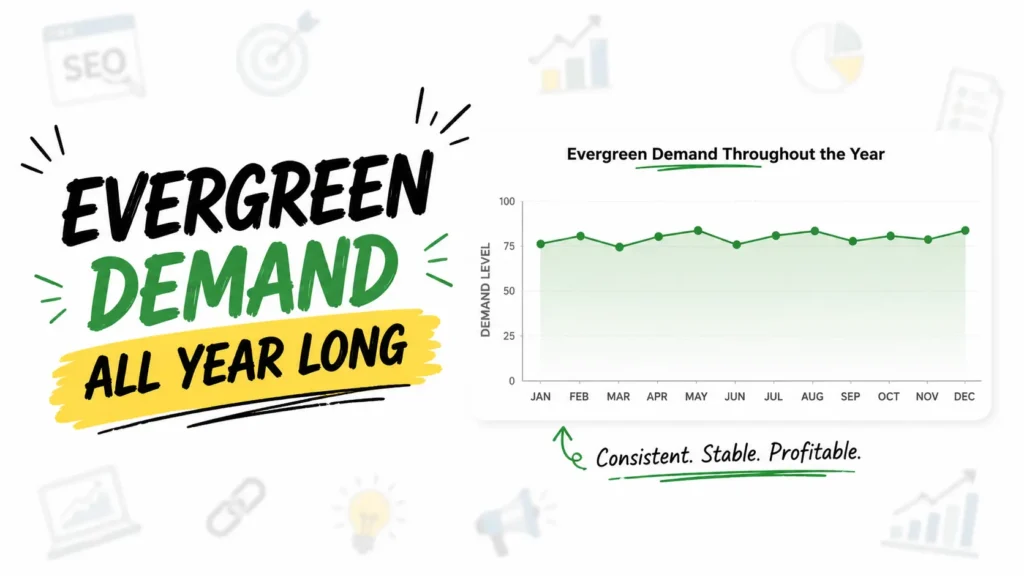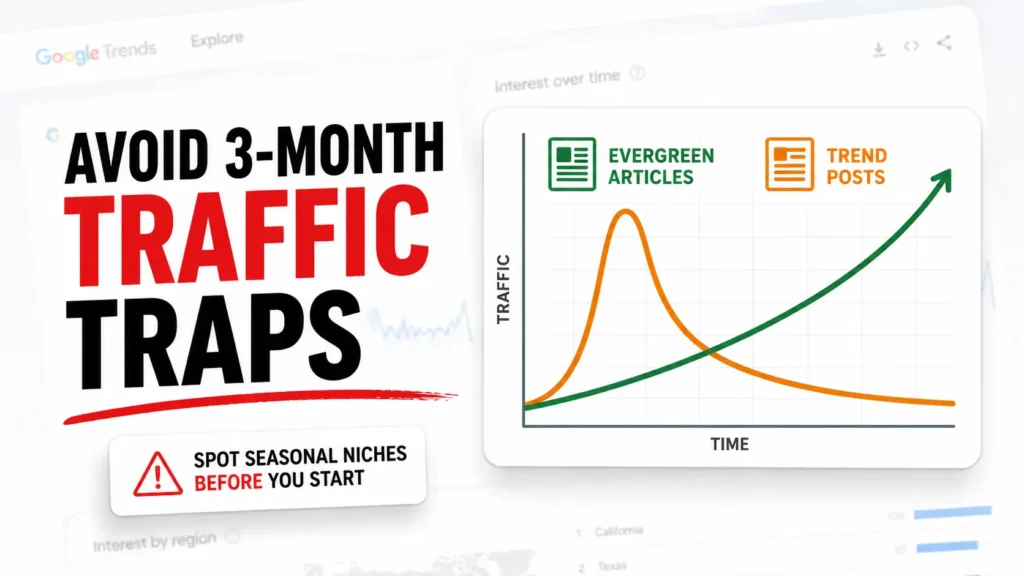
Blogging fandamentals and setup
How to start a business blog : Blueprint for building a Real digital asset in 2026.
If you want to learn how to start a business blog, this category guide breaks down the complete system behind turning a simple website into a structured, revenue-focused content business. Instead of random publishing, you will learn how to build a foundation using niche validation, brand positioning, content planning systems, and multi-channel distribution strategies that support long-term growth.
This guide is designed as a practical roadmap for creators who want to move beyond hobby blogging and build a structured online business with clarity, consistency, and scalable content systems.

By MRD- Malaka
Last verified : june 12, 2026
Read time – 12 minutes
- Profitable Blog Niche Validation
- Blog Brand Identity Framework
- High-Income Content Planning Protocol
- Multi-Channel Blog Content Distribution
The reality of building a business blog in today's search landscape
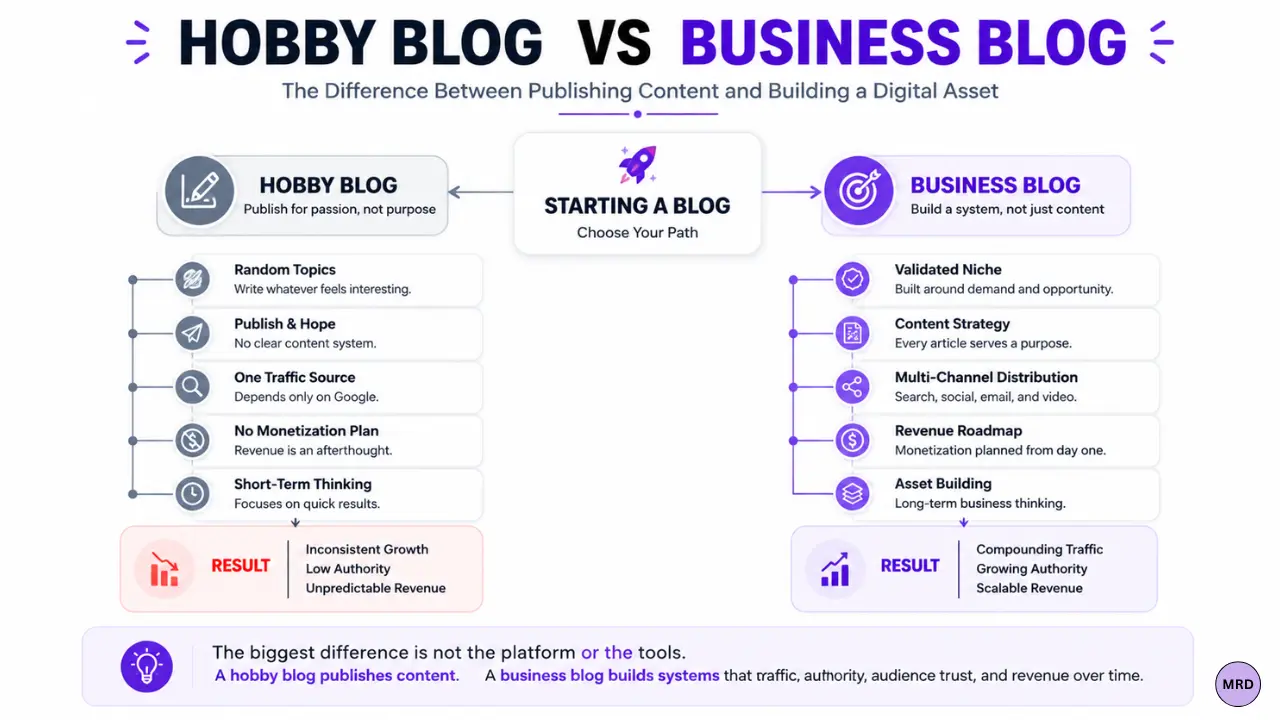
If you want to learn how to start a business blog, the biggest mistake you can make is treating it like a casual hobby instead of a scalable business asset. Thousands of new websites launch every month, yet only a small percentage ever generate sustainable traffic, qualified leads, or meaningful revenue.
Most beginners spend weeks obsessing over themes, plugins, and logos while overlooking the systems that actually drive long-term business growth.
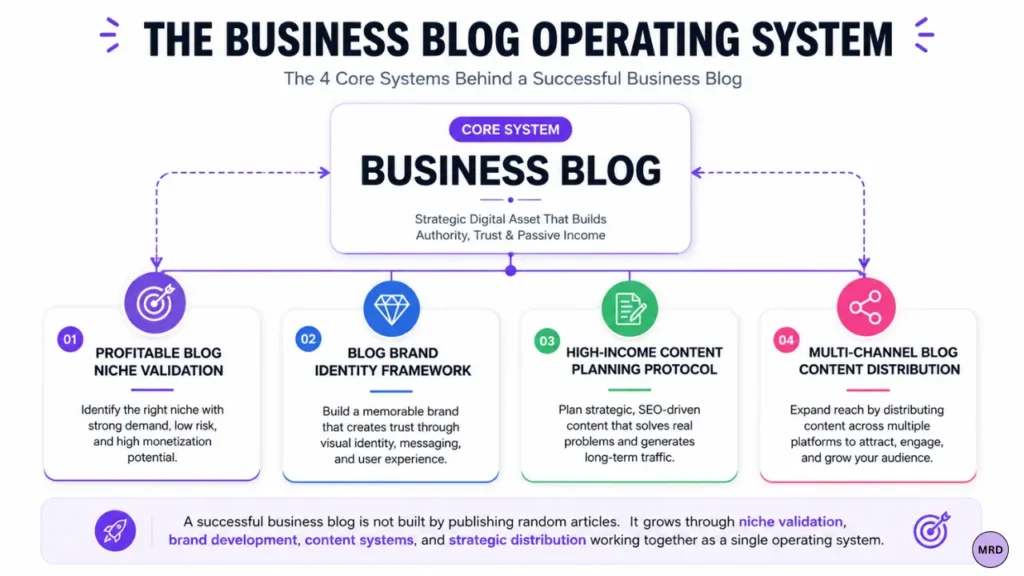
A successful business blog is not simply a collection of articles. It is an interconnected digital ecosystem designed to attract qualified traffic, establish authority, generate opportunities, and build long-term business value.
Whether your goal is to build a one-person business supported by modern AI automation or create a scalable content operation, this category guide serves as your operational blueprint.
Throughout this ecosystem, you’ll learn the frameworks, systems, and execution principles used to perform profitable blog niche validation, develop a recognizable blog brand identity framework, implement a high-income content planning protocol, and expand visibility through multi-channel blog content distribution.
The Action Trap
“Modern AI search systems and generative engines increasingly favor content that contributes original insights, clear first-hand experience, and well-structured information.
Pages that simply repeat existing advice are becoming less competitive. The strongest business blogs are built around unique expertise, clear communication, and consistent user value. ”
THE BLOGGING BUSINESS ROADMAP : WHERE YOU ARE RIGHT NOW
To get the most value from this ecosystem, identify your current stage and follow the appropriate path. If a foundational component is missing, complete that step before moving forward.
STAGE 01 :
Technical Infrastructure
If your website is not live yet, begin here: This is the very first step you need :
This guide walks through the technical foundation required before any business strategy can succeed.
STAGE 01 :
Core strategy & launch planning
Once your website is operational, move into strategic planning:
From there, you’ll progress through niche validation, brand positioning, content planning and demanding topics
Before moving into implementation, understand that learning how to start a business blog is not about publishing more content-it is about building the right systems for niche selection, brand positioning, content planning, and long-term audience growth.
-
Validate befre you create
Choose a niche only after confirming search demand, audience problems, and monetization opportunities through profitable blog niche validation. -
Build a recognizable brand
A strong blog brand identity framework helps establish trust, improve user experience, and differentiate your content from competitors. - Use AI as an assistant, not a replacement
AI can accelerate research, outlining, and editing, but your personal experience, examples, and observations remain your biggest competitive advantage. -
Plan content around user intent
Successful blogs don't publish randomly. A high-income content planning protocol focuses on solving real problems with clear, well-structured content. -
Design for humans first
Readable layouts, scannable formatting, and practical insights improve engagement and make content easier to consume.
Essential Content Creation Tools Stack
Helps improve grammar, readability, visual design, and overall content presentation before publishing. A simple way to make blog posts look more professional and trustworthy.
Grammarly
Writing Assistant • Grammar & Clarity
The ultimate editing layer for your copy. Fixes grammatical errors, enhances sentence structure, and refines vocabulary in real-time to maintain an absolute professional editorial standard.
Optimize CopyCanva
Design Engine • Visual Graphics
Empowers solo creators to design gorgeous blog headers, custom infographics, and social assets without touch-coding or complex design software. Keeps branding perfectly clean.
Create Visuals💡 Transparency Note: Some links above are affiliate pathways. If you use them, I earn a small commission at zero absolute extra cost to you. I only recommend the infrastructure I actively use to scale my own web properties.
Is This Blogging Blueprint For You?
Before you commit to this deep-dive strategy blueprint, let's verify you're in the right room. This implementation engine is hyper-optimized for two distinct pathways:
The Niche Blogger & Creator
For those building a high-authority personal brand or niche site from scratch.
- Clear Niche Validation: Eliminate guesswork. Learn how to audit search demand, analyze audience problems, and map monetization protocols before writing.
- Overcome Content Inertia: Stop staring at a blank editor. Implement a repeatable writing system to ship comprehensive, valuable guides consistently.
- Audience-First Frameworks: Design clean layouts optimized for scanners and mobile readers to turn casual search traffic into loyal subscribers.
The Solopreneur & Business Owner
For businesses scaling high-value content assets to capture organic customer growth long term.
- Asset-Driven Strategy: Stop treating your blog like a hobby. Build a structured, multi-channel digital asset that establishes industry authority.
- Commercial Content Systems: Deploy high-income content planning protocols explicitly designed to capture targeted intent and attract qualified buyers.
- Platform Diversification: Set up scalable content distribution layers across search and social channels without adding technical overhead or team bloat.
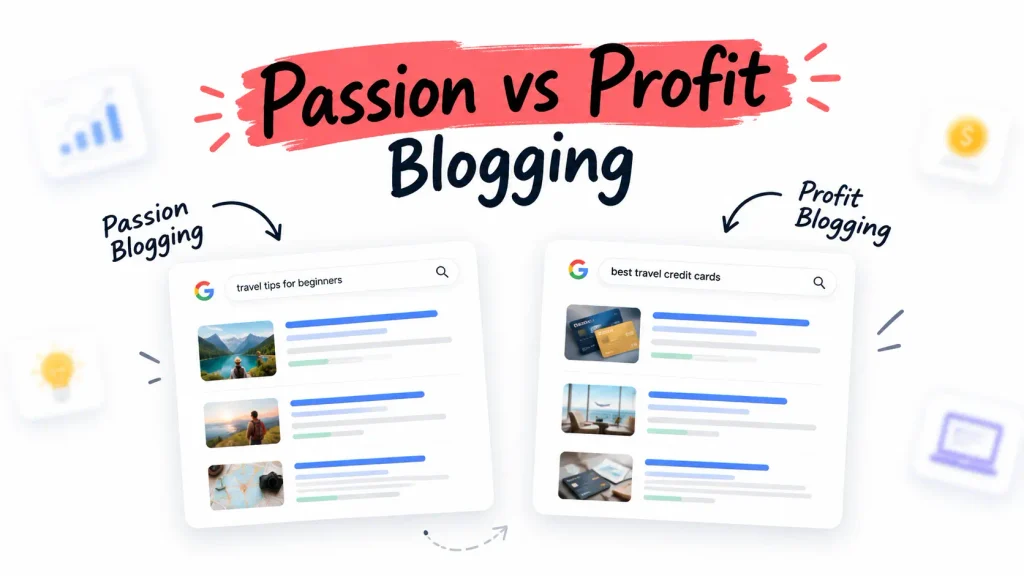
Profitable blog niche validation : Shifting from passion to profit
When I built my very first blog, I fell into the same trap that catches many new creators. I chose a niche that was far too broad because it seemed safer and offered endless content ideas. At the time, I assumed that targeting a larger topic would automatically attract a larger audience.
The opposite happened.
After publishing content for months, I found myself competing against established websites with years of authority, thousands of indexed pages, and entire teams dedicated to content production. No matter how much effort I invested, it was difficult to stand out because I had not defined a clear market position from the beginning.
That experience completely changed the way I approach profitable blog niche validation today.
Before publishing a single article, I now evaluate whether a niche has enough demand, commercial opportunity, and long-term sustainability to support a real business. Choosing a niche is not simply about following your interests. It is about identifying a specific market where you can provide meaningful value while building a defensible position over time.
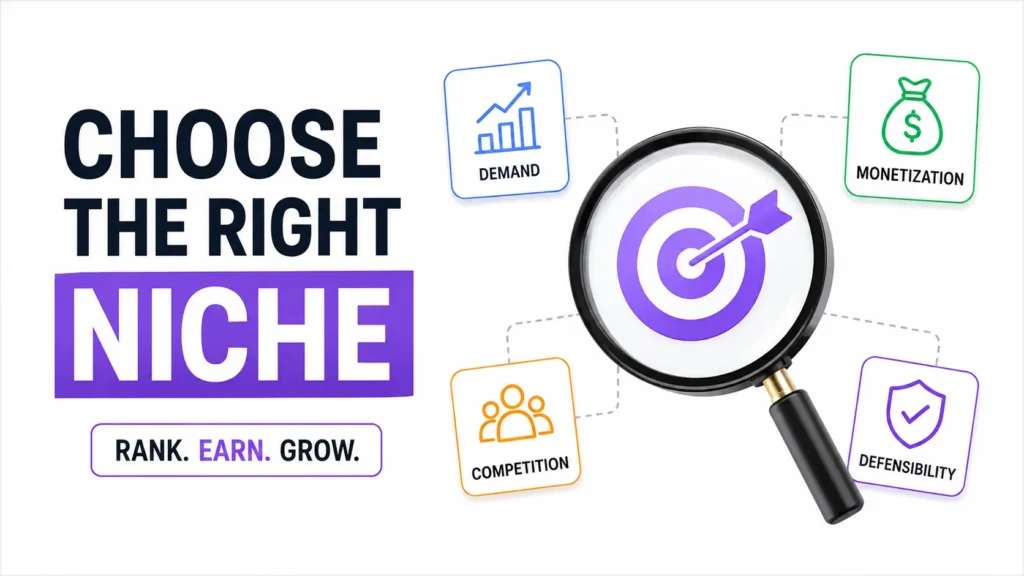
To guide that process, I use a framework called the Three-Circle Validation Engine. For a niche to be viable as a long-term business asset, it should sit at the intersection of three critical factors:
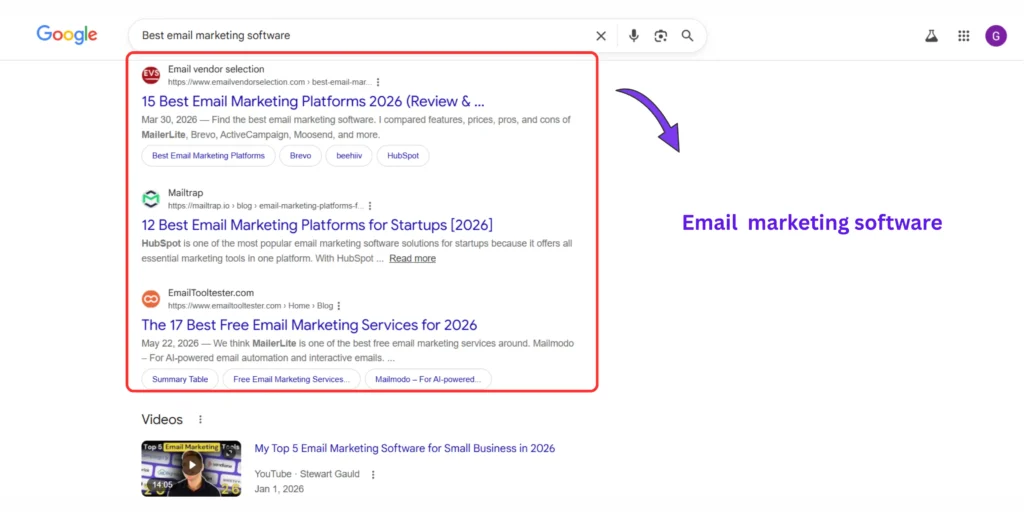
Audience search indensity
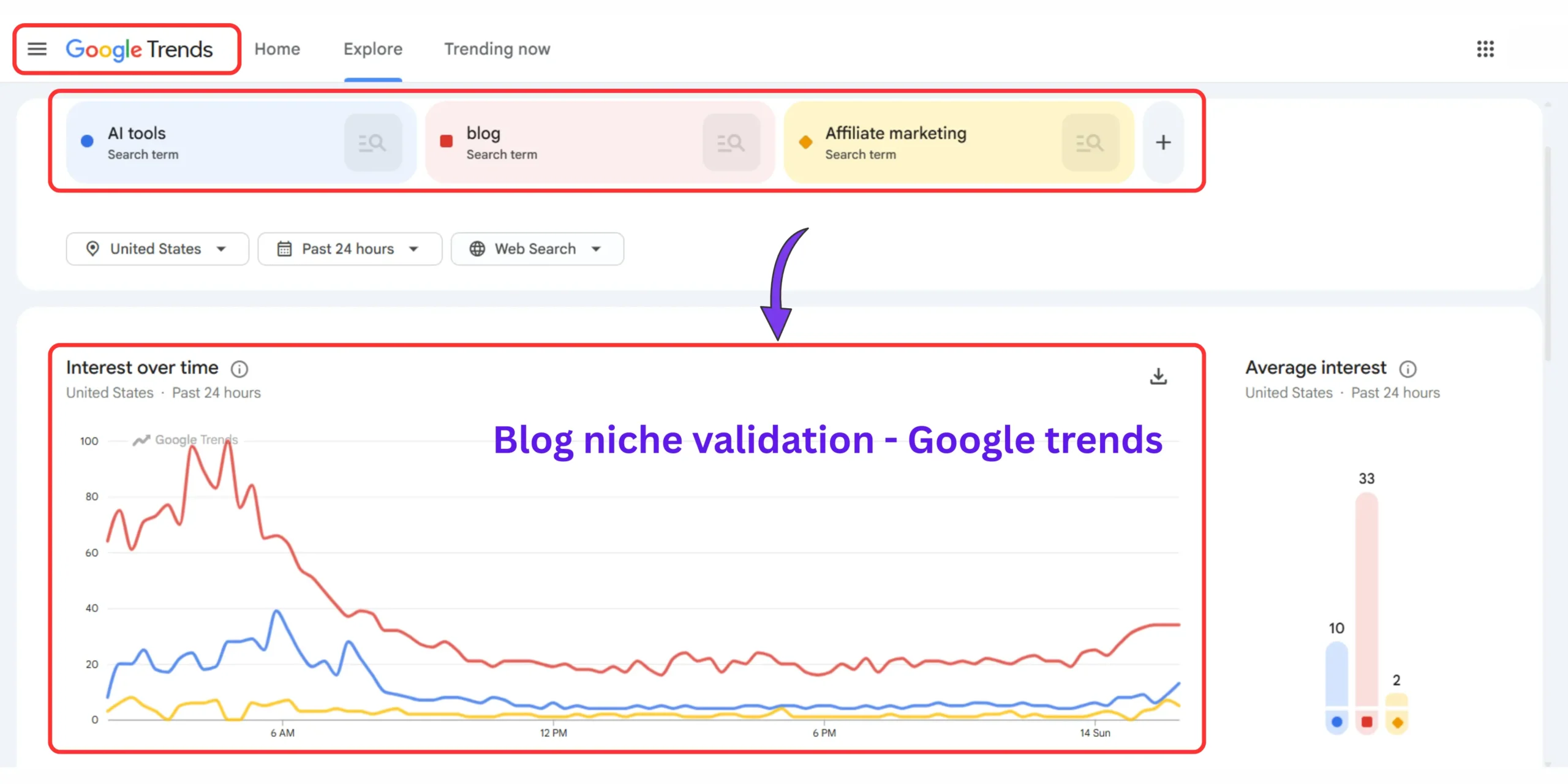
There should be a consistent stream of people actively searching for solutions, answers, or products related to the topic.
For example, when researching a niche, I look beyond broad keywords and pay close attention to recurring questions, comparison searches, and problem-focused queries. These often reveal stronger long-term demand than high-volume vanity keywords.
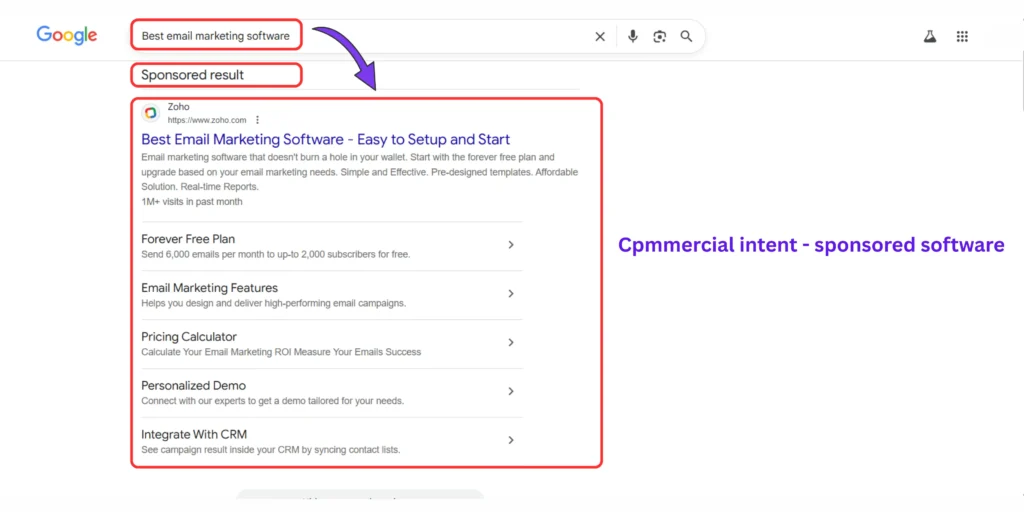
High ticket affiliate density
The market should contain products, services, software platforms, or educational resources that solve meaningful problems and create monetization opportunities.
A niche can attract traffic, but if there is little commercial activity behind it, turning that attention into sustainable revenue becomes much harder.
Operational longevity
You should have enough experience, curiosity, or willingness to learn that you can continue publishing valuable content for years rather than months.
Before committing to a niche, ask yourself:
- Can I realistically create 50 to 100 useful articles on this topic?
- Am I interested enough to keep learning about it?
- Can I provide perspectives or examples that larger competitors may overlook?
When all three factors align, you have a much stronger foundation for long-term growth.
If you’re still evaluating potential markets, my guide on How to choose the perfect blog niche expands on this validation process and shows how to assess ideas before investing significant time and effort.
Breaking the topic down in to micro silos
One of the biggest lessons I learned is that broad topics rarely create meaningful differentiation.
Modern search engines and AI-powered discovery systems increasingly surface content that demonstrates clear expertise, unique perspectives, and practical experience. Generic content still has value, but it often competes against thousands of similar resources and may receive fewer clicks when search engines provide direct answers to basic questions.
This is why profitable blog niche validation should not stop at selecting a broad category. The next step is identifying a focused micro-silo.
For example, instead of launching a generic fitness blog, you might focus on evidence-based strength training for busy executives, recovery strategies for endurance athletes, or fitness systems designed specifically for remote workers.
The narrower your focus becomes, the easier it is to:
- Build topical authority
- Create unique content
- Share first-hand observations
- Publish detailed case studies
- Develop stronger audience trust
This is also where personal experience becomes a competitive advantage. Real examples, screenshots, workflows, experiments, and lessons learned create information that cannot be easily replicated by automated systems or copied from competing websites.
Over time, these assets become part of the protective moat around your brand.
A validated micro-silo combined with consistent execution allows even a small creator to build a highly respected digital presence. That philosophy forms the foundation of The 2026 blueprint : how to start a one person ai business, where I explore how focused positioning and modern automation can work together to create sustainable growth.
Bypassing the technical friction
Want to make sure you don’t skip a critical step while executing the framework below? Secure your interactive copy of the roadmap companion tracker to audit your system live:
FREE RESOURCE
The no-code WordPress launch checklist
Don’t miss a critical setting. Skip the technical friction with this step-by-step checklist to launch a secure, lightning-fast WordPress site on your own terms.
🔒 Zero Spam. Unsubscribe with 1-click anytime.
Building a premium blog brand identity framework for long term trust
One of the biggest lessons I learned after launching my first blog was that visitors often formed an opinion about the site before they read a single article. I could spend hours researching, writing, and editing content, but if the website felt cluttered, outdated, or difficult to navigate, many visitors left before they ever experienced the value of the content itself. That realization completely changed the way I approached website design.
Today, whenever I help entrepreneurs plan how to start a business blog, I treat visual presentation as part of the overall user experience rather than a decorative afterthought. Establishing a premium blog brand identity framework is not simply about making a website look attractive. It is about creating an environment that feels trustworthy, professional, and easy to use from the very first visit.
When rebuilding my own sites, I intentionally moved away from many traditional blogging layouts that relied on crowded sidebars, excessive widgets, and competing visual elements. Instead, I adopted several principles commonly found in modern SaaS applications because they help create a cleaner reading experience:
- Minimal structure layouts : A simple layout helps readers focus on the content rather than unnecessary distractions. When visitors arrive on a page, they should immediately understand where to look and what action to take next.
- Clean typography systems : Readable typography improves the overall experience across desktop and mobile devices. The easier content is to consume, the longer readers are likely to stay engaged.
- Generous whitespace : One mistake I made early on was trying to fit too much information into every screen. Adding more spacing between sections made articles feel easier to read and reduced the sense of visual overload.
- Crisp , consistent visual organization : Clear section divisions, content cards, and predictable formatting help readers scan information quickly. This becomes increasingly important as your content library grows.
However, your brand is also reflected through the topics you choose to cover, the tone of your writing, and the overall experience visitors have across your website. Together, these elements create the trust signals that encourage readers to return, subscribe, and recommend your brand to others.
As you review your own website, ask yourself:
- Can a first-time visitor immediately understand what my site is about?
- Is the layout helping readers find information quickly?
- Does the visual presentation support credibility?
If you’re still planning the overall structure of your website, my guide on how to structure a blog for beginners explains how to organize pages, categories, navigation, and content architecture in a way that supports both usability and long-term growth. A strong brand identity is not created through logos alone; it is built through small decisions that collectively make your website easier to trust, use, and remember.
The high income content planning protocol : Engineering content for retention
When I first started taking blogging seriously, I believed that publishing more content would automatically lead to more traffic. If I could simply write more articles than competing websites, I assumed the results would eventually follow.
What I discovered was that volume alone was not the answer.
Some of my longest articles received very little engagement, while shorter, better-structured content consistently performed better with readers. The difference wasn’t the amount of information. It was the experience of consuming that information.
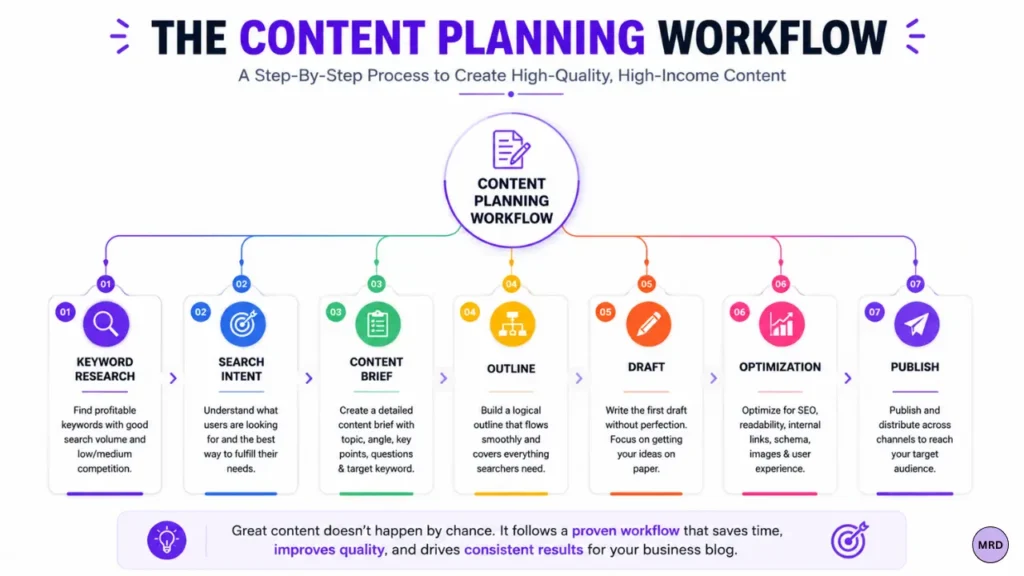
That realization led me to develop what I now call the high-income content planning protocol. Before writing a single paragraph, I focus on understanding search intent, planning the article structure, and making the content easy for readers to navigate.
In a world where information is abundant, presentation matters almost as much as the information itself.
Designing content for scannability
One lesson I learned quickly is that most readers do not consume articles from top to bottom.
Instead they scan, They jump between headings, look for key takeaways, and search for answers that solve their immediate problem.
Because of this behavior, every article I publish follows a simple scannability framework:
Direct answer hooks
Each major section should quickly answer the question the reader is likely asking. For example
QUESTION – How long does it take to start a blog?
DIRECT ANSWER – Most beginners can launch a blog in a few hours, although building meaningful traffic usually takes significantly longer.
This immediately satisfies intent before expanding into deeper explanations.
Bold conceptual highlights
Important concepts should stand out visually so readers can understand the main ideas even if they are scanning quickly.
Crisp bullet configurations
Complex processes are easier to understand when broken into lists rather than large blocks of text.
Scannability alone will not guarantee higher rankings or AI visibility. However, it makes content easier for readers to understand and easier for search systems to interpret.
When I began formatting articles for human readers first, I noticed visitors spending more time engaging with individual pages and exploring additional content throughout the site.
That shift reflects a larger change happening across the industry, which I explore in greater depth in What happens to blogging in the age of AI.
Leveraging smart automation systems wisely
The goal of modern blogging is not to avoid artificial intelligence. It is to use it strategically without allowing it to replace your expertise, judgment, or personal experience.
Many beginners rely on AI tools to generate entire articles with minimal editing. The result is often generic content that adds little value beyond what already exists online.
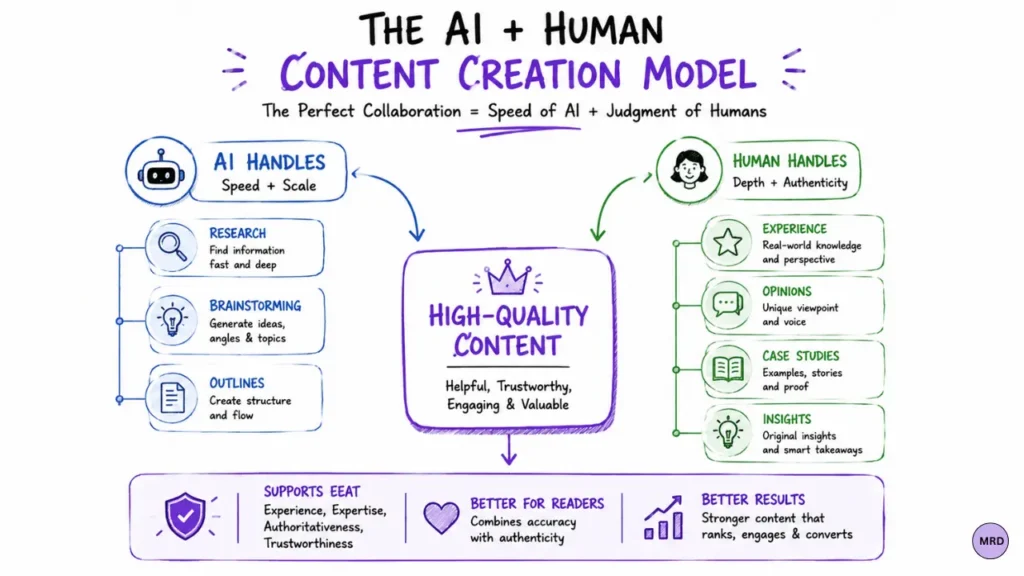
My approach is different. I use AI primarily to :
- Generate ideas
- Explore content angles
- Organize research
- Create rough outlines
- Improve editing efficiency
If you’re interested in building a responsible workflow, my guide on How to use ChatGPT to write blog posts for beginners explains the process in detail.
The key principle is simple: AI should help you create faster, not think for you. Once the outline is complete, your role is to contribute the elements that AI cannot easily replicate:
- Personal experience
- Original observations
- Real examples
- Screenshots
- Case studies
- Unique opinions
This is exactly why How to add value to AI generated blog posts has become such an important skill for modern creators.
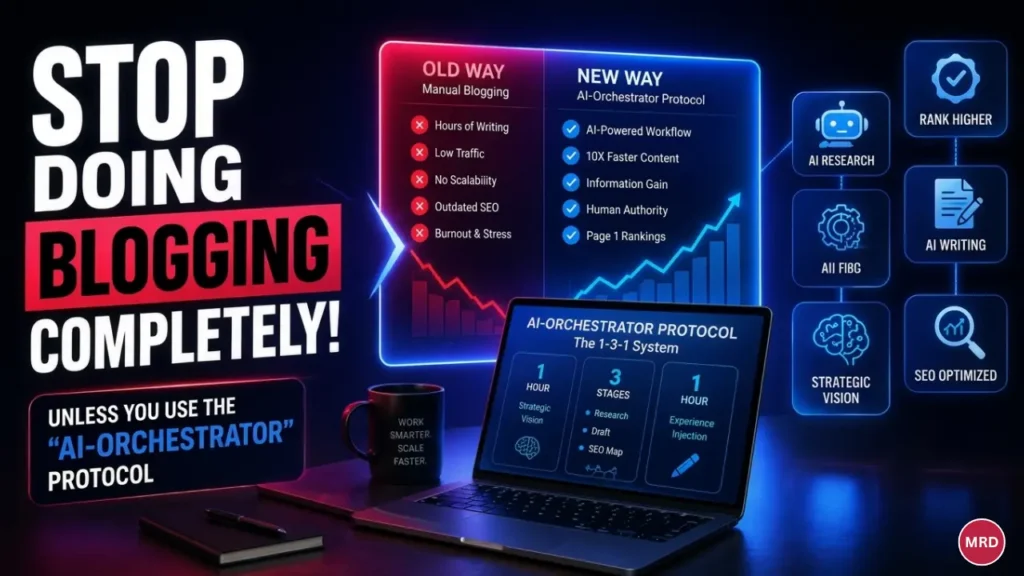
And even you can get a rough idea about blogging with the impact on AI by studying my masterpiece :
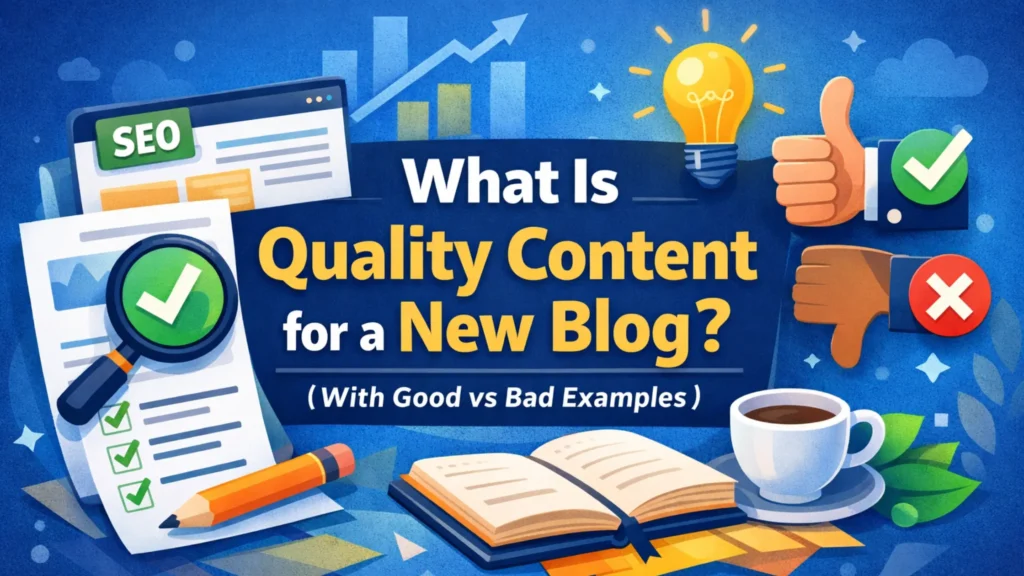
Overcoming the blank page friction
One of the biggest obstacles to consistent publishing is not writing itself. It is deciding what to write next.
Early in my blogging journey, I wasted a surprising amount of time jumping between ideas, researching random topics, and second-guessing my content decisions. Creating a structured content calendar solved much of that problem.
When topics are planned in advance, writing becomes an execution task rather than a brainstorming exercise. Instead of staring at a blank page, you begin each session with a clear objective and a defined content opportunity.
If you’re building your initial content pipeline, 101 content ideas for beginners can help you generate a backlog of potential topics and reduce the friction that often prevents consistent publishing.
The less time you spend deciding what to write, the more time you can spend creating content that genuinely helps your audience.
Multi-channel block content distribution : Amplifying beyond search networks
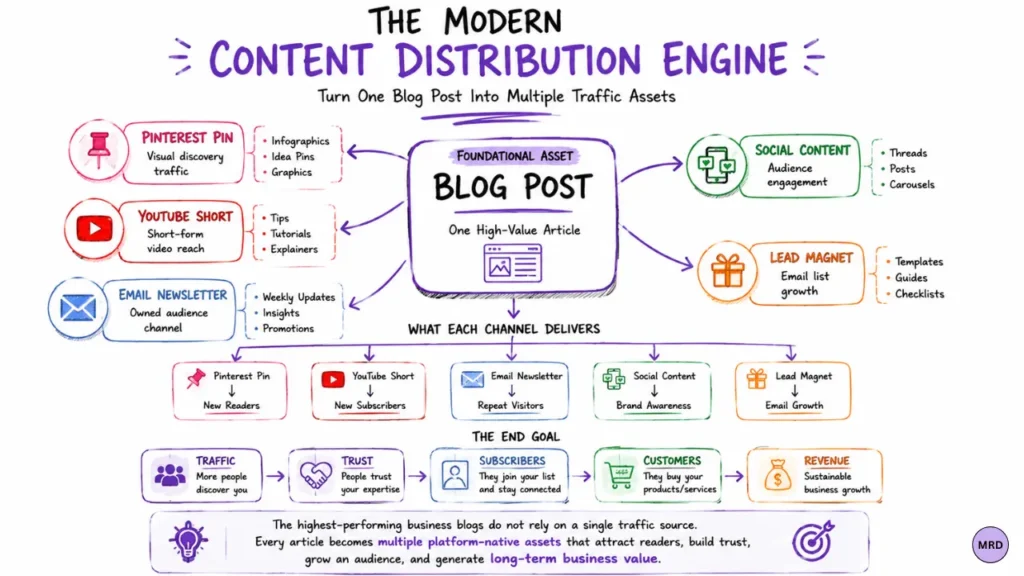
One of the biggest mistakes I made when growing my first blog was assuming that publishing content was the finish line.
My process looked simple: I would spend days researching and writing an article, hit publish, share the link once on social media, and immediately move on to the next piece of content. I assumed search engines would eventually do the rest.
Sometimes they did. Most of the time, they didn’t.
A few weeks after publishing several articles, I noticed that some pages were receiving impressions but very little traffic. Others were barely being discovered at all. That experience taught me an important lesson: creating content and distributing content are two different skills.
Publishing is only the beginning. If you want to maximize the value of the work you create, you need a structured multi-channel blog content distribution strategy.
Instead of treating a blog post as a single destination, think of it as a source asset that can be adapted into multiple content formats.
A single article can often become:
Long-Form Blog Post
The comprehensive strategic foundation containing all primary insights, data, and frameworks.
Short-Form Video Scripts
Adapted directly into high-hook execution scripts optimized for TikTok and YouTube Shorts.
Visual Graphic Assets & Infographics
Data maps and framework models converted into high-engagement boards for Pinterest.
Native Micro-Lessons
Text blocks refined into value-first sequences sent directly out inside Email Newsletters.
This approach allows you to reach people who may never discover your content through search engines alone.
Adapting content for different platforms
One of the most common distribution mistakes is posting the same message everywhere. Different platforms reward different content formats.
The goal is not to copy and paste content across channels. The goal is to extract the core value and present it in a way that feels native to each platform.
Short-form video scripts
A blog article often contains multiple ideas that can become standalone videos. For example, a post about niche validation could easily become several short clips covering:
- Common niche selection mistakes
- How to evaluate search demand
- Signs of commercial intent
- Questions to ask before choosing a niche
These shorter videos can introduce new audiences to your expertise while directing interested viewers toward deeper resources.
Visual graphic assets
Some readers prefer visual learning. Frameworks, workflows, checklists, and step-by-step processes can often be transformed into Pinterest graphics, infographics, and other visual assets that are easier to consume and share.
Native micro lessons
Email subscribers typically want quick, practical takeaways rather than full-length blog posts.
Instead of sending a raw link, consider extracting one valuable lesson from an article and presenting it as a short email that delivers immediate value.
Building a diversified content engine
One lesson I learned over time is that relying entirely on search traffic creates unnecessary risk. Search engines remain incredibly valuable, but they should not be your only source of visibility. A diversified content strategy helps you:
- Reach audiences across multiple platforms
- Build direct relationships through email
- Extend the lifespan of every article
- Create additional discovery opportunities
- Reduce dependence on a single traffic source
As you develop your content system, ask yourself:
- Can this article become a video?
- Can this process become an infographic?
- Can one lesson become an email newsletter?
- Can the same idea be repackaged for a different audience?
The strongest blogging businesses rarely rely on a single channel. They build interconnected content ecosystems where each platform supports and strengthens the others.
When distribution becomes part of your publishing workflow rather than an afterthought, every article has the potential to generate value long after the day it is published.
Frequently Asked Questions (blogging fundamentals)
Clear answers to foundational questions about business blogging sustainability, niche monetization metrics, authority scaling, and modern asset deployment.
Yes, starting a business blog can still be profitable when it focuses on solving specific problems and monetizing through products, services, affiliate partnerships, or digital assets.
One of the biggest misconceptions about blogging is that success depends on generating millions of pageviews. In reality, many profitable blogs serve relatively small but highly targeted audiences. The key is building content that helps readers solve meaningful problems and connecting those readers with relevant solutions. When approached as a long-term business rather than a publishing hobby, a blog can become a valuable source of traffic, leads, and revenue.
You can evaluate a blog niche by confirming there is consistent search demand, clear audience problems, and products or services that people are already willing to purchase.
Before investing months into content creation, it is worth validating whether the market has genuine commercial potential. Look for signs such as active competitors, established companies operating in the niche, affiliate programs, digital products, or service providers. A profitable niche does not necessarily need massive search volume, but it should contain an audience actively looking for solutions.
No, you do not need formal certifications to build a successful blog, but you do need to provide accurate information, practical insights, and genuine experience whenever possible.
Many successful bloggers started by documenting what they were learning rather than presenting themselves as industry authorities. Readers often value transparency, real-world examples, and honest observations more than credentials alone. If you consistently share useful information and continue improving your knowledge, you can build trust over time.
Most business blogs require several months of consistent effort before they begin generating meaningful traffic, leads, or revenue.
The exact timeline depends on factors such as niche competition, content quality, publishing consistency, and promotion efforts. Some blogs gain traction quickly, while others take much longer to establish authority. Instead of focusing solely on short-term traffic numbers, concentrate on publishing useful content and building a strong foundation that can compound over time.
Yes, AI tools can help with research, brainstorming, outlining, and editing, but the strongest blog content still relies on human expertise, judgment, and experience.
AI can significantly improve efficiency, especially when generating ideas or organizing information. However, publishing unedited AI-generated content rarely creates a competitive advantage. The most effective approach is to use AI as a supporting tool while adding your own examples, insights, observations, and perspectives that readers cannot find elsewhere.
Executing your 0-1 blog launch roadmap
Learning how to start a business blog is ultimately about building systems that support long-term growth rather than chasing short-term results. Throughout this guide, you’ve explored the foundational principles that help transform a simple website into a sustainable digital business.
You began with profitable blog niche validation, where the goal is not simply choosing a topic you enjoy, but identifying a market with genuine demand, monetization opportunities, and long-term potential. A strong niche creates the foundation that every future decision will be built upon.
From there, you learned how a professional blog brand identity framework helps establish credibility and trust from the very first visitor interaction. Readers often form impressions quickly, and a clear, consistent brand experience makes it easier for them to engage with your content and return in the future.
You also explored the high-income content planning protocol, which focuses on creating content that is useful, well-structured, and aligned with user intent. In a world where information is abundant, the blogs that stand out are often the ones that communicate ideas more clearly, more practically, and more effectively than their competitors.
Finally, you discovered why multi-channel blog content distribution is no longer optional for serious creators. Publishing is only the first step. The ability to adapt and share your content across multiple platforms helps expand your reach, diversify your traffic sources, and maximize the value of every piece of content you create.
The 4 Pillars of a Sustainable Business Blog
Learning how to start a business blog is ultimately about building scalable systems that support long-term growth rather than chasing short-term results. Here is your foundational progression engine.
Profitable Blog Niche Validation
Identify a market with genuine search demand, healthy monetization opportunities, and true long-term scalability potential. A strongly validated niche forms the structural foundation that every future strategic decision will safely build upon.
Blog Brand Identity Framework
Establish crystal-clear authority and professional trust from the very first visitor interaction. A clean, premium reading layout design ensures instant brand alignment, increasing user session durations and turning casual traffic into active subscribers.
High-Income Content Planning Protocol
Engineer high-value articles structurally mapped around user search intent. By designing specifically for modern content scannability, your blog communicates deep insights and practical frameworks much more effectively than generic competitors.
Multi-Channel Blog Content Distribution
Stop treating publishing as the final step. Learn to successfully unpack your source text assets into optimized downstream channels—maximizing visibility across diverse discovery networks and securing stable, long-term traffic protection.
More importantly, these four systems work together. A validated niche attracts the right audience.
A strong brand builds trust. Strategic content keeps readers engaged. Distribution ensures your work reaches more people.
As you continue your journey of learning how to start a business blog, focus on consistent execution rather than perfection. Publish content that reflects your own experiences, observations, and lessons learned. Use AI as a tool to improve efficiency, but rely on your expertise and perspective to create the information that readers genuinely remember.
Your website does not need to be perfect before you begin. It simply needs to be useful. Start with one article, solve one problem, and help one reader. Then repeat the process.
Over time, those small actions can grow into something far more valuable than a collection of blog posts, a trusted platform, a recognizable brand, and a business asset that continues to compound in value for years to come.
Malaka Dharmarathne - MRD
Digital Marketing & Blogging growth specialist
” I help beginner bloggers build high-converting, no-code WordPress websites and master the fundamentals of SEO and content distribution. Through actionable blueprints on affiliate marketing and high-income monetization, I turn simple blogs into profitable digital businesses.“
Popular Blueprints
Table of Contents - Create a no-code website with WordPress
Build & Scale a High-Converting Blog Platform
Join thousands of creators getting actionable breakdowns on affiliate monetization, clean UX design, and growth strategy delivered straight to your incbox.
- Step-by-Step Guides: Proven traffic & monetization tactics.
- Tech Stack Curations: The exact tools & plugins to build faster.
- Zero Spam: Unsubscribe in 1 click at any time.
🔒 We respect your privacy. No spam, ever.

” I’m MRD, a digital entrepreneur specializing in building lightweight, automated systems for solo creators. I founded Learn2Launch to share the exact AI orchestration protocols and framework setups I use every day—helping you launch a profitable one-person business completely free of technical overwhelm or backend bloat.“