

TL;DR Executive Summary: Learn how to find content gaps in blog competitors by comparing their ranking topics, keywords, and content weaknesses against your own coverage. Use free tools like Google Search Console, Ubersuggest, AnswerThePublic, and manual SERP analysis to uncover missed opportunities. Then group related keywords by search intent and prioritize each gap using the MRD Content Gap Opportunity Score, turning competitor research into validated, higher-value content opportunities without relying on expensive SEO software.
How to find content gaps in blog competitors is a practical way to discover topics your competitors cover that your blog does not yet adequately address. Before diving into the tactics, it helps to see where this process fits inside a bigger system.
If you have not yet built the foundation for a monetizable site, start with How to Start a Business Blog: Blueprint for Building a Real Digital Asset in 2026, and pair this guide with the Profitable Blogging Niche Validation & Market Research Frameworks to validate demand before you invest hours into content.
What to Remember About Finding Content Gaps
- Content gap analysis finds topics competitors rank for that your blog does not yet cover, using free tools instead of paid SEO software.
- Google Search Console + Ubersuggest + AnswerThePublic can reproduce many of the core insights of paid keyword-gap tools through a more manual research process.
- Low-competition opportunities are easier to identify when competing pages have outdated information, weak content, or limited authority signals rather than relying on word count alone.
- Scoring opportunities out of 100 across affiliate potential, keyword difficulty, evergreen demand, scalability, and commercial intent can reduce guesswork when deciding what to publish.
- Outranking competitors depends on matching search intent, improving information quality, and structuring content clearly for both search engines and AI-generated answers—not simply publishing more words.
What is content gap analysis?
Content gap analysis is a competitive research process that identifies topics, keywords, and search intents your competitors rank for but your blog does not yet cover.
Bloggers in the United States and across Europe use content gap analysis to find winnable keywords before spending money on paid tools like Ahrefs or SEMrush. The output is a prioritized list of blog post ideas ranked by traffic potential, competition level, and revenue opportunity.
Understanding how to find content gaps in blog competitors matters most when your niche is crowded.
A US-based finance blogger competing against NerdWallet, or a UK lifestyle blogger competing against sites ranking on google.co.uk, both need the same core skill: spotting what the market is missing.
A content gap is a topic or user need your blog does not adequately cover, while a keyword gap is a specific search query for which a competitor ranks but your site does not. Keyword gaps are narrower; content gaps are broader opportunities that can often be covered by one comprehensive article.
The simplest way to distinguish the two is to compare their focus, scope, and intended output:
| Comparison | Content Gap | Keyword Gap |
|---|---|---|
| Focus | Topic or user need | Search query |
| Scope | Broad | Narrow |
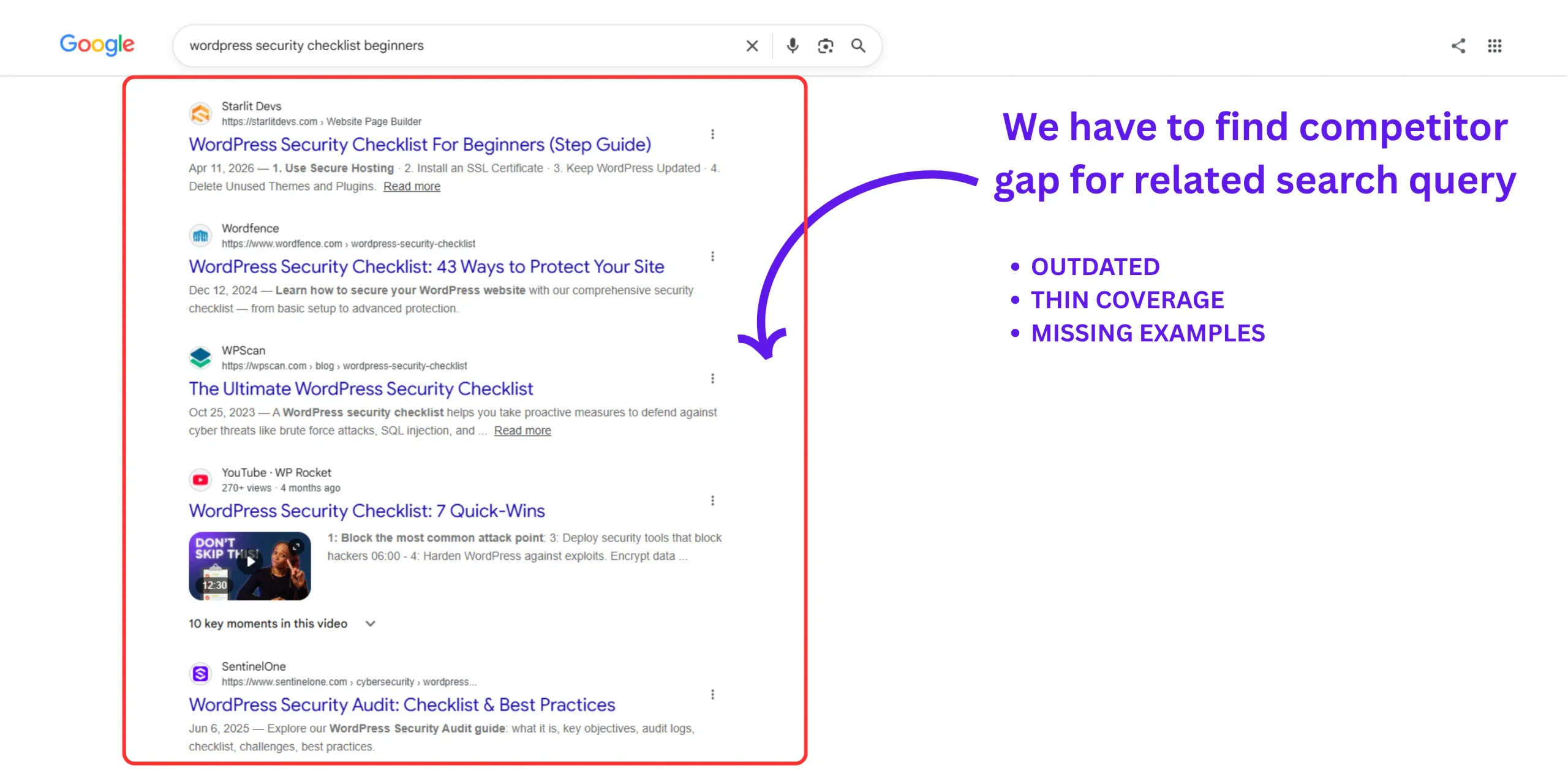
| Example | Beginner WordPress security | “wordpress security checklist beginners” |
| Best use | Content planning | Keyword targeting |
| Output | Article opportunity | Target keyword/query |
Why the Distinction Matters
One content gap can contain multiple keyword gaps. For example, if competitors cover beginner WordPress security but your site has no dedicated guide, that is a content gap. The same opportunity may contain related queries about plugins, passwords, backups, updates, malware protection, and security checklists.
Why content gap analysis matters for bloggers
Content gap analysis matters because it converts guesswork into a data-backed content calendar. Bloggers who skip this step tend to publish content that already has ten strong competitors on page one, wasting months of writing time.
A few reasons this process pays off financially:
- Faster ranking timelines – targeting gaps means less competition, so posts can rank in 60–90 days instead of a year.
- Higher affiliate revenue – many content gaps sit in commercial-intent categories, which convert better in USD and EUR markets alike.
- Better use of limited hours – solo bloggers in cities like Austin, Manchester, or Berlin rarely have an in-house SEO team, so free-tool efficiency matters.
- Regional relevance – a gap that exists for “best budgeting apps in the UK” might not exist for “best budgeting apps” globally, so localized gaps are often the easiest wins.
If your traffic has stalled despite consistent publishing, it is worth checking why your blog is not getting traffic after 6 months before assuming the niche itself is the problem – sometimes the real issue is a content gap you have not filled yet.
How to do competitor keyword gap analysis for free
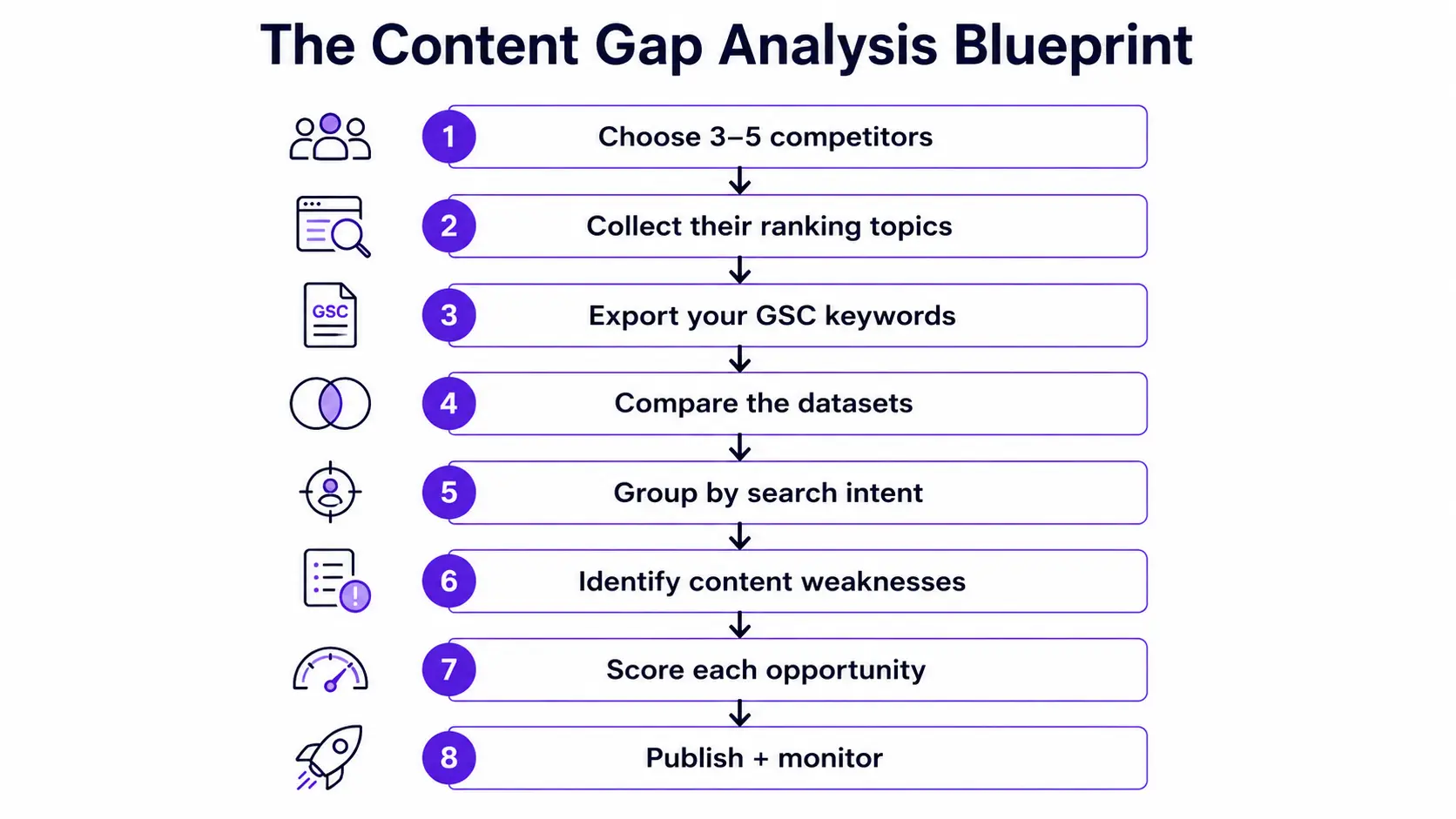
Competitor keyword gap analysis is the process of comparing your site’s ranking keywords against a competitor’s ranking keywords to isolate the difference, and it can be done entirely without paid software. Here is the exact free workflow:
- Pick 3–5 direct competitors who target the same audience and monetization model (affiliate, ads, or digital products).
- Pull their top pages using Ubersuggest’s free tier (3 searches per day) or Google’s “site:” search operator combined with manual review.
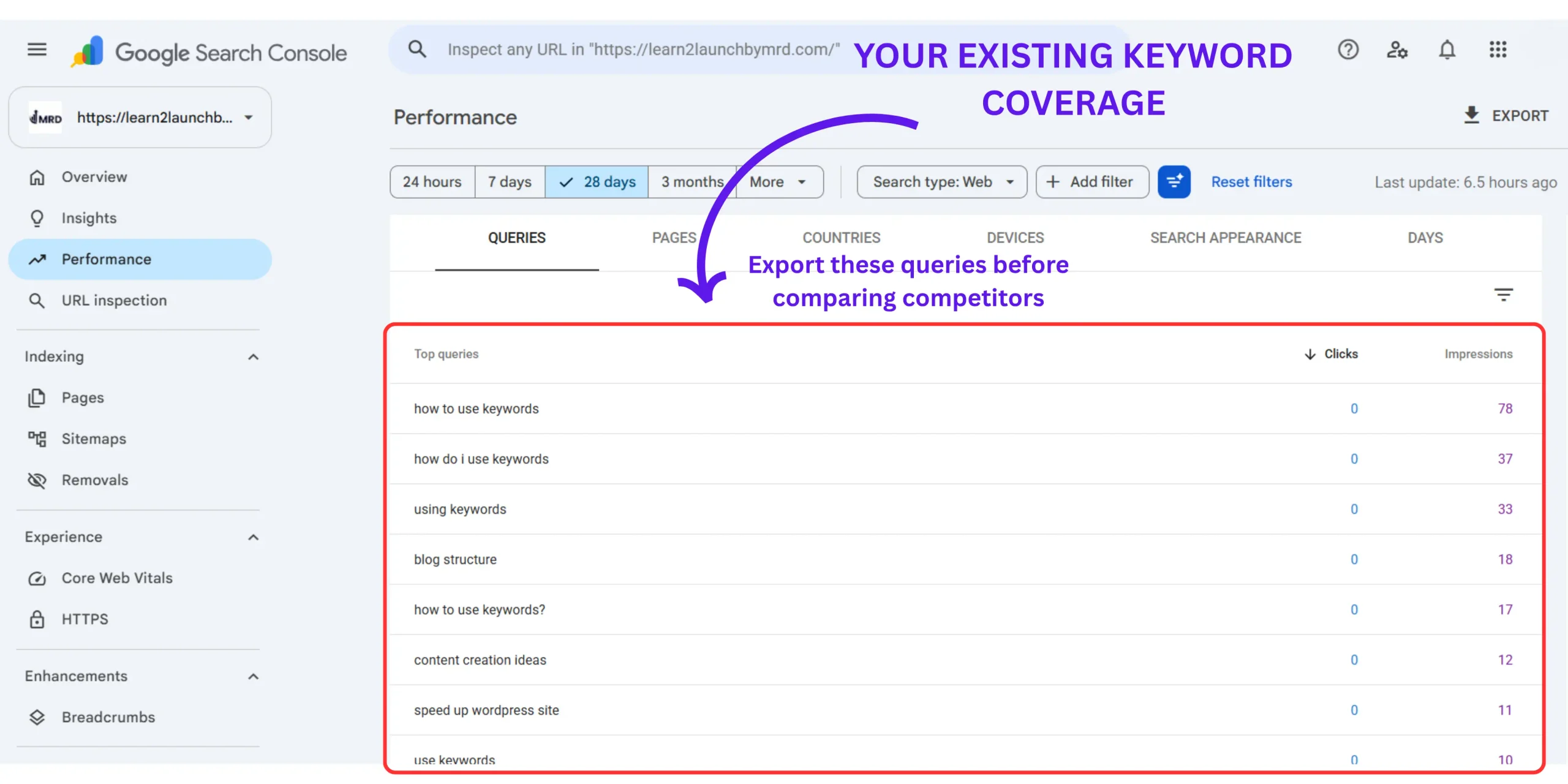
- Export your own Google Search Console queries from the Performance report to see what you already rank for.
- Cross-reference the lists in a free Google Sheet – anything on their list and missing from yours is a gap.
- Filter by search intent so you only keep gaps that match your monetization goal (informational, commercial, or transactional).
This method works whether you’re based in Toronto, Dublin, or Sydney, because Google Search Console data is tied to your property, not your location.
How to find low competition keywords from competitor blogs
Low competition keywords from competitor blogs are ranking terms that bring a competitor traffic but face weak on-page optimization or thin backlink profiles, making them realistic targets for newer sites.
The fastest way to find them is by combining Google’s autocomplete data with a competitor’s existing blog structure.
- Check word count – competitor pages under 1,000 words ranking on page one usually signal a weak content moat.
- Check publish date – content older than 2 years that hasn’t been updated is often vulnerable.
- Check backlink count – free tools like Ahrefs’ Backlink Checker (limited free version) show if a ranking page has near-zero backlinks.
- Check SERP features – if no featured snippet exists yet, that’s an open opportunity for a structured, definition-led answer.
Bloggers who are still deciding on a topic altogether should first confirm how specific a blog niche should be, since overly broad niches make every keyword feel high-competition by default.
How to analyze blog competitor content gaps without paid tools
Analyzing blog competitor content gaps without paid tools is fully achievable using Google Search Console, Google Trends, AnswerThePublic‘s free tier, and manual SERP review. The process below replicates roughly 80% of what paid gap-analysis tools output.
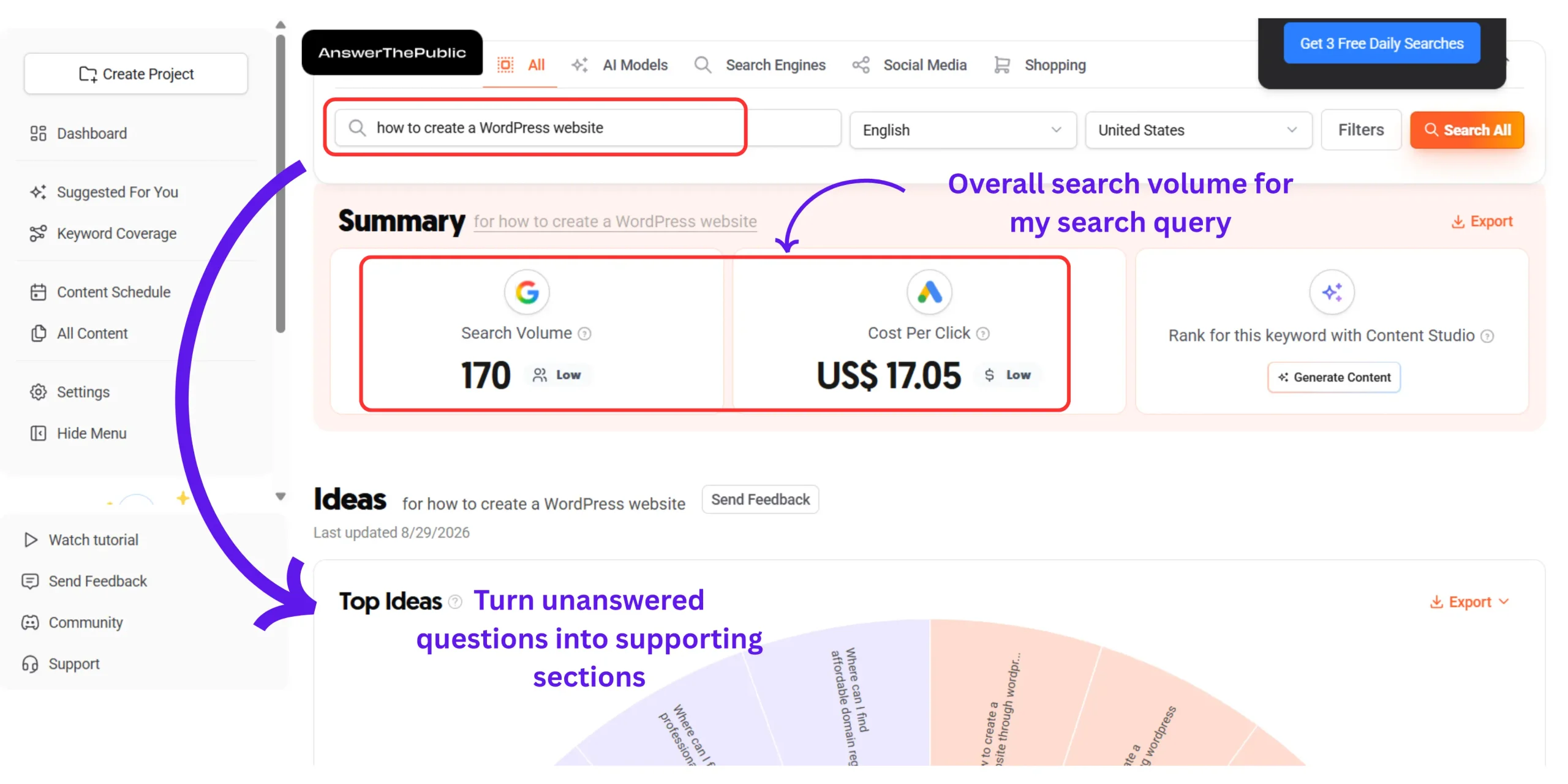
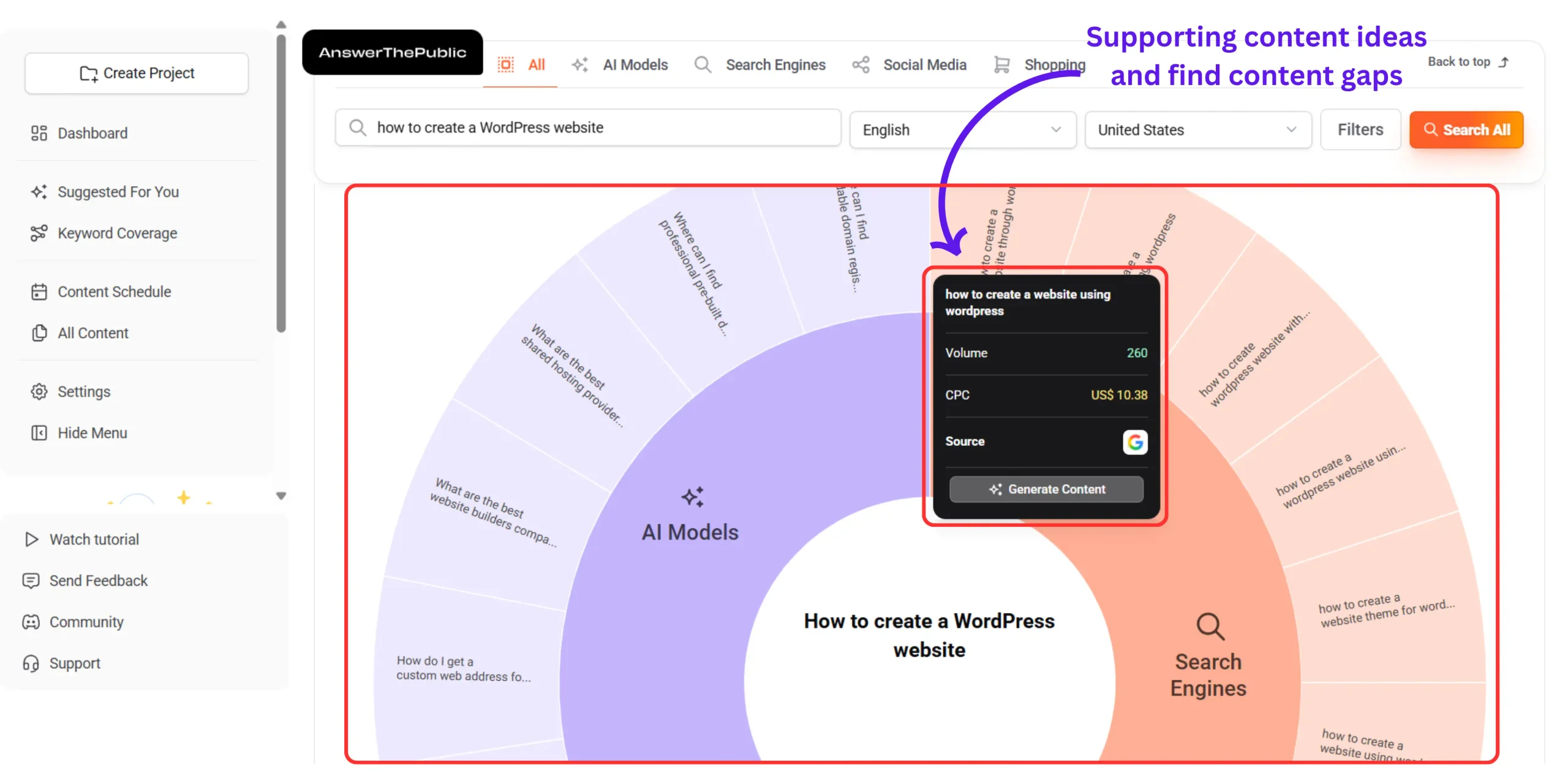
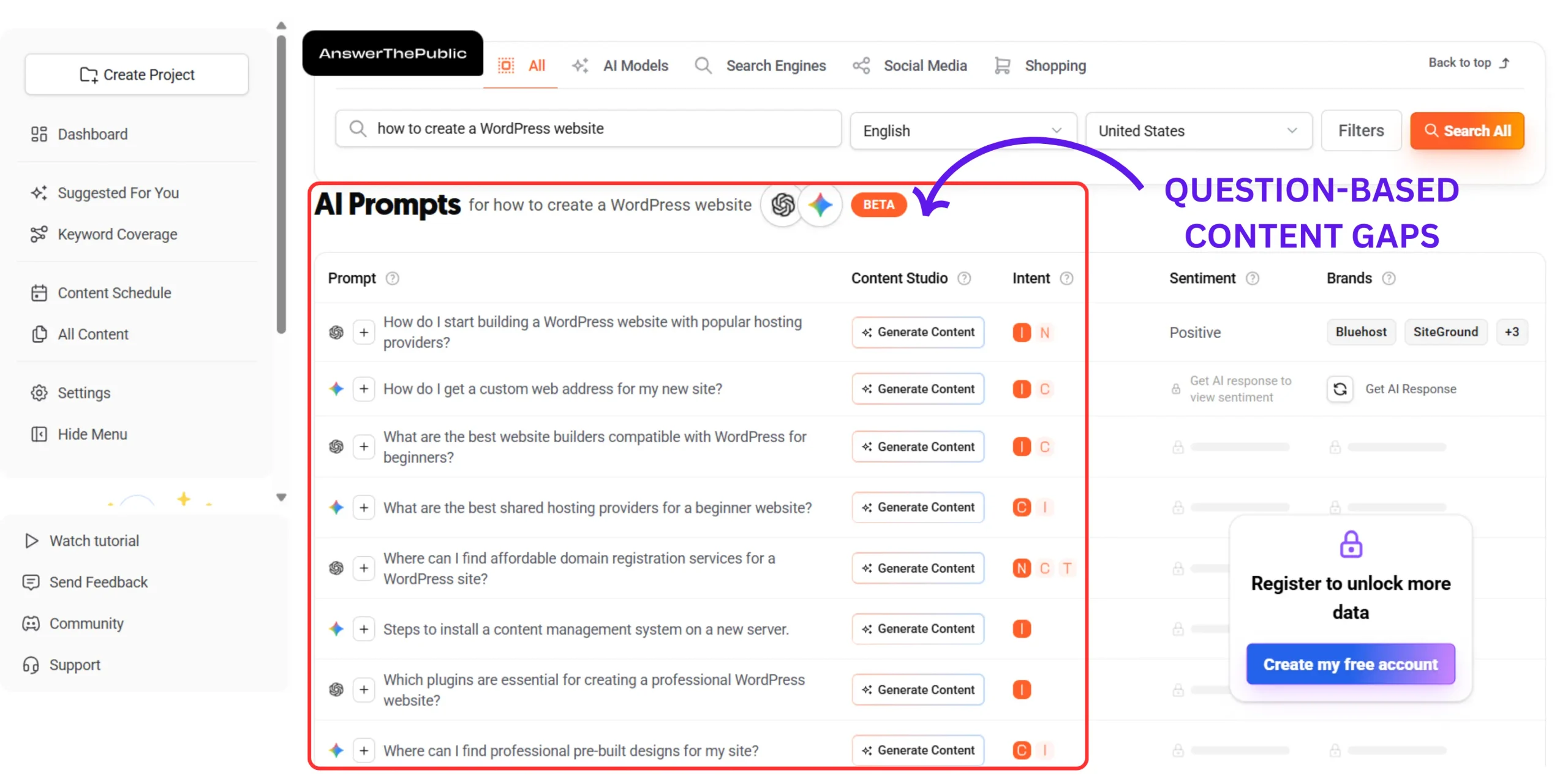
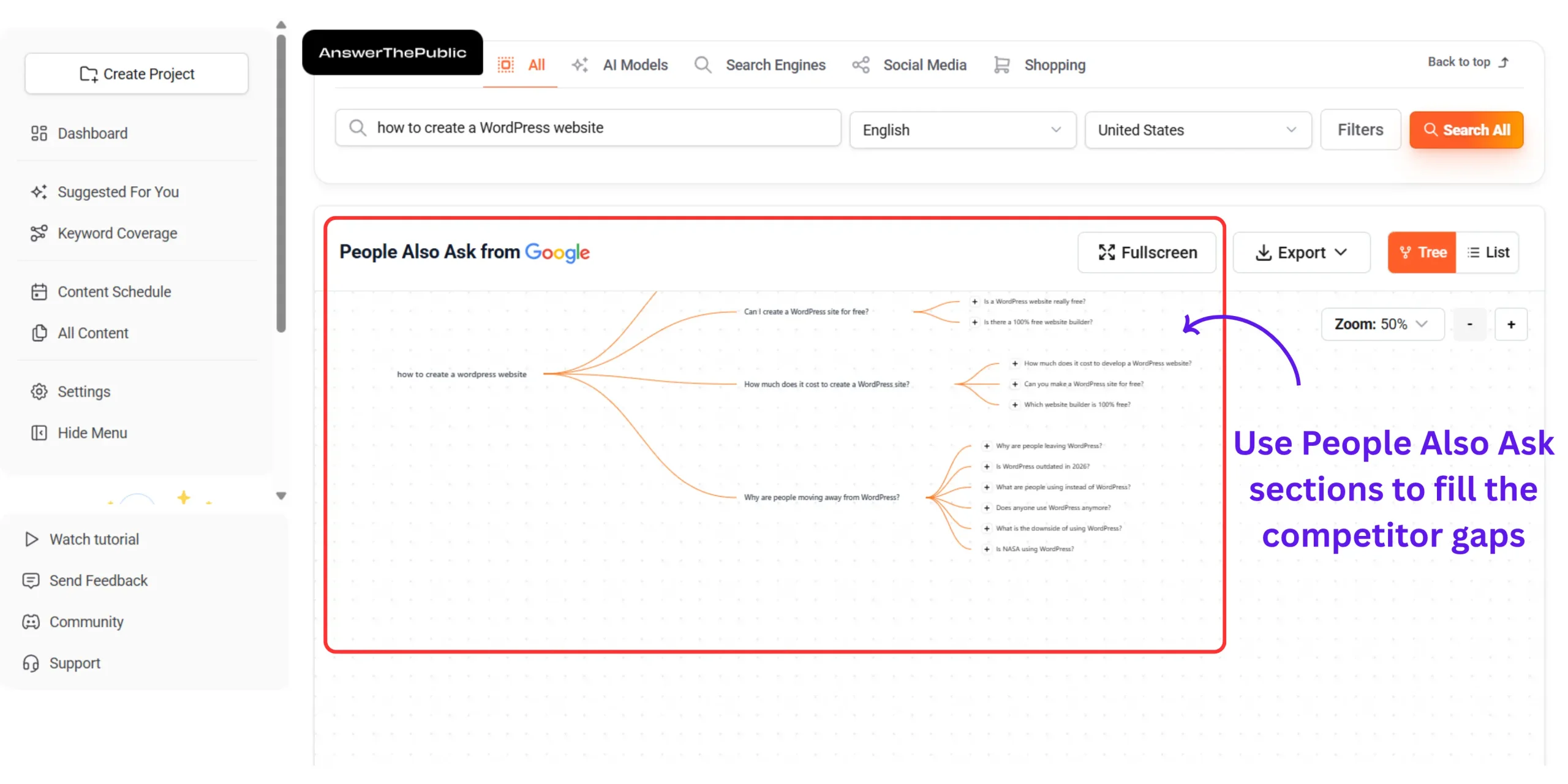
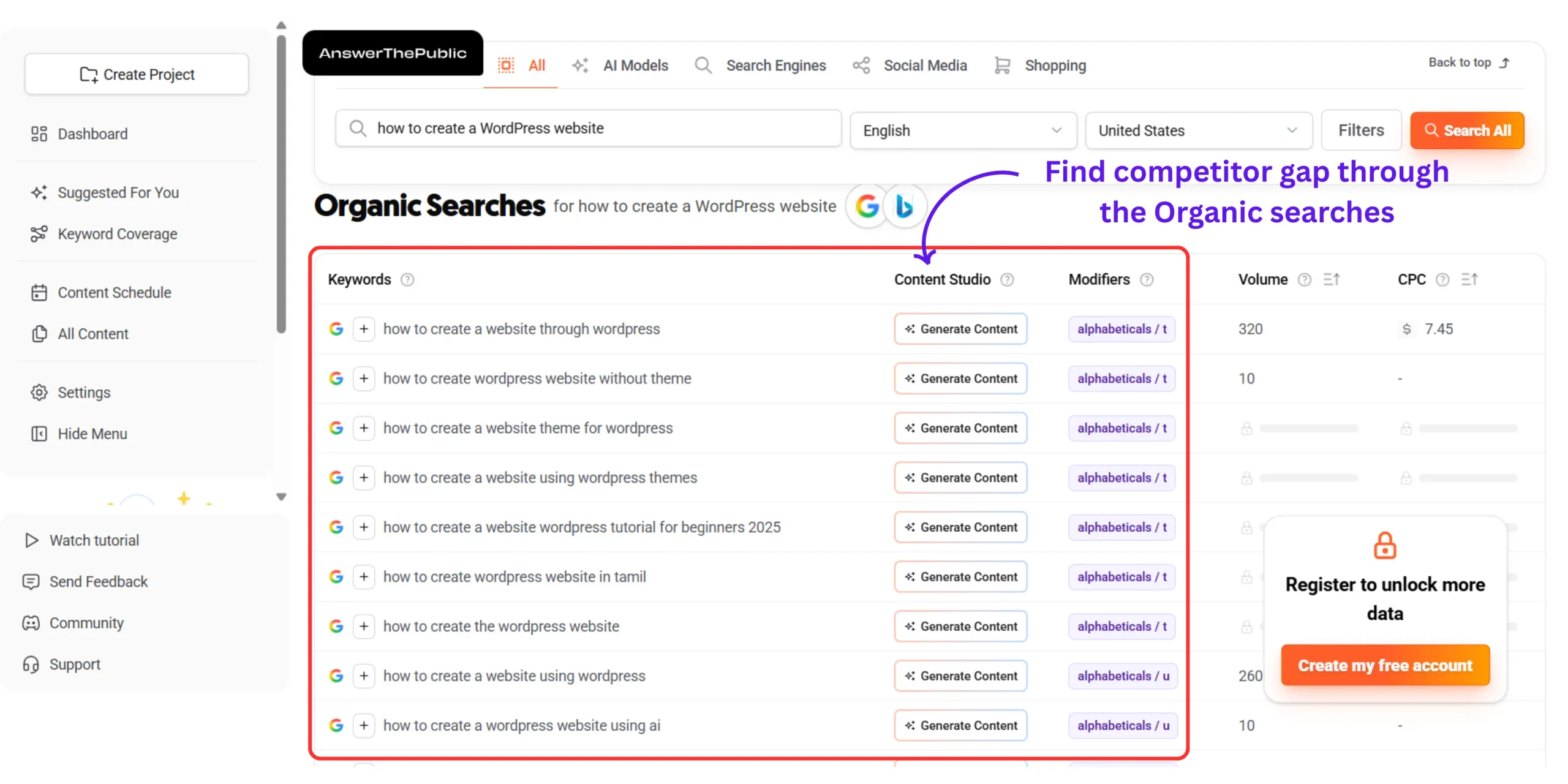
Free content gap analysis tools can help bloggers identify missing topics, competitor keywords, unanswered questions, and emerging search demand without relying entirely on paid SEO platforms. The best approach is to combine your own Google Search Console data with competitor research and manual search analysis.
| Free Tool | What It Replaces | Best Use Case |
|---|---|---|
| Google Search Console | Ahrefs Site Explorer (your side) | Finding your own ranking gaps |
| Ubersuggest (free tier) | SEMrush Keyword Gap tool | Competitor keyword snapshots |
| AnswerThePublic | AlsoAsked | Finding question-based content gaps |
| Google Trends | Ahrefs Trending Topics | Validating rising demand |
| “site:” search operator | Content inventory crawlers | Manual competitor page audits |
Once the raw data is collected, prioritize gaps using this scoring approach: assign points for search volume, ranking difficulty, content format match, and monetization potential, then tackle the highest-scoring gaps first.
If you’re unsure what to publish once gaps are identified, 101 content ideas for beginners and how to write your first blog post for beginners are useful next steps for turning research into published content.
15 modern blog niches scored for content gap opportunity
The MRD Content Gap Opportunity Score
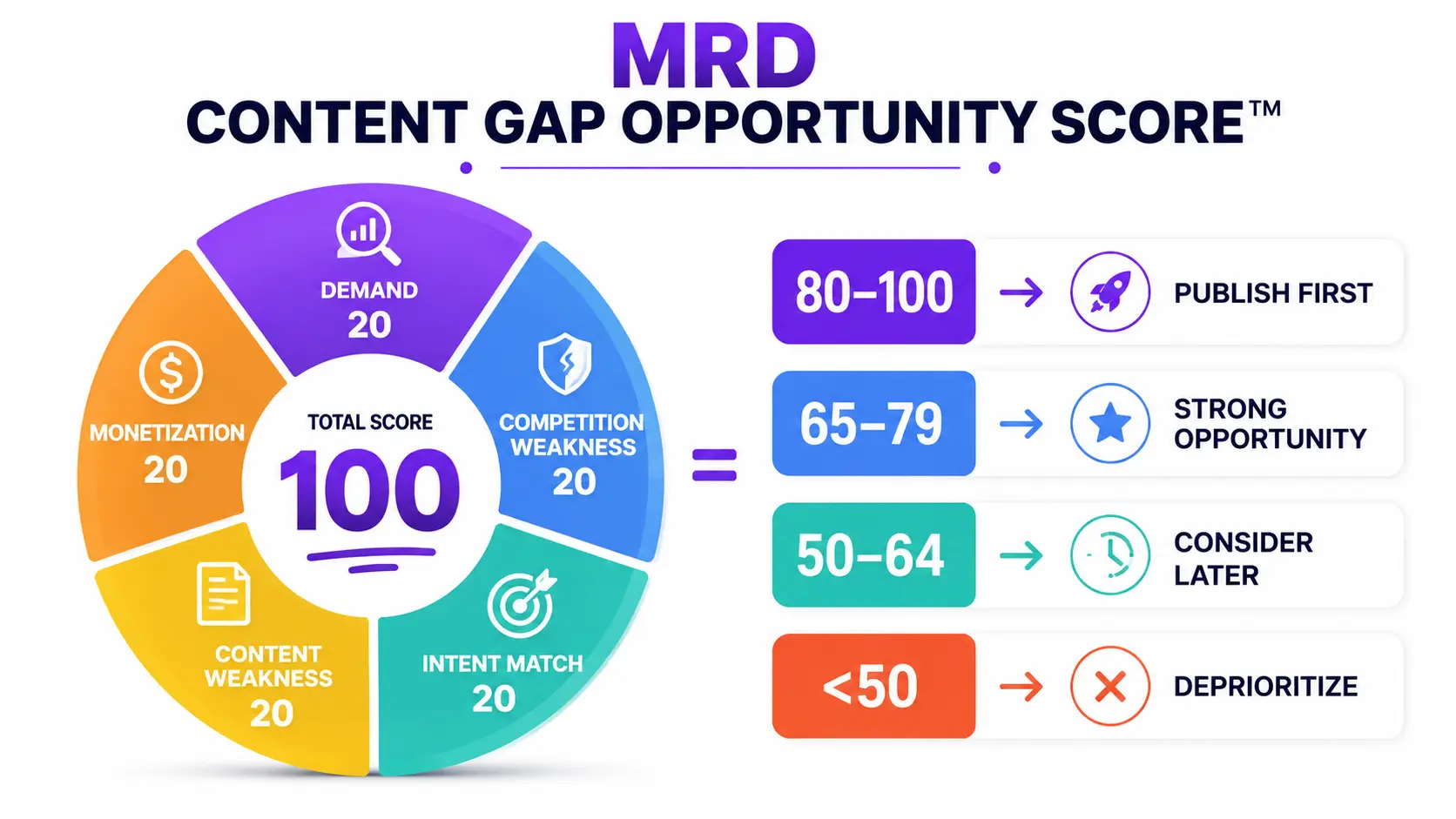
Not every competitor gap deserves a new blog post. The MRD Content Gap Opportunity Score prioritizes each gap using five signals: demand, competition weakness, search-intent match, content weakness, and monetization potential.
Score each category from 0–20 points, for a maximum opportunity score of 100 points.
| Factor | What to Measure | Points |
|---|---|---|
| Demand | Search interest, impressions, or recurring audience demand | 0–20 |
| Competition weakness | Weak, outdated, thin, or poorly optimized ranking pages | 0–20 |
| Intent match | How closely the query matches what your site wants to achieve | 0–20 |
| Content weakness | Missing examples, unanswered questions, poor structure, or outdated information | 0–20 |
| Monetization potential | Affiliate, product, service, or commercial opportunity | 0–20 |
| Total | Maximum opportunity score | 100 |
Use the total score to prioritize your content calendar:
This niche opportunity score compares 15 modern blog niches using five factors: affiliate potential, keyword difficulty, evergreen demand, content scalability, and commercial intent. Each factor contributes up to 20 points, creating a consistent 100-point framework for comparing potential blogging opportunities.
| Niche | Affiliate | Keyword Diff. | Evergreen Demand | Scalability | Commercial Intent | Total /100 |
|---|---|---|---|---|---|---|
| AI productivity tools | 18 | 12 | 18 | 19 | 18 | 85 |
| Personal finance for Gen Z | 17 | 10 | 19 | 17 | 19 | 82 |
| Sustainable/eco living | 15 | 14 | 17 | 16 | 14 | 76 |
| Pet tech & smart pet gear | 16 | 15 | 15 | 15 | 15 | 76 |
| Remote work & digital nomad life | 15 | 12 | 16 | 18 | 14 | 75 |
| Mental wellness apps & journaling | 14 | 13 | 17 | 16 | 13 | 73 |
| Home fitness equipment | 16 | 11 | 16 | 15 | 15 | 73 |
| EV & home charging accessories | 17 | 13 | 14 | 13 | 16 | 73 |
| Plant-based cooking | 13 | 15 | 16 | 17 | 11 | 72 |
| Side hustles & freelancing | 14 | 11 | 17 | 16 | 13 | 71 |
| Digital minimalism | 12 | 16 | 14 | 15 | 12 | 69 |
| Biohacking & sleep optimization | 15 | 12 | 14 | 13 | 14 | 68 |
| Smart home tech for renters | 15 | 13 | 13 | 13 | 14 | 68 |
| Solo travel for women | 12 | 12 | 15 | 15 | 13 | 67 |
| ADHD productivity systems | 11 | 14 | 15 | 14 | 12 | 66 |
AI productivity tools and personal finance for Gen Z score highest because affiliate programs, high-value keywords, and content scalability all align.
Before committing to any niche from this table, it’s worth confirming whether a blog niche is profitable and reviewing the 15 best low competition, high income blog niches for beginners for additional validation.
It also helps to separate genuine interest from short-term hype, the Passion vs Profit framework explains how to avoid picking a niche you’ll abandon in three months.
Niches with strong seasonality, such as holiday gift guides or back-to-school content, deserve a separate look at how to identify seasonal blog niches before scoring them the same way as evergreen topics.
How to outrank competitor blogs with content gap analysis
Outranking competitor blogs with content gap analysis requires publishing content that is more complete, more current, and more clearly structured than what currently ranks, not simply longer. Once gaps are identified using the free workflow above, execution determines whether the opportunity converts into rankings.
Three execution priorities matter most:
- Match search intent exactly – a listicle gap should not be filled with a long-form guide, and vice versa.
- Add proof elements competitors lack – original screenshots, updated pricing in both USD and GBP, or first-hand testing data.
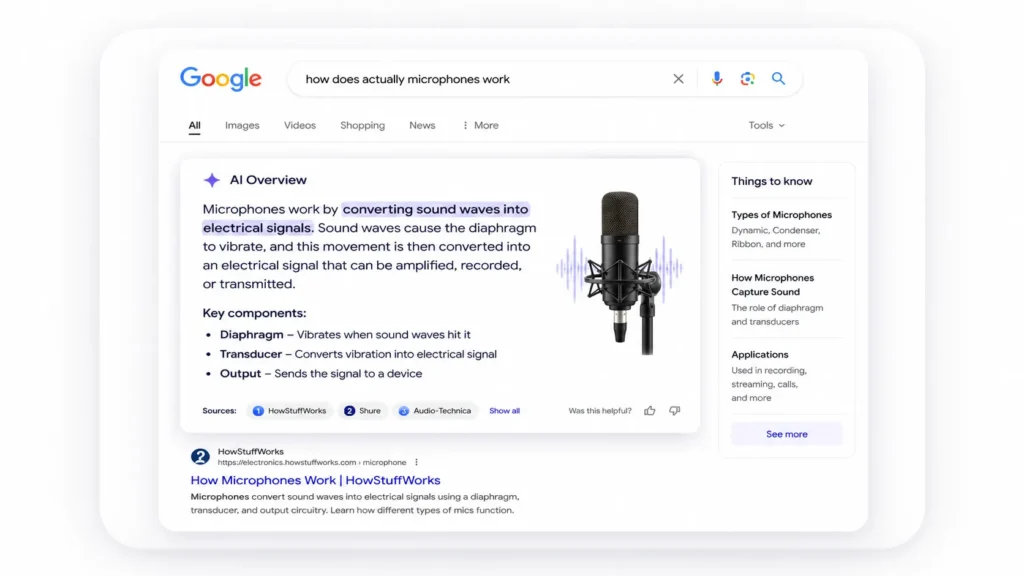
- Structure for AI Overviews and featured snippets — definition-first paragraphs and comparison tables (like the ones in this guide) get pulled into AI-generated answers more often than narrative writing.
If gap-filled content still isn’t appearing in Google after publishing, confirm technical basics first – a surprising number of bloggers troubleshoot rankings for weeks before discovering why their new WordPress site isn’t indexing on Google.
Frequently asked questions on
What is the difference between a content gap and a keyword gap?
A content gap is a missing topic on your blog, while a keyword gap is a specific ranking term a competitor owns. Content gaps are broader and topic-based; keyword gaps are narrower and query-based, though the two often overlap in SEO audits.
How often should I run a content gap analysis on my blog?
Run a content gap analysis every 60–90 days for an active blog, since competitors publish new posts and SERPs shift regularly. Quarterly reviews catch fresh opportunities early, while waiting a full year often means the best low-competition keywords have already been claimed.
Can I do content gap analysis without Ahrefs or SEMrush?
Yes, content gap analysis is fully possible without Ahrefs or SEMrush by combining Google Search Console, Ubersuggest’s free tier, and manual SERP review. This free-tool stack replicates most core features paid platforms offer, just with more manual cross-referencing involved.
How do I prioritize which content gaps to write first?
Prioritize content gaps by scoring each one on search volume, ranking difficulty, and commercial intent, then tackle the highest-scoring gap first. Gaps with low competition and clear monetization potential should always outrank high-volume but highly competitive topics on your list.
What tools do professional bloggers actually use for content gap analysis?
Professional bloggers typically use a mix of Google Search Console, Ahrefs or SEMrush (when budget allows), and AnswerThePublic for question-based gaps. Bloggers on a free-tool budget replace paid platforms with Ubersuggest and manual Google SERP audits without losing much accuracy.
How long does it take to rank after filling a content gap?
Filling a genuine content gap typically shows ranking movement within 60–90 days, faster than competing for saturated keywords. Low-competition gaps with weak existing content on page one tend to rank fastest, sometimes within a few weeks of publishing and indexing.
Turn Competitor Gaps Into Better Content Opportunities
Before publishing content based on a competitor gap, validate the opportunity with this checklist. A strong content gap should have clear search intent, identifiable weaknesses in existing results, audience relevance, and enough potential to justify creating a stronger page.
Finding content gaps in blog competitors is not about copying the topics your competitors already rank for. It is about identifying valuable search intents your blog does not adequately satisfy, validating those opportunities, and turning them into better content.
The most effective free workflow combines competitor research, Google Search Console data, manual SERP analysis, search-intent matching, and content-quality evaluation. From there, prioritize each opportunity by demand, competition weakness, intent fit, content weakness, and monetization potential.
The biggest advantage is not publishing more articles; it is publishing the right articles with stronger information, clearer structure, and greater usefulness than existing results. Revisit your content gaps regularly because competitor publishing, search behavior, and SERPs continually change. A validated gap should become a prioritized content opportunity, not simply another keyword on your spreadsheet.