Affiliate marketing for bloggers
how to start affiliate marketing as a beginner blogger : The zero-fluff monetization blueprint
This category is designed to help you understand how to start affiliate marketing for beginner bloggers using practical, step-by-step strategies that focus on real results rather than hype. You’ll learn how to choose a profitable niche, select the best affiliate networks and programs, and build content that naturally converts readers into clicks and sales.
Instead of random link placement, this section focuses on creating value-driven blog content that matches search intent and solves real problems. You’ll also explore how to start with no budget, how to place affiliate links effectively, and how to follow affiliate disclosure guidelines while maintaining trust and credibility.
The goal is to help you build a sustainable affiliate marketing system that grows with your blog and generates long-term income through helpful, high-quality content.

By MRD- Malaka
Last verified : june 25, 2026
Read time – 15 minutes
- Niche Selection Strategy: Learn how to choose a profitable blogging niche that balances passion, search demand, and affiliate income potential.
- Beginner Affiliate Setup: Understand how to start affiliate marketing for beginner bloggers with no money using simple tools and free platforms.
- Content & Link Strategy: Discover how to create helpful blog content and place affiliate links in a natural, non-salesy way that builds trust and conversions.
- Affiliate Programs & Compliance: Learn how to choose the best affiliate networks, evaluate programs, and follow disclosure guidelines to stay transparent and compliant.
The transition from casual writer to strategic affiliate partner
Many beginner bloggers assume affiliate marketing is as simple as joining a program, adding a few affiliate links to blog posts, and waiting for commissions to appear. That is exactly what I believed when I first started.
Like many new bloggers, I signed up for multiple affiliate programs and spent months promoting products without a clear strategy. Most of the links generated little engagement, the commissions were small, and the content itself did not provide enough value to readers. Looking back, I was focusing on links instead of solutions.
The reality is that successful affiliate marketing is not about adding more affiliate links. It is about understanding what your audience needs and recommending products, services, or tools that genuinely help them achieve a specific goal.
Learning how to start affiliate marketing for beginner bloggers requires a shift in mindset. Instead of treating your blog as a collection of random articles, you need to treat it as a resource that helps people solve problems, make decisions, and take action with confidence.
The biggest breakthrough for me happened when I stopped asking, “How can I make money from this article?” and started asking, “What is the most helpful solution for this reader?” That single change improved both the quality of my content and the results it generated.
The bloggers who consistently build affiliate income tend to follow three core principles:
The Strategic Value Loop
“Affiliate marketing for beginner bloggers is a strategy where content creators earn commissions by recommending products or services through their blog content. It focuses on helping readers solve problems while earning income from relevant affiliate partnerships.
Instead of simply placing links, successful affiliate marketing relies on understanding user intent, choosing a profitable niche, and creating helpful, solution-focused content that naturally guides readers toward useful tools or services.
Beginners can start affiliate marketing with no money by using free content platforms, selecting beginner-friendly affiliate programs, and focusing on informational blog posts that attract search traffic.
A strong affiliate system includes niche selection, content creation, affiliate network integration, proper link placement, and clear disclosure practices to maintain trust and compliance.”
— MRD
Focus on valuable solutions, not random products
Many beginners spend their time promoting low-commission products with limited earning potential. While physical products can work, many successful affiliate marketers also focus on software tools, digital products, online services, and recurring subscription programs that provide greater long-term opportunities.
Solve problems before recommending products
Readers rarely click affiliate links because of persuasive sales language. They click because a recommendation helps them solve a problem, save time, avoid mistakes, or achieve a desired result. When your content is genuinely helpful, affiliate recommendations feel natural rather than promotional.
Build a system instead of chasing quick wins
Every article should be created with long-term value in mind. A well-optimized blog post can continue attracting readers from search engines, building trust, and generating affiliate commissions long after it is published. Over time, these articles work together to create a sustainable affiliate marketing system.
The good news is that you do not need a large audience, advanced technical skills, or a significant budget to get started. Even if you are building a blog from scratch, you can create a solid foundation by following a structured process.
In this guide, you will learn how to start affiliate marketing for beginners with no money, how to choose a profitable blogging niche for affiliate marketing, how to find the best affiliate networks and programs for new bloggers, how to place affiliate links in a blog post naturally, and how to follow affiliate disclosure guidelines for beginner bloggers while maintaining reader trust.
By the end of this guide, you will have a clear step-by-step affiliate marketing framework that helps you create valuable content, recommend relevant products, and build a blog that can generate affiliate income over the long term.
Before you start implementing strategies from this category, it’s important to understand that successful affiliate marketing is not about placing random links or chasing quick commissions. It’s about building a structured system where your content, audience intent, and affiliate offers work together naturally.
-
Strategic Niche Selection
Your niche directly determines your earning potential. Choosing a focused topic with strong search demand and relevant affiliate products is the foundation of long-term success. -
Beginner-Friendly Entry Without Barriers
You don’t need money, advanced tools, or a large audience to start. With the right content strategy, even a new blog can begin generating affiliate income over time. -
Content-Driven Conversions
Affiliate success comes from helpful, problem-solving content. When your blog answers real questions, affiliate links become natural solutions rather than forced promotions. -
Smart Program Selection
Not all affiliate programs are equal. Choosing networks and products that match your niche improves trust, conversions, and long-term earning stability. -
Trust and Compliance Matter
Clear affiliate disclosures and honest recommendations are essential for building audience trust and maintaining long-term credibility with both readers and search engines.
The No-Waste Affiliate Stack
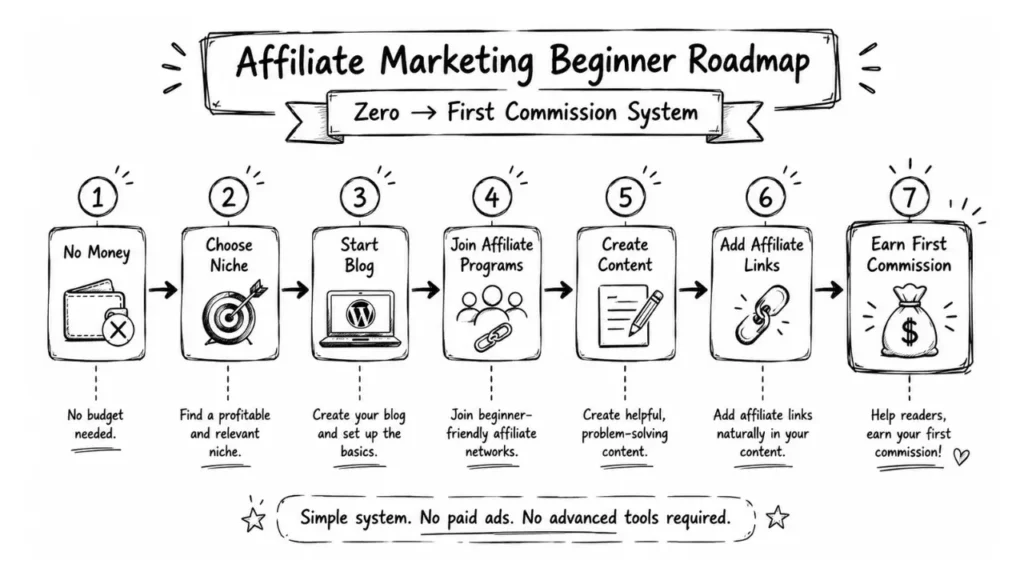
Stop drowning in tool choices. To match the exact speed, tracking accuracy, and conversion performance scores of this roadmap, this is the lean, battle-tested stack I run. No bloated extras.
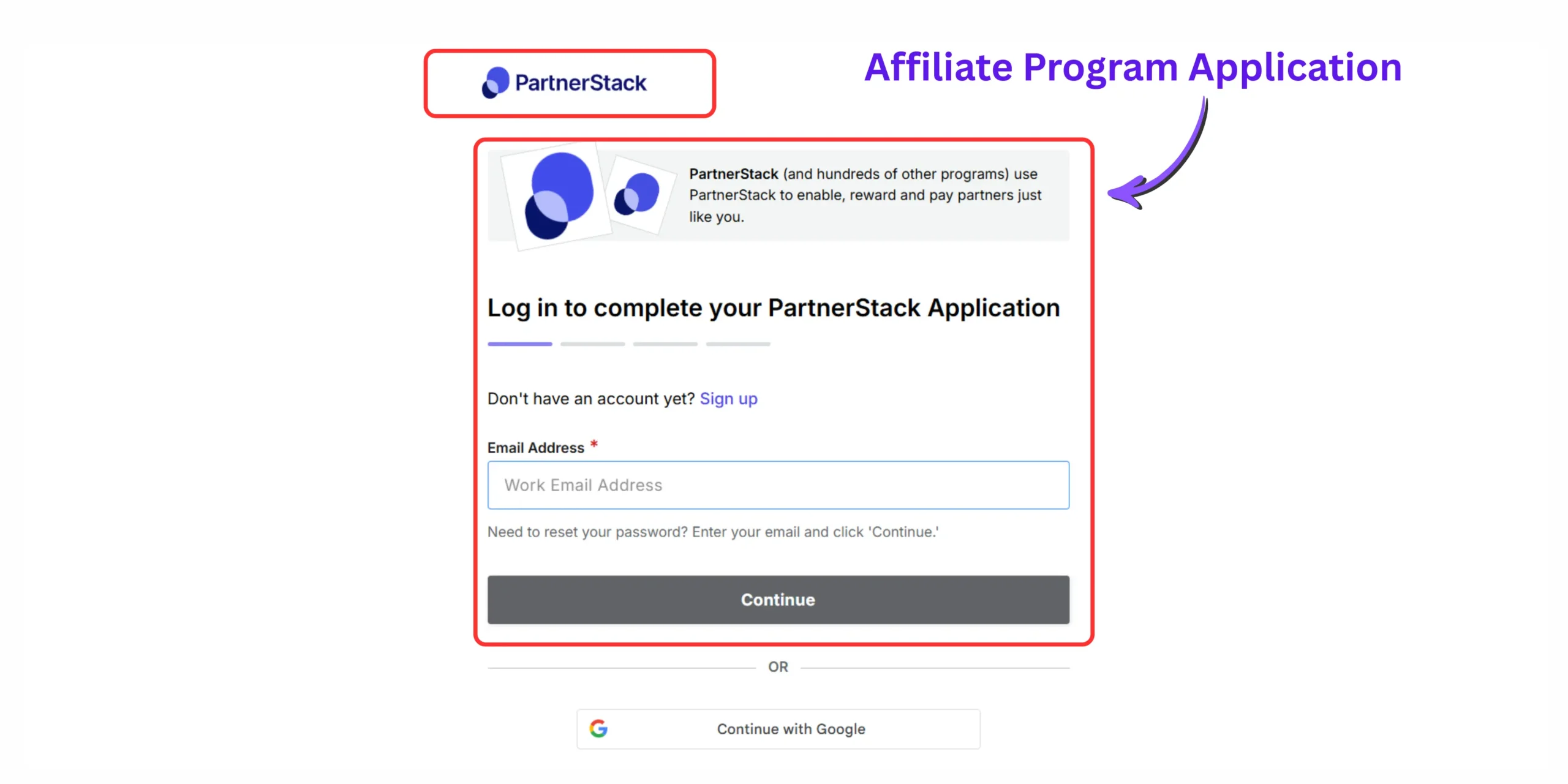
PartnerStack
The ultimate engine for sourcing premium high-ticket software and SaaS programs offering lucrative recurring monthly commissions.
Access Network →Impact
A massive automated partnership marketplace connecting beginner bloggers directly with global tech utilities and household retail brands.
Connect Platform →Pretty Links
Essential WordPress asset to transform long, ugly, raw affiliate strings into clean, trustworthy, brand-aligned trackable URLs.
Deploy Plugin →MailerLite
The most beginner-friendly platform to build your email newsletter subscriber lists and distribute automated sequence workflows.
Build Funnel →How to start affiliate marketing for beginners with no money
One of the most common questions new bloggers ask is whether affiliate marketing requires a large budget to get started. The short answer is no.
Many beginners assume they need expensive software, premium courses, paid advertising campaigns, or a complicated marketing funnel before they can earn their first affiliate commission. In reality, most of those tools become relevant much later. When you are just starting out, your focus should be on creating helpful content, building trust, and learning how affiliate marketing works.
The biggest mistake I see beginners make is spending money on tools before they have a proven content strategy. A blog with ten helpful articles will usually outperform a blog with expensive software but no valuable content.
While some creators choose to explore alternatives such as How to start affiliate marketing without a website in 2026, a self-hosted WordPress website remains one of the best long-term assets you can build. Unlike social media platforms, you own your content, control your audience experience, and have greater flexibility when monetizing your blog.
The good news is that most of the tools needed to start affiliate marketing can be accessed for free or at a very low cost.
Build lean and focus on the essentials
Instead of investing in a complicated software stack, focus on the tools that directly support content creation and audience growth.
Use blog posts as your primary marketing assets
Many successful affiliate marketers generate their first commissions through simple blog content rather than complex sales funnels.
A detailed tutorial, product comparison, or problem-solving guide can often attract targeted search traffic and naturally introduce relevant affiliate recommendations. For most beginners, creating valuable content is a better investment than building elaborate funnels.
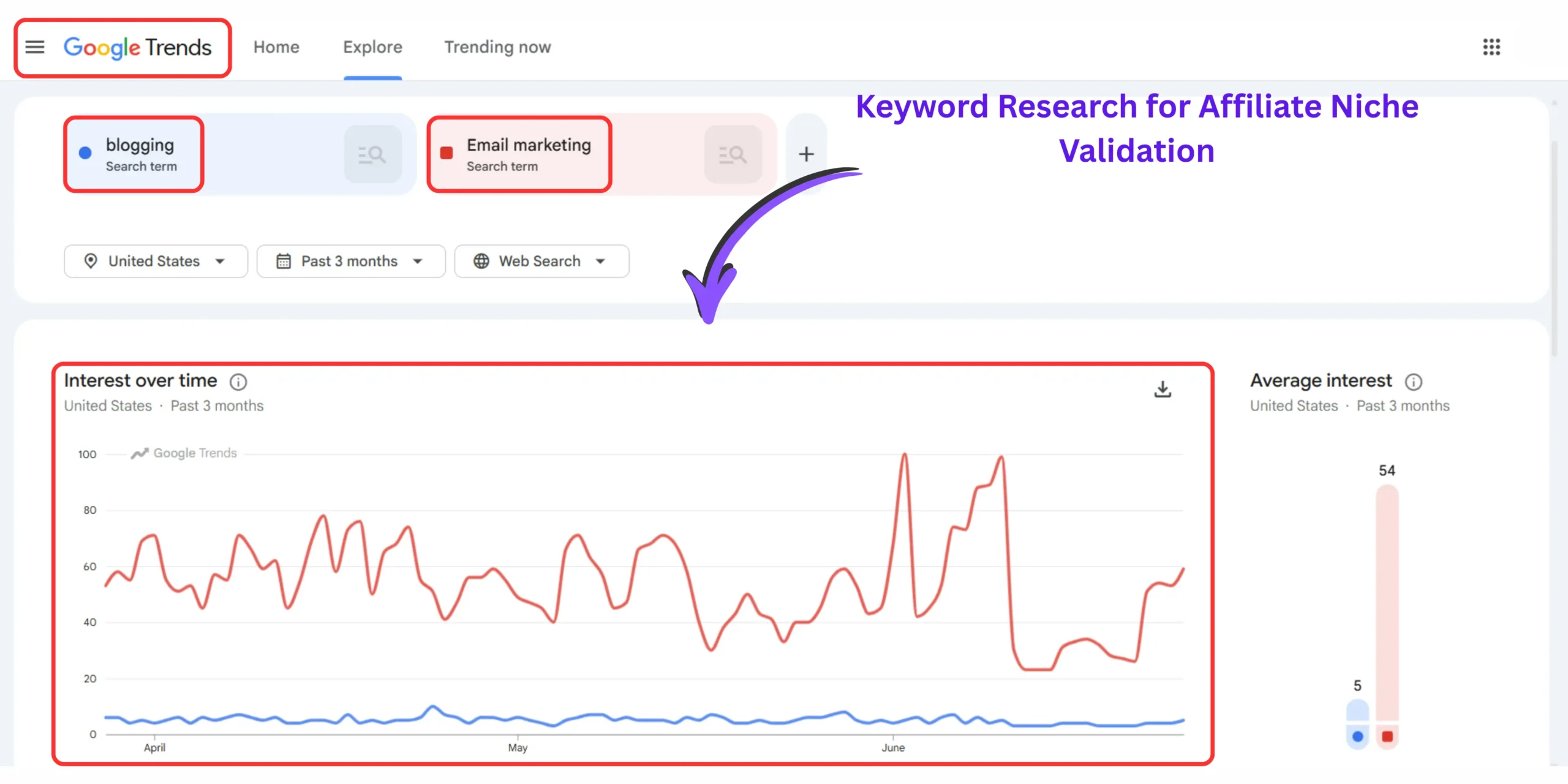
Take advantage of free email marketing tools
Building an email list is valuable, but you do not need expensive software when starting out.
Many email marketing platforms offer free plans that allow you to collect subscribers, send newsletters, and create basic automations. This gives you an opportunity to build relationships with readers before investing in advanced features.
Use free affiliate link management tools
As your content library grows, managing affiliate links becomes more important.
Free link management plugins can help you organize affiliate links, create cleaner URLs, and update links more efficiently across your website. This saves time and keeps your blog easier to manage.
Focus content before tools
One lesson many experienced affiliate marketers learn is that tools rarely create results on their own.
A beginner with a simple website, useful content, and a clear understanding of their audience will often make more progress than someone who spends hundreds of dollars on software without a content strategy.
When learning how to start affiliate marketing for beginners with no money, remember that your most valuable assets are not expensive tools. They are your content, your knowledge of your audience, and your ability to help readers solve real problems.
Start lean, focus on creating genuinely helpful content, and invest in additional tools only when they support proven growth.
Bypassing the technical friction
Want to make sure you don’t skip a critical step while executing the framework below? Secure your interactive copy of the roadmap companion tracker to audit your system live:
FREE RESOURCE
The no-code WordPress launch checklist
Don’t miss a critical setting. Skip the technical friction with this step-by-step checklist to launch a secure, lightning-fast WordPress site on your own terms.
🔒 Zero Spam. Unsubscribe with 1-click anytime.
How to choose a profitable blogging niche for affiliate marketing
Choosing a blogging niche is one of the most important decisions you will make as an affiliate marketer. Your niche influences the content you create, the audience you attract, the affiliate programs you can join, and ultimately your earning potential.
Many beginners choose a niche based only on personal interest. Others focus entirely on earning potential without considering whether they can consistently create helpful content. Both approaches can create problems in the long run.
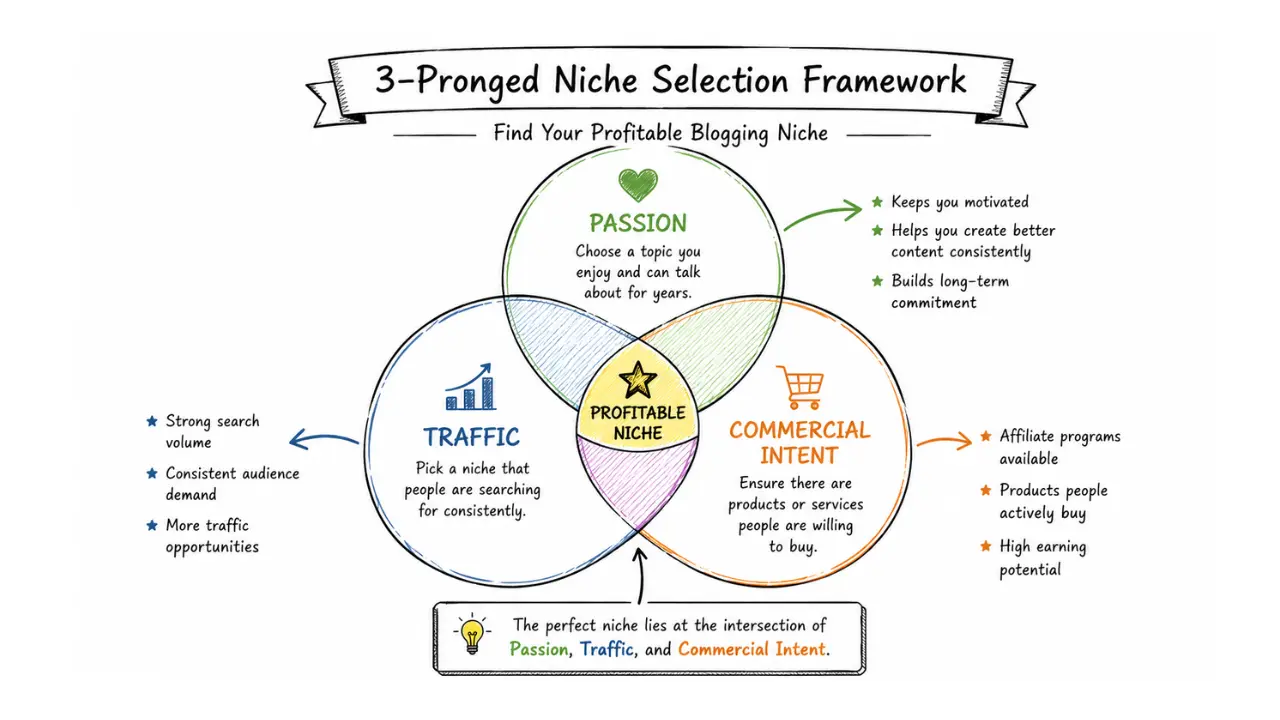
A sustainable affiliate marketing niche usually sits at the intersection of three factors:
- A topic you are willing to learn and write about consistently
- A market with ongoing search demand
- Products or services that solve valuable problems
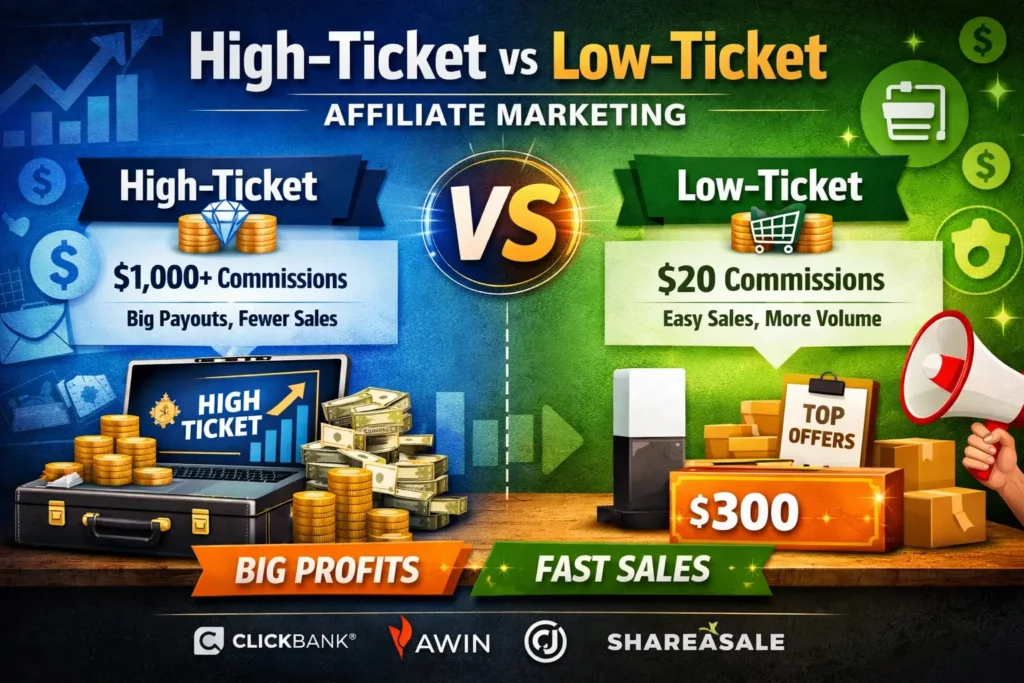
This is why understanding high ticket vs low ticket affiliate marketing for beginner bloggers is important early in the process. The niche you choose often determines the types of affiliate products available, the commission rates you can earn, and whether your income comes from one-time purchases or recurring subscriptions.
The 3 pronged niche framework : passion , traffic and commercial intent
Before committing to a niche, I evaluate it using the following framework:
01 . Passion and expertise
You do not need to be an expert before starting a blog, but you should have enough interest in the topic to continue learning about it.
Affiliate marketing is a long-term strategy. Publishing helpful content month after month becomes much easier when you enjoy researching the subject and helping others solve problems related to it. Ask yourself:
- Can I create content about this topic for the next two years?
- Am I interested in learning more about this subject?
- Can I genuinely help readers make better decisions?
02 . Search traffic and audience demand
A niche can be interesting, but if nobody is searching for information about it, growth will be limited.
Use keyword research tools to identify whether people are actively searching for solutions, tutorials, reviews, and comparisons related to your niche. Consistent search demand creates opportunities to attract readers from search engines over time.
Look for questions such as :
- How to…
- Best tools for…
- Alternatives to…
- Reviews of…
- Comparison between…
These search patterns often indicate strong content opportunities.
03 . Commercial intent and monetization potential
The final step is evaluating whether the niche contains products or services that people are willing to purchase.
Many beginners focus only on physical products because they are familiar with them. However, some of the most profitable affiliate niches also include software tools, online services, digital products, memberships, and educational programs.
When researching a niche, ask questions such as:
- Are there software tools people use regularly?
- Are there subscription-based services?
- Are there reputable online courses or educational resources?
- Do businesses operate within this market?
For example, niches related to content creation, blogging, productivity, online business, web hosting, marketing, and software often contain affiliate programs that offer recurring commissions or higher-value payouts.
The goal is not simply to find products to promote. The goal is to find a niche where people have genuine problems, actively search for solutions, and are willing to invest in tools or resources that help them achieve better results.
When passion, search demand, and commercial intent align, you create a strong foundation for long-term affiliate marketing growth.
Best affiliate networks and programs for new bloggers
Once you have chosen your niche, the next step is finding affiliate programs that align with your content and audience.
Many beginner bloggers assume they must join the largest affiliate networks immediately. In reality, the best affiliate program is not always the biggest one. It is the program that matches your niche, offers products your audience genuinely needs, and provides a fair commission structure.
The good news is that many affiliate networks welcome new bloggers, even if your website is still growing. While some programs may require established traffic or a more developed site, many others allow beginners to get started and gain experience.

SaaS programs vs independant creator programs
As you evaluate affiliate opportunities, you will often encounter two categories that can be particularly attractive for bloggers: software-based affiliate programs and independent creator programs.
Software and SaaS Affiliate Programs
Software-as-a-Service (SaaS) companies often offer some of the most blogger-friendly affiliate opportunities.
Many software products operate on subscription models, which means commissions may be earned from recurring customer payments rather than a single purchase. This can create more predictable long-term income compared to one-time product commissions.
Popular affiliate networks that frequently feature software companies include:
- PartnerStack
- Impact
- ShareASale
These platforms connect bloggers with software tools, online services, business applications, marketing platforms, and other digital products used by individuals and businesses.
Independent creator affiliate programs
Many course creators, educators, software developers, and online business owners also run their own affiliate programs directly through their websites.
These programs can sometimes offer competitive commission rates because they operate independently rather than through a large affiliate marketplace.
Examples may include:
- Online courses
- Membership communities
- Coaching programs
- Digital products
- Premium educational resources
For bloggers who create educational content, these programs can often align naturally with reader needs and content recommendations.
What to evaluate before joining any affiliate program
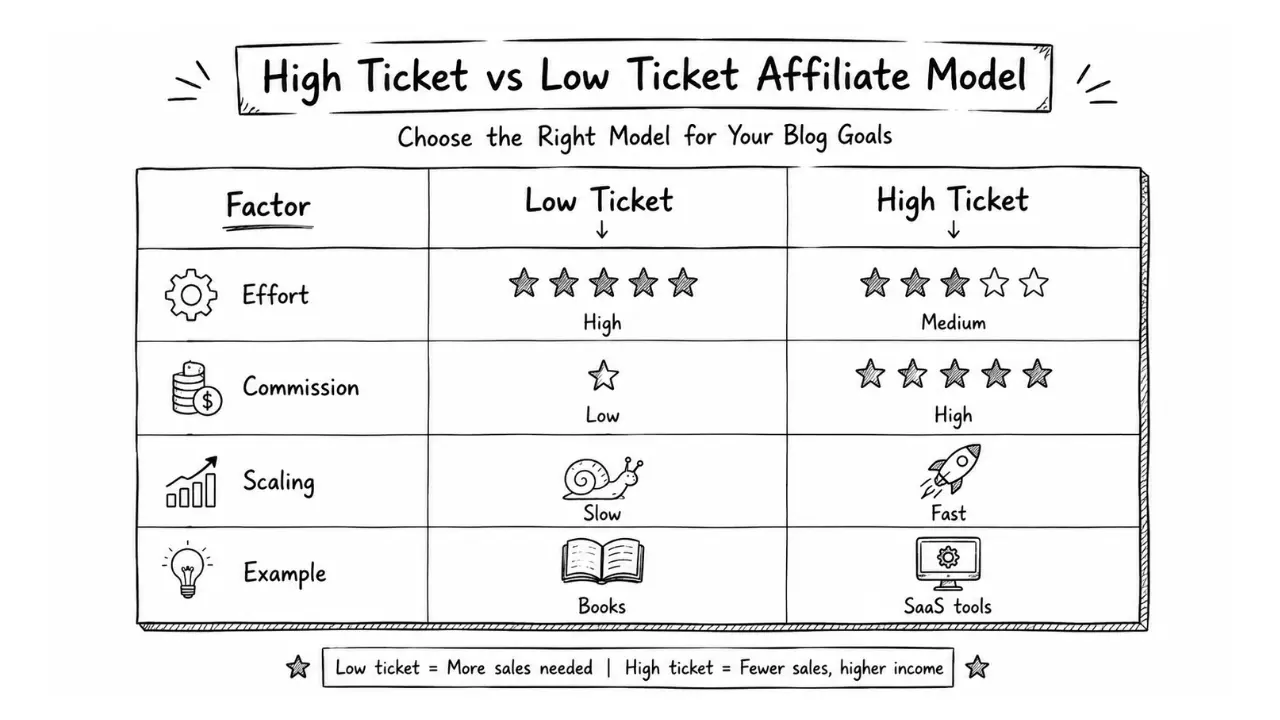
Before applying to an affiliate program, review the following factors carefully.
Cookie duration
Cookie duration determines how long an affiliate referral remains active after someone clicks your link.
For example, if a program offers a 30-day cookie, you may still receive credit if the visitor makes a purchase within that period.
Longer cookie durations can be beneficial because many buyers take time to research and compare options before making a decision.
Commission structure
Look beyond the headline commission percentage. Consider,
- One-time commission vs recurring commission
- Average customer value
- Product pricing
- Refund policies
A lower percentage on a high-value product can sometimes outperform a higher percentage on a low-cost product.
Payment threshold and payment methods
Check ;
- Minimum payout amount
- Payment frequency
- Available payment methods
Programs that offer reasonable payout thresholds and reliable payment methods can be easier for beginners to work with during the early stages of growth.
Beginner friendly affiliate netwrks comparison
| Affiliate Network | Common Product Types | Why Beginners Like It |
|---|---|---|
| PartnerStack | Software, SaaS tools, business platforms | Strong selection of recurring commission programs |
| Impact | Technology, software, online services | Large variety of brands and affiliate partnerships |
| ShareASale | Digital services, software, lifestyle products | Beginner-friendly with a wide range of merchants |
The goal is not to join dozens of affiliate programs. Instead, focus on a small number of high-quality products that genuinely help your audience.
A few carefully chosen affiliate partnerships that align with your content will usually outperform a large collection of unrelated affiliate links scattered across your blog.
Step by step affiliate marketing guide for bloggers
One of the biggest mistakes beginner affiliate marketers make is assuming that success comes from adding more affiliate links to their content.
In reality, affiliate marketing works best when the content itself provides genuine value. Readers are far more likely to trust your recommendations when they feel informed, supported, and confident in their decision.
That is why learning how to promote affiliate products without being salesy is such an important skill for bloggers. Instead of focusing on selling, focus on helping readers solve problems, compare options, and achieve specific outcomes.
The most successful affiliate content usually shares one thing in common: it provides information that readers cannot easily find elsewhere. This may include personal experience, original screenshots, real-world examples, case studies, templates, workflows, or detailed comparisons.
Rather than creating generic product reviews that repeat information already available on a company’s website, focus on content formats that help readers make informed decisions.
Framework 01 : The head to head comparison guide
Comparison articles are valuable because they help readers evaluate multiple solutions and choose the option that best fits their needs.
A search such as “Tool A vs Tool B” often indicates that the reader is already researching solutions and wants help understanding the differences between them.
To create a useful comparison article:
Clearly define the use cases
Instead of simply listing features, explain who each tool is best suited for. For example:
- Which option is better for beginners?
- Which option offers more advanced features?
- Which option provides better value for money?
Helping readers match a product to their specific situation creates far more value than declaring a universal winner.
Include a simple comparison table
Many readers want quick answers before reading the full article. A comparison table near the beginning of the post can summarize:
- Pricing
- Key features
- Ease of use
- Integrations
- Customer support
- Best use cases
This improves readability and helps readers find information quickly.
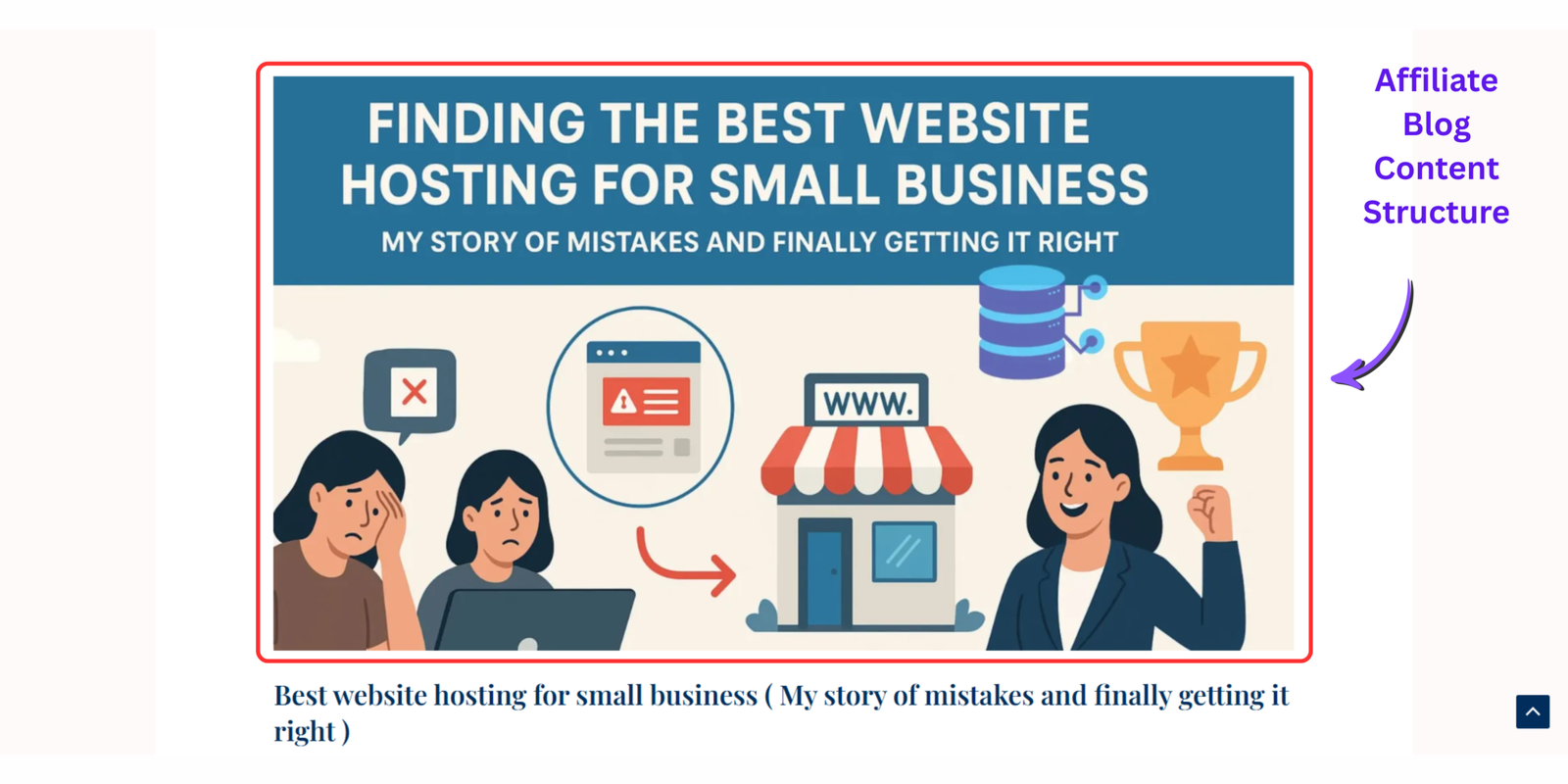
Use original examles whenever possible
Screenshots, workflow examples, and personal observations can make your content significantly more helpful.
Rather than repeating marketing claims from a product page, show readers how the tool works in a real-world situation and explain what you learned from using it.
Framework 02 : The step by step tutorial
Tutorial content is one of the most effective ways to combine education and affiliate marketing because readers can immediately apply what they learn.
Instead of simply recommending a product, show readers how to use it to accomplish a specific goal.
Start with a clear outcome
The strongest tutorials focus on a single result. Examples include:
- How to start a blog
- How to create an email newsletter
- How to schedule social media content
- How to design graphics for a website
A clear goal helps readers understand what they will achieve by following the tutorial.
Introduce tools naturally
If a particular tool helps readers complete the process more efficiently, introduce it at the point where it becomes relevant.
This allows affiliate recommendations to feel like a natural part of the solution rather than a separate sales message.
Share real examples and results
Whenever possible, include screenshots, examples, templates, checklists, or lessons learned from your own experience.
This type of original content creates stronger trust, improves reader engagement, and provides the kind of information gain that search engines increasingly value.
Focus on helping before selling
The most effective affiliate content does not begin with a product recommendation. It begins with a problem, a question, or a goal that readers are trying to achieve.
When your content helps people make better decisions, affiliate clicks become a natural outcome of the value you provide.
As a beginner blogger, focus on creating content that is useful, trustworthy, and experience-driven. Over time, these qualities often have a greater impact on affiliate results than any conversion tactic or marketing trick.
How to place affiliate links in a blog post
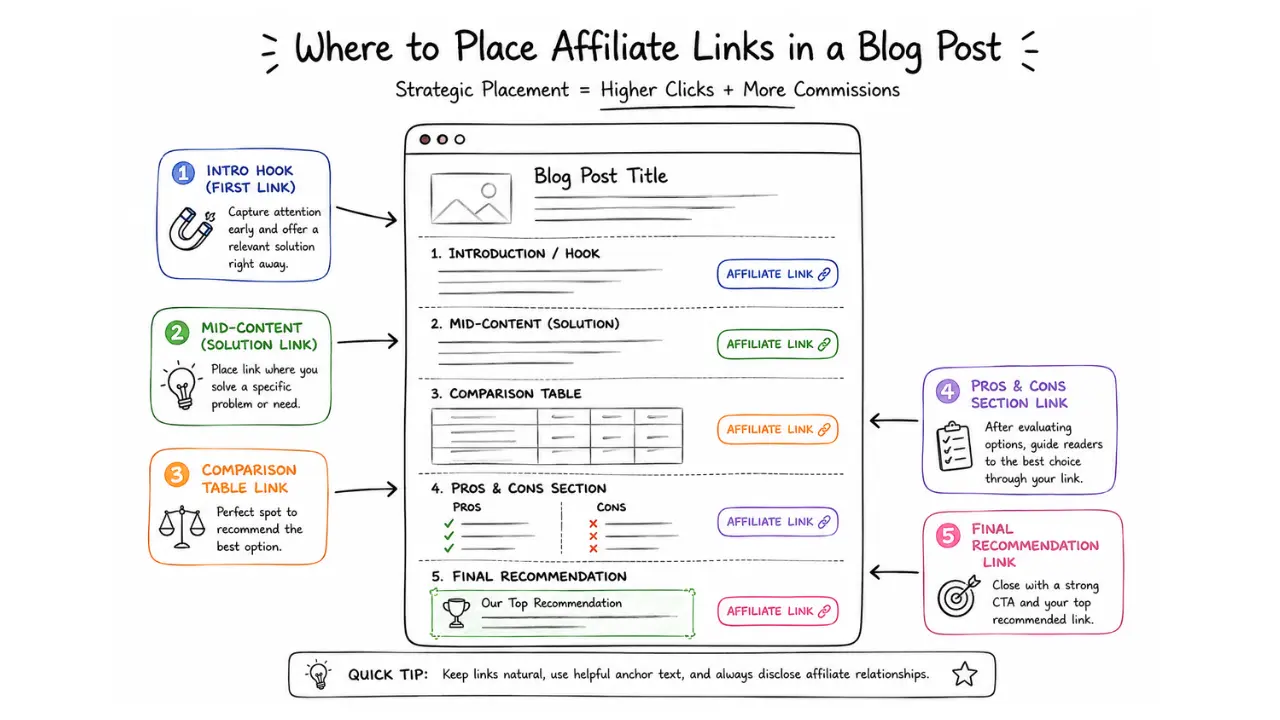
Creating helpful content is only part of the affiliate marketing process. The way you place affiliate links throughout your article can significantly influence both the reader experience and the likelihood that readers will find the resources they need.
One of the most common mistakes beginner bloggers make is placing affiliate links without a clear strategy. Some bloggers hide links at the very end of an article where few readers reach them. Others add affiliate links to nearly every paragraph, creating a distracting experience that can reduce trust.
A better approach is to place affiliate links where they naturally support the reader’s decision-making process.
If you want a complete breakdown of layouts, placements, and examples, be sure to read my detailed guide on Where to place affiliate links in blog posts.
Focus on reader intent first
Before placing an affiliate link, ask yourself a simple question:
“What is the reader trying to do at this point in the article?”
Readers typically move through content in stages:
- Understanding the problem
- Exploring possible solutions
- Comparing available options
- Taking action
The most effective affiliate links appear when readers are actively looking for the next step.
Strategic affiliate link placement ideas
01 . Early contextual mentions
Some readers already know what they are looking for and simply want a recommendation.
If a tool, product, or service is directly relevant to the topic, a natural affiliate link near the beginning of the article can be helpful. The key is context.
Rather than inserting a standalone promotional link, briefly explain why the resource is relevant to the problem being discussed.
02 . Comparison tables and summary sections
Comparison tables are often one of the first elements readers scan.
When comparing products, software tools, or services, a clear comparison table can help readers evaluate options quickly. Include information such as:
- Pricing
- Key features
- Best use cases
- Ease of use
Readers who find a suitable option can then continue to the detailed review or access the recommended resource directly.
03 . Pros and cons sections
Many readers want a balanced evaluation before making a decision.
A simple pros and cons section can help readers understand both the strengths and limitations of a product.
Placing an affiliate link after this section often feels natural because readers have already reviewed the key information needed to make an informed choice.
04 . Recommendation and resource boxes
Highlighting important recommendations inside a dedicated callout box can improve readability and make useful resources easier to find. These boxes can include:
- A short explanation
- Key benefits
- Who the recommendation is best for
- A clear call-to-action button
When used sparingly, callout boxes help readers identify important information without interrupting the flow of the article.
Match link placement to content type
Different types of affiliate content benefit from different link placements.
| Content Type | Effective Link Placement |
|---|---|
| Product Review | Introduction, pros and cons section, final verdict |
| Comparison Article | Comparison table, feature breakdowns, recommendation section |
| Tutorial Guide | At the point where the tool is used in the process |
| Resource List | Within each resource description and summary section |
Prioritize user experience over link quality
Adding more affiliate links does not automatically lead to better results.
In many cases, a few well-placed recommendations will outperform dozens of unnecessary links.
The goal is not to place affiliate links everywhere. The goal is to place them where they genuinely help readers move forward.
When affiliate links are integrated naturally into helpful content, they become part of the solution rather than an interruption to the reading experience. This approach builds trust, improves engagement, and creates a better experience for both readers and search engines.
Affiliate disclosure guidlines for beginner bloggers
Affiliate marketing works best when it is built on trust.
Readers deserve to know when a recommendation may result in a commission, and being transparent about affiliate relationships helps you build credibility over the long term. Many beginner bloggers worry that disclosures will reduce clicks or hurt conversions. In reality, clear disclosure often strengthens trust because readers appreciate honesty and openness.
Transparency is also important for complying with advertising regulations and following search engine best practices.
Why affiliate disclosures matter
When you recommend a product, service, or tool through an affiliate link, you may earn a commission if someone makes a purchase through your referral.
Because of this financial relationship, readers should be informed before they interact with affiliate recommendations. A clear disclosure helps:
- Build trust with your audience
- Increase transparency
- Comply with advertising regulations
- Demonstrate responsible publishing practices
Most successful affiliate websites make disclosures a normal part of their content rather than treating them as a legal formality.
Place disclosures where readers can see them
One of the most common mistakes beginners make is hiding disclosures in the footer or placing them on a separate page that readers rarely visit.
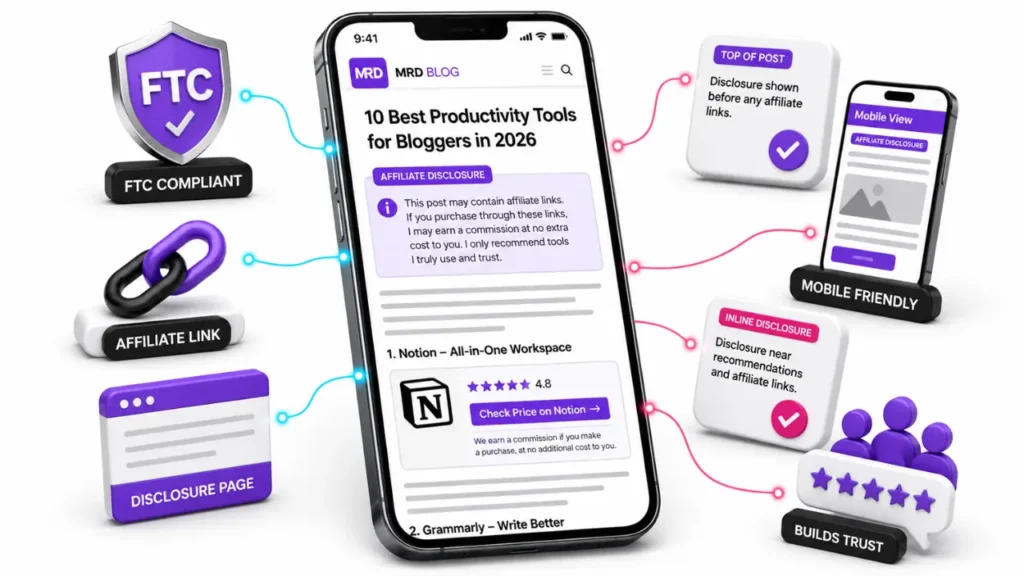
A better approach is to include a short disclosure near the beginning of any article that contains affiliate links. For example
This article contains affiliate links. If you purchase through these links, I may earn a commission at no additional cost to you. I only recommend products and services that I believe provide value to readers.
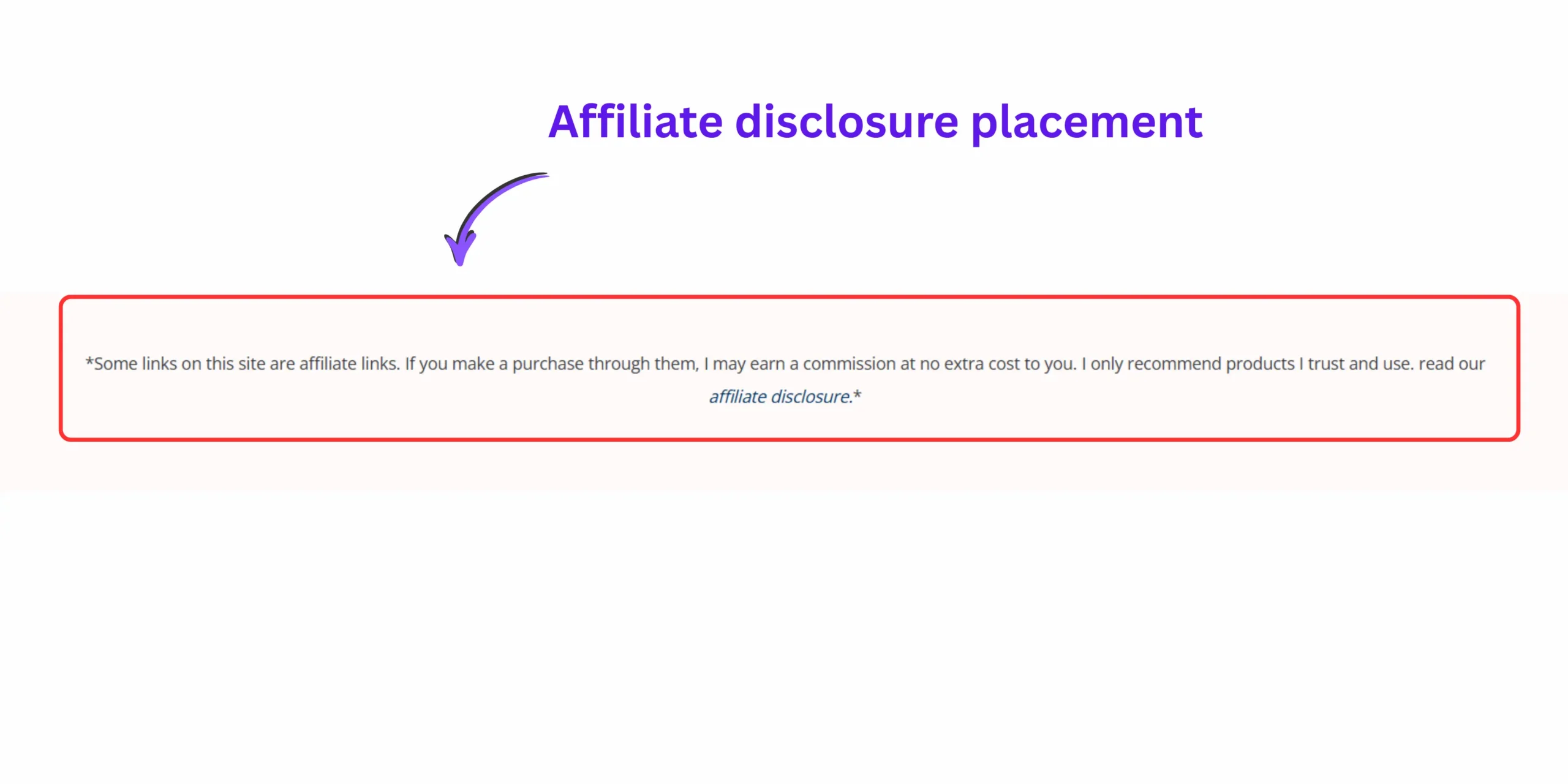
The exact wording may vary, but the goal should always be clarity and transparency.
Use honest recommendations
A disclosure alone does not create trust. Readers are more likely to trust your recommendations when you:
- Explain why you recommend a product
- Share both strengths and limitations
- Provide real examples whenever possible
- Avoid promoting products that are unrelated to the topic
The best affiliate content helps readers make informed decisions rather than pushing them toward a purchase.
Follow search engine best practices for affiliate links
Search engines recommend properly identifying affiliate links so they are clearly distinguished from editorial links.
For WordPress users, many affiliate link management plugins can automatically apply the appropriate attributes to affiliate links, making the process easier to manage as your website grows.
If you are unsure how to configure affiliate links correctly, review your plugin settings or consult your SEO plugin documentation to ensure affiliate links follow current search engine recommendations.
Create a simple affiliate disclosure workflow
As your blog expands, consistency becomes important.
Before publishing any affiliate content, ask yourself:
- Is the disclosure clearly visible?
- Have I explained why I am recommending this product?
- Does the recommendation genuinely help the reader?
- Are affiliate links properly identified?
Following a simple checklist like this helps ensure that every affiliate article maintains the same standard of transparency.
Trust is a long term asset
Many beginner bloggers focus exclusively on clicks and commissions. However, long-term affiliate success usually comes from building trust with readers over time.
When readers know that your recommendations are honest, transparent, and designed to help them solve real problems, they are far more likely to return to your content, follow future recommendations, and view your blog as a reliable resource.
Monetization Obstacles and Solutions
Answers about strategic scaling, traffic minimums, link tracking safety configurations, and choosing high-yield affiliate partner programs.
No, you do not need massive traffic to earn affiliate commissions if you target high-intent commercial keywords. Pro-bloggers make substantial revenue with low traffic by matching a highly specific problem with a high-ticket software or digital asset. Even with fewer than 500 monthly visitors, an article comparing two premium SaaS tools can yield conversions because every single reader lands on the page with their wallet already out.
Most beginner bloggers earn their first commission within 3 to 6 months of consistent publishing. This timeline depends heavily on how fast search engine crawlers index your problem-first guides and reward your on-page SEO. You can dramatically shorten this runway by sharing your early content workflows directly through niche communities and curated email newsletters rather than waiting purely on organic search.
No, adding affiliate links will not hurt your SEO as long as you use proper HTML attributes and avoid spammy link stuffing. Google explicitly expects commercial content to flag these connections. To protect your site’s authority, always add the rel="sponsored" or rel="nofollow" code tag to your links, and make sure your text provides deep, original human perspective rather than just repeating information from the product’s home page.
Yes, you can start affiliate marketing for free by leveraging third-party platforms like YouTube, LinkedIn Newsletters, or social media ecosystems. However, while this bootstrapped setup works well for testing your market, relying entirely on borrowed land leaves your income at the mercy of sudden algorithm shifts. For long-term viability, your ultimate goal should always be moving that audience onto a self-hosted platform that you completely own.
The highest-paying affiliate programs for beginners are Software-as-a-Service (SaaS) platforms and independent creator courses found on networks like PartnerStack or Impact.com. Unlike physical marketplaces like Amazon Associates, which offer low 2% to 4% commission structures, digital software and online education assets routinely offer 30% to 50% profit margins, alongside monthly recurring payouts from a single customer referral.
Turning helpful content into sustainable affiliate income
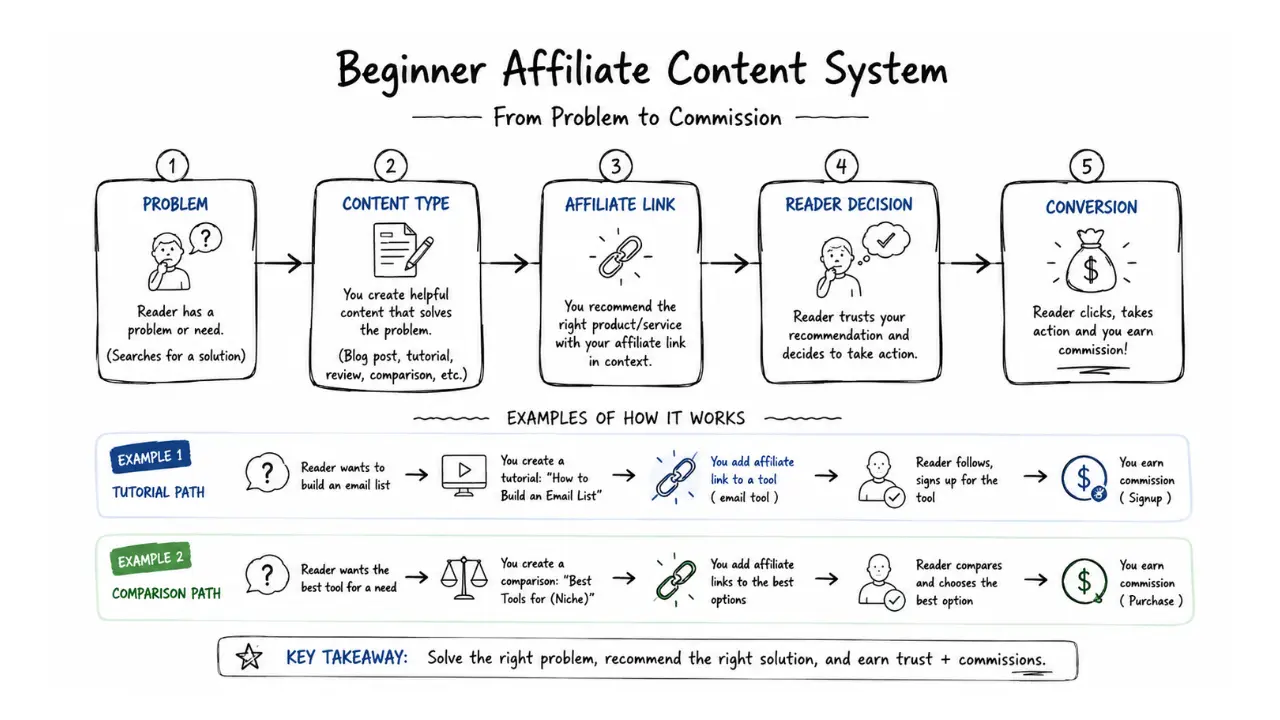
Learning how to start affiliate marketing for beginner bloggers is not just about placing affiliate links in blog posts. It is about building a content system that consistently helps readers solve real problems and make better decisions.
When you approach affiliate marketing with a problem-solving mindset, your blog naturally becomes more valuable over time. Instead of pushing products, you are guiding readers toward solutions that genuinely match their needs. This is what leads to long-term trust, higher engagement, and more stable affiliate income.
The most successful affiliate bloggers are not those who publish the most content, but those who focus on clarity, usefulness, and relevance. When your articles are built around real reader problems, your content continues to attract search traffic long after it is published.
As you build your affiliate marketing foundation, focus on these key principles:
- Prioritize helpful, solution-based content over promotional writing
- Clear comparisons between tools or solutions
- Practical examples that show how something works in practice
- Honest insights based on your own experience or testing
This type of content helps both readers and search engines understand that your blog provides real value, not just summaries of existing information.
I have seen this single checkbox prevent entire websites from appearing in Google search results. It’s one of the easiest mistakes to make and one of the hardest to notice if you don’t know where to look.
Affiliate marketing success does not happen instantly. It is built gradually through consistent publishing, continuous improvement, and a focus on reader trust. If you stay focused on helping people first, the monetization side becomes a natural outcome of your content rather than the sole objective. Over time, this approach creates a blog that not only generates affiliate income but also builds authority, search visibility, and long-term credibility in your niche.
MRD
Malaka Dharmarathne - MRD
Digital Marketing & Blogging growth specialist
” I help beginner bloggers build high-converting, no-code WordPress websites and master the fundamentals of SEO and content distribution. Through actionable blueprints on affiliate marketing and high-income monetization, I turn simple blogs into profitable digital businesses.“
Popular Blueprints
Table of Contents - affiliate marketing for beginner blogger
Build & Scale a High-Converting Blog Platform
Join thousands of creators getting actionable breakdowns on affiliate monetization, clean UX design, and growth strategy delivered straight to your incbox.
- Step-by-Step Guides: Proven traffic & monetization tactics.
- Tech Stack Curations: The exact tools & plugins to build faster.
- Zero Spam: Unsubscribe in 1 click at any time.
🔒 We respect your privacy. No spam, ever.

” I’m MRD, a digital entrepreneur specializing in building lightweight, automated systems for solo creators. I founded Learn2Launch to share the exact AI orchestration protocols and framework setups I use every day—helping you launch a profitable one-person business completely free of technical overwhelm or backend bloat.“