
If you are asking what is quality content for a new blog , you’re already ahead of most beginners. The problem is not motivation, it’s confusion. Everywhere you look, people say “ create quality content, ” but almost no one explains what that actually means when your blog is brand new, has no traffic and no authority.
This is where a lot of beginners run into issues. After writing and publishing an article, you ask yourself, “Is this good enough?” Does it need to be longer? More specific? More focused on SEO? Or more “human”? Online guidance often comes from experienced bloggers rather than the realities of beginners. This disparity leads to self-doubt and frustration.
The truth is quality content for beginners does not mean writing like an expert or copying top-ranking blogs. Google doesn’t expect perfection from a new blog but it does expect clarity, helpfulness and intent.
In this guide , I will break down what quality content really means for a new blog in simple terms , you will learn how google defines quality content , see clear good VS bad content examples and understand exactly how to create content that helps readers and supports SEO without overthinking or over-optimizing.
End of this guide , you will know what to focus on and what to ignore , when building the content the right way from day one .
You don’t need expensive tools to create quality content. Learning how to start a high-quality blog on a budget helps beginners focus on fundamentals, clear writing, helpful content and consistency rather than costly software or unnecessary upgrades.
Table of Contents What is quality content for a new blog
Why ” quality content ” confuses new bloggers
A lot of beginners find the idea of quality content to be unclear and confusing. The meaning of the phrase becomes unclear when it comes time to write, even though you hear it all the time.
The vague advice found online is a major contributing factor. The majority of guides say things like “write valuable content” or “focus on quality,” but they don’t specify what that means for a new blog. Beginners are left in anticipation.
There is also a clear expert vs beginner mismatch . Much of the advice comes from bloggers who already have authority, backlinks, and traffic. What works for them doesn’t always work for someone just starting out. This makes quality content for beginners feels harder than it needs to be
Copying others is another common mistake. Because they believe that’s what Google wants, new bloggers often attempt to rewrite highly ranked posts. However, copying ideas, tone or structure without knowing the intent usually results in generic content that doesn’t really add anything.
In the end , Google’s standards keep changing . Years ago keyword heavy content could rank easy. Today , Google focus ore on,
- Helpful answer
- Clear intent
- Real experience
- User satisfaction
This shift makes beginners wonder what is considered quality content in blogging and that confusion is completely normal.
The good news ? content is simpler than it sounds when you understand the basics.
Quality content needs a reliable platform. Learning how to create a website with WordPress gives beginners flexibility, control, and scalability making it easier to publish, optimize and grow valuable content over time.
How Google defines quality content (Beginner friendly)
To understand quality content, it helps to know how Google defines quality content but in simple terms , not technical SEO language
Google’s main goal is simple , Show helpful content to real people . That’s why Google introduced what’s often called the helpful content update. In beginner terms , this means Google prefers content that is
- Written to help users, not just to rank
- Clear, honest and easy to understand
- Created by someone who understands the topic
Search intent is another important consideration. This simply means knowing why someone is looking. Google wants content that provides a clear answer to a beginner’s query, free of unnecessary information or distractions.
Google also values experience over expertise . especially for new blogs. You don’t need to be a certified expert. But you do need to show that you understand the topic and can explain it in a practical way. A beginner explaining a beginner problem can still create quality content.
Originality is another crucial factor. Rewritten content from other blogs is not rewarded by Google. Content is not valuable if the words are changed but the ideas remain the same.
Instead quality content should ,
- Add a new explanation or perspective
- Simplify confusing ideas
- Answer questions better than existing posts
In short, Google defines quality content as content that helps users first and rankings come as a result not the goal.
As blogging evolves, many beginners worry about what happens to blogging in the age of AI and whether quality still matters. Google has made it clear that helpful, human focused content remains valuable, even in an AI-driven world. Understanding how AI impacts blogging can help you focus on originality, experience, and real value instead of shortcuts.
Core elements of quality content for a new blog
Creating quality content for a brand new blog doesn’t require advanced SEO skills or expert credentials. It comes down to getting a few fundamentals right consistently. These are the core elements Google and readers both respond to.
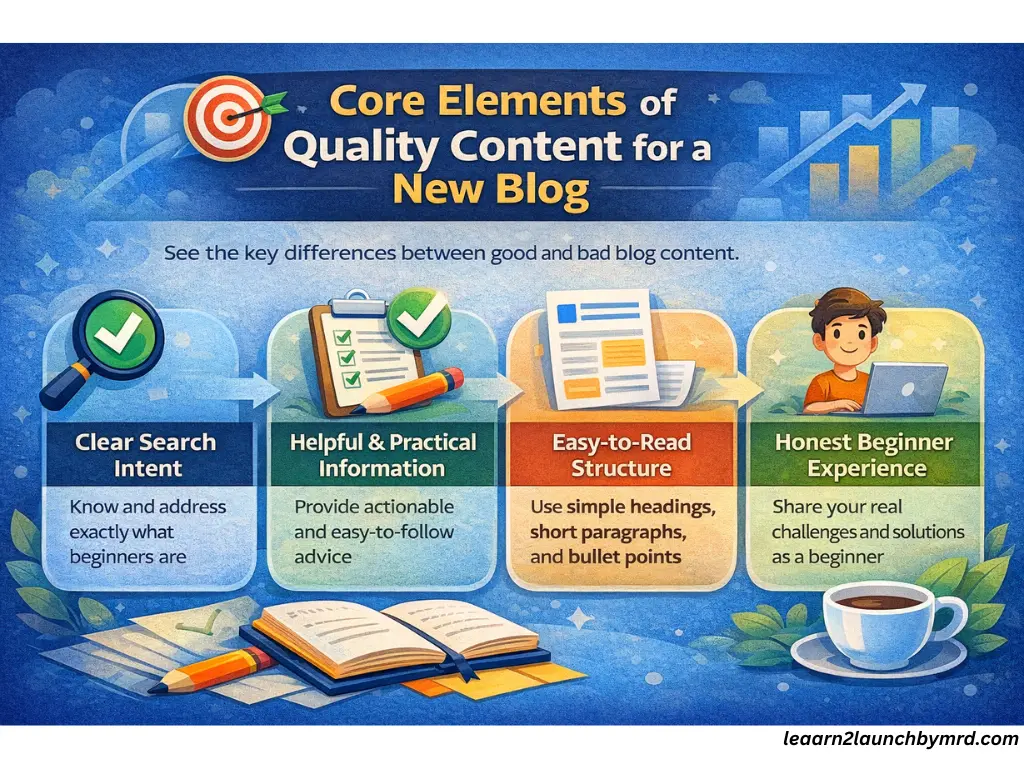
01 . Clear search intent
Everything starts with understanding why someone is searching . Before writing , ask ,
- What question is the reader trying to answer?
- Are they a beginner or experienced?
- Do they want steps, explanations or comparisons?
Quality content directly matches that intent. If a beginner searches a topic, your content should,
- Explain concepts clearly
- Avoid assumptions
- Stay focused on one main problem
For new blogs, matching intent matters more than length or keywords.
Quality content begins with the right idea. If you struggle with topics, learning how to find content ideas for beginners helps you focus on questions real users are already searching for. Strong ideas combined with clear intent make it much easier to create valuable, rank-worthy content.
02 . Helpful and practical information
Google favors content that actually helps people. Helpful content,
- Explains how and why, not just what
- Solves one clear problem per post
- Gives actionable guidance beginners can follow
This is especially important for quality content for SEO beginners , Instead of vague advice, focus on,
- Simple steps
- Real explanations
- Clear takeaways
If a reader can apply something immediately, your content is doing its job.
03 . Easy to read structure
Even great information fails if it’s hard to read. Quality content for a new blog should be,
- Broken into short paragraphs
- Organized with headings and subheadings
- Easy to scan
Use,
- Bullet points for clarity
- Simple sentences
- Clear section breaks
Google measures how users interact with your content. If people stay longer and read comfortably, that’s a positive signal.
Visual presentation supports quality content. Tools like Canva make it easier to enhance readability and engagement. If you’re promoting your posts on social platforms, learning how to use Canva for social media content creation can help you turn valuable blog content into eye catching visuals.
04 . Honest beginner experience
One of the most underrated elements of quality content is honesty.
You don’t need to pretend to be an expert. In fact, for a brand new blog, sharing,
- What you have learned
- What confused you
- What worked and didn’t
can actually improve trust.
Google values real experience , especially when it helps beginners avoid mistakes. Content written from a beginner’s perspective often connects better than expert-level explanations.
Many new bloggers hesitate because they don’t feel qualified. The good news is, learning how to create content without being an expert is completely possible. Google values clarity, honesty and usefulness more than credentials , especially when your content genuinely helps beginners solve real problems.
In simple terms, quality content is not about perfection, it’s about clarity, usefulness and genuine understanding. Get these four elements right, and your content will naturally improve over time.
Many beginners expect fast results, but quality content takes time to work. If you’re wondering how long does it take for a new blog to rank on Google, the answer depends heavily on content quality, consistency, and intent. Publishing helpful content regularly builds trust with both readers and search engines.
Difference between good and bad blog content
Understanding the difference between good and bad blog content is one of the fastest ways to improve your writing as a beginner. Many new bloggers don’t fail because they lack effort, they fail because they don’t know what to avoid and what to focus on.
These are clear examples ,
Bad blog content examples
Bad content isn’t always obvious. It often looks “okay” on the surface but fails to help the reader.
- Thin content
This happens when a post barely scratches the topic. It answers part of the question but leaves the reader confused or unsatisfied.
- Generic advice
Content that repeats what every other blog says without adding clarity or context feels empty. Phrases like “just stay consistent ” or “Create valuable content” don’t help beginners understand what to do.
- Keyword stuffing
Forcing keywords into every sentence makes content unnatural and hard to read. Google can detect this and users quickly lose interest.
- No structure
Large blocks of text with no headings, bullets or breaks overwhelm readers. Even useful information can feel unreadable without structure.
Bad content usually focuses more on ranking than on helping.
Good blog content examples
Good content is clear, helpful and written for real people.
- Clear answers
The content directly answers the main question without unnecessary distractions. Readers quickly understand what the post is about.
- Beginner friendly tone
Good content explains ideas simply, without jargon or assumptions. It feels supportive, not intimidating.
- Real explanations
Instead of vague advice, quality content explains why something works and how to apply it, especially for beginners.
- Viral structure
Headings, bullet points, short paragraphs and tables make the content easy to scan. Readers can find answers quickly.
Good content keeps people reading because it respects their time and intent.
When you clearly understand the difference between good and bad blog content, your writing naturally improves and so do your chances of ranking, even with a new blog.
One major reason why most blogs fail before making money is poor content quality. Thin, rushed or copied posts don’t build trust or traffic. Understanding these common mistakes early helps you focus on creating meaningful content that supports long-term growth instead of quick wins.
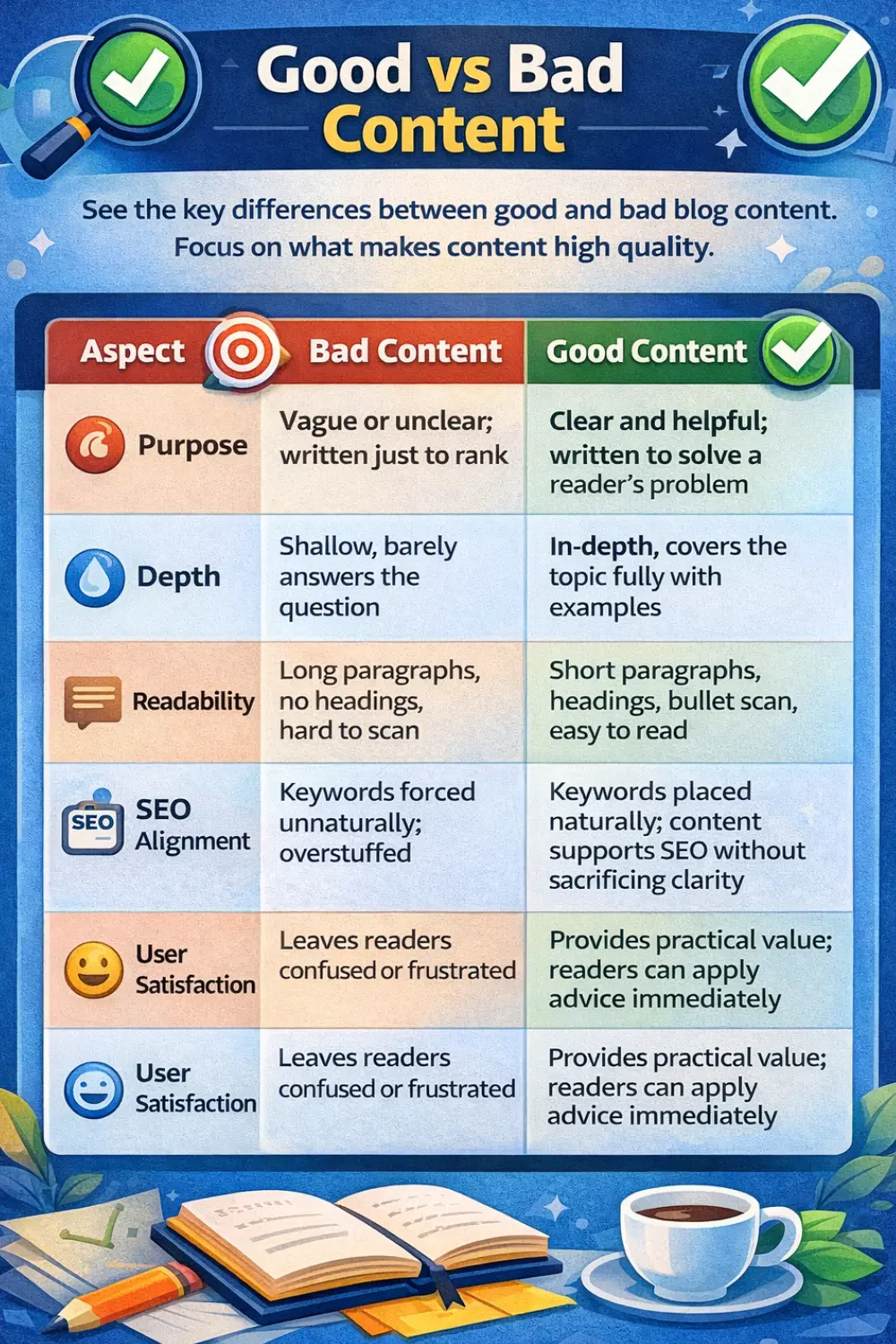
Good VS bad content comparison
Understanding the difference between good and bad blog content becomes much easier when you break it down into clear aspects. Even without a table, you can see what works and what doesn’t.
| Bad content | Good content | |
| Purpose | Vague, unclear, often written just to rank. | Clear, helpful and focused on solving a reader’s problem. |
| Depth | Shallow, barely answers the reader’s question. | In-depth, covers the topic fully with examples and practical explanations. |
| Readability | Long paragraphs, no headings or bullets, hard to scan. | Short paragraphs, headings, bullet points and simple formatting make it easy to read. |
| SEO alignment | Keywords are forced unnaturally or overstuffed. | Keywords are used naturally, supporting SEO without sacrificing clarity or user experience. |
| User satisfaction | Leaves readers confused or frustrated, with no actionable takeaway. | Provides practical value that readers can apply immediately, making them more likely to return or share. |
Breaking these differences down helps beginners focus on what really matters when creating content. By following these guidelines, your quality content for a brand nw blog will be both reader-friendly and SEO-optimized, giving your posts a much higher chance to rank and engage readers.
How to create quality content as a beginner
If you are wondering how to create quality content as a beginner , the process can feel overwhelming. The good news is, it doesn’t have to be complicated. By following a simple, step-by-step approach, you can produce posts that are both helpful to readers and SEO friendly, even on a brand-new blog.
Before quality content comes setup. Learning how to start a WordPress blog for beginners step by step ensures your foundation is solid, allowing you to focus fully on creating content that serves readers instead of dealing with technical issues later.
01 . Choose one clear keyword
Start with a single, focused keyword for your post. This ensures your content stays on topic and helps Google understand what your article is about. Avoid trying to target too many keywords at once, especially as a beginner.
02 . Understand beginner intent
Ask yourself: What problem is your reader trying to solve? Are they looking for a step-by-step guide, a simple explanation or examples? Writing with this intent in mind ensures your content actually helps your audience.
03 . Outline before writing
Create a brief outline for your post that includes bullet points, headings, and subheadings. You can avoid long paragraphs, keep your content organized, and make sure you cover all the important points in detail by using an outline.
04 . Write simply , not perfectly
Prioritize clarity over perfection. Make use of active voice, simple language, and short sentences. It’s more important that readers understand your points than that the post is perfect.
05 . Improve , Don’t over edit
After your draft is complete, edit it for flow, grammar, and clarity, but avoid becoming stuck in details. Over time, high-quality content gets better, and consistency in publishing is more important than perfection.
If this is your first time blogging, understanding how to write your first blog post for beginners removes a lot of confusion. Quality content doesn’t mean writing perfectly, it means answering one clear question in a simple, helpful way.
Following these steps makes it easy to produce Quality content for SEO beginners while building confidence and momentum on your first blog. It’s practical, actionable and aligned with what Google values most.
Creating quality content becomes easier with the right support. Exploring the best content creation tools and strategies helps beginners stay consistent, organized, and efficient, without sacrificing authenticity or value.
AI tools can support beginners when used correctly. Knowing how to use ChatGPT to write blog posts for beginners allows you to brainstorm, outline and improve clarity , without replacing your voice. Quality content still depends on human judgment and real understanding.
Quality content for SEO beginners (without over optimization)
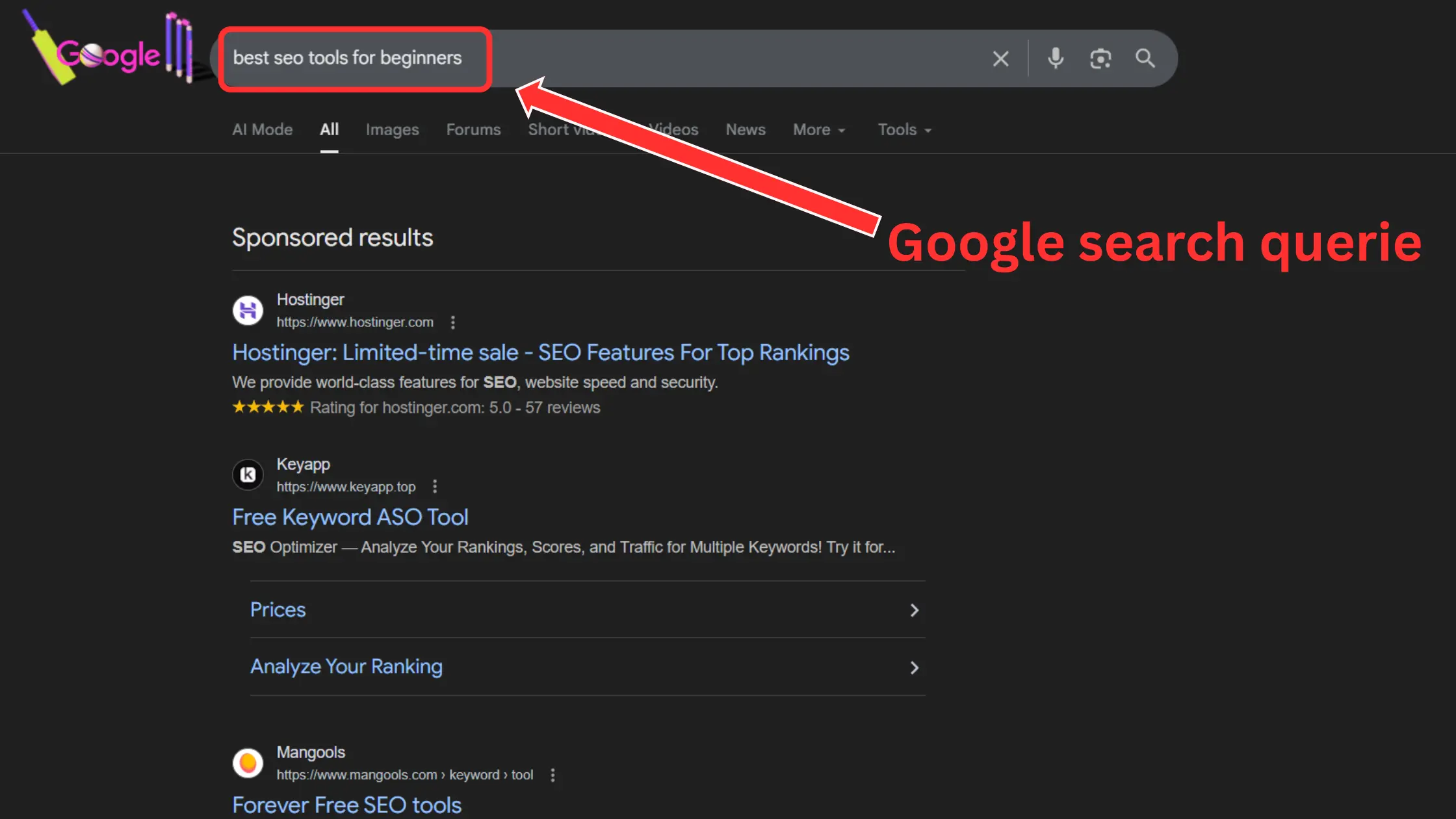
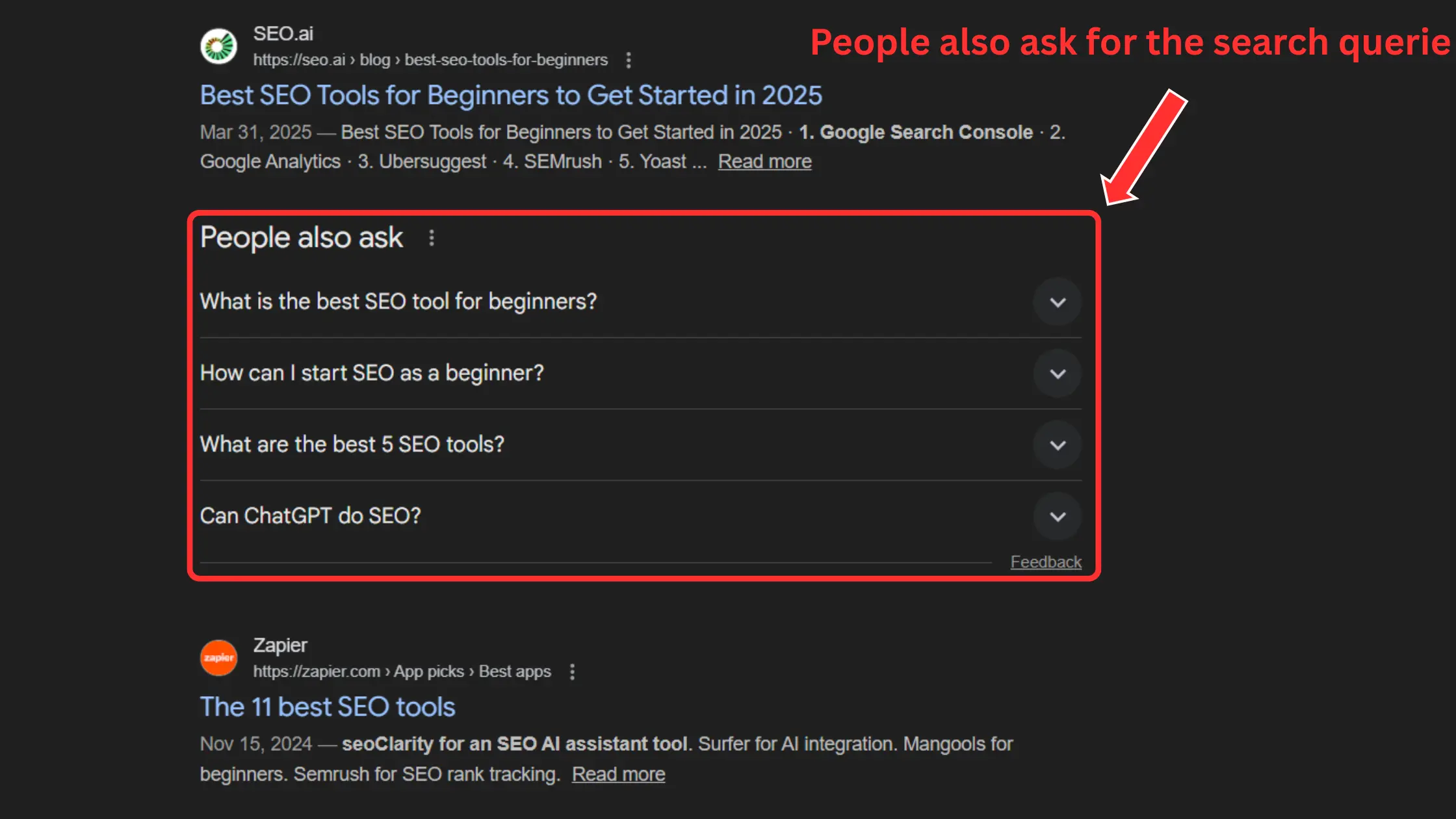
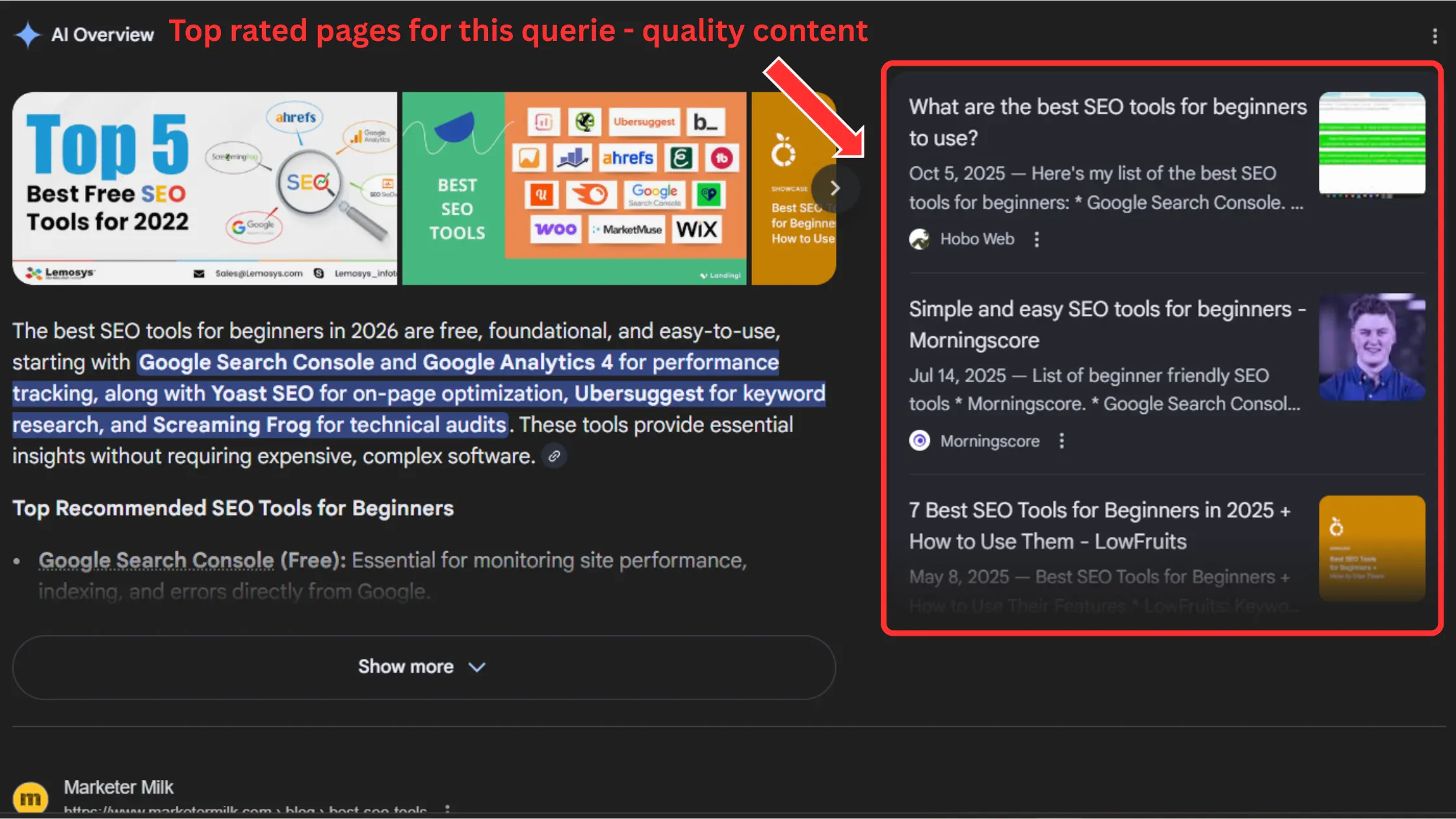
Creating quality content for SEO beginners doesn’t mean cramming keywords or obsessing over every SEO metric. In fact, over optimization can harm your blog more than help it, especially when your site is new.
01 . Natural keyword placement
- Use your main keyword where it makes sense: in the title, headings and a few times in the body.
- Avoid forcing it into every sentence—Google favors readability and context over repetition.
02 . Internal linking basics
- Link to other relevant posts on your blog when it adds value to the reader.
- Internal links help Google understand your site structure and keep readers engaged.
03 . Content length myths
- Beginners often think content must be 2000+ words to rank.
- Focus instead on covering the topic clearly and fully quality always beats quantity.
04 . Why quality > backlinks early on
- When starting a blog, Google rewards helpful, readable content first.
- Backlinks become more important later, but early posts should focus on solving real problems for readers.
By keeping these principles in mind, you can create SEO friendly content that ranks naturally without overthinking or over-optimizing. For beginners, quality and clarity should always come first.
Quality content also plays a huge role in monetization. If you plan to earn from your blog, knowing where to place affiliate links in blog posts matters just as much as the content itself. Poor placement can hurt trust, while thoughtful, contextual links support both user experience and long term SEO performance.
Creating quality content doesn’t mean ignoring SEO. In fact, learning how to optimize blog posts for SEO beginners helps your content reach the right audience without over-optimization. Simple on-page practices combined with helpful writing make your posts easier for Google and beginners to understand.
Many beginners hurt their content by overusing keywords. Understanding how to use keywords the right way helps you write naturally while still supporting SEO. Proper keyword placement improves clarity and rankings without sacrificing reader experience
How to know if your content is high quality
Even after publishing, it can be hard to tell whether your blog post is truly valuable. Here’s a simple checklist to help beginners evaluate their work and ensure it meets the standard of quality content for a new blog.
- Answers the questions fully – Make sure your post completely addresses the reader’s query without leaving gaps.
- Easy to scan – Use headings, bullet points and short paragraphs so readers can quickly find key information.
- Helpful to a beginner – Write with the mindset of someone just starting out, breaking down concepts into simple steps.
- Not copied or rewritten – Original content adds value; avoid duplicating existing blogs.
- Improve with time – High-quality content evolves. Update it regularly with new insights, examples or corrections.
Using this checklist ensures that your content is both reader friendly and Google friendly, giving your blog a solid foundation for growth and higher rankings.
Quality content is the foundation of traffic growth. If you’re learning how to get traffic to a new blog, it always starts with helpful, search focused content. Without quality, even the best traffic strategies won’t work long term.
Frequently asked questions on what is quality content for a new blog
What is quality content for a new blog?
Quality content for a new blog is content that clearly answers readers’ questions, is easy to read and provides practical value. It focuses on helping beginners understand a topic, rather than just targeting keywords or search rankings. Good quality content is original, structured and written with the reader’s intent in mind.
How can beginners create quality content for their blog?
Beginners can create quality content by following simple steps: choose one clear keyword, understand the reader’s intent, outline the post, write clearly and simply and improve without over-editing. Including real examples and practical tips makes your content more helpful and engaging.
What is the difference between good and bad blog content?
Good blog content provides clear answers, uses a beginner-friendly tone, includes real explanations and has a visual structure. Bad content is thin, generic, stuffed with keywords and lacks proper structure. Understanding this difference helps new bloggers write content that ranks and engages readers.
How does Google define quality content for beginners ?
Google defines quality content as helpful, original and satisfying to the reader’s intent. For beginners, this means writing posts that answer questions fully, are easy to scan, and demonstrate real understanding or experience. It’s not about keyword stuffing or perfect grammar, it’s about value.
How can new bloggers improve their content over time?
New bloggers can improve their content by updating posts with new examples, refining explanations, fixing readability issues and adding internal links. Regularly revisiting posts helps increase user engagement, improves SEO and ensures content remains relevant.
You don’t need massive traffic to start earning. Learning how to monetize a blog with low traffic starts with high-quality content that targets the right audience. When readers trust your content, even a small audience can lead to meaningful income opportunities.
Creating quality content for a new blog doesn’t mean your first post has to be perfect. Many beginners hesitate to publish because they fear making mistakes, but the truth is, taking action is far more valuable than waiting for perfection. Even small, thoughtful posts can provide real value to readers and signal to Google that your blog is growing.
Keep in mind that creating content that is of high quality requires consistency, clarity, and helpfulness rather than writing like an expert from the start. Don’t worry about small mistakes; instead, focus on achievable steps and share your genuine experiences. You may improve and enhance every post over time.
If you have been wondering how to create quality content as a beginner or the difference between good and bad blog content, now is the time to apply these strategies.
I would be interested in knowing what difficulties you face when creating content for your blog. In order for us to both learn and develop, give us your ideas or queries in the comments section.