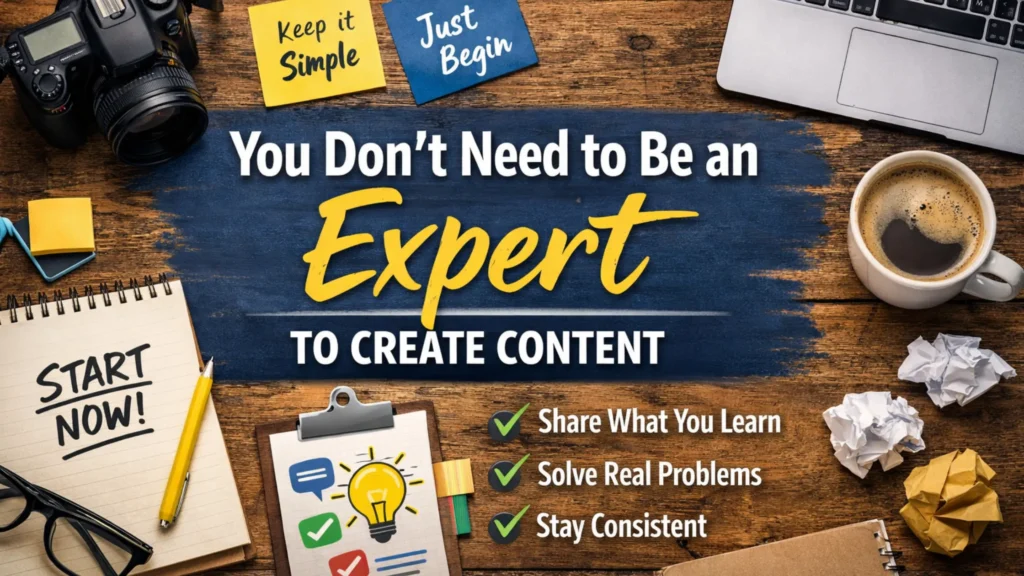

For a long time, I believed I had to know everything before I was allowed to publish anything. Every time I opened a blank document, the same thought stopped me cold , ” Who am I to talk about this ” I would rewrite sentences, delete paragraphs and eventually close the tab without publishing. If you’re here, chances are you’ve felt that same hesitation. The fear of not being “ qualified enough ” is one of the biggest reasons people never start. That’s exactly why learning how to create content without being an expert matters more than most beginners realize.
I learned this lesson the hard way. When I looked closely at creators I admired, I realized something surprising, most of the people you follow online weren’t experts when they started. They were confused, inconsistent and figuring things out in real time. Just like you. The only difference is that they didn’t wait for permission. They shared what they were learning and that’s how they created content people actually want .
As a beginner, you don’t need years of experience, awards or credentials. You don’t even need perfect confidence. What you do need is clarity, honesty and a willingness to help someone who is one step behind you. This is how trust is built. This is why you don’t need to be an expert to create content and why beginner voices often connect more deeply.
In this post, you’ll learn a simple, practical approach to how to start creating content as a beginner , including how to create blog content as a beginner without overthinking, faking expertise or holding yourself back.
Table of Contents – how to create content without being an expert
Why you don’t need to be an expert to create content
One of the biggest myths in online content creation is the idea that you must be an expert before you’re allowed to speak. This belief stops more beginners than lack of skill ever will. The truth is simple , you don’t need to be an expert to create content , you need to be useful
What “Expert” really means today
Being an expert online doesn’t mean knowing everything. It means,
- Understanding a specific problem clearly
- Explaining it in a simple, practical way
- Helping someone make progress
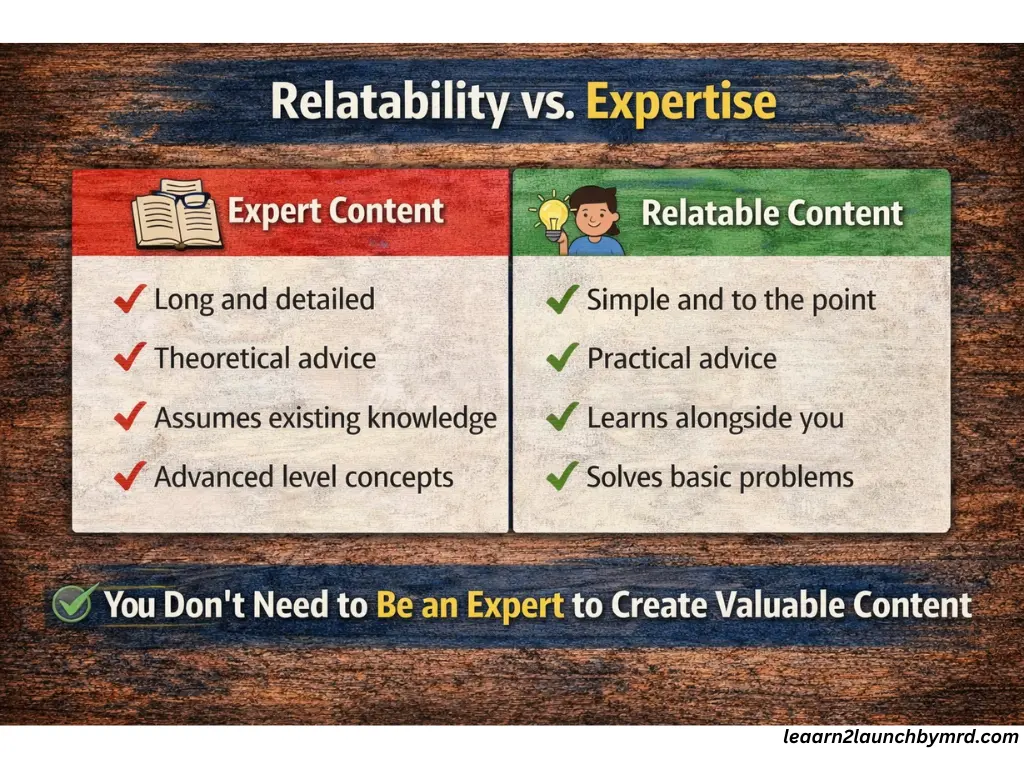
Most people searching for content aren’t looking for advanced theories. They’re looking for clarity.
Relatability beasts credentials every time
Credentials look impressive, but relatability builds trust. As a beginner or intermediate learner,
- You remember what confused you
- You explain things without jargon
- You speak the same language as your audience
That makes your content easier to understand and more valuable to the right people.
Authority comes from expertise , Not titles
Real authority isn’t claimed, it’s earned. You build it by,
- Sharing what you’ve learned honestly
- Being consistent over time
- Helping people solve real problems
When your content helps, people listen. And when people listen consistently, authority follows naturally, no expert label required.
What people actually want from content
Many beginners think great content means teaching everything they know. In reality, people don’t search for experts, they search for solutions. Understanding this shift is the key to learning how to create content people actually want.
Low engagement doesn’t mean your content lacks value. Often, it’s a clarity or connection issue. Understanding why people do not engage with your content helps beginners adjust their message, simplify their approach and create content that actually resonates.
People want problems solved , Not lectures
Most readers arrive with one goal: to fix something that’s confusing or frustrating them. They care less about your background and more about,
- Clear answer
- Practical steps
- Results they can apply immediately
Content that focuses on solving one specific problem will always outperform long, theory heavy explanations.
Why simple content performs better
Simple content works because it’s easy to consume and easy to trust. Overly complex content often,
- Create more confusion
- Feels intimidating to beginners
- Gets skipped or abandoned
Clear, straightforward writing keeps people reading and coming back.
The beginner clarity advantage
As a beginner, you have a powerful advantage
- You understand confusion clearly
- You explain concepts in plain language
- You focus on the basics that matter most
That clarity is exactly what most people are searching for. When your content helps someone understand something faster, it becomes valuable , no expertise required.
Content creation doesn’t stop at blogs or social media posts. Platforms like LinkedIn reward clarity and consistency over credentials. If you’re exploring professional platforms, these LinkedIn success tips for online business beginners show how beginners can grow visibility and trust without positioning themselves as experts.
Content gains power when it’s shared strategically. Learning how to use social media to grow your online business helps beginners extend the reach of their content and build visibility without relying on expert positioning.
How to start creating content as a beginner
Starting can feel overwhelming when you think you’re not ready yet. The key is to stop trying to teach like an expert and sharing like a learner . The simple process shows exactly how to start creating content as a beginner , without pressure or perfection.
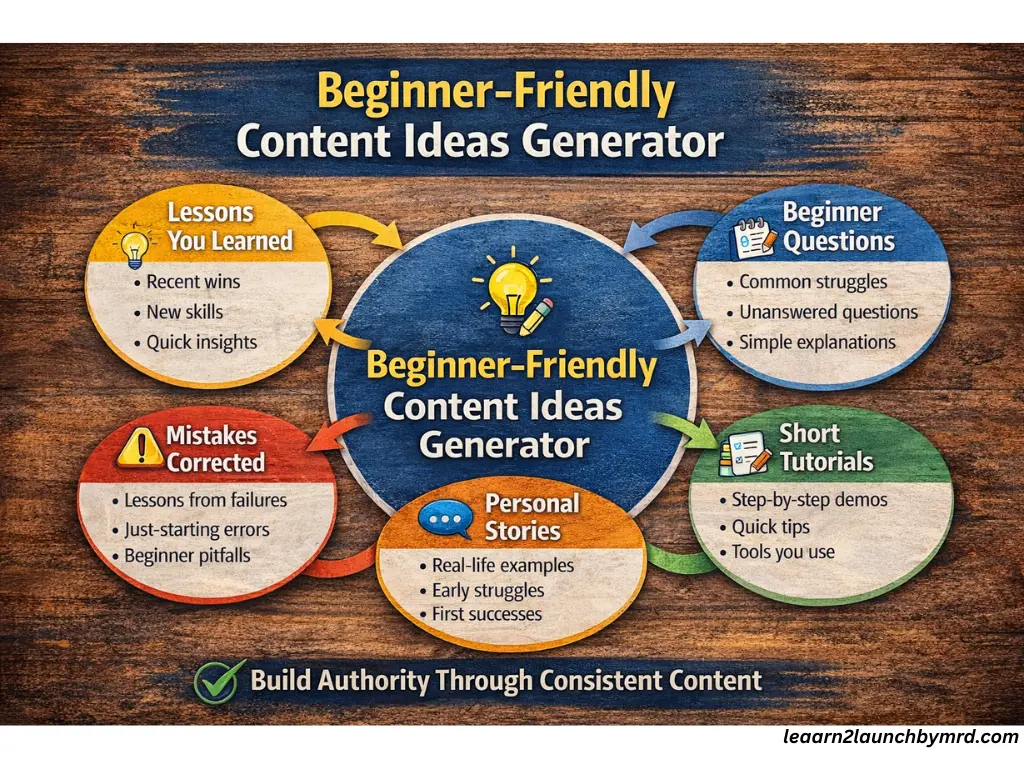
01 . Start with what you are learning right now
You don’t need new ideas, you need awareness. Pay attention to what you’re already learning every day. If something confused you, slowed you down or helped you move forward, it’s content.
Focus on ,
- Lessons you learned recently
- Mistakes you made and corrected
- Small wins that saved time or effort
When you share what you’re learning in real time, your content feels honest and relatable. You’re not positioning yourself above your audience, you’re walking alongside them. This builds trust naturally and removes the pressure of pretending to know more than you do.
Running out of ideas is a common fear when starting out. Having access to 101 content ideas for beginners removes that mental block and proves that you don’t need expertise, just observation, curiosity and consistency.
02 . Turn beginner question into content ideas
Beginner questions are content gold. The questions you ask today are the same ones others are typing into search bars.
Look for questions in…. ,
- Google autocomplete
- YouTube comments
- Social media replies and DMs
If you’ve asked the question, someone else has too. Answering these questions creates practical content that feels relevant and useful. Instead of guessing what to post, you’re responding to real curiosity, this is how beginner content stays valuable.
Content ideas don’t come from expertise, they come from paying attention. Learning how to find content ideas for beginners helps you turn daily questions, struggles and lessons into meaningful content your audience can relate to.
03 . Simplify and share what you learn
After learning something new, your job isn’t to repeat everything, it’s to simplify it. Ask yourself- How would I explain this to someone who’s just starting?
Keep your content ,
- Short and focused
- Free of unnecessary jargon
- Centered on one clear takeaway
When you simplify ideas, your content becomes easier to understand and easier to trust. That simplicity is what keeps people engaged and positions you as a helpful, reliable voice, even as a beginner.
Your first blog post doesn’t need to be perfect it just needs to exist. Learning how to write your first blog post helps beginners overcome hesitation and publish content confidently, even without expert knowledge.
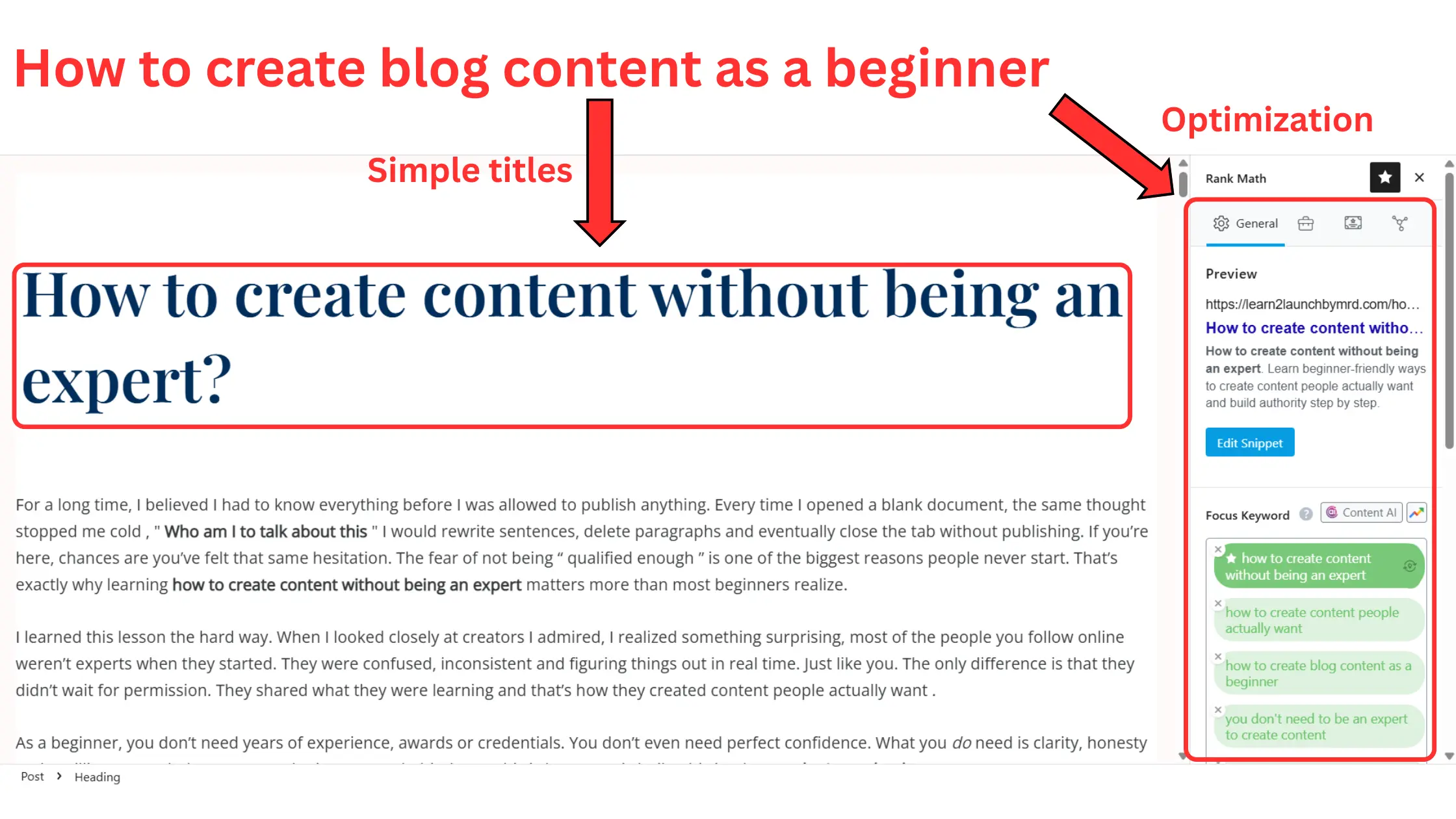
How to create a blog content as a beginner without overthinking
Creating blog content can feel intimidating when you’re just starting out. The trick is to keep things simple and focused. Learning How to create a blog content as a beginner doesn’t require perfect grammar, long posts or fancy designs. It requires clarity, structure and consistency.
You don’t have to start with a blank page. Tools like AI can support your thinking and structure. Learning how to use ChatGPT to write blog posts helps beginners write faster, organize ideas clearly, and focus on value instead of perfection.
Focus on one problem per post
Each blog post should solve one specific problem for your readers. Trying to cover multiple topics at once can overwhelm both you and your audience. Ask yourself , what is the one thing my reader needs to understand or do after reading this post ?
Keeping it focused makes your content more actionable and memorable.
Use a simple structure
A clear structure helps you write faster and keeps readers engaged. For example,
- Introduce the problem
- Explain why it matters
- Provide a solution or step-by-step guide
- Give a quick takeaway
This framework works every time and makes your posts readable, even for beginners.
Consistency over perfection
It’s tempting to wait for “ perfect ideas ” or polished posts but consistency matters more. Publishing regularly, even if posts aren’t flawless, builds authority and trust faster than a single perfect post ever could. Over time, your skills and confidence will grow naturally.
Starting content creation doesn’t require expensive tools or setups. Understanding how to start a high-quality blog on a budget helps beginners focus on fundamentals, clear writing, helpful ideas and consistency without financial pressure.
Authority is built through consistency , not expertise
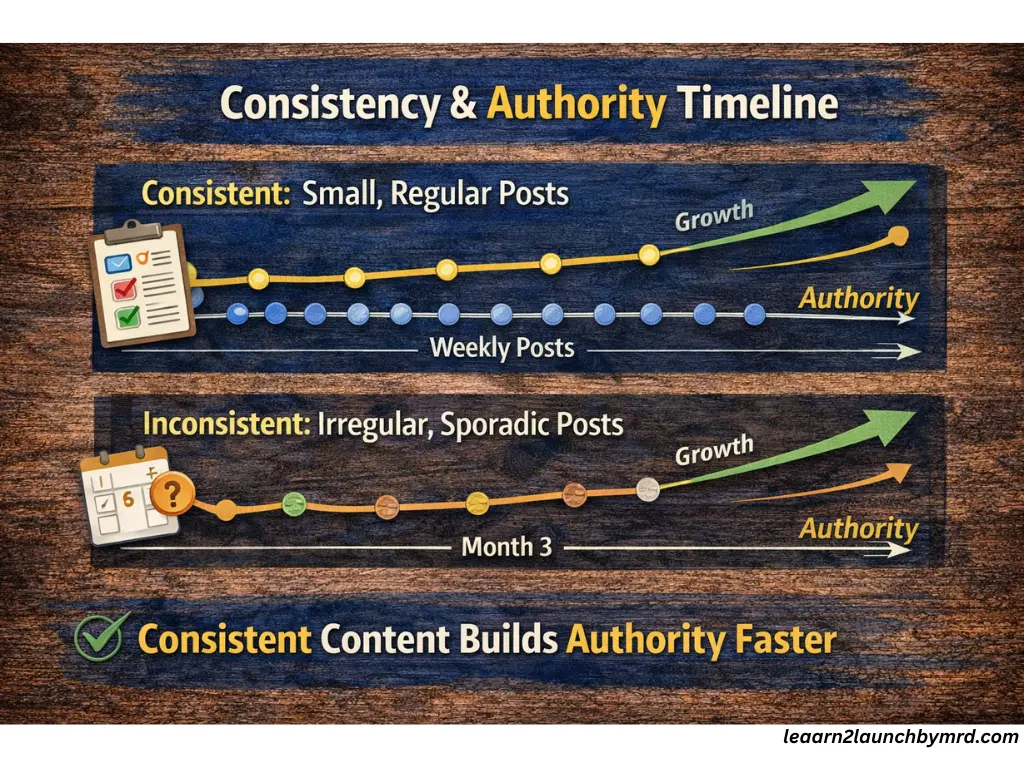
Many beginners think authority comes from credentials or deep expertise. The truth is different, Authority is earned by showing up consistently and delivering value over time. Even if you’re not an expert today, the content you create can position you as a trusted voice if you stay consistent.
Many beginners assume monetization only comes after becoming an expert, which often leads to avoidable mistakes. If you’re planning to earn from your content early, understanding the 12 common monetization mistakes beginners make can save time and frustration. Learning what not to do is just as valuable as knowing what works.
Consistency is powerful, but burnout can stop progress completely. Learning how to stay consistent on social media without burnout helps beginners create sustainable habits, post regularly, and build authority without feeling overwhelmed or exhausted.
What authority really means
Being perfect or having all the answers is not what it means to be an authority. It’s about establishing yourself as a trustworthy source that your audience can rely on. People start to trust your point of view, guidance and suggestions when they consistently find helpful content from you.
Trust isn’t built through expertise alone. It comes from honesty, consistency, and shared experiences. Understanding how to build trust on social media as a beginner helps you connect with your audience authentically, even if you’re still learning and growing alongside them.
Why repetition builds trust
Regular posting shows your dedication and friendliness. Each piece of content serves as a point of contact with your audience. Even if you were beginner at first, this repetition eventually fosters familiarity, which naturally increases credibility.
Adopt a long term content mindset
Consider creating content a marathon rather than a sprint. Instead of seeking quick recognition, concentrate on providing low, regular value. This strategy compounds over a period of weeks and months. You will develop authority naturally and sustainably because your consistency will speak louder than any claim of expertise.
You don’t need years of experience to help others. Learning how to monetize your knowledge online shows beginners how to turn what they’re already learning into value driven content and income opportunities
Common mistakes beginners make when creating content
When you’re just starting out, it’s easy to fall into habits that slow your progress. Avoiding these common mistakes can save time, frustration and lost opportunities as you learn how to create content without being an expert.
01 . Writing to feel ready
Many beginners delay publishing because they feel they don’t know enough. The truth? You’ll never feel 100% ready . The best way to learn and grow is by starting now and improving along the way.
02 . Copying experts
It’s tempting to mimic top creators but copying others can make your content feel inauthentic. Instead, focus on sharing your perspective, even if it’s simpler or less polished. Authenticity builds trust faster than imitation.
03 . Overcomplicating content
Beginners often try to include everything they know. This overwhelms readers and dilutes your message. Focus on one clear idea per post, clarity is far more valuable than complexity.
04 . Inconsistent posting
Consistency is key to building authority. Irregular posting confuses your audience and slows growth. Even small, regular updates maintain engagement and show reliability.
By avoiding these mistakes, you’ll create content that’s simple, authentic and consistently valuable, without needing expert level knowledge.
Many beginners struggle not because of lack of expertise, but because of simple strategic mistakes. Being aware of the 10 social media mistakes beginners must avoid can help you grow faster, communicate more clearly and avoid habits that reduce reach and engagement.
A simple content framework you can reuse every time
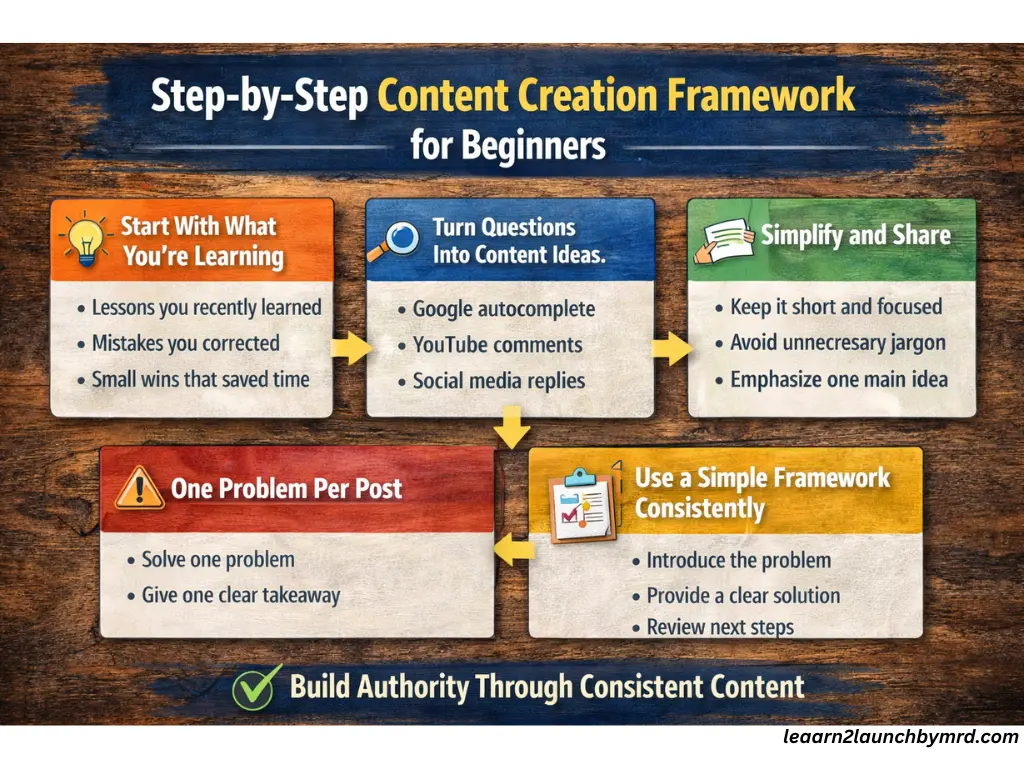
Creating content doesn’t have to be complicated. Once you have a repeatable framework, writing becomes easier, faster and more consistent, perfect for beginners learning how to create content without being an expert.
A beginner friendly framework
Use this simple structure for almost any piece of content,
- Introduce the problem – Start by highlighting a challenge your audience faces.
- Explained what you learned – Share your own experience or insight.
- Provide actionable steps – Give 2 – 3 clear steps your readers can follow.
- Highlight common mistakes – Warn about pitfalls you or others might have faced.
- Wrap up with a takeaway – End with a simple summary or encouragement to act.
Content creation becomes easier with the right systems in place. Exploring content creation tools and strategies helps beginners streamline their workflow, reduce overthinking and stay focused on creating value instead of getting stuck in setup.
This framework can be used for short videos, blog entries and social media updates. Even if you’re just getting started, it keeps your content valuable, clear and easy to read. Reusing it helps you save time, cut down on overthinking, and stay consistent all important aspects of developing authority and trust over time.
Creating content doesn’t require advanced design skills. Tools like Canva make it easy for beginners to turn simple ideas into clean visuals. Learning how to use Canva for social media content creation helps you focus on clarity and message instead of design perfection.
recently asked questions on how to create blog content as a beginner
Do I need to be an expert to create content online ?
No. You don’t need credentials or years of experience to create valuable content. Sharing what you’re learning, documenting your journey and solving small problems for your audience is enough to build authority and trust. This approach helps you start creating content without being an expert.
How can beginners create content people actually want ?
Focus on solving specific problems that your audience faces. Use your own questions and challenges as inspiration, simplify complex ideas and provide actionable steps. This ensures your content is useful, relatable and exactly what beginners are searching for.
What type of content should I start with as a beginner?
Start small and simple, explain something you just learned, share a beginner mistake you corrected or answer a common question. Blog posts, short social media updates or step by step guides are ideal. Consistency matters more than perfection at this stage.
How do I stay consistent with content creation?
Create a simple content framework and stick to it. For example: introduce a problem – explain your solution – share actionable steps – summarize. Posting regularly, even with shorter content, builds trust and authority faster than sporadic “ perfect” posts.
Can beginners really build authority without expertise?
Absolutely. Authority comes from consistently providing value, helping people solve problems and sharing your journey honestly. By focusing on clarity, consistency and relatability, you can position yourself as a trusted creator without needing to be an expert.
Start before you feel ready
The biggest barrier to creating content is often your own doubt. Waiting to feel “ ready ” only delays progress. Remember, the best way to grow is by taking action even small steps, every day.
If you’re ready to move from ideas to action, learning how to start a WordPress blog for beginners gives you a simple foundation to publish consistently and grow authority over time without needing technical expertise.
By now, you’ve seen that you don’t need to be an expert to create content . Focusing on one problem at a time, keeping your posts simple and sharing what you’re learning are the keys to building trust and authority. Consistency, not perfection, is what truly sets successful creators apart.
Here’s something easy you can do right now, Pick a topic that has recently confused you, simplify it into a few simple steps and explain it to your audience. You’ll be shocked at the amount of value even content for beginners can offer.
Many beginners delay content creation because they fear choosing the wrong niche. Understanding how to choose the perfect blog niche that can actually make money helps you start with clarity instead of waiting for certainty.
Don’t wait for permission or perfect knowledge. Authority and meaningful engagement develop organically when you start now, share your journey and interact with your audience by resolving their actual problems.