
Most people don’t quit blogging because they’re lazy or untalented. They quit because they don’t understand why most blogs fail before making money and no one warned them what the early stages actually look like.
There is a repetitive, quiet pattern. A brand-new blogger starts out enthusiastically, publishes regularly for a few months, and monitors their stats daily. and sees very little. No sales. No spikes in traffic. There is no evidence that it is “working.” Doubt takes over sometime between the third and sixth months. Motivation declines. Eventually, the blog is shut down.
Effort is not the issue. It’s expectations.
Most beginners assume that if they do the “ right things ,” results should come quickly. But this is exactly why blogging takes longer than expected , progress in blogging is delayed, invisible, and deeply behavioral. Search engines move slowly. Trust compounds quietly. And income always comes after consistency, not during it.
In this article, we’ll examine the true causes of most blogs’ failure before they make their first dollar – behavioral patterns that subtly delay development rather than technical errors or platform problems. More significantly, you’ll discover how to steer clear of these pitfalls.
Table of Contents – Why most blogs fail before making money
The real reason most blogs fail
When a blog doesn’t make money, the first things people blame are traffic, SEO or the tools they’re using. But in reality, why most blogs fail before making money has very little to do with those factors.
Most failed blogs were not broken.
They were simply built on the wrong behavior.
New bloggers often assume that doing more equals moving forward. They buy better themes, install more plugins, redesign layouts and publish article after article. But tools don’t create progress , direction does.
Here’s the uncomfortable truth, many bloggers are busy, but not effective.
Common patterns that quietly stall growth include
- Publishing content without understanding how long results actually take
- Measuring success by effort instead of feedback
- Expecting income before trust, authority, or visibility exist
This is one of the common blogging mistakes that kill income working hard on the front end while ignoring the delayed nature of results.
Many blogs fail not because the content is bad, but because no one stops to read it. Learning how to write hooks for social media traffic helps your posts get initial attention, clicks and saves. A strong hook doesn’t just increase traffic, it trains you to think from the reader’s perspective, not the creator’s.
Confusion between publishing and building is another ignored problem. Posts are simple to upload. It takes dedication, repetition and alignment with a long-term timeline to create an asset that compounds. The majority of bloggers put in the effort, but they give up because they are playing a long-term game on a short-term clock.
When expectations and timelines don’t match reality, frustration sets in. And frustration, not lack of skill is what ends most blogs.
While tools don’t guarantee success, a stable foundation matters. Knowing how to start a WordPress blog for beginners ensures your early effort isn’t wasted on technical confusion, allowing you to focus on publishing, learning and improving consistently.
The blogging timeline most beginners don’t understand
One of the biggest shocks for new bloggers is realizing that how long it takes to make money blogging is rarely what they expect. Most beginners jump in thinking results should follow effort immediately, but in reality, blogging is a slow, compounding process. This is exactly why blogging takes longer than expected.
What beginners expect (0 – 3 months)
When you start your blog, it’s natural to anticipate fast progress. Typical beginner expectations include,
- Instant traffic and visible page views
- The first affiliate sale within weeks
- Validation through likes, comments, or social shares
These expectations are fueled by success stories and “ overnight blog ” myths. While exciting, they rarely reflect the real path to growth.
What actually happens (3 – 12 months)
In truth, the early months often feel invisible. Here’s what usually occurs
- Slow indexing – Search engines take time to recognize and rank content
- Low conversions – Even the best posts may get clicks but no sales initially
- Steep learning curve – Optimizing headlines, SEO, email lists and monetization takes repeated effort
This phase is where patience becomes critical. Successful bloggers understand that small, consistent actions compound over time . Traffic grows, trust builds and income emerges , not because of luck but because of repeated, intentional work aligned with audience needs.
Understanding this timeline helps new bloggers stay committed and avoid quitting too early , a mistake that silently ends most blogs before their first dollar.
Impatience often hides a deeper problem: unclear positioning. Learning how to choose the perfect blog niche helps align content, audience and monetization naturally, reducing the frustration that makes many bloggers quit before traction appears.
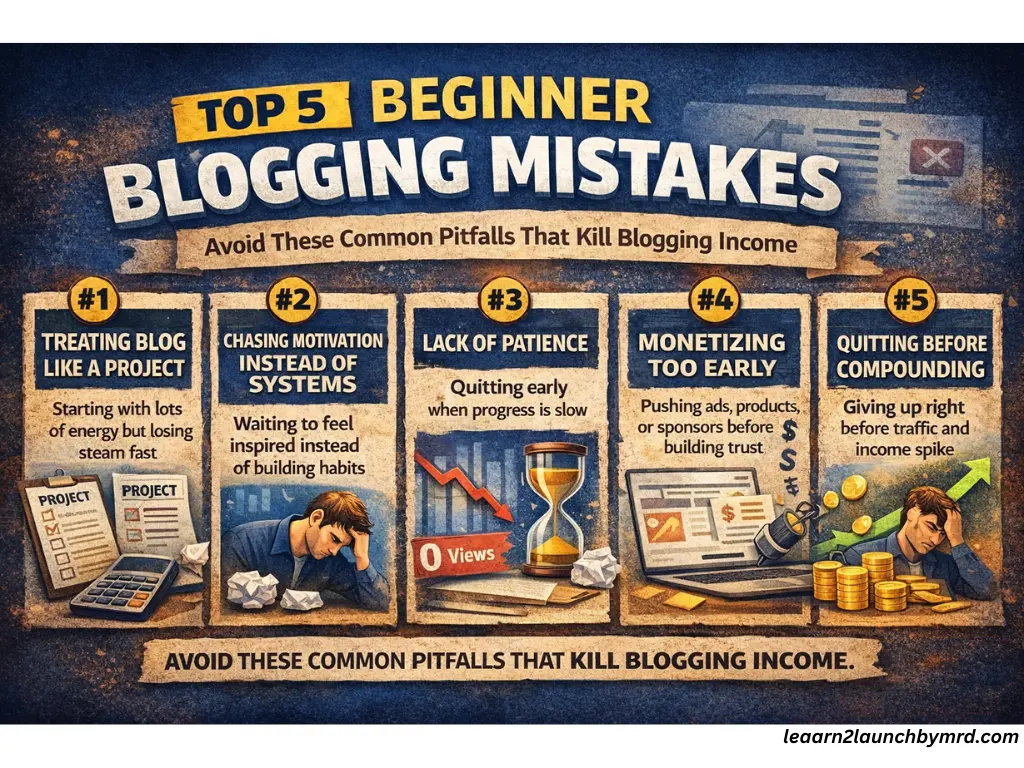
Mistake 01 . Treating blogging like a project instead of a process
One of the most common pitfalls for new bloggers is approaching their blog as a project with an end date instead of an ongoing process. This mindset quietly sabotages growth and is one of the beginner blogging mistakes to avoid.
Many bloggers think that once the setup is complete, theme installed, plugins configured, first few posts published, the hard part is over. They sit back, check traffic occasionally and wait for results. Unfortunately, blogging doesn’t work like a one – time project.
Here is what often goes wrong,
- No feedback loop – Posts are published but performance isn’t analyzed. What’s working? What’s not? No one knows.
- No iteration mindset – Content, headlines or calls to action aren’t improved based on real data
- Premature completion – Believing the blog is finished leads to disengagement before results can compound.
These behaviors are part of the common blogging mistakes that kill income , because without iteration, nothing grows. Success in blogging comes from continuous learning, testing and refining. Think of your blog as a living system, not a checklist.
Many bloggers quit because their setup feels unfinished or messy. Following the ultimate WordPress launch checklist removes uncertainty, prevents unnecessary rework and helps you move forward confidently instead of constantly “ fixing ” your blog.
Shifting your mindset from “ finish line ” to “ ongoing process ” changes everything. Each post becomes an experiment, each metric a lesson and over time, the compounding effect of small improvements leads to real traffic, trust, and eventually revenue.
Many blogs fail because the first posts are written for the writer, not the reader. Understanding how to write your first blog post correctly sets the tone for clarity, structure and intent , skills that compound over time and reduce early discouragement.
Many beginners think SEO is about stuffing keywords, not intent. Understanding how to use keywords the right way helps your content age better, rank naturally and align with real search behavior, something that only pays off over time, not instantly. Some bloggers never earn because they over-invest before validating effort. Learning how to start a high quality blog on a budget removes pressure and allows you to focus on consistency, content quality, and learning, without financial stress forcing premature monetization decisions.
Mistake 02 . Chasing motivation instead of systems
A second common reason blogs fail early is relying on motivation instead of creating repeatable systems . Many beginners think that passion alone will carry them through, but this approach is a shortcut to frustration and one of the beginner blogging mistakes to avoid
Here is the pattern,
- Inconsistent publishing – Posts are created in bursts when inspiration strikes, then neglected for weeks.
- Emotional decision making – Traffic dips or slow results trigger impulsive changes, abandoning strategies that actually work
- Burnout before traction – Relying on short-term excitement often leads to exhaustion long before results appear.
The truth is, passion gets you started, but systems keep you going . Successful bloggers focus on creating routines, publishing schedules and content frameworks that work even when motivation dips. This shift from relying on emotion to relying on process is critical for long term success.
For those curious about the psychology behind early blogging decisions and income, you can explore this further in our post on Blog monetization psychology , it explains why habits and behavior often matter more than tactics.
Every post, metric and iteration becomes predictable and manageable when systems are built first, avoiding the stress of waiting for inspiration to strike and maintaining steady progress – even during the slow, compounding early months.
Social platforms reward consistency more than perfection. Learning how to use social media to grow your online business helps blogs survive the early months when traffic is low, without relying on motivation spikes or viral luck.
Mistake 03 . Writing content with no patience for results
Another major reason blogs fail before seeing income is a lack of patience. Many beginners expect instant traffic or sales, but this mindset is exactly why blogging takes longer than expected . Impatience often leads to frustration, quitting or constantly chasing new tactics.
Here is what typically happens in the early months
- Google delay – Search engines take time to index and rank your content. Even high-quality posts may not appear in search results for weeks or months.
- Content maturity – Articles often need multiple updates, internal linking and promotion before they start gaining traction.
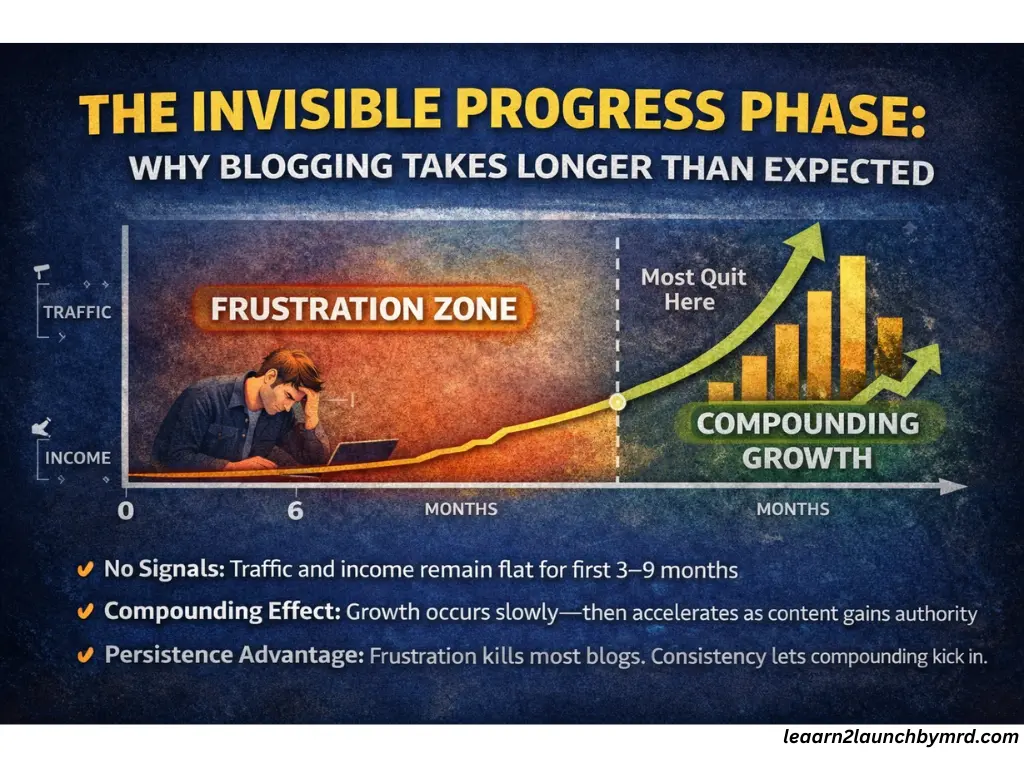
- Invisible progress phase – Metrics like traffic, engagement and email subscribers grow slowly and aren’t immediately noticeable.
Many new bloggers give up during this stage because they mistake slow growth for failure. In actuality, consistent publishing and small modifications add up over time to produce noticeable results.
Many beginners underestimate why blogging takes longer than expected. Search engines don’t reward content instantly. Understanding how Google evaluates content over time explains the invisible growth phase most bloggers quit during—long before rankings, traffic, or trust begin to compound.
Recognizing this “ invisible progress ” period is one of the most important beginner blogging mistakes to avoid . Patience doesn’t mean doing nothing, it means trusting the process, iterating on your content and letting your blog gain momentum behind the scenes.
Bloggers can concentrate on long-term growth rather than short-term validation, which is a sign of successful, sustainable blogging, by realizing that results are delayed.
Low engagement is often misread as failure, when it’s actually feedback. Understanding why people do not engage with your content helps you fix clarity, relevance and positioning issues early. Engagement problems usually signal a messaging gap, not a lack of effort or consistency.
Mistake 04 . Trying to monetize before trust exists
Attempting to monetize before gaining the trust of their audience is a crucial behavioral mistakes that many new bloggers commit. This is a sequence failure that quietly weakens early revenue; it has nothing to do with the incorrect affiliate program or ad placement.
Here is why it happens ,
- Monetization timing – Many beginners push products or ads immediately after launching, hoping for instant returns. The audience isn’t ready, so conversions are low.
- Audience readiness – Readers are just discovering your blog. They need value, consistency and guidance before they’re willing to invest in recommendations.
- Psychological barrier – Early monetization often backfires because it feels transactional rather than helpful, creating friction instead of trust.
This mistake is one of the subtle beginner blogging mistakes to avoid . It’s not the tactic that fails, it’s the timing and sequence. A blog can be monetized effectively, but only after readers have experienced consistent value and developed confidence in your expertise.
Blogs that earn consistently usually build audiences before income. Knowing how to build an email list for beginners helps you create trust long before monetization begins. An email list gives feedback, repeat traffic and confidence, three things most beginners lack when they quit too early.
The secret is to be patient and prioritize establishing credibility, providing solutions and encouraging trust. Monetization becomes a natural extension rather than a forced interruption once your audience feels confident and connected.
Without repeating the fundamentals discussed in “How to Monetize a Blog for Beginners,” sticking to this sequence will prevent frustration, boost conversion rates and establish the groundwork for long term, sustainable revenue.
Most income problems aren’t technical, they’re behavioral. Understanding common mistakes beginners make when monetizing content helps you avoid damaging trust, confusing readers and sabotaging long-term earning potential.
Mistake 05 . Quitting right before the compounding phase
One of the most heartbreaking patterns in blogging is watching new creators quit right before their efforts start to pay off. This is exactly why most blogs fail before making money and it’s almost never because of a lack of skill.
Here is what usually happens ,
- Traffic + skill lag – The blog is still gaining visibility and the blogger’s writing, SEO or promotion skills are only starting to improve. Early results don’t reflect the work being done.
- Confidence gap – Low engagement and minimal income create doubt. Bloggers question their ability to succeed and wonder if the effort is worth it.
- The invisible tipping point – Just weeks or months after quitting, consistent effort often begins to compound, leading to growth in traffic, email subscribers and eventually income.
Because progress seems impossible to attain, a lot of bloggers give up. They are unaware that blogging is an ongoing process in which initial effort sets the foundation for later success.
It is crucial for understanding this emotional trap. Those who persist through the difficult initial months have an unfair advantage over their peers who give up too soon. What separates blogs that fail silently from those that succeed are patience, persistence and faith in the process.
What successful bloggers do differently ?
It’s evident from looking at the typical causes of blog failure that using the newest plugin or following to the newest trend isn’t the key to success. The mindset and behavioral patterns of successful blogs differ from those of unsuccessful ones.
here is what sets successful bloggers apart,
- Long term thinking – They understand that blogging is a marathon, not a sprint. Every post, email and update is part of a larger growth plan. They aren’t chasing instant results but building a sustainable foundation.
- Date over emotion – Decisions are guided by performance metrics, feedback and analytics, not how they feel in the moment. They iterate based on real results, not motivation or frustration. Instead of guessing why income isn’t coming in, successful bloggers rely on data. Knowing how to use analytics to improve monetization strategy helps you understand what content converts, where readers drop off and which pages deserve optimization. Monetization improves when decisions are based on behavior, not assumptions.
- Process obsession – Consistency is king. Successful bloggers develop systems for content creation, promotion and audience engagement that function regardless of energy levels or mood.
- Delayed gratification – They resist the urge to monetize or expect immediate rewards. Trust, authority and income all come after sustained effort, not before.
Observe a trend, no special tools or covert strategies are mentioned. Plugins, themes and platforms are not as important as mindset, discipline and process.
By implementing these behavioral changes, bloggers may stay clear of the common mistakes we’ve covered, maintain consistency during the slow initial months and set up their blog for long-term revenue, compounding growth and trust.
How long it really takes to make money blogging?
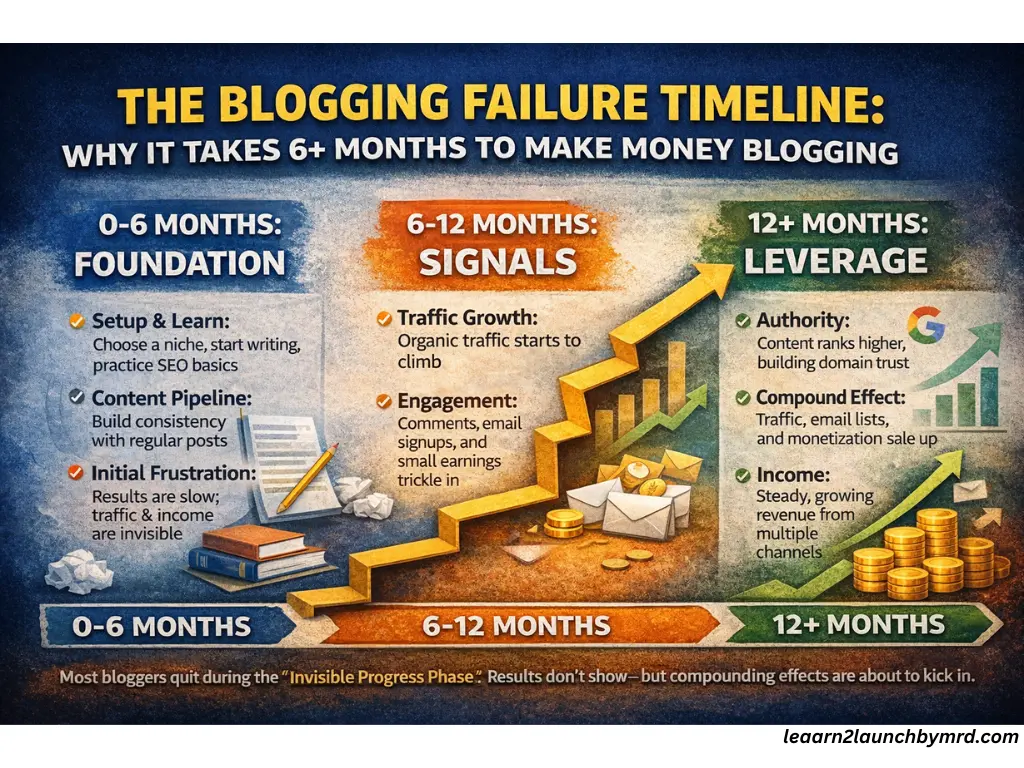
One of the most common questions beginners ask is, how long it takes to make money blogging . The honest answer is: it takes longer than most expect. but the timeline can be predictable if you understand the phases.
- 0–6 months – Foundation – This is the phase of setup and learning. You’re creating content, establishing your niche and building basic systems. Results may be slow or invisible, but every action lays the groundwork for future growth.
- 6 – 12 months – Signals – By this stage, you start seeing early indicators of progress: organic traffic growth, email subscribers, engagement or small affiliate commissions. These “ signals ” show which strategies are working and where adjustments are needed.
- 12+ Months – Leverage – After a year of consistent effort, the compounding effect takes over. Your content gains authority, search engines reward your posts, your audience trusts your recommendations and monetization begins to scale.
The key is understanding that slow early growth is normal . Bloggers who persist through the first 6–12 months position themselves for long term success, while those who quit early miss the compounding phase entirely.
Early traffic struggles are normal, not a sign of failure. Learning how to get traffic to a new blog helps you set realistic expectations while building multiple entry points search, social and referral, so slow growth doesn’t feel like wasted effort.
Patience, consistency and strategic iteration not luck determine when your blog will start earning its first meaningful income.
Many beginners quit before exploring long-term traffic channels. Learning how to drive website traffic from Pinterest can help blogs survive the early “ invisible phase ,” especially when Google traffic is slow. Pinterest rewards consistency and intent-based content, making it a patience-friendly platform for beginners.
Income focused blogs succeed when structure, patience and behavior align. Learning how to create a WordPress blog that makes money reinforces the idea that monetization is built over time, not activated instantly
Low traffic doesn’t mean zero opportunity. Learning how to monetize a blog with low traffic reframes income as alignment and intent, not volume, reducing frustration during the slow growth phase.
How to avoid these blogging mistakes without overworking
Avoiding common pitfalls doesn’t mean working harder , it means working smarter. By addressing behavioral patterns, you can prevent failure while keeping your blogging process manageable. Here’s how to do it
- Focus rules – Identify 1- 3 key goals for your blog. Avoid chasing every shiny tactic. Focused effort reduces wasted time and prevents frustration.
- Consistency rules – Build a publishing routine that fits your life. Small, regular actions outperform sporadic bursts of intense effort. Track metrics weekly instead of obsessing daily.
- Patience framework – Accept that results take time. Celebrate small wins like improved engagement, email signups or higher search rankings. Understand that progress compounds quietly before income appears.
- Iterate , Don’t overthink – Use data and feedback to tweak posts or strategies. Avoid endless planning, action combined with adjustment is more effective than perfectionism.
- Protect motivation – Focus on process, not instant validation. Recognize that beginner blogging mistakes to avoid often stem from impatience and overemphasis on early results.
By applying these simple behavioral rules, you maintain momentum, reduce burnout and set the stage for long term growth and eventual monetization without overwhelming yourself.
Frequently asked questions on why most blogs fail before making money
Why do most blogs fail before making money ?
Most blogs fail before making money due to behavioral mistakes like impatience, inconsistent publishing and premature monetization. Understanding how long it takes to make money blogging and avoiding beginner blogging mistakes to avoid can prevent early failure.
How long does it take to make money blogging ?
Typically, it takes 6-12 months to start seeing consistent income. The first 0-6 months are about building a foundation, 6-12 months show growth signals and after 12 months, compounding effects create leverage. Patience is key since why blogging takes longer than expected is normal.
What are the common blogging mistakes that kill income?
Common mistakes include inconsistent publishing, chasing motivation over systems, monetizing too early and quitting before results compound. Recognizing these common blogging mistakes that kill income helps new bloggers focus on sustainable growth.
How can I avoid beginner blogging mistakes ?
Avoid beginner blogging mistakes by building systems, focusing on long term goals, iterating based on data and trusting the compounding process. Consistency and patience are more valuable than short term tactics or quick wins.
Why does blogging takes longer than expected to succeed?
Blogging takes longer than expected because traffic, authority and monetization grow slowly. Early progress is often invisible and results require repeated effort and iteration. Understanding how long it takes to make money blogging helps set realistic expectations .
Blogging failure is predictable and preventable
The truth is why most blogs fail before making money isn’t random, it’s predictable. Most beginners stumble not because of tools or platforms, but because of behavioral patterns, impatience and unrealistic expectations. Understanding how long it takes to make money blogging and recognizing common blogging mistakes that kill income allows you to anticipate challenges rather than be surprised by them.
Success comes from focusing on systems, embracing patience and avoiding beginner blogging mistakes to avoid , like chasing instant results or monetizing too early. By committing to consistent effort, analyzing your progress and trusting the compounding nature of blogging, you can close the gap between expectation and reality.
Remember , early frustration is part of the journey . Why blogging takes longer than expected doesn’t mean failure, it means results are quietly building beneath the surface. Stay consistent, keep improving and avoid short term distractions.
Early income expectations silently sabotage progress. Understanding early income psychology for beginner bloggers helps you manage impatience, avoid emotional decisions and stay consistent long enough for compounding to work.
If you’re still publishing, you’re already ahead. By learning from these patterns, applying behavioral strategies and maintaining long-term focus, you position yourself to turn your blog into a sustainable, income generating asset.