


If you’re constantly feeling behind on content, this is on how to repurpose one blog post into multiple content formats is exactly what you need. Most beginners don’t struggle because they lack ideas, they struggle because creating new content from scratch every time is exhausting, time consuming and unsustainable.
Burnout in content creation is real, especially if you’re trying to blog, post on social media and maintain consistency with little time. You sit down to write, overthink everything and ultimately do nothing because your process has weaknesses rather than because you’re lazy.
This is where content repurposing for beginners change everything . The truth is ,
- Beginners don’t fail due to lack of creativity
- They fail due to lack of systems
- And creating “ new “ content every day is not a system
If you are wondering how to create content faster as a beginner without lowering quality or burning out, the answer isn’t more ideas, it’s better use of the ideas you already have.
This post does not explain what content repurposing is or how it works. Instead, it shows you how to use one blog post as a content engine , a simple , repeatable way to multiply your content across platforms without rewriting everything or living online.
Most blogs fail not because of poor writing, but because content is under distributed. Repurposing solves this visibility problem. Understanding why most blogs fail before making money reinforces why systems matter more than publishing volume.
Let’s break the cycle and build a system that actually works .
Table of Content – How to repurpose one blog post into multiple content formats
Why beginners should stop creating new content every time
It makes sense that you would feel burned out if you are attempting to post something new every single day. The majority of beginners erroneously believe that greater content equates to greater growth. In actuality, one of the quickest ways to feel stressed and stuck is to continuously create from scratch.
This is where content repurposing for beginners becomes a game changer. Instead of forcing yourself to create new ideas every day, you can reuse the content you already have and reach multiple audiences with less effort.
Here’s why creating “ new content every day ” often fails beginners,
- Time overload – Writing, designing and editing new content daily is exhausting.
- Mental load – Thinking up new ideas constantly drains creativity.
- Inconsistency – When it feels like too much, posting becomes irregular and inconsistent posting kills engagement.
- Limited impact – Spreading yourself thin prevents you from making any one post perform well.
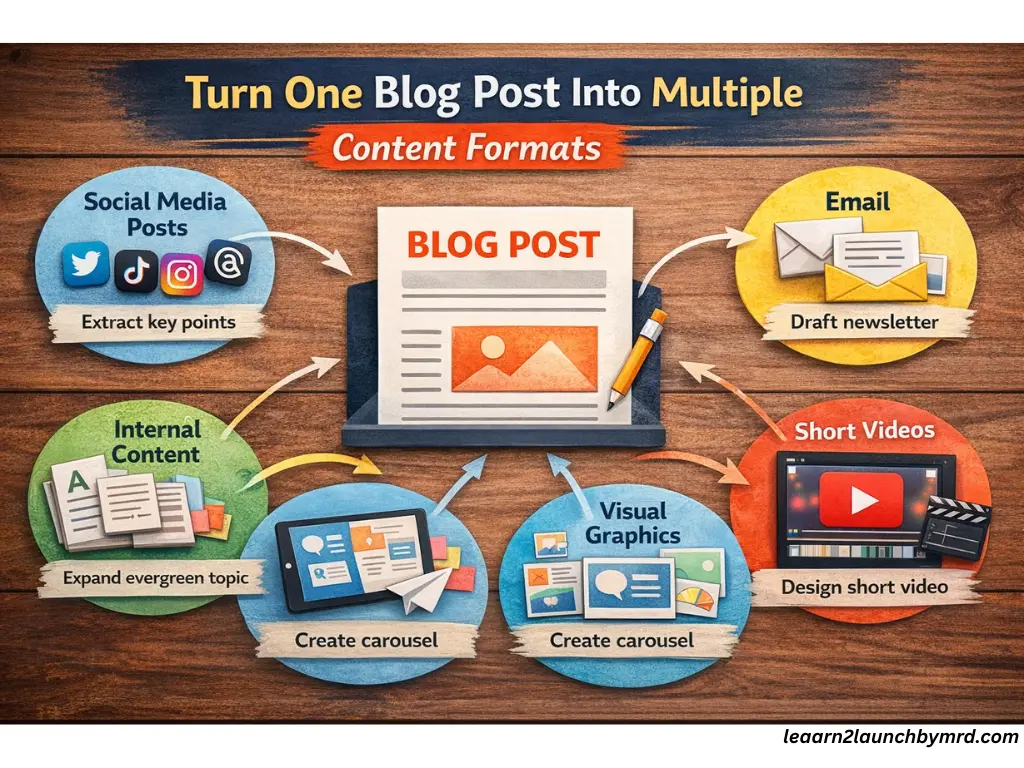
The smartest approach is distribution over creation, one blog post can become ,
- Multiple social media posts
- Short videos or reels
- Email newsletters
- Visual pins for platforms like Pinterest
- Updates for future blog content
- Updates for future blog content
Instead of stressing yourself out trying to create new content every day, you may focus on quality, reach and consistency by repurposing content.
Additionally, this approach fosters audience trust. The secret to developing as a beginner while maintaining your mental health is to repeat the message across platforms and keep your content visible without becoming overwhelming.
Repurposing content isn’t just about reach, it’s about repetition with intention. Seeing the same core ideas across platforms builds familiarity and credibility. This process directly supports how to build trust on social media as a beginner, because consistent messaging reinforces authority without feeling repetitive.
The beginner blog content distribution strategy
Most beginners focus all their energy on creating new content without thinking about where it goes . That’s why understanding a blog content distribution strategy is more important than creating content nonstop.
The key difference is simple ,
- Content creation is about generating ideas, writing posts or making graphics.
- Content distribution is about getting that content in front of the right audience on the right platform
Your blog is the foundation of this entire system. Without a solid setup, repurposing loses effectiveness. If you’re still building, learning how to create a WordPress blog that makes money ensures your content engine is built on a profitable base.
Your primary asset should always be your blog. Consider it the “master file” for each piece of content you produce. Every newsletter, brief video and social media post should come from your blog, not the other way around.
Instagram, LinkedIn, TikTok and Pinterest are examples of platforms that serve as distribution channels rather than sources of content. Instead of taking the place of what you already have, they enhance it.
New blogs struggle because great content often goes unseen. Repurposing solves this by pushing traffic from multiple channels back to one core post. Learning how to get traffic to a new blog becomes much easier when each post fuels distribution across platforms.
Think in content formats , not platforms
Beginners often get stuck thinking: “ What should I post on Instagram ? Or LinkedIn? ” The truth is, platforms reward familiarity not originality.
Focus on formats instead of platforms ,
- Short text snippets – great for X / Twitter threads or LinkedIn posts
- Quote images – perfect for Instagram and Pinterest
- Short video clips – ideal for Reels, Shorts, TikTok
One idea can fit multiple formats. Stop worrying about platforms; worry about how the content is packaged.
One blog post = one core idea
Every blog post should act as a source file . Everything else you create is an extraction.
- Break down you post into key points for social media
- Highlight quotes or lessons for visuals
- convert sections into emails or short videos
This way , you maximize the value of a single post without rewriting everything . The post becomes a content engine , power multiple channels while saving time and reducing stress
Repurposed content works best when aligned with business goals not random posting. Using social platforms strategically amplifies your blog’s impact. Learning how to use social media to grow your online business helps you turn repurposed content into long term assets.
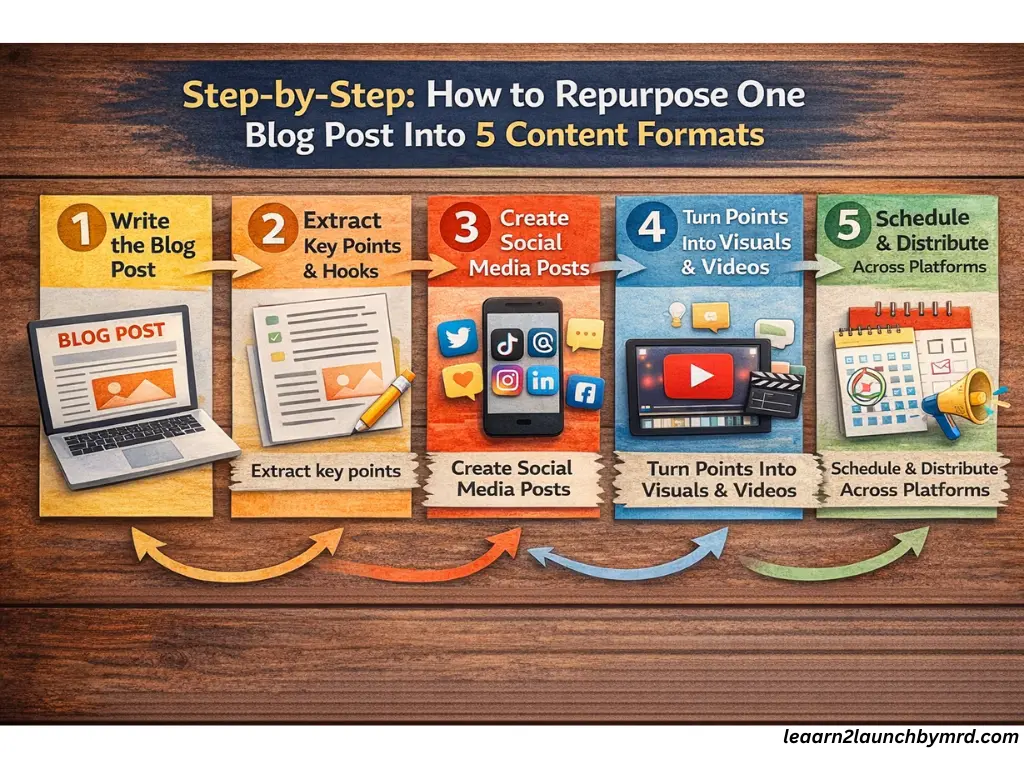
Step by step – how to repurpose one blog post into 5 content formats
If you’re looking for a practical system, here’s exactly how to repurpose one blog post into multiple content formats . This method is designed for beginners, saves time and ensures your content reaches more people without starting from scratch every time.
Repurposing involves identifying the best ideas, rewriting them in various formats and strategically distributing them rather than simply copying. You can establish a consistent content workflow that fosters authority and trust by adhering to these steps.
Format 01 . Turn your blog post into a social media post series
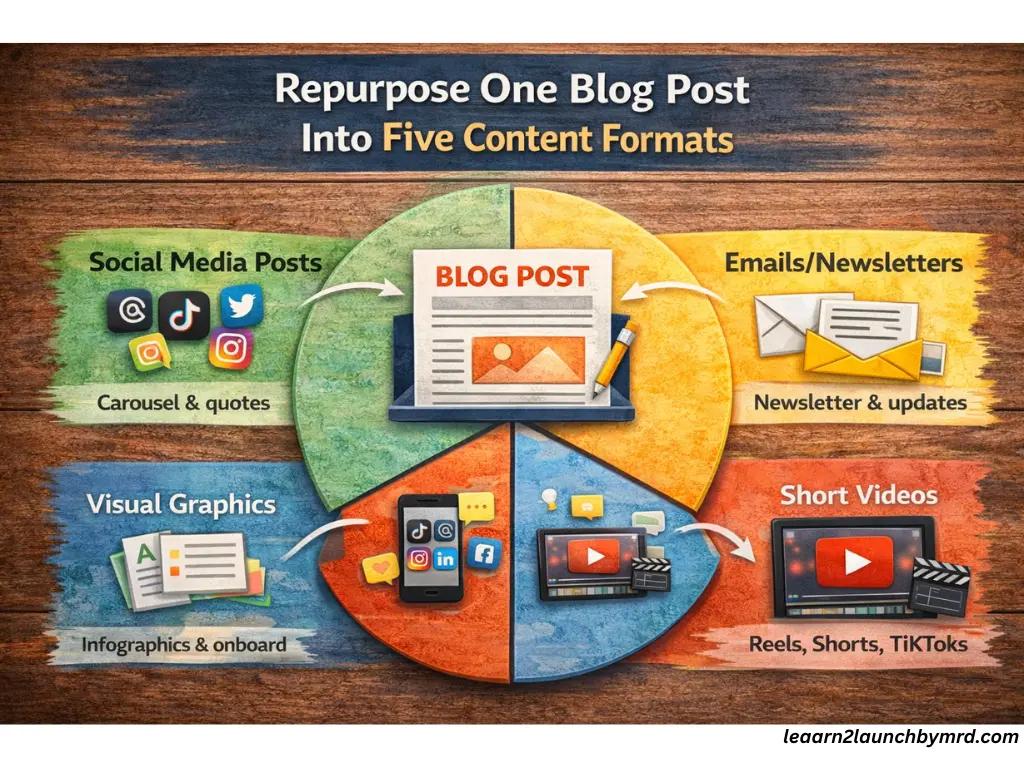
Social media is one of the fastest ways to get your blog content in front of an audience. To create a post series,
- Extract hooks – Pull engaging statements, questions or bold claims from your post.
- Identify key points – Turn your blog sections into concise social media points.
- Contrarian lines – Highlight anything surprising or counter intuitive , this increases engagement.
- Platform examples ,
- Facebook – carousel posts or multi slide guides
- LinkedIn – text posts or mini threads
- X / Threads – threads summarizing your blog ideas
Platforms like LinkedIn reward clarity, consistency and insight, not constant originality. When repurposing blog content into LinkedIn posts, framing ideas as lessons or experiences works best. If LinkedIn is part of your distribution plan, these LinkedIn success tips for online business beginners can help you adapt blog content without sounding promotional.
Avoid copying and pasting paragraphs. Write in a conversational style suitable for the platform. This guarantees uniqueness and encouraging engagement
With this method, a single blog post can produce five to ten social media posts.
Low engagement often isn’t about the platform, it’s about unclear messaging or weak positioning. Repurposing helps refine ideas, but understanding why people do not engage with your content ensures your extracted posts actually resonate instead of blending into the feed.
When repurposing a blog post into social content, strong hooks matter more than the format itself. If your posts aren’t stopping the scroll, the issue is often the opening line. This is why learning how to write hooks for social media as a beginner is essential when turning blog ideas into carousels, threads or short posts.
Format 02 . Convert the blog post into short form visual content
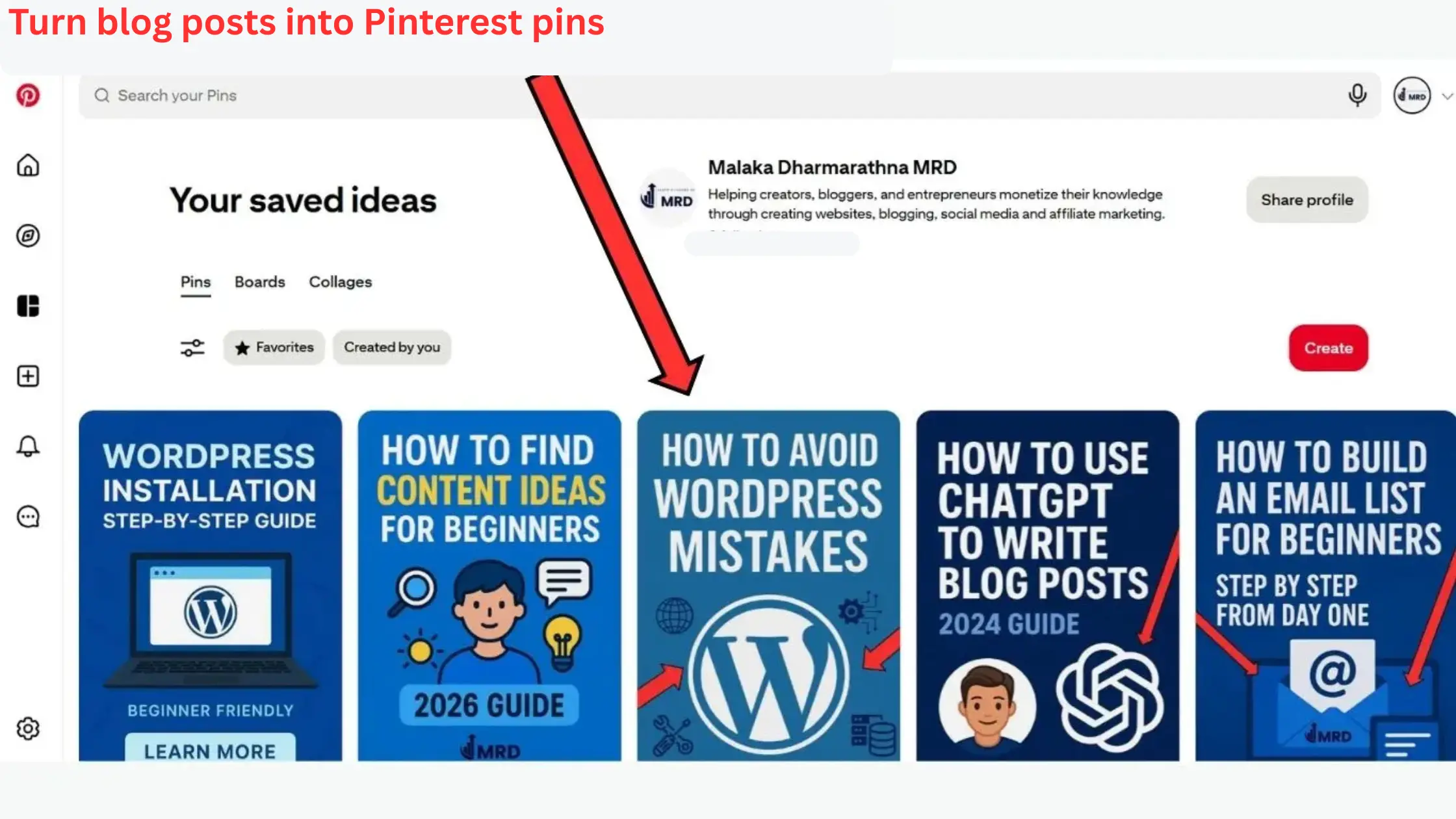
Visual content drives discovery and shares, especially on platforms like Instagram and Pinterest. Here’s how to turn your blog post into visuals,
- Pinterest Pins – Create one pin per key idea or tip
- Instagram graphics – Use quotes, tips or statistics from your post.
- Quote visuals – Highlight memorable lines from your content in Canva or other design tools.
- Workflow – Copy key sentences – design in Canva – export for platforms
Pinterest works differently from traditional social platforms, making it ideal for repurposed blog content. Turning key points into pins creates long term discovery. If traffic is your goal, learning how to drive website traffic from Pinterest can turn visual repurposing into a consistent blog traffic source.
Without having to write more posts, visual content can increase your audience by generating traffic from Pinterest and Google Image searches.
Beginner-friendly advice: Keep the branding consistent, keep the design simple and concentrate on readability. In a matter of minutes, this creates multiple shareable graphics from a single blog post.
Format 03 . Turn your blog post into an email or newsletter
Email newsletters are perfect for building trust and staying top of mind with your audience to convert a blog post .
- One idea , one lesson – Pick a single takeaway from your post.
- Short paragraphs – Keep emails concise, easy to read on mobile.
- No selling required – Focus on delivering value and insights.
- Call to action – Include a subtle link back to the original blog post for those who want details.
By repurposing one blog post into email content, you create a direct line to your audience without additional research or writing .
Use the same headings or bullet points from your blog as sections in the email to save time.
Format 04 . Repurpose blog content into short videos
Growing your following on YouTube Shorts, Instagram Reels or TikTok requires short-form videos. Videos can be made by beginners without revealing their faces.
- Text based videos – Turn blog points into slides with captions.
- Stock clips + captions – Use free stock video or animated clips while overlaying your text.
- Step by step ideas – Each key point from your blog can become a 15 – 30 second video.
Workflow example ,
- Pick 3 – 5 key points from the post
- Write captions or short scripts for each point.
- Pair captions with stock clips or Canva animations.
- Export videos for Instagram, TikTok or Shorts.
Why it works for beginners ,
- No expensive camera required
- No professional editing skills needed
- One blog post can generate multiple short videos in an hour or a two hour
Short videos increase visibility and drive traffic back to your blog, turning one post into an entire mini video series
Format 05 . Reuse the blog post for evergreen and internal content
Finally, a blog post can be repurposed to strengthen your website.
- Internal linking – Use the post to link to future posts or related content.
- Update old posts – Refresh outdated sections with new tips or insights.
- Turn section into future posts – Each subsection can become a standalone article.
- Build topical authority – Reusing content strategically signals Google that your blog is a comprehensive resource.
Repurposing isn’t just about growth, it supports monetization. More reach means more clicks, trust and opportunities. If income is your goal, understanding how to monetize a blog for beginners helps you connect content distribution with revenue strategies.
Schedule updates and internal linking as part of your workflow. This ensures your blog stays relevant and drives consistent traffic.
By following these five repurposing formats , beginners can,
- Save hours of content creation time
- Reach multiple platforms without extra writing
- Build authority, trust and consistency
- Maximize every blog post as a content engine
One blog post isn’t just a single piece of content, it’s the foundation of your entire content strategy.
Not every repurposed post performs the same and guessing what works leads to wasted effort. Tracking clicks, saves and engagement helps you double down on what converts. Understanding how to use analytics to improve monetization strategy allows you to repurpose smarter, not harder. especially when your goal is long term income.
The exact workflow I use to create content faster as a beginner
If you’re struggling with consistency or feeling overwhelmed, understanding how to create content faster as a beginner is a game-changer. The secret isn’t working harder ,it’s creating smarter. By treating one blog post as a content engine , you can generate multiple outputs in a single workflow without burning out.
The key principles are ,
- One writing section – Focus on completing the blog first before thinking about other formats.
- Batch extraction – Pull all ideas, quotes and key points in one go.
- Scheduling mindset – Plan your content ahead, rather than reacting daily.
- Content calendar logic – Organize repurposed content across platforms for consistent delivery.
Start with the blog
Your blog is the foundation of everything else. Write your post thoroughly, covering key points, examples, and actionable insights. Once the blog is complete, all your social posts, emails, visuals and videos can be extracted from this single source, saving hours of repeated work.
Extract – Reframe – Schedule
After finishing the blog, extract the key ideas for different formats. Then, reframe the content for each platform: a carousel, a short video, an email, or a quote graphic. Finally, schedule the content on your platforms instead of posting spontaneously. This system ensures consistency without stress.
One section , multiple outputs
The magic happens when you produce everything in one session . For example ,
- Write a blog (core idea)
- create social snippets
- Design visuals
- Draft emails
- Plan videos
By following this workflow, you’re maximizing one effort into multiple pieces of content , helping you stay consistent, build authority, and save time ,exactly what beginners need to scale content without burnout.
Beginner blogging strategy – when and what to repurpose first
A strong beginner blogging strategy isn’t just about writing posts , it’s about knowing which posts to repurpose first Repurposing the right content ensures you maximize effort, save time and avoid overwhelm.
Start with posts that are ,
- Evergreen – Timeless content that remains relevant over months or years. These posts have the most long term value.
- Problem solving – Posts that answer common questions or solve audience pain points. These naturally attract engagement and shares.
- Traffic focused – Posts that already bring visitors or rank for key search terms. Repurposing these amplifies their reach and ROI
At the same time , avoid repurposing posts that are too nicer or outdated. Posts with irrelevant trends, overly specific events or poor quality content may not convert well when reused.
Audience growth comes from consistent exposure to the right ideas. Repurposing increases visibility without increasing workload, which supports early growth. This system aligns naturally with how to get your first 1000 followers as a beginner for free, especially when content reaches multiple platforms consistently.
Tips to avoid overwhelm –
- Focus on 3 – 5 posts at a time , not everyone at once
- Prioritize posts with high engagement or search potential
- Use a content calendar to plan repurposing sessions in advance
By following this approach, your blog becomes a content engine and each post you write can work multiple times across platforms, building traffic and authority without creating new content endlessly.
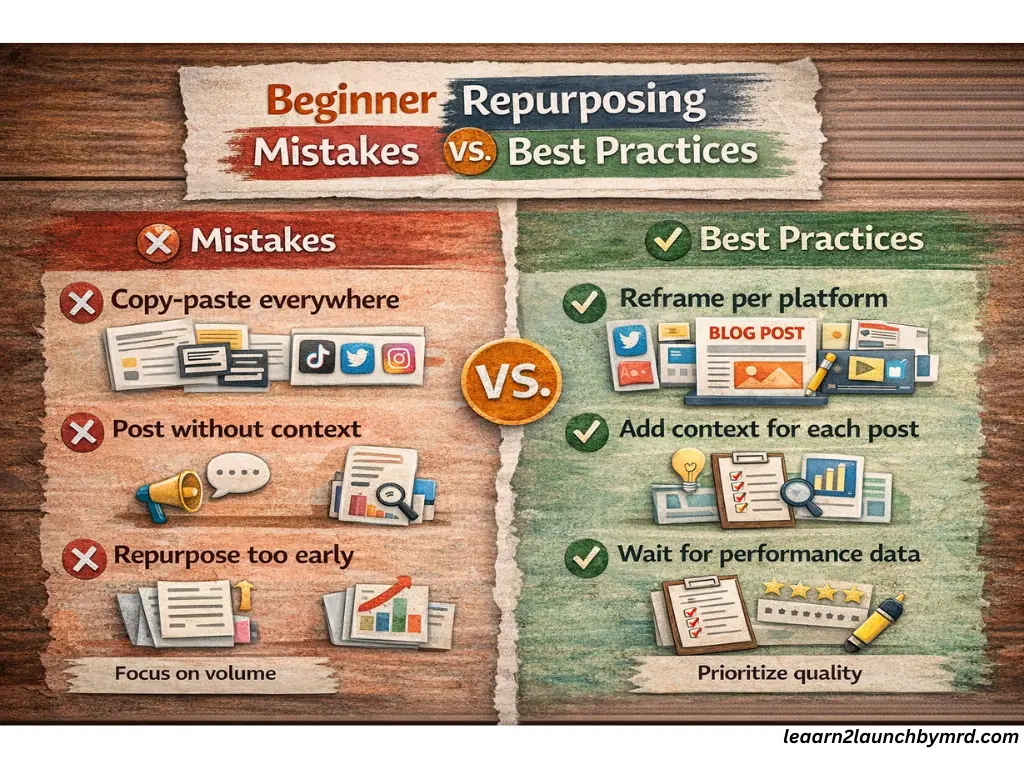
Common beginner repurposing mistakes that kill results
Even with a solid content repurposing strategy , beginners often make mistakes that reduce impact and waste time. Avoiding these pitfalls will help your content reach its full potential.
01 . Copy pasting everywhere
Simply copying blog paragraphs into social media posts or emails rarely works. Each platform has its own style, tone and audience expectation. Tailor your content for each channel instead.
02 . Posting without context
Sharing content without explaining its relevance or framing it for the audience leads to low engagement. Always give context and clarify the value your audience will get.
03 . Repurposing too early
Repurposing content immediately after publishing doesn’t allow your blog post to perform or gather insights. Wait to see what resonates, then amplify the best performing parts.
04 . Focusing on volume over clarity
Posting everywhere without a clear plan creates noise, not authority. One well executed post repurposed thoughtfully is more effective than dozens of rushed updates.
By avoiding these mistakes, beginners can repurpose content strategically , build authority and maximize ROI from each blog post without wasting time or effort.
Many beginners repurpose content correctly but still see poor results due to avoidable mistakes. Posting without context, copying content everywhere or focusing on volume over clarity can hurt engagement. Reviewing 10 social media mistakes beginners must avoid can help you fix issues before scaling your repurposing system.
How this repurposing system helps you stay consistent without burnout?
One of the biggest challenges for beginners is staying consistent without feeling overwhelmed. By following a structured content repurposing system , you can maintain a regular publishing schedule while protecting your energy and creativity.
- Consistency without pressure – You’re no longer scrambling for new content every day. Each blog post becomes the foundation for multiple outputs across platforms.
- Mental clarity – Knowing exactly how to extract, reframe and schedule content removes guesswork and reduces decision fatigue.
- Sustainable content growth – By focusing on repurposing strategic posts rather than constantly creating new ones, your blog and social presence grow steadily over time.
This system aligns perfectly with a beginner blogging strategy , helping you prioritize high-value content and maximize impact.
Instead of feeling burned out or scattered, you’ll experience emotional pay off , confidence in your process, clarity in your content plan and the satisfaction of building an audience efficiently.
With this approach, one blog post can drive months of content and results, without the stress.
Consistency doesn’t come from posting more, it comes from reducing friction. Repurposing one blog post into multiple formats makes consistency realistic. This approach aligns closely with how to stay consistent on social media without burnout, because it removes daily pressure while maintaining visibility.
Frequently asked questions on content repurposing for beginners
What is the best way to repurpose a blog post for beginners?
The best way for beginners to start is by following a content repurposing system . Focus on extracting key points, quotes and actionable tips from your blog post, then turn them into social media posts , visuals , emails or short videos . This approach helps create content faster as a beginner without rewriting everything.
How can I repurpose one blog post into multiple content formats ?
You can repurpose one blog post by breaking it into different formats,
- Social media post series (Facebook, LinkedIn, X/Threads)
- Short-form visuals (Pinterest, Instagram graphics)
- Email newsletter
- Short videos (Reels, Shorts, TikTok)
- Internal or evergreen blog content
This method ensures your blog content distribution strategy works efficiently while saving time.
Which type of blog posts should I repurpose first?
Focus on posts that are evergreen , problem solving or traffic focused . These posts have the most long term value and audience impact. Avoid outdated or overly niche content to prevent wasted effort. A clear beginner blogging strategy ensures you repurpose high-value content first.
How can repurposing content help me stay consistent without burnout ?
Repurposing allows you to create once and share many times which reduces mental load and prevents burnout. Using a structured workflow for extraction, reframing and scheduling helps beginners maintain consistency while growing their blog and social presence sustainably.
Do I need to rewrite my blog content when repurposing?
Not entirely. Beginners should reframe content for each platform instead of copying and pasting. Tailor the tone, format and style to suit social media, emails or visuals. This ensures engagement and maximizes the impact of one blog post while following a content repurposing system for beginners.
One blog post is more powerful than you think
If you’ve followed along, it’s clear how to to repurpose one blog post into multiple content formats can transform your blogging workflow. One well crafted post isn’t just a single piece of content, it’s the foundation for social media, emails, videos and more.
The real power comes from thinking in systems , not one offs . Instead of creating endlessly, focus on extracting value from what you already have. This approach saves time, builds authority and keeps your content consistent across platforms.
Pick one of your existing posts, and try repurposing it into at least two other formats . This guide focuses on execution, not definitions. If you’re new and want to understand the concept behind this system, reading what is content repurposing and how does it work will give you the foundation needed to apply these strategies with clarity and confidence.
Start small, stay consistent, and watch how one blog post becomes a content engine for your entire strategy.