
When I first started looking into high paying affiliate programs for beginners , I thought the answer was simple ; promote the products that pay the most money. Bigger commission, bigger income…… right? But very quickly, I realized the real question isn’t just about payout. It’s about choosing the right model for your stage, your blog, and your audience. That’s where the debate around high ticket vs low ticket affiliate marketing for beginner bloggers becomes important.
If you already understand the basics of affiliate marketing, the next big decision is choosing between high ticket and low ticket offers.
Here’s the dilemma most beginners face,
- Should I promote cheaper products that are easier to sell?
- Or focus on expensive products that pay larger commissions?
- Is it better to make 50 small sales or 2 big ones?
Both models work.
Both can make money.
But they require different strategies, expectations and patience levels.
In this guide, I’ll walk you through
- The real earning differences
- The pros and cons of each approach
- And how to decide which one fits your blog right now
No hype. Just practical clarity so you can move forward with confidence.
Understanding the fundamentals helps when choosing between ticket sizes. Affiliate Marketing for Beginners Complete Guide covers the core concepts that support smart decisions about commission structures and program selection.
Table of Contents – High ticket vs low ticket affiliate marketing for beginner bloggers
Understanding affiliate marketing commission structures
Before choosing products, you need to understand how affiliate marketing commission structures actually work.
Not all programs pay the same way. And the structure behind the payout often determines whether something becomes high ticket or low ticket.
Here are the most common types of affiliate marketing programs you will come across ,
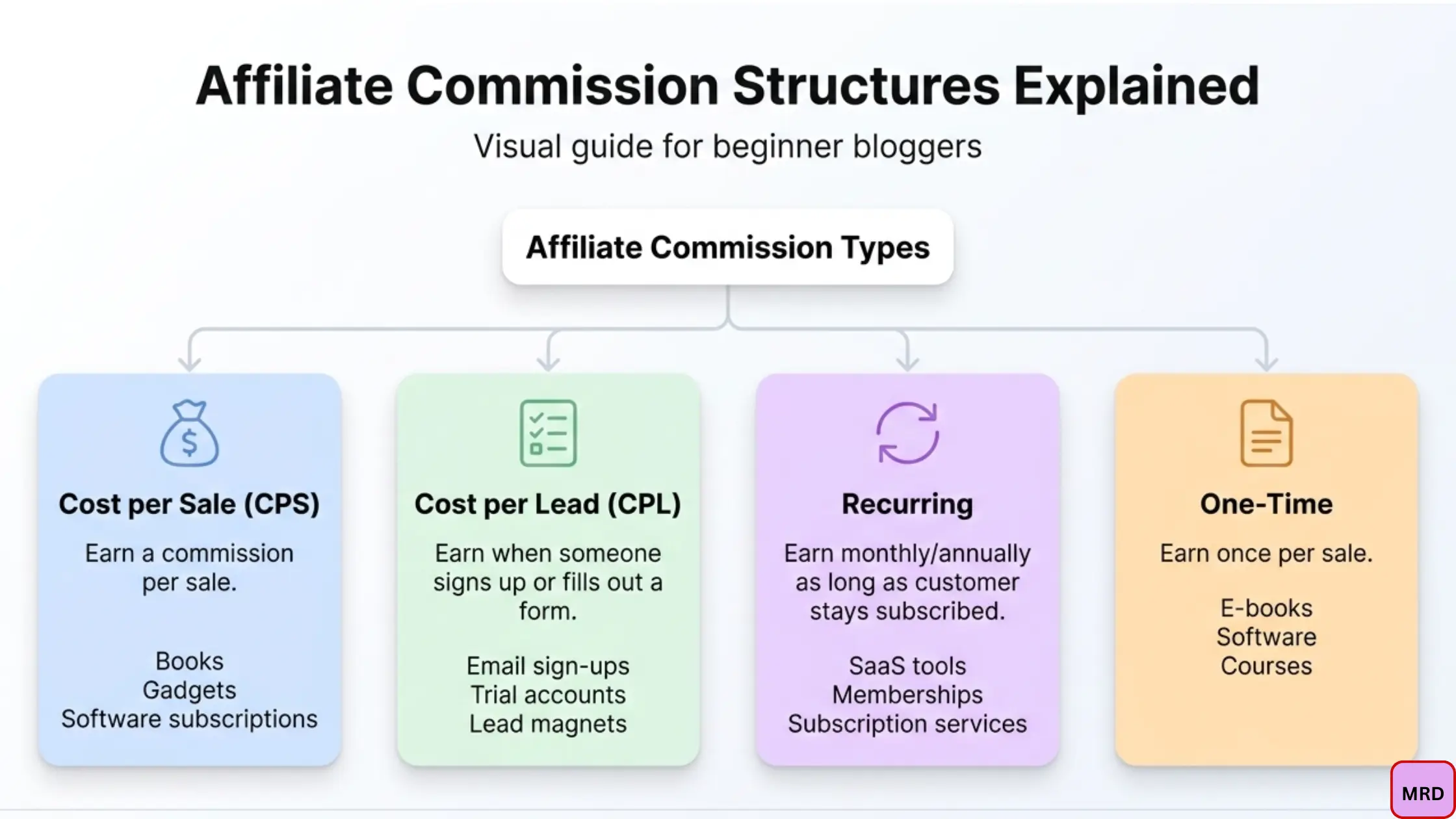
Cost per sale (CPS)
This is the most common model.
You earn a commission only when someone buys through your link.
- Example: Promote a $100 product with 20% commission – you earn $ 20 per sale.
- High ticket products usually use this model.
Cost per lead (CPL)
You get paid when someone signs up or fills out a form.
- No purchase required.
- Lower payout, but easier conversions.
One time commissions
You earn once per sale.
That’s it. No future payments from that customer.
Recurring commissions
This is powerful.
You earn monthly or yearly as long as the customer stays subscribed.
Many , high paying affiliate programs for beginners fall into this category , especially software and online tools.
The key takeaway?
The commission structure directly affects,
- How much you earn per sale
- How hard it is to convert
- Whether income is one time or long-term
And this matters more than most beginners realize.
Types of affiliate marketing programs explained
When people talk about the types of affiliate marketing programs , they usually focus on commission style. But in reality, the ticket size changes everything – your strategy, traffic needs, and income expectations.
Let’s break this down in a practical way.
Low ticket affiliate programs
Low ticket affiliate marketing usually involves products priced under $100. These are everyday purchases.
- Books
- Small gadgets
- Budget software tools
- Online utilities
Because the price is low, people don’t overthink the purchase. That means,
- Higher conversion rates
- Faster sales
- Smaller commissions per sale
You might earn $5 – $30 per sale.
It feels slow at first. But with steady traffic, those small commissions can stack up. Many beginners start here because it’s easier to build momentum and confidence.
High ticket affiliate programs
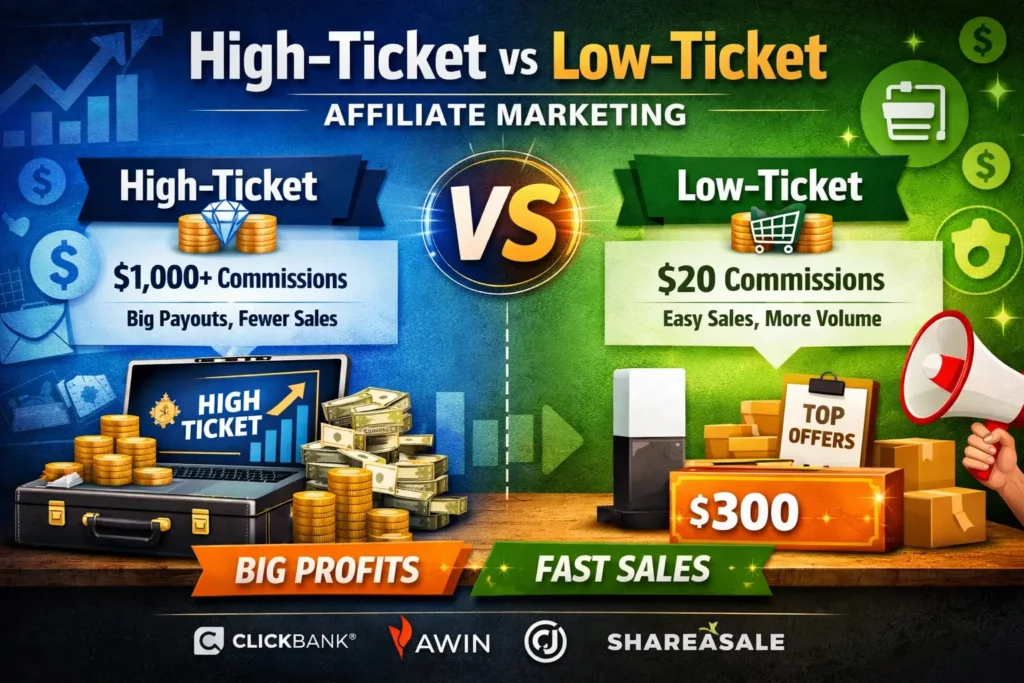
High ticket affiliate marketing focuses on products typically priced between $500 and $5000 or more. Examples include,
- Premium online courses
- Business software subscriptions
- Coaching programs
- Luxury products
The conversion rate is lower because people think carefully before spending that much. But the reward is bigger.
One sale could earn,
- $200
- $500
- Even $1000+
That’s why many high paying affiliate programs for beginners fall into this category – especially in tech, finance and education niches.
Recurring and hybrid models
Some of the smartest bloggers focus on recurring programs. This include –
- Subscription services
- SaaS tools
- Membership platforms
Instead of earning once, you earn every month the customer stays subscribed. This is powerful because
- It builds predictable income
- You don’t need constant new sales
- Income compounds over time
For long term bloggers, recurring models often become the most stable strategy.
Platforms like Shopify and SEMrush commonly offer recurring commissions for subscription-based affiliate programs.
High ticket affiliate marketing – pros and cons
When I first explored high ticket affiliate marketing for bloggers , I was attracted to one thing the math.
It looked simple. Fewer sales. Bigger income.
But like everything in business, there’s more to it.
Benefit of high ticket affiliate marketing
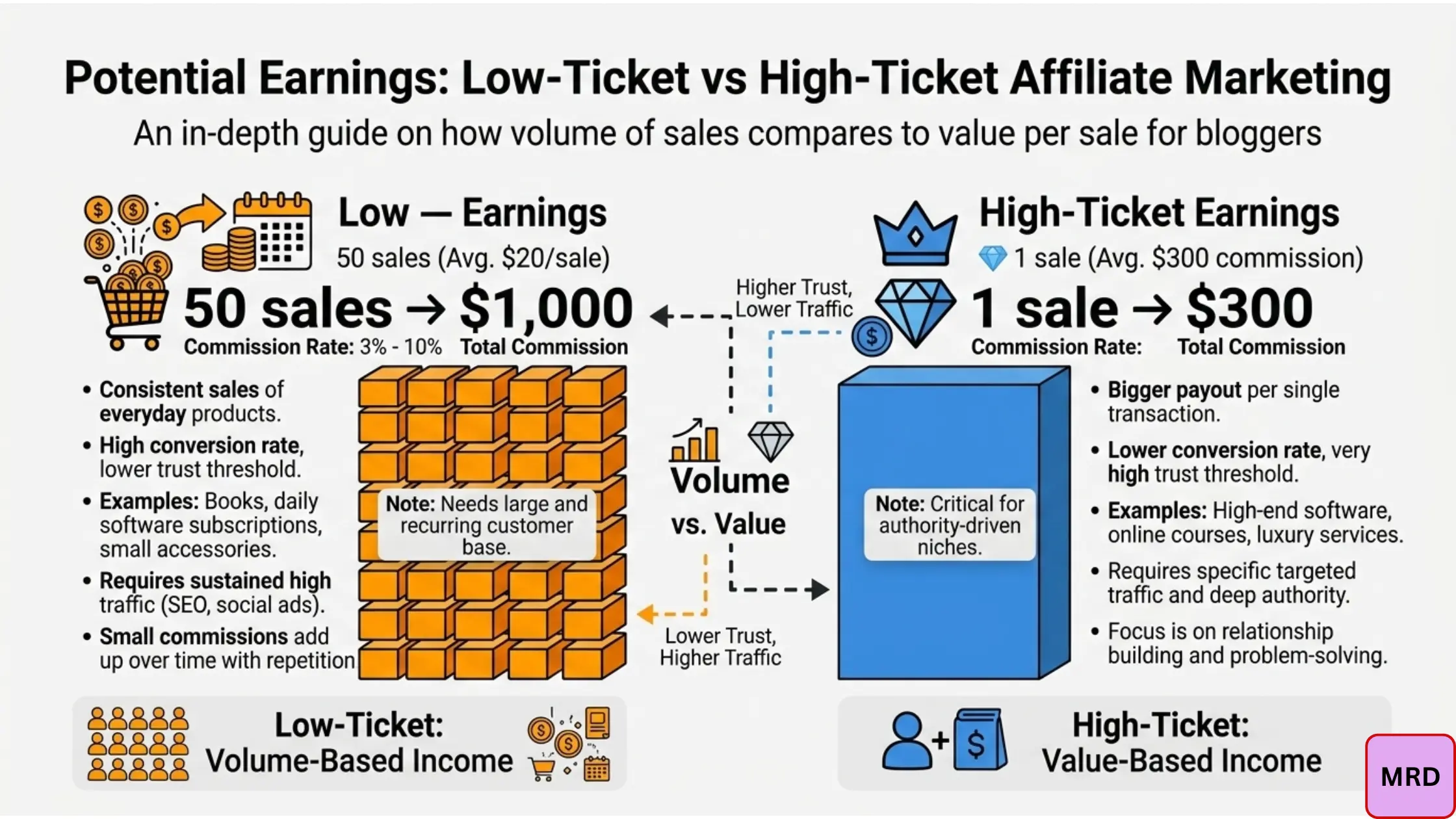
The biggest advantage is obvious,
You don’t need many sales.
For example –
- 1 sale at $1000
- 30% commission
- You earn $300 from one customer
Now compare that to selling a $20 product.
This model offers;
- Higher revenue potential
- Faster income jumps
- Premium brand positioning
- More scalable long term growth
Many high paying affiliate programs for beginners are in industries like software, education, finance and online business.
Instead of chasing volume, you focus on quality traffic and stronger buying intent.
That’s why many advanced affiliate marketing strategies for bloggers include at least one high ticket offer.
As authority grows, affiliate commissions often lead to bigger opportunities. How to Monetize Your Knowledge Online explores turning expertise into premium offers, which naturally aligns with high-ticket monetization models.
Challenges of high ticket affiliate marketing
Here’s the part beginners don’t always expect.
High-ticket products require ,
- Trust
- Authority
- Patience
People don’t spend $1000 instantly.
The buyer journey is longer. They research. They compare. They hesitate.
Trust plays a major role in selling premium offers. How to Build Trust on Social Media as a Beginner shows how credibility built outside the blog strengthens both high-ticket and recurring affiliate conversions.
You usually need,
- In-depth blog content
- Case studies
- Tutorials
- Sometimes an email funnel
Without trust, conversions stay low.
So while the payout is attractive, the effort behind each sale is significantly higher.
Jumping into expensive programs too early can slow progress. Common Monetization Mistakes Beginners Make When Monetizing Content discusses unrealistic expectations, poor product alignment, and strategic missteps that often delay affiliate results.
Low ticket affiliate marketing – Pros and cons
When I started, I actually leaned toward smaller products first. Not because they paid more but because they felt realistic.
That’s the core idea behind low ticket affiliate marketing strategies . You focus on products that are easier for people to buy.
Benefits of low ticket affiliate marketing
Low-ticket products are usually under $100. that means,
- Easier conversions
- Faster buying decisions
- Lower trust barrier
People don’t need weeks to decide whether to buy a $25 tool or a $40 gadget.
This model works especially well with SEO traffic. If your blog ranks for buyer-intent keywords, small commissions can add up steadily.
It’s also great for building confidence as a beginner. You start seeing sales faster. For example,
- 50 sales
- $20 commission each
- That’s $1000 total
That’s why many affiliate marketing tips for beginners recommend starting here to understand traffic, conversions and content strategy before scaling.
Challenges of low ticket affiliate marketing
The downside? Volume. You need consistent traffic to make meaningful cncome. Because,
- Profit margins are smaller
- You rely on more clicks
- Growth can feel slow at the beginning
If your blog only gets 100 visitors a month, low ticket won’t move the needle much. This model rewards patience, SEO effort and content consistency. It’s not flashy , but it can be stable if done correctly.
Often, the issue isn’t choosing high-ticket or low-ticket offers – it’s deeper strategy problems. Why Most Blogs Fail Before Making Money highlights structural and mindset mistakes that stop blogs from generating consistent income.
High ticket vs low ticket – dirrect comparison
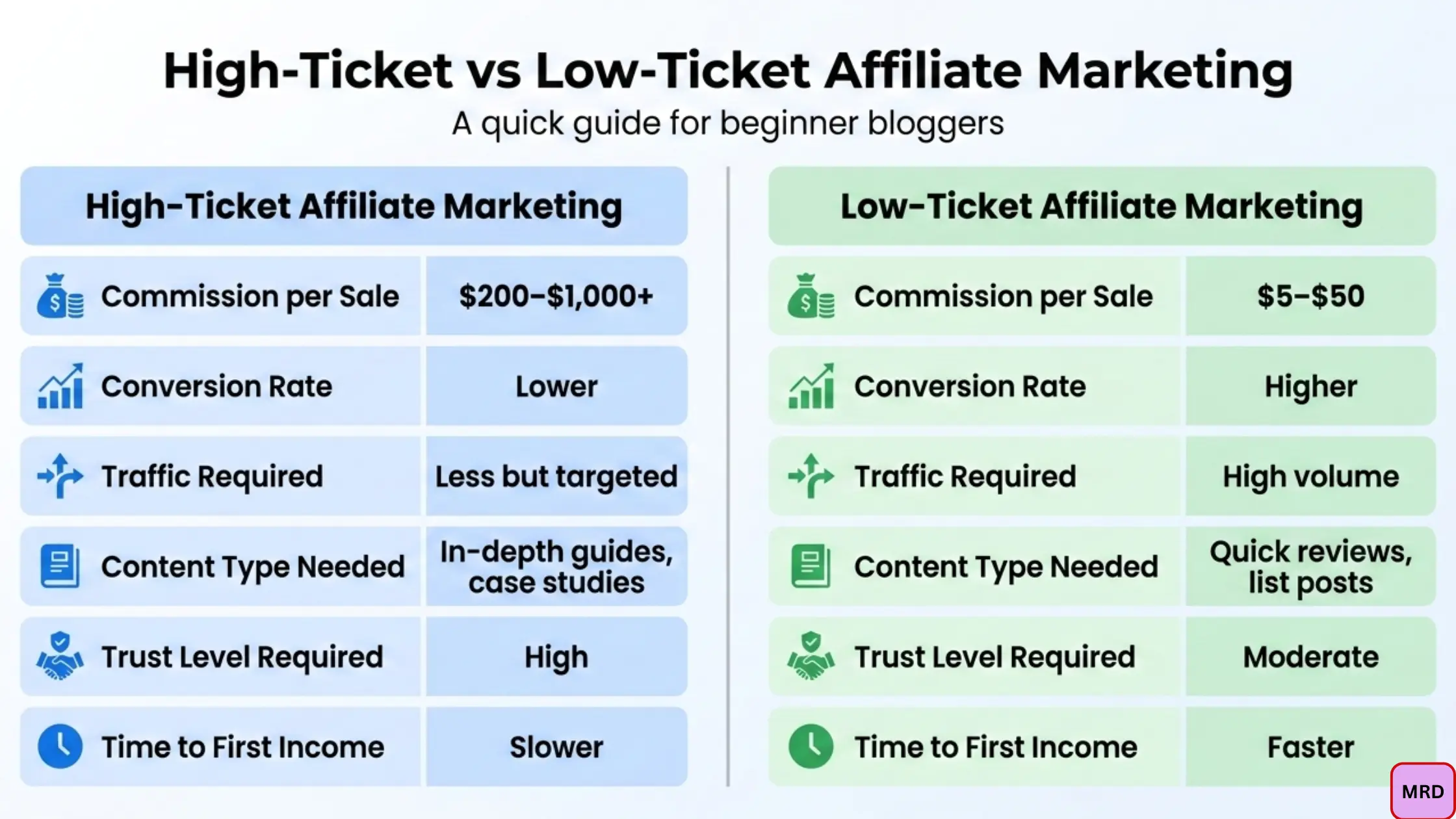
When it comes to high ticket vs low ticket affiliate marketing for beginner bloggers, the difference isn’t just about commission size.
It affects your traffic strategy, content depth and even how long it takes to see results. Here’s a simple breakdown to make the decision clearer,
| Factor | High ticket | Low ticket |
|---|---|---|
| Commission Per Sale | $200 – $1,000+ per sale | $5 – $50 per sale |
| Conversion rate | Lower (buyers think longer) | Higher (faster decisions) |
| Traffic required | Less traffic, but highly targeted | More traffic needed overall |
| Content type needed | In-depth guides, case studies, comparisons | Reviews, list posts, quick recommendations |
| Trust level required | High trust & authority required | Moderate trust needed |
| Time to first income | Slower start, bigger payouts | Faster start, smaller payouts |
If you are exploring high paying affiliate programs for beginners , remember this,
- High-ticket = fewer sales, bigger impact
- Low-ticket = more sales, steady momentum
Neither is “better” . It depends on,
- Your niche
- Your traffic level
- Your patience
- Your long term strategy
The smartest bloggers eventually learn how to use both.
How to choose the right model for your blog ?
Now comes the real question, what’s the best affiliate model for beginners – especially for your blog?
There’s no universal answer. The right choice depends on your current stage. Smart affiliate marketing strategies for bloggers always match the model to the situation. Let’s break it down.
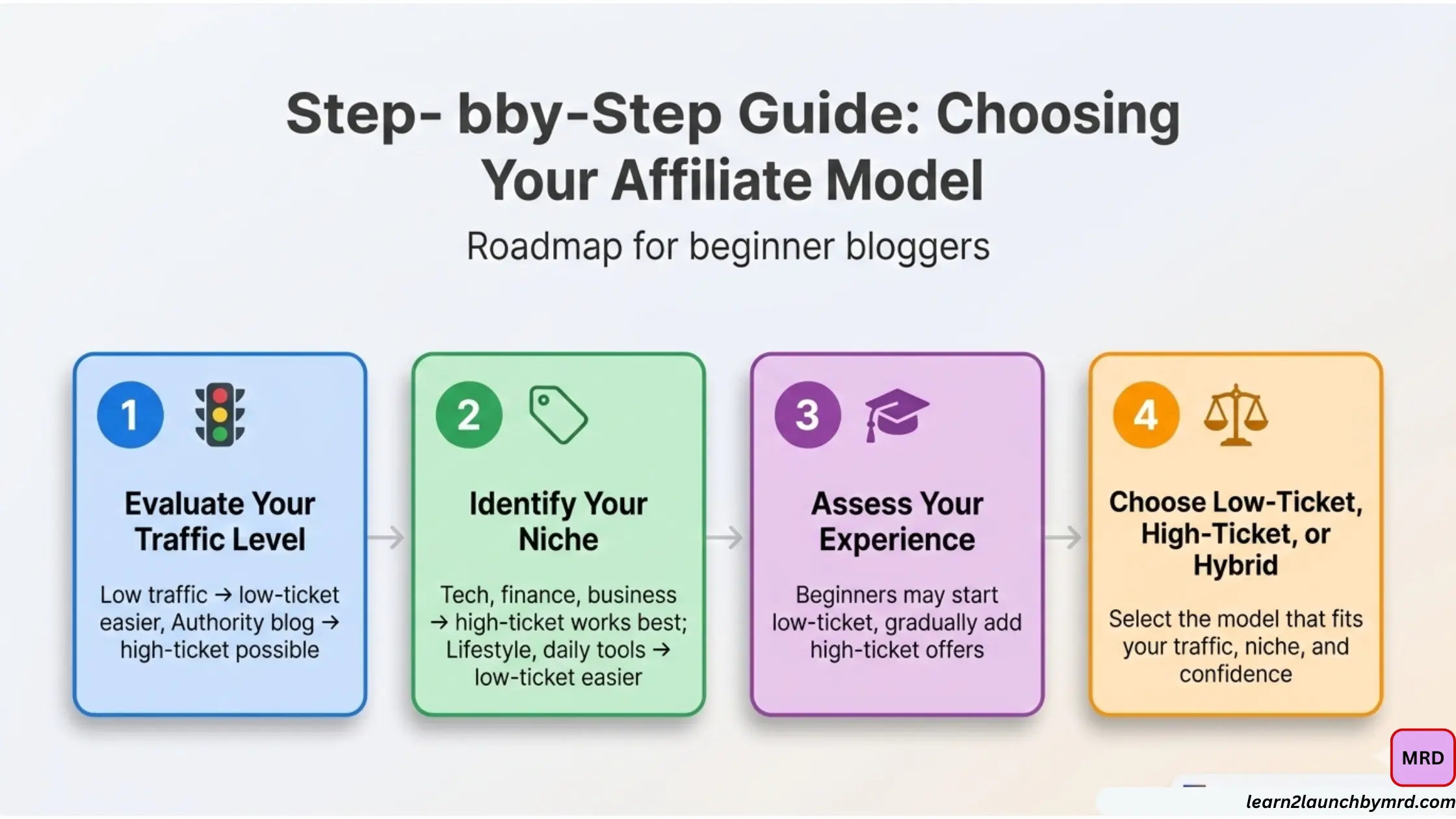
01 . Consider your traffic level
If your blog is still new and traffic is low, low ticket products are usually easier. Why ?
- Visitors don’t know you yet
- Small purchases require less trust
- Conversions happen faster
But if you already have,
- Consistent traffic
- A focused niche
- Engaged readers
Then high ticket affiliate marketing becomes realistic. You don’t need thousands of visitors, just the right ones.
Before committing to a high-ticket or low-ticket strategy, the platform itself matters. Blogging vs YouTube Which Is Better for Making Money for Beginners compares how each channel impacts long-term monetization, traffic control, and income stability.
High traffic isn’t always required to begin earning. How to Monetize a Blog with Low Traffic outlines practical monetization methods that work even when your audience size is still small.
02 . Consider your niche
Some niches naturally support high ticket offers. For example,
- Tech
- Finance
- Online business
- Software
These often include high paying affiliate programs for beginners willing to invest in tools or training. On the other hand,
- Lifestyle
- Daily tools
- Home products
- Budget solutions
These usually perform better with low-ticket volume based strategies. Match your model to buying behavior in your niche.
03 . Consider your experience level
If you’re just starting, begin simple. Low ticket helps you,
- Understand conversions
- Learn content optimization
- Gain confidence
As your authority grows, gradually introduce high ticket offers. You don’t have to choose one forever. The smartest move is evolving with your blog.
Monetization also depends heavily on site organization. How to Structure a Blog for Beginners breaks down how proper categories, pillar posts, and internal linking improve conversions for both high-ticket and low-ticket affiliate models.
Can you combine high ticket and low ticket?
Yes , and honestly, this is where things get interesting. Blending high ticket and low ticket affiliate marketing is often the smartest long term strategy.
Here’s how it works in practice,
- Use low-ticket products to generate consistent, steady income.
- Build traffic through SEO and helpful content.
- Let small commissions stack up month after month.
Then, strategically introduce,
- High ticket offers for larger income boosts
- Premium tools, courses or services
- Products that solve deeper problems
Email marketing becomes powerful here. You can nurture trust through your blog and newsletter, then recommend high ticket products when your audience is ready.
Email marketing becomes powerful when promoting premium products. How to Build an Email List for Beginners covers foundational steps for collecting subscribers and nurturing relationships before introducing higher-priced affiliate offers.
Low-ticket builds stability. High-ticket creates breakthroughs. Together, they create balance.
Small early commissions can shift motivation dramatically. Early Income Psychology for Beginner Bloggers explores how those first low-ticket wins build confidence and long-term consistency before moving into higher-value offers.
Practical tips for promoting high paying affiliate programs
Promoting high paying affiliate programs for beginners isn’t just about adding links. It’s about strategy, value and trust. Here are practical tips that work.
01 . Create in-deapth reviews
Write honest, detailed reviews that cover benefits, features and potential drawbacks. Your readers should feel informed enough to make a decision.
02 . Use comparison posts
Compare similar products. Highlight why one might be better for certain needs. This naturally integrates multiple affiliate links.
03 . Build an emai list
Email lets you nurture your audience over time. Promote high-ticket offers to engaged subscribers when trust is established.
04 . Focus on search intent keywords
Target phrases people use when actively searching to buy. This increases the chances of conversions.
05 . Use clear CTAs
Make your call-to-action obvious. Use buttons, highlighted links, and actionable text like “Get access now” or “Start your free trial“.
06 . Track performance
Monitor clicks, conversions and revenue. Test different placements and formats for your affiliate links.
Data-driven decisions make affiliate growth predictable. How to Use Analytics to Improve Monetization Strategy focuses on tracking click-through rates, conversions, and behavior patterns to determine whether low-ticket or high-ticket offers perform better.
Following these strategies not only improves results but also teaches affiliate marketing tips for beginners about what works in real-world promotion.
Remember , proper affiliate link placement strategies can make a huge difference in how much you earn from each post.
Even the strongest offer can underperform if link placement is weak. Where to Place Affiliate Links in Blog Posts explores positioning strategies that increase click-through rates while keeping content natural and trust-focused.
Frequently asked questions on high ticket vs low ticket affiliate marketing
What is the difference between high ticket and low ticket affiliate marketing ?
High-ticket affiliate marketing focuses on promoting expensive products with larger commissions, while low-ticket affiliate marketing promotes smaller, cheaper products with lower commissions. Beginners often start with low-ticket offers for easier conversions and gradually integrate high-ticket items for bigger earnings. Understanding the types of affiliate marketing programs helps you choose the right approach.
Which affiliate model is best for beginners?
For most new bloggers, low-ticket programs are easier to start with because they require less trust and lower traffic to make sales. As you grow your blog’s authority and audience, you can include high paying affiliate programs for beginners and high-ticket products to maximize income.
Can I promote both high ticket and low ticket products on my blog?
Yes , Blending high ticket and low ticket affiliate marketing is a smart strategy. Use low-ticket products for consistent income and high-ticket products for big boosts. Combining both allows beginners to start earning while building trust and traffic over time.
How do I place affiliate links effectively?
Effective placement is crucial. Include links naturally within in-depth reviews, comparison posts, tutorials or email newsletters. Using proper affiliate link placement strategies increases click-throughs and conversions, making your blog more profitable.
How much can beginners earn with affiliate marketing?
Earnings vary based on product type, traffic and strategy. For example,
- Low-ticket – 50 sales at $20 commission = $1,000
- High-ticket – 1 sale at $1,000 with 30% commission = $300
Using the right affiliate marketing strategies for bloggers, beginners can start small and scale over time.
Which one should you choose?
Deciding between high ticket vs low ticket affiliate marketing for beginner bloggers depends on your blog’s niche, traffic and goals. High ticket programs give fever sales but bigger payouts, helping you scale faster if you build trust and authority.
Affiliate marketing is only one monetization channel. How to Monetize a Blog for Beginners outlines complementary income streams that can support both low-ticket consistency and high-ticket profit spikes.
Low ticket options make affiliate marketing strategies for bloggers simpler , with more frequent conversions and consistent income, perfect for beginners. Understanding affiliate marketing commission structure explained ensures you know how each program pays and how to plan effectively.
Focusing on high paying affiliate programs for beginner bloggers gradually can help you grow a sustainable income. If you’re still setting up your blog, read our guide on preparing your blog for affiliate marketing to start the right way.