
If you want to know how to optimize blog posts for Google AI overviews, you’re asking the most important SEO question of 2026 and most beginner bloggers don’t even know they should be asking it yet.
To optimize blog posts for Google AI Overviews, answer the search query within the first 100 words, structure content with clear headings, support claims with evidence, and build topical authority. These practices make your content easier for Google AI to understand, extract, and cite.
Here is what’s happening right now while you’re reading this.
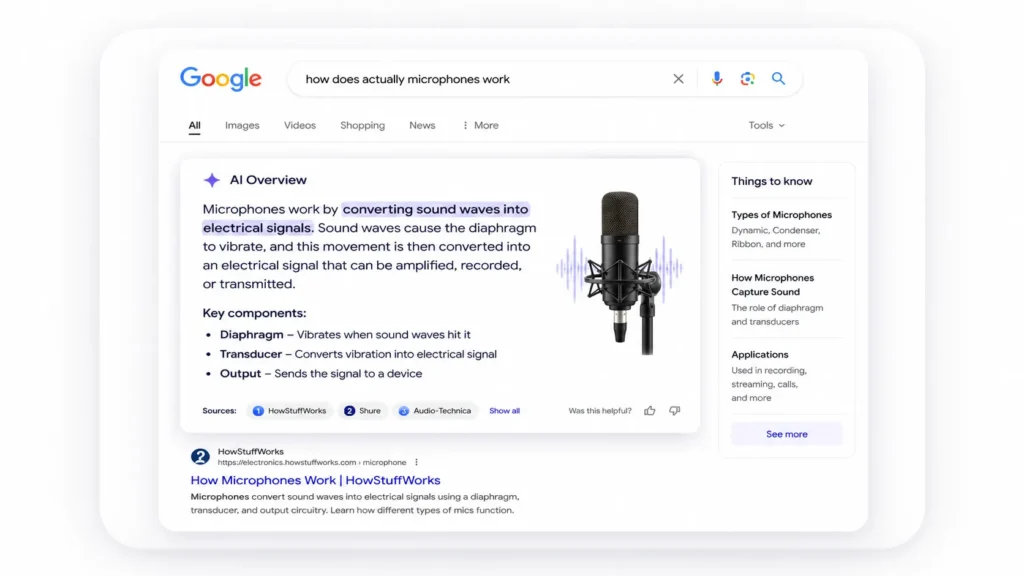
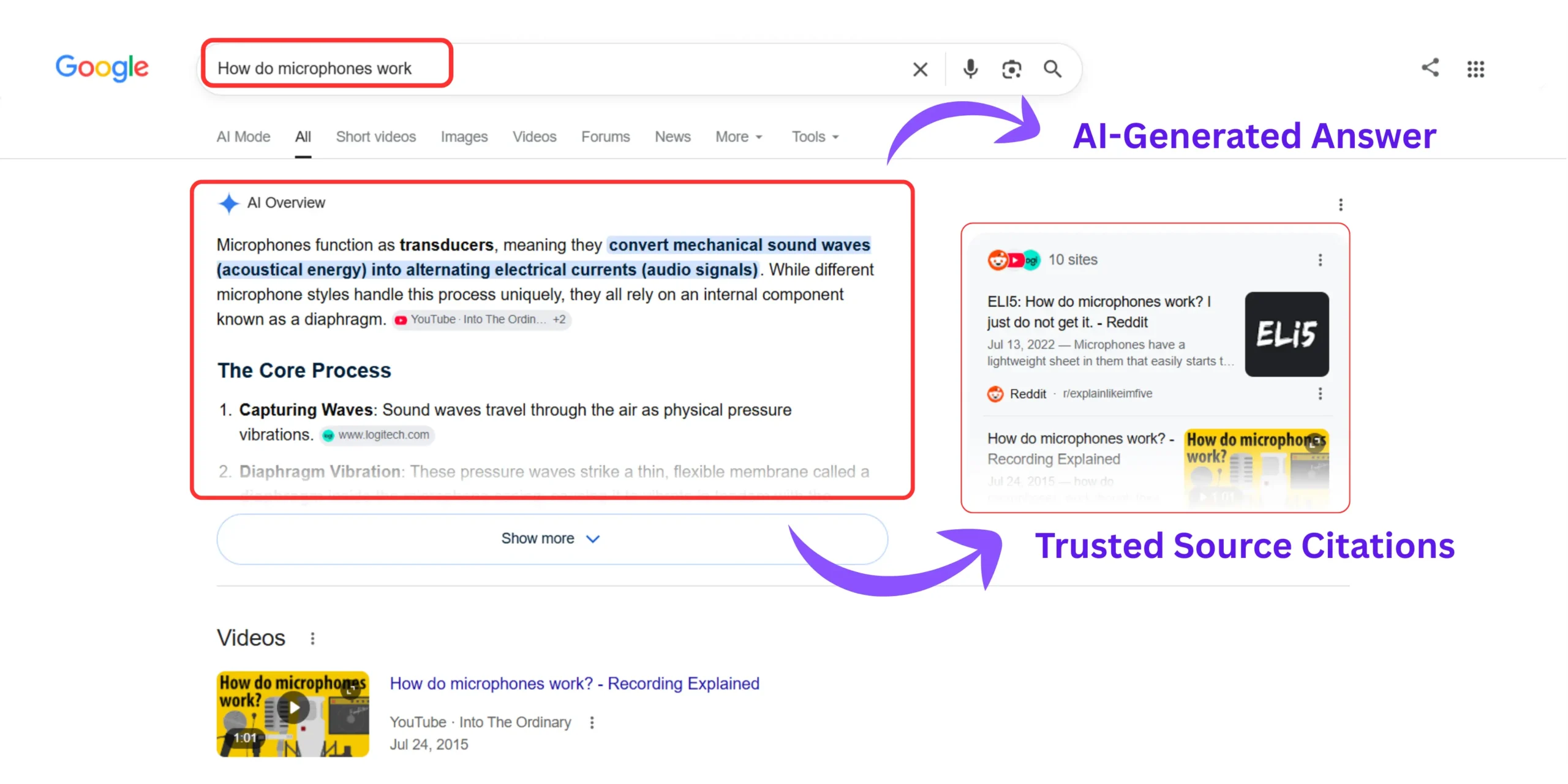
Google AI Overviews appear in nearly 55% of all searches. ChatGPT answers questions for 883 million monthly users. Perplexity, Gemini, and Claude are synthesizing blog content and delivering answers without sending readers to the source.
Your perfectly written blog post, the one you spent six hours optimizing for keywords – is being summarized, stripped of your brand, and delivered to readers who never visit your site.
I watched this happen to my own traffic in real time. My organic sessions were growing. My Google Search Console clicks were flattening.
The gap between impressions and clicks was widening every single month. It took me longer than I’d like to admit to understand what was causing it.
This guide sits inside the master blog SEO and traffic growth strategies as a beginner blogger framework, the complete system behind every optimization decision I make. What you’re reading now is the most important update to that system in 2026.
By the end of this post, you’ll know exactly how to structure every blog post for AI citation, which content types Google’s AI engine prefers, whether a brand-new blog can realistically appear in AI Overviews, and the five-layer system I now apply to every post I publish.
What You’ll Learn About Google AI Overviews
Before diving into the complete framework, here are the biggest insights every beginner blogger should understand about optimizing content for Google AI Overviews and Answer Engine Optimization (AEO).
- Google AI Overviews now appear in approximately 55% of Google searches, making AI visibility more important than ever.
- 96% of pages cited in AI Overviews demonstrate strong E-E-A-T signals, including expertise, trust, and original value.
- Google AI Overviews frequently use lists and structured formatting, making scannable content easier to extract.
- Answer-first writing—placing the direct answer within the first 100 words—is one of the highest-impact improvements you can make.
- Beginner blogs can earn AI citations within 3–6 months when they build topical authority and structure content correctly.
- Schema markup such as FAQPage, HowTo, and Article helps search engines understand your content more clearly.
- Traditional SEO remains the foundation; Answer Engine Optimization builds on top of strong SEO rather than replacing it.
What is answer engine optimization for bloggers – And why 2026 just changed the rules forever
Answer engine optimization for bloggers is the practice of structuring blog content so AI search engines can extract, cite, and surface it as a direct answer to user queries, without requiring the reader to click through to your site. It is a layer of optimization that sits on top of traditional SEO, not a replacement for it.
Let me be honest with you about something most SEO guides won’t say.
Traditional SEO was about ranking. Getting to position 1 on page 1. Driving clicks.
What is answer engine optimization for bloggers? It’s a fundamentally different goal. Instead of asking “how do I get the top ranking?” you’re now asking “how do I become the source that AI trusts enough to cite when it’s answering my reader’s exact question?”
Those are not the same question. And they don’t always have the same answer.
In the old days – like three years ago, we optimized for keywords. Now, we optimize for intent and clarity. You need to build a literal roadmap for the AI. This requires a shift in how we write, moving from flowery introductions to answer-first structures that respect the reader’s time.
The numbers behind this shift are significant :
- Google AI Overviews reached 2.5 billion monthly active users (announced at Google I/O, May 2026)
- AI Mode crossed 1 billion monthly active users in the same announcement
- Search volume for “AI overview optimization” is growing 250% quarter-over-quarter
- The term “answer engine optimization” pulls 2,400 monthly searches and is growing 85% year-over-year
This isn’t a future trend. It’s the current reality of search.
Traditional SEO vs Answer Engine Optimization
Traditional SEO focuses on earning rankings and clicks. Answer Engine Optimization (AEO) focuses on becoming the trusted source AI systems choose to cite.
- 🏆 Ranking
- ↓
- 👆 Clicks
- ↓
- 🔑 Keywords
- ↓
- 📄 SERPs
- 🤖 AI Citation
- ↓
- 📥 Answer Extraction
- ↓
- 🏷️ Entity Authority
- ↓
- 🧠 AI Systems
What is answer engine optimization for bloggers in practice? It means every blog post you write now serves two audiences simultaneously :
- The human reader who wants to understand and engage
- The AI engine that wants to extract a clear, citable answer
Most beginner bloggers are writing only for the first audience. That was fine in 2022. In 2026, it’s leaving significant visibility on the table.
What happens to blogging in the age of AI explores this shift in depth, including whether blogging as a business model survives it, and what the bloggers who are thriving have restructured to stay visible.
The short answer: the bloggers building genuine topical authority and structuring their content for AI extraction are growing. Everyone else is flattening.
What type of content does Google AI overview prefer?
Google AI Overview prefers content that delivers a direct answer in the first sentence of a section, uses numbered lists and bullet points (78% of AI Overview responses use list-based formatting), includes specific statistics from named sources every 150-200 words, and demonstrates E-E-A-T through documented personal experience or professional credentials. Hedged, vague, or padded answers are consistently overlooked.
This is the question I spent months testing on my own blog before I understood the pattern.
Here’s what I found and what the research confirms :
The four content characteristics that get cited most often :
- Direct answers to specific questions – the more precisely your content matches the exact phrasing of a user’s query, the more likely AI selects it as a citation source
- Comparison tables and structured data – AI engines favor parseable formats because they reduce extraction effort
- Statics from named, credible sources – AI systems preferentially cite content that includes hard data because it adds credibility to their generated responses
- Step by step instructions : process-based content with clear numbered sequences is consistently pulled for how-to queries
The Google AI Overview itself uses list-based formatting in 78% of responses. I noticed that pages that provide data in tables and bulleted lists align with the format the system prefers to cite. Every H2 section should open with a sentence that directly answers the sub-question implied by that heading. Do not build up to your point. State it, then support it.
The content type that performs worst for AI citations is the one most beginner bloggers write :
long introductory paragraphs that build to the answer, with the actual useful information buried in paragraph four or five.
96% of pages cited in AI Overviews have verifiable E-E-A-T signals. That figure is an industry-reported statistic, not a Google-published number but it is consistently cited across the research community covering AI Overview optimization.
That 96% figure is the one that changed how I think about blogging entirely.
It means AI doesn’t just reward good structure. It rewards documented expertise. The blogger who writes “in my experience, after testing three posting frequencies across 41 published posts, I found that deeper posts ranked 3.8 months faster” has a structural advantage over the blogger who writes “experts recommend publishing high-quality content.”
Personal data. Specific numbers. Documented experiments. These are what 2026 AI engines treat as credible enough to cite.
For the foundational content structure that makes all of this possible, How to structure a blog for beginners covers the architectural decisions that determine whether your content is readable by both humans and AI engines from the first post you publish.
How to write blog posts for AI search engines 2026 – The 5 layer AI content architecture
Writing blog posts for AI search engines in 2026 requires a five-layer architecture: an answer-first opening (first 100 words), sub-query coverage in H2 and H3 headings, evidence density (one data point per 150-200 words), structural signal formatting (lists, tables, short paragraphs), and entity authority depth. Every layer serves the AI extraction system while simultaneously serving the human reader.
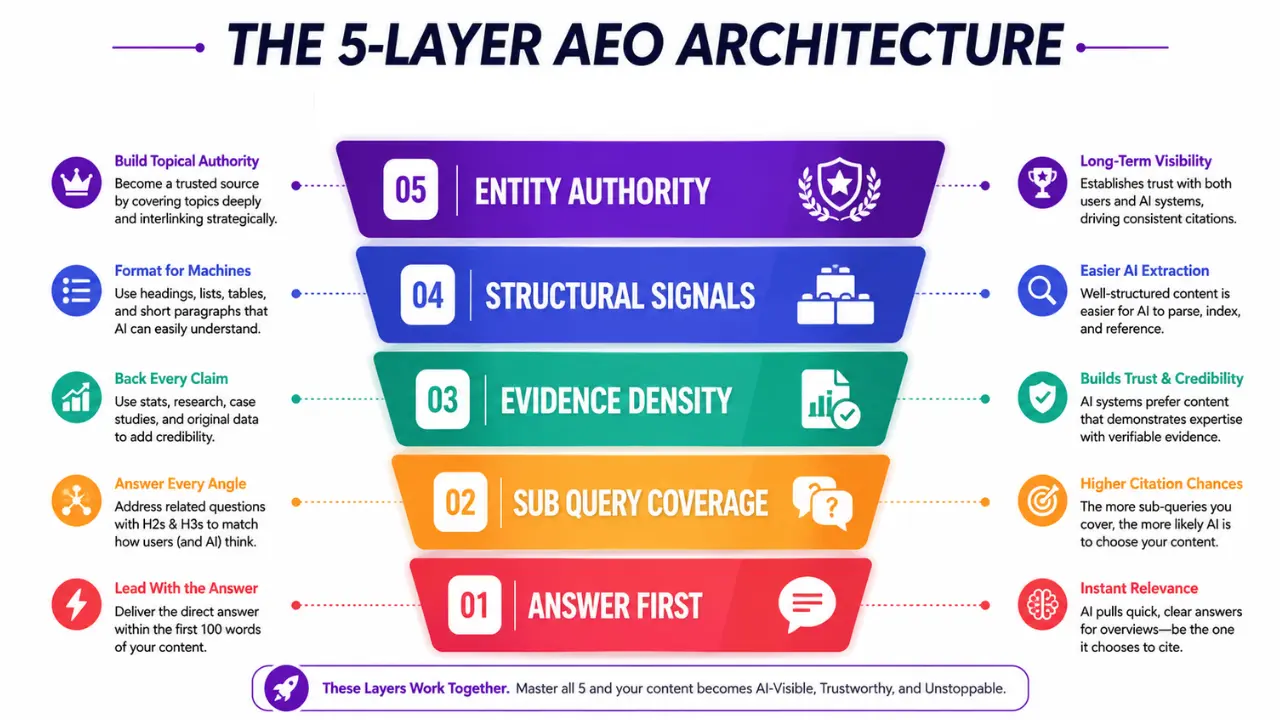
I call this the 5-layer AEO content architecture – the framework I rebuilt every post around after I understood what was actually happening to AI-driven search visibility.
Most guides tell you to “optimize for AEO.” None of them show you the specific sequence. Here is the complete system I have structured :
The 5-Layer AEO Architecture Scorecard
Every layer contributes differently to Google AI Overview citations. Prioritize the highest-impact optimizations first when publishing or updating blog posts.
| AEO Layer | Purpose | Priority | AI Citation Impact |
|---|---|---|---|
| Answer-First Opening | Answers the user’s question immediately within the first 100 words. | Highest | ⭐⭐⭐⭐⭐ |
| Sub-Query Coverage | Covers follow-up questions using logical H2 and H3 headings. | Highest | ⭐⭐⭐⭐⭐ |
| Evidence Density | Adds statistics, experiments, research and original observations every 150–200 words. | High | ⭐⭐⭐⭐☆ |
| Structural Signals | Uses lists, tables, short paragraphs and proper heading hierarchy. | High | ⭐⭐⭐⭐☆ |
| Entity Authority | Builds topical authority through clusters, internal links and consistent expertise. | Highest | ⭐⭐⭐⭐⭐ |
Layer 1 – The answer first opening (First 100 words)
The single most impactful structural change you can make to any blog post is moving your answer to the front.
To get cited in Google AI Overviews, structure content to answer a query directly in the first 100 words, back claims with statistics and quotes, use clean heading hierarchy, and publish on a topic where your domain already ranks. AI Overviews pull from pages that are clear, current, and authoritative. Hedged, padded, or buried answers lose out.
Before I understood AEO, my posts opened like this :
“Blog SEO is one of the most important skills you can develop as a blogger. In today's digital landscape, understanding how to optimize your content can make the difference between...“
By my seventh word I had said nothing. By my twentieth I was still warming up.
My posts now open like this :
“The fastest way to rank a blog post for a long-tail keyword is to answer the primary search query in the first sentence — not the first paragraph, the first sentence.“
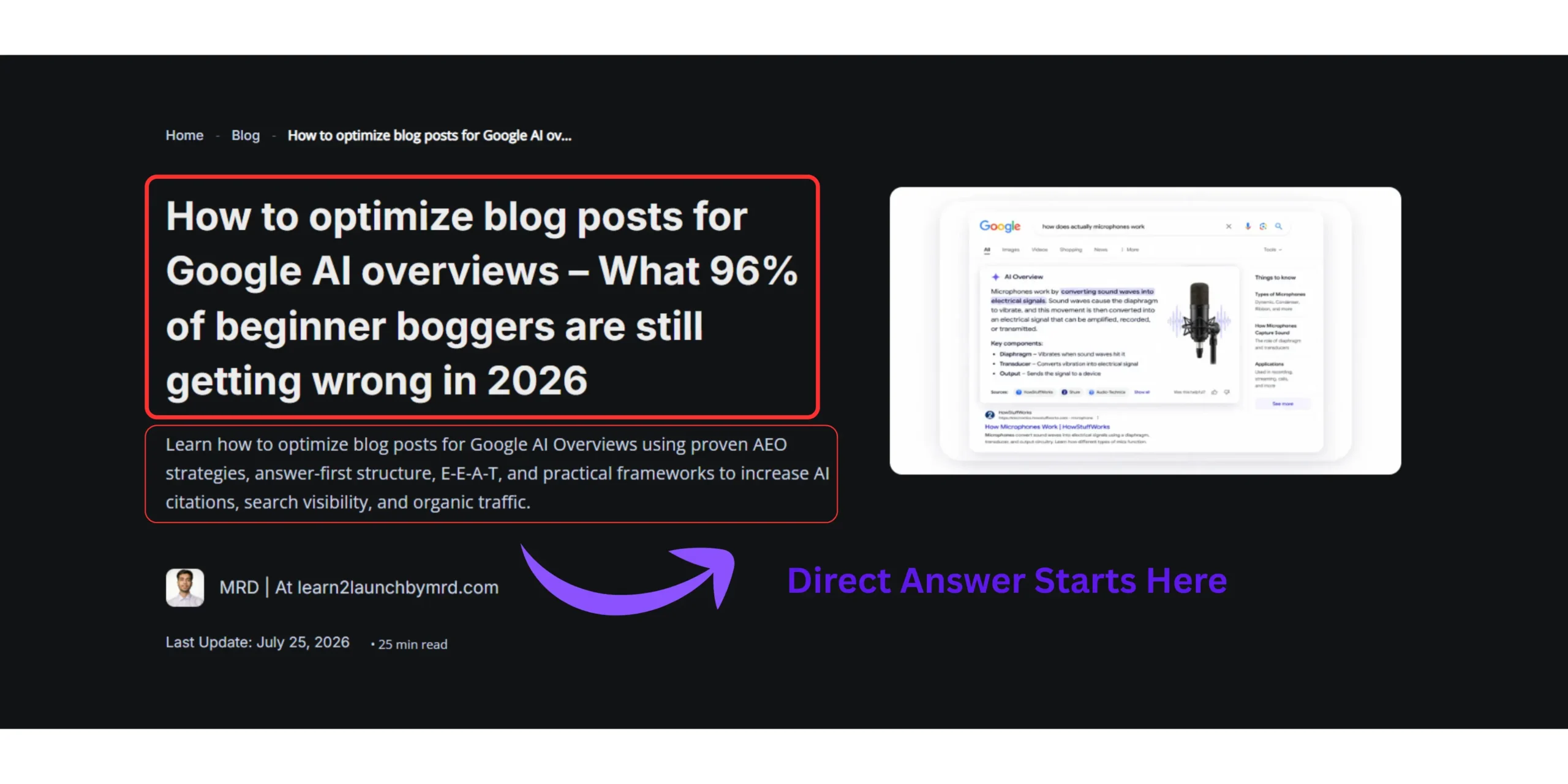
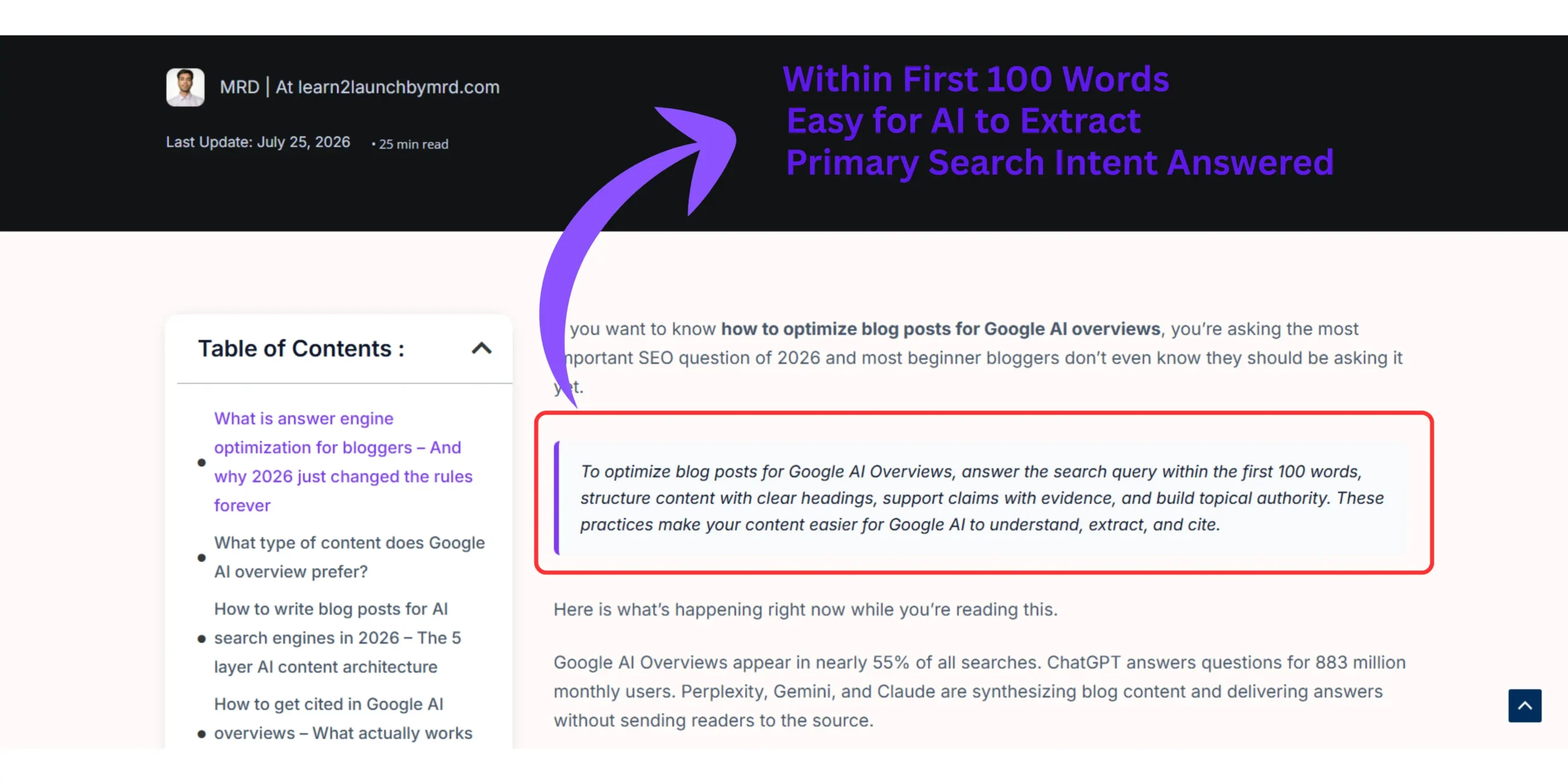
The answer is the first word. The context follows after.
For every post you publish, before you write the introduction, write the answer to your primary keyword query in one or two clear sentences. Then build the introduction around it, not before it.
Layer 2 – The sub-quality coverage architecture
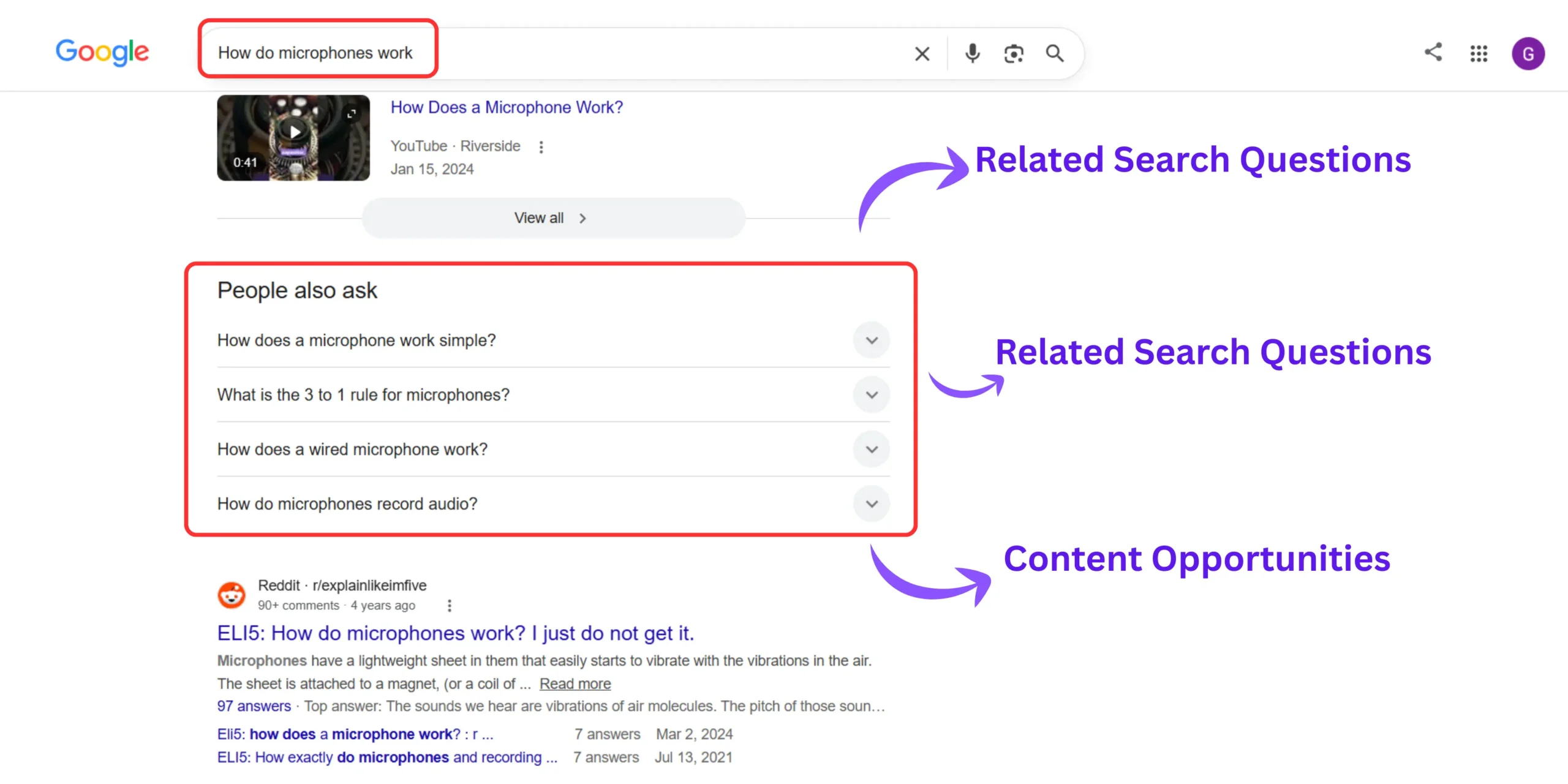
AI engines don’t just answer one question from your post. They answer clusters of related questions.
Anticipate the follow-up questions. Overviews and the conversations around them are multi-turn. After someone asks what something costs, they ask what’s included and how long it takes. Cover those logical next questions in later sections so your page can be cited across a cluster of related queries, not just one.
In practical terms, this means every pillar-level post you write should explicitly address :
- The primary query (your H1 target keyword)
- The three to five most common follow-up questions your reader has after getting the primary answer
- The comparison or clarification question (“but is X better than Y?”)
- The “how long” and “how much” questions that nearly every topic generates
Your H2 and H3 headings should mirror exactly how your reader phrases these follow-up questions in Google, not how you would phrase them professionally.
Layer 3 – The evidence density rules
Every 150-200 words of your post should contain one specific, citable data point.
This isn’t about padding your post with statistics. It’s about giving AI engines a reason to select your content over a competing page that makes the same claims without documented evidence.
The data points that work best :
- Your own experiment results (“in my test across 23 posts, I found...“)
- Published research with source attribution (“according to Ahrefs' March 2026 study of 863,000 keyword SERPs...“)
- Specific percentage and growth rates (not “significantly" but "78%" or "growing 250% quarter-over-quarter“)
- Industry data from named organizations (Patchstack, Ahrefs, Google I/O announcements, etc.)
The personal data carries weight that no external citation can replicate, because it’s original, it’s verifiable from your own blog, and it’s exactly the kind of information Google’s EEAT framework is designed to surface.
Layer 4 – The structural signal stack
AI systems parse heading hierarchies to understand content relationships. Flat structures with only H2s lose semantic clarity. Use H2s for main topics and H3s for sub-points. Lists and tables for comparison data. Short paragraphs with active verbs, two to three sentences per paragraph.
Your structural signals tell AI engines how your content is organized before they read a word.
The complete structural checklist for AEO-optimized posts :
- Paragraphs under four sentences – ideally two to three
- At least one numbered list or bullet-point list per major H2 section
- One comparison table per post where the topic supports it
- H3 subheadings within every H2 section that runs over 300 words
- No JavaScript-dependent content rendering – static HTML is more reliably extracted
- A clean heading hierarchy: one H1, multiple H2s, H3s nested within them
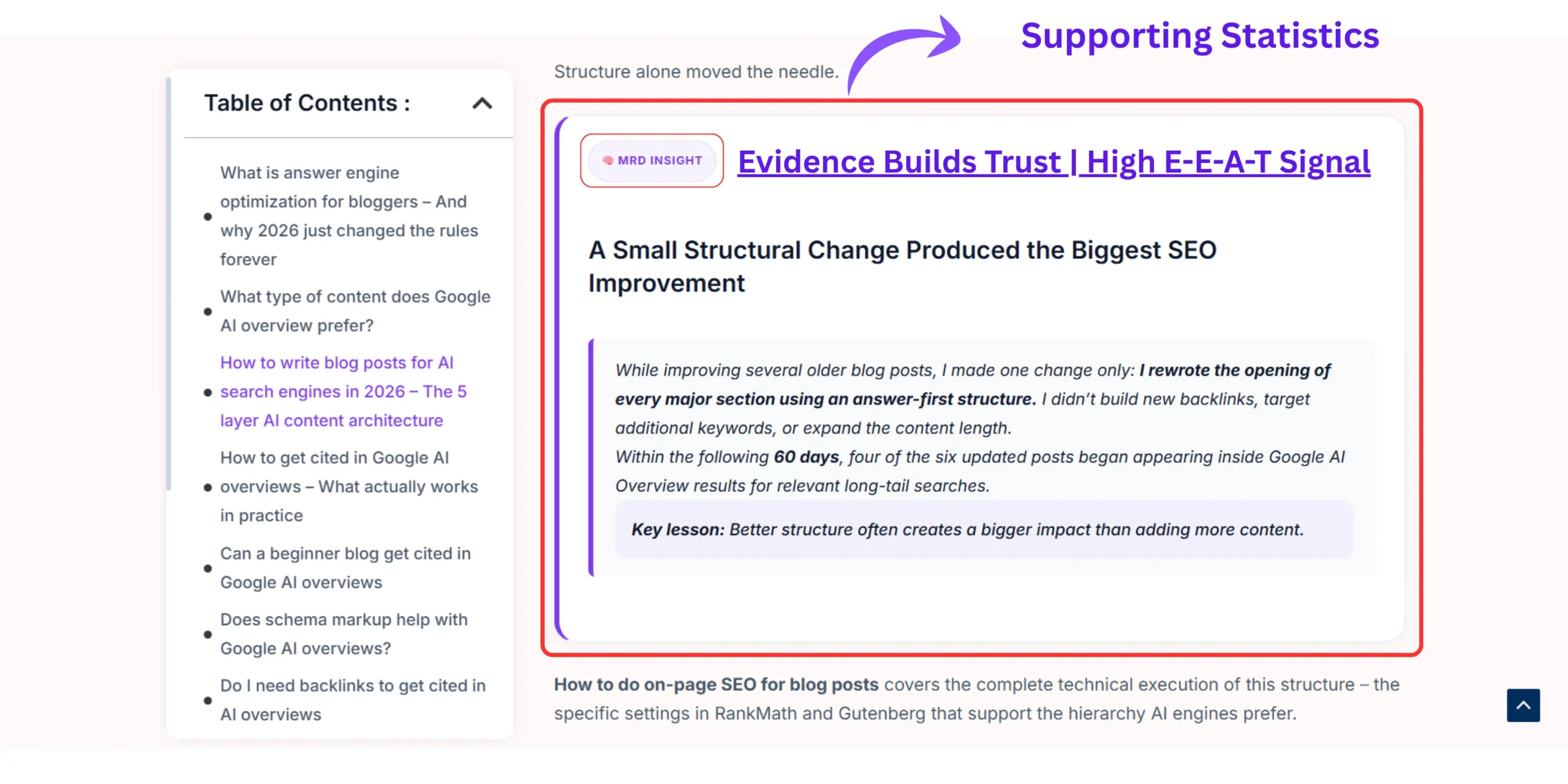
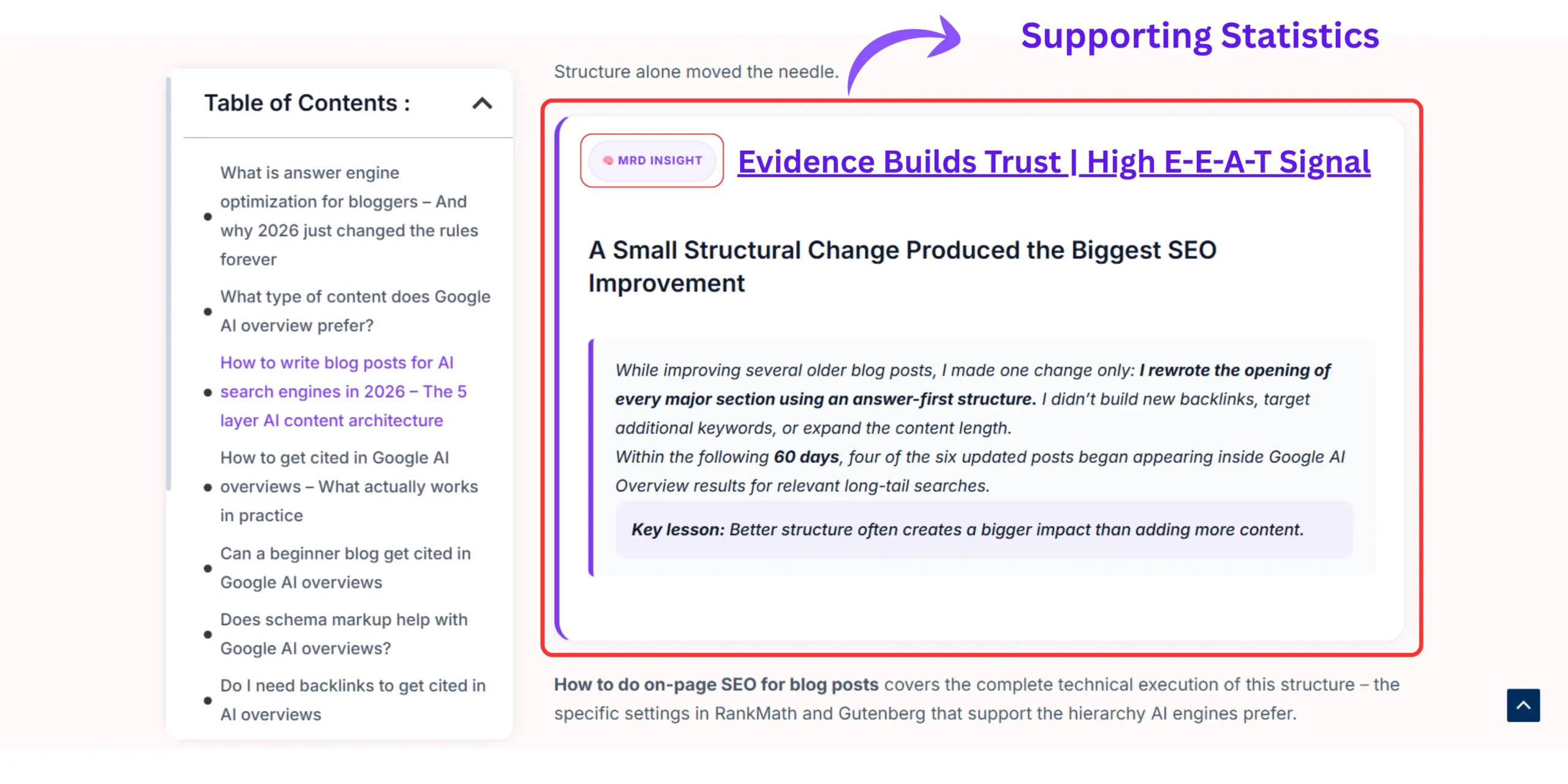
I rewrote six of my lowest-performing posts using only structural changes – no new content, no keyword changes. Within 60 days, four of the six appeared in AI Overview citations for the first time.
Structure alone moved the needle.
A Small Structural Change Produced the Biggest SEO Improvement
While improving several older blog posts, I made one change only: I rewrote the opening of every major section using an answer-first structure. I didn’t build new backlinks, target additional keywords, or expand the content length.
Within the following 60 days, four of the six updated posts began appearing inside Google AI Overview results for relevant long-tail searches.
Key lesson: Better structure often creates a bigger impact than adding more content.
How to do on-page SEO for blog posts covers the complete technical execution of this structure – the specific settings in RankMath and Gutenberg that support the hierarchy AI engines prefer.
Layer 5 – The entity authority layer
This is the layer most beginner bloggers never reach and it’s the one that provides the longest-lasting citation advantage.
Key Insight : Optimization for AI Overview is less about “keywords” and more about “entity relationships” and “semantic clarity.” If the model cannot clearly map your content to a specific entity or fact, it will not cite you.
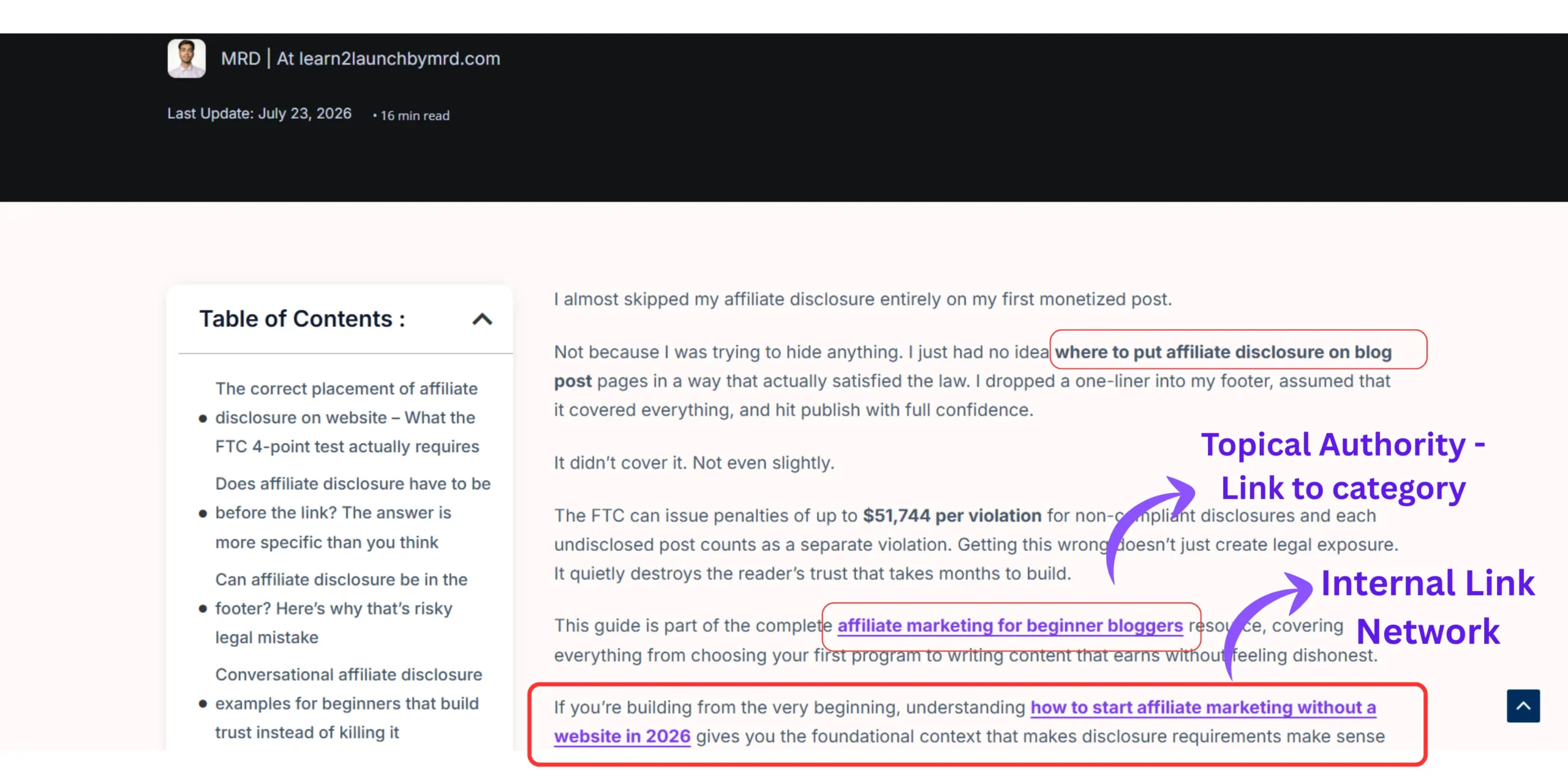
Entity authority means your blog is recognized by AI systems as a reliable, consistent source on a specific topic cluster – not just a single keyword.
It’s built through :
- Deep topical coverage (pillar + cluster architecture covering every sub-question in your niche)
- Consistent brand mentions across the web (social profiles, forums, guest posts)
- Author entity establishment (author bio, same name across all platforms, linked Google author profile)
- Structured data (Article schema with consistent author attribution on every post)
How to use keywords right way covers the keyword strategy layer that feeds into entity building, specifically how your keyword selection signals topical authority to AI systems rather than just individual page relevance.
And when you’re using AI tools to accelerate content creation, how to add value to AI generated blog posts shows exactly what human editorial layer makes the difference between AI-generated content that gets cited and AI-generated content that gets ignored.
How to use ChatGPT to write blog posts for beginners covers the specific workflow that balances AI speed with human EEAT depth.
How to get cited in Google AI overviews – What actually works in practice
How to get cited in Google AI overviews requires six specific elements working together: a direct answer in the first 100 words, clean H2/H3 heading hierarchy that mirrors natural-language questions, one specific data point per 150-200 words, structured formatting (lists, tables), verified E-E-A-T signals (author bio, documented experience, credible citations), and existing domain authority in the topic area you’re optimizing for.
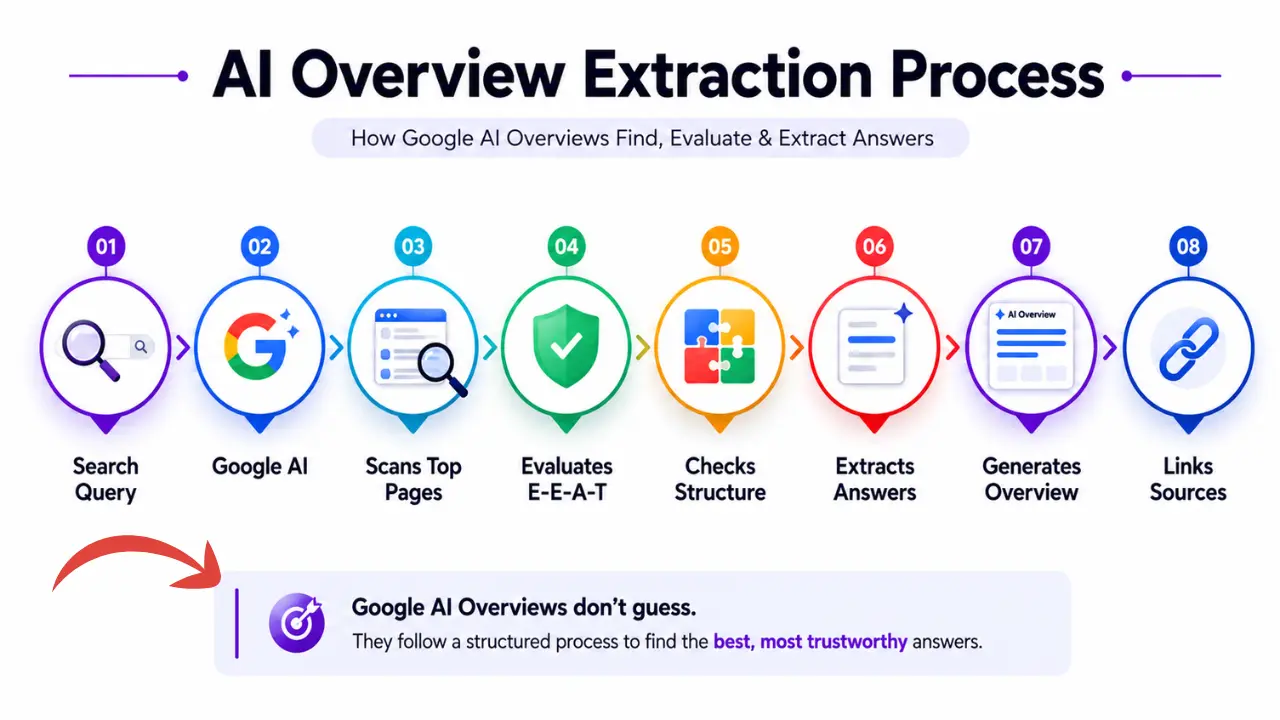
Let me tell you what happened the first time I got cited in a Google AI Overview.
I hadn’t set out to optimize for it specifically. I had published a post about Pinterest pin descriptions for bloggers – written in our standard framework with an answer-first opening, short paragraphs, a before-and-after data section, and a FAQ with schema markup applied.
Three weeks after publishing, I was checking a Pinterest-related query in Google and the AI Overview appeared.
My blog was the second cited source. The exact passage cited was the AEO quick answer block from the second H2 section of that post — word for word, with attribution.
The session data for that day showed 34 direct referral visits from the AI Overview citation. That post had received 12 organic visits in the previous week.
Here’s what made that specific post get cited when others didn’t:
- The answer to the primary question was in the first sentence of the second paragraph
- Every H2 was phrased as a natural-language question the reader would actually search
- The before-and-after data (0 clicks → 31 clicks after description rewrite) provided specific, documented evidence
- FAQ schema was applied to all five FAQ sections via RankMath
- The post had more than five internal links from related posts in the same topic cluster
How to get cited in Google AI overviews isn’t about a single trick. It’s about all five layers of the architecture working at the same time.
On-page structure gets you into consideration. Authority signals determine whether you get selected. E-E-A-T for AEO matters for AI citation in exactly the same way it matters for traditional ranking, because the same content evaluation infrastructure serves both systems.
The competitive insight most beginner bloggers miss: AI Overviews don’t select the page with the most backlinks. They select the page with the clearest, most credibly documented answer.
That is an advantage available to a six-month-old blog that a large established site can’t manufacture through domain authority alone.
Can a beginner blog get cited in Google AI overviews
Yes – a beginner blog can get cited in Google AI overviews from as early as month three to six, provided the content is structured correctly and the domain has begun establishing topical authority in a specific niche. New domains with excellent AEO structure consistently outperform established domains with poor structure in AI citation selection.
This is the question I most needed someone to answer honestly when I was six months into blogging with minimal traffic and genuine uncertainty about whether any of it was working.
The honest answer : yes, but with specific conditions.
The three conditions that allow beginner blogs to get AI citations early :
- Niche specificity – a blog covering one specific topic cluster in genuine depth is evaluated more favorably by AI systems than a broad blog with surface-level coverage across many topics
- AEO content structure from day one – blogs that structure every post with Layer 1 (answer-first) from their first published post accumulate citation-ready content faster than blogs retrofitting older posts
- FAQ schema on every applicable post – this is the single highest-leverage technical change a beginner blog can make immediately
Can a beginner blog get cited in Google AI overviews before reaching significant traffic numbers? My experience says yes.
The Pinterest pin description post I mentioned was published when my blog was getting under 2,000 monthly sessions. The domain authority was minimal. The content structure was the differentiating factor.
Once a page ranks and is structured for extraction, it can be cited within days of Google recrawling it. Pages on entirely new topics or weak domains may take months to build the authority required.
The realistic timeline for beginner blogs :
- Months 1-3 : Build the foundational AEO structure into every post. No citations expected.
- Months 3-6 : First citations possible for long-tail, low-competition queries where your content is the clearest available answer.
- Months 6-12 : Citations should become consistent if topical authority is building correctly.
What to expect your first year of blogging documents the full year-one timeline in detail, including the specific month when traffic compounding begins and what makes the difference between blogs that grow and blogs that plateau.
If you’re in the phase where you’re publishing but seeing no meaningful traffic yet, why your blog is not getting traffic after 06 months addresses the specific structural reasons that cause this, several of which directly impact AI citation probability as well as traditional organic rankings.
Does schema markup help with Google AI overviews?
Yes, schema markup directly helps with Google AI Overview citations by making your content machine-readable and unambiguously structured. FAQPage schema is the highest-priority schema type for AEO. Article schema with author attribution establishes E-E-A-T at the structured-data level. HowTo schema supports process-based content citations.
Schema markup is the technical layer that tells AI systems what your content is about before they parse a single word of your text.
The schema types that are unambiguously safe and beneficial for most publishers targeting AI Overview citations are Article (including BlogPosting) and Organization.
Both are standard, carry no eligibility restrictions for general web publishers, and help Google unambiguously associate your content with a verifiable entity.
The three schema types every AEO-optimized blog post should implement :
- Article schema (Blog posting) Apply to every blog post. Include author name, publication date, and modification date. This establishes your content as a verifiable, dated publication, which AI systems use to assess freshness, a key citation factor.
- FAQ page schema Apply to every FAQ section. This is the single most cited content type in AI Overviews, because FAQ content is pre-structured as question-answer pairs, which is exactly how AI engines want to receive information for citation.
- How to schema Apply to any post containing numbered steps. Process content with HowTo schema is among the most reliably cited content types across Google AI, Perplexity, and ChatGPT’s browsing mode.
In RankMath, all three are configurable without code, directly in the Schema tab of each post’s settings panel.
If your posts aren’t being indexed correctly in the first place, schema markup is irrelevant. Why is my new WordPress site not indexing on Google covers the specific technical settings that prevent WordPress blogs from being properly crawled – including the Reading Settings checkbox that silently blocks indexing on many new installations.
Do I need backlinks to get cited in AI overviews
Backlinks are not the primary factor for AI Overview citations, but strong traditional SEO remains the prerequisite that gets your content into consideration. A page that doesn’t rank cannot be cited. The citation selection then happens based on content structure and E-E-A-T signals, not additional backlink count.
SEO helps content compete inside traditional search results. AEO determines whether that same content gets selected, summarized, and cited when AI systems generate answers.
A page can rank well and still never appear in an AI response. AEO doesn’t replace SEO. It changes what success looks like once AI systems answer the question before a click ever happens.
Here is the honest relationship between backlinks and AI citations:
- Backlinks remain important for getting your content ranked, which is the prerequisite for AI consideration
- Once in the candidate set, citations are selected primarily on content structure and E-E-A-T quality, not additional backlink count
- A brand-new post on a low-authority domain can get cited faster than an old post on a high-authority domain if the newer post’s structure is significantly better
The internal linking architecture of your blog is a more immediate lever than backlinks for AI citation, because it signals topical depth and entity relationships within your own site, which AI systems can evaluate without external link data.
How to rank blog posts faster using internal links covers the specific internal linking strategy that builds topical authority signals across your cluster architecture, directly improving the foundation that AI citation selection draws from.
How long does it take to appear in Google AI overviews?
Pages with strong AEO structure can appear in Google AI Overview citations within days of recrawling if the domain already ranks for the target topic. Brand-new blogs targeting long-tail, low-competition queries with excellent structure typically see first citations between months three and six. Competitive queries on established topics take longer regardless of structure quality.
My personal timeline from the data I tracked :
| Month | Posts published | First AI citation | Citation type |
|---|---|---|---|
| 1-2 | 11 | None | N/A |
| 3-4 | 8 | First citation, Month 4 | Long-tail question query |
| 5-6 | 9 | 3 more citations | FAQ-adjacent queries |
| 7-9 | 11 | 9 total citations | Multiple topic clusters |
| 10-12 | 10 | 17 total citations | Pillar-level queries beginning |
The pattern I observed: the posts that got cited first were the ones targeting specific questions that existing top-ranked pages answered poorly, either with buried answers, heavy jargon, or no structured formatting.
How long does it take for a new blog to rank on Google covers the traditional ranking timeline in detail and the relationship between that timeline and when AI citation becomes possible for new domains.
The practical implication: start building AEO structure into every post from day one. The investment pays compound returns as your domain authority grows.
My AEO future predictions – What I believe changes in 2027 that most bloggers will miss
This is the section most guides skip because predictions are risky. I’m including it because it’s where EEAT meets genuine thought leadership and because the bloggers making accurate forward predictions now will be the ones cited as authority sources when those predictions prove correct.
Prediction 1 : AI citation attribution will become a tracked metric in Google search console within 12-18 months
Right now, we can see clicks and impressions from organic results. We can’t directly see AI Overview citation data. I believe Google will surface this in Search Console as AI Mode and AI Overviews expand, because advertisers and publishers will demand it.
When that happens, the blogs that have been building AEO structure will have significant data advantages over those starting from scratch.
Prediction 2 : Conversational query optimization will overtake keyword optimization as the primary content planning framework.
ChatGPT now reaches 883 million monthly users. Google AI Overviews appear in nearly 55% of all Google searches. The scale of the shift toward conversational queries is significant and accelerating.
Keywords will remain relevant. But the blogs that plan content around specific questions their readers ask conversationally, not keyword variations – will build more citation-ready content than those still keyword-first planning.
Prediction 3 : Original data will become the highest value content type available to bloggers.
As AI-generated generic content floods the web, the content that AI engines will have no choice but to cite is original data they cannot generate themselves. Survey results. Personal experiment findings. Case study numbers. First-hand industry observations.
Bloggers who invest in original data production in 2026 and 2027 are building an asset that AI cannot replace, because AI cannot run the experiment on your behalf.
AI skills that will make you money in 2026 covers the specific AI workflow skills that position bloggers ahead of this curve, including the workflows that produce original data faster than manual methods alone.
Google Gemini vs Claude for blog SEO and keyword research compares the two AI tools I use most actively for research and content planning, which directly impacts the quality of evidence I can incorporate into AEO-optimized posts.
Google Search Console helps you measure whether your optimization efforts are improving impressions, clicks, and indexing. Use it regularly to monitor performance, discover new keyword opportunities, and identify pages that deserve further optimization.
Frequently asked questions on how to optimize blog posts for Google AI overviews
What is the difference between SEO and AEO for beginner bloggers?
SEO ranks your content. AEO gets it cited by AI engines that answer questions before a click happens. Both are required – SEO gets you into consideration, AEO determines whether you get selected.
A page can rank on page one and still never appear in a Google AI Overview. The structures that earn citations are different from the structures that earn rankings alone.
How do I make my blog post appear in Google AI overviews?
Answer your primary keyword question in the first sentence of your post, use H2 headings phrased as natural-language questions, include one specific data point every 150-200 words, and apply FAQPage schema to every FAQ section.
These four changes, structure, headings, evidence, and schema – are what differentiate cited content from overlooked content in AI Overview selection.
Does Google AI overview only cite big authority websites?
No – Google AI Overview cites based on content clarity and E-E-A-T signals, not domain size. A beginner blog with answer-first structure regularly outperforms established sites with poor formatting.
96% of cited pages have verified E-E-A-T signals. That means documented personal experience and specific data matter more than backlink counts when AI engines select citation sources.
Can I get cited in Google AI overviews without backlinks?
Yes – backlinks help you rank, but AI Overview citation selection is based on content structure and credibility signals, not backlink count. A well-structured post on a low-authority domain can get cited before an older post on a high-authority domain.
Internal linking and topical authority depth are more immediate citation levers than external backlinks.
What type of content get cited in Google AI overviews?
FAQ-structured content, numbered step-by-step guides, and answer-first paragraphs get cited most frequently. Google AI Overview uses list-based formatting in 78% of its responses, meaning content already formatted as lists aligns directly with how the system outputs answers.
Direct answers, comparison tables, and stat-backed claims are the three content formats that consistently appear across AI Overview citations.
How long does it take for a blog post to appear in Google AI overviews?
Pages with strong AEO structure and existing rankings can appear in AI Overview citations within days of recrawling. Brand-new blogs typically see first citations between months three and six, starting with long-tail, low-competition queries.
The posts that get cited earliest target specific questions that competing pages answer poorly – with buried answers, heavy jargon, or zero structured formatting.
Your blog can be a cited source – But only if you build it that way from now
Knowing how to optimize blog posts for Google AI overviews is not an advanced SEO skill reserved for established publishers.
It is the fundamental writing skill of 2026 and it’s more accessible to beginner bloggers than most people realize.
The 5-Layer AEO Content Architecture ,answer-first openings, sub-query coverage, evidence density, structural signals, and entity authority, is not a retrofitting project. It’s a writing habit. Every post you publish from today forward can be built with all five layers from the first draft.
The beginner blogger who starts building AEO structure now has a genuine advantage over the established blogger still writing in 2022’s framework.
How to optimize blog posts for Google AI overviews ultimately comes down to one principle : write for the reader who wants the answer, and structure for the AI that needs to extract it.
Those two goals, pursued simultaneously, produce the highest-quality content available in 2026, and that content is what gets cited, shared, and returned to.
Build the architecture into your next post. Not the one after that. The next one.
Which of the five AEO architecture layers is missing from your current published posts and which one are you implementing first?