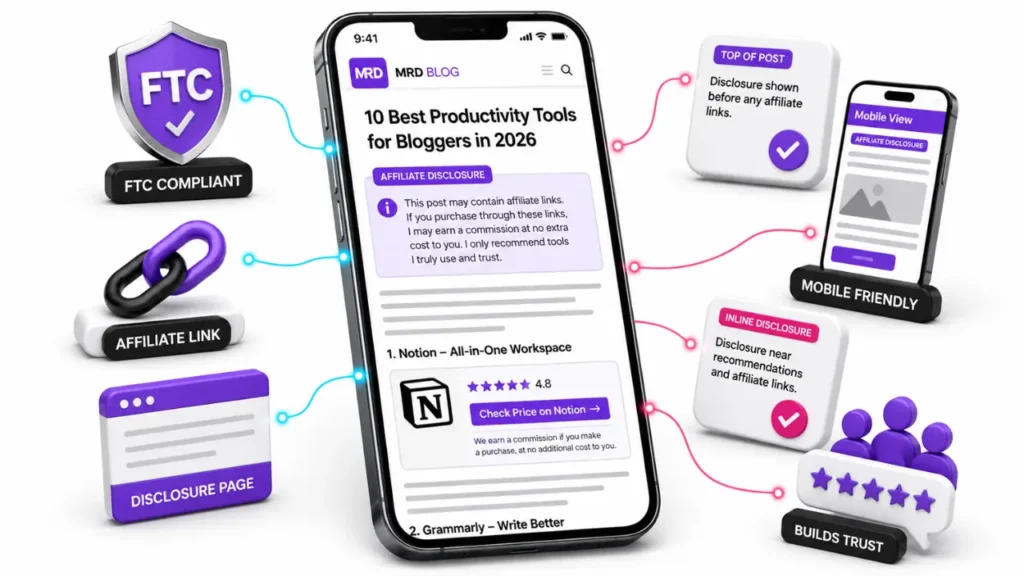


If you are struggling to figure out where to place affiliate links in blog posts (Higher conversions for bloggers) , you are not alone. Most beginner bloggers add links everywhere and then wonder why clicks and commissions never come. The truth is, affiliate success is rarely about how many links you add it’s about where and how you place them.
Many bloggers are excited to begin affiliate marketing, but after weeks or months of no results, they become confused. It’s possible that even though you’re writing useful content and receiving some traffic, there are still no conversions. That usually means the problem is not your content , it is affiliate link placement for beginners.
After this guide , you will learn,
- Why link placement matters more than link quantity
- The best places to add affiliate links in blog content
- How to place links naturally without hurting trust or SEO
If you want your blog posts to convert without sounding salesy, this is where it starts.
Table of Contents – where to place affiliate links in blog posts
Why affiliate link placement matters for beginners
When I first started affiliate marketing, I believed adding more links would automatically lead to more income. I placed affiliate links everywhere in my posts but the results were disappointing. Over time, I realized that affiliate link placement for bloggers matters far more than the number of links used.
Trust doesn’t start only on your blog. When readers already trust you from social platforms, affiliate links feel more natural. Understanding how to build trust on social media as a beginner supports your blog monetization by warming up readers before they ever click a link.
When readers feel understood rather than under pressure, they click on links. The majority of readers will ignore a link that appears before a problem is explained. However, it feels more like a solution than an advertisement when a link is placed right after a useful explanation. This is where it becomes important for understanding reader psychology and user intent.
Search engines also pay attention to how users interact with your content. Poorly placed links can increase bounce rates and reduce trust, while strategic placement improves engagement. That is why knowing the best places to add affiliate links in blog posts is both an SEO and conversion skill
Good placement helps you ,
- Build trust with readers
- Improve click-through rates naturally
- Protect your blog’s SEO health
Smart placement turns helpful content into consistent income.
Affiliate link placement works best when your blog is already structured correctly for search engines. If your content lacks proper headings, internal links, or user flow, even well-placed affiliate links may not convert. That’s why understanding how to optimize blog posts for SEO beginners is essential before focusing on monetization strategies.
Affiliate links perform best when you understand the full process behind them. Reading affiliate marketing for beginners: how to start affiliate marketing helps you see how link placement fits into a larger system of content, trust and long term income building.
Best places to add affiliate links in blog posts
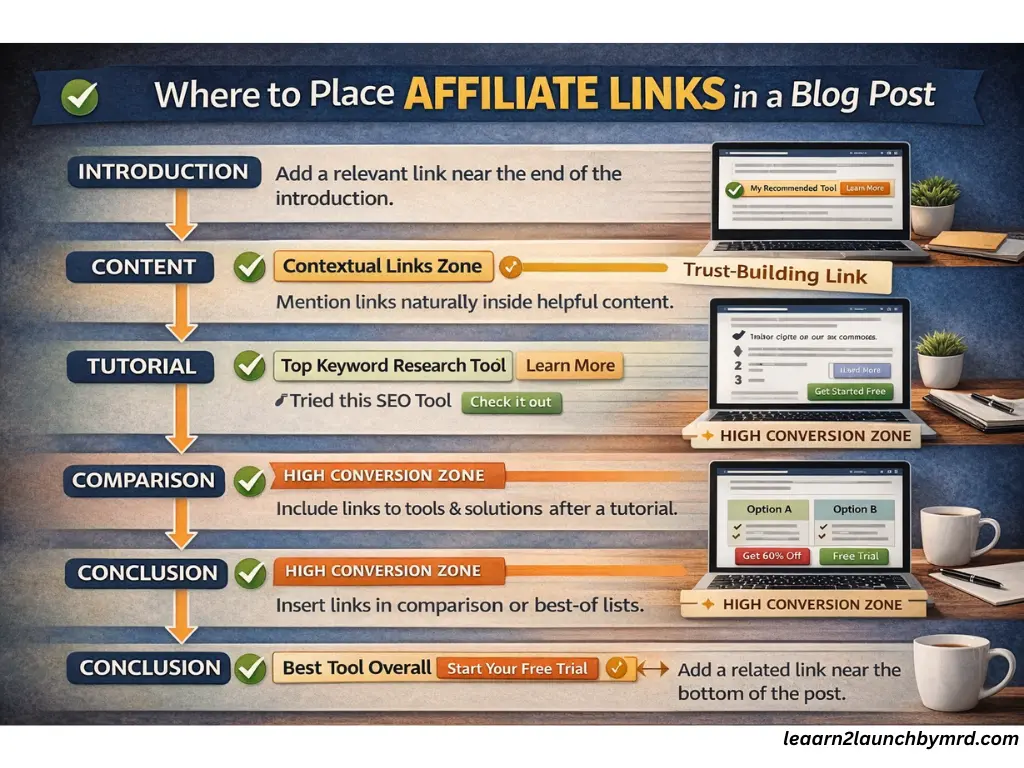
What separates blogs that make money occasionally from those that make money regularly is knowing where to put affiliate links. As time continued on, I discovered that links work best when they are placed right where the reader expects support rather than advertising. These are the most effective placements that work especially well for beginner bloggers.
If you’re still early in your blogging journey, correct affiliate placement starts with strong content fundamentals. Learning how to write your first blog post for beginners ensures your structure supports both readers and monetization without feeling forced or sales heavy.
01 . Inside contextual paragraphs ( In content links )
Including affiliate links in informative, helpful paragraphs is one of the best strategies to boost clicks. Because they show up while the reader is already interested in the content, these links seem natural. The link doesn’t feel forced when you clearly describe a problem before introducing a tool as part of the solution.
This method follows a simple flow,
- Identify a problem the reader is facing
- Explain how that problem can be solved
- Introduce a relevant tool or product naturally
Here’s how to include affiliate links organically without messing with the reading experience. Because they align with reader intent and trust, relevant links, in my experience, consistently perform better than banners or randomly placed link drops.
Many bloggers hesitate to add affiliate links because they feel they’re not “ experts ” yet. The truth is, you don’t need to be one. Learning how to create content without being an expert allows you to share real experiences, which makes affiliate recommendations feel more natural and trustworthy to readers.
02 . After explaining a solution or step
When affiliate links are placed right after a step or solution is explained, they work incredibly well. Readers of how-to blogs and tutorials are already in the process of learning and actively seeking out the next step. This makes timing just as important as placement.
Once you explain how something works, the reader often wonders what tool can help them do it faster or better. That moment is one of the best places to add affiliate links in blog posts . The key is to keep the recommendation helpful, not aggressive.
Best use cases include ,
- Step-by-step tutorials
- Beginner guide
- Tool-based workflows
When the link follows value, conversions feel natural.
03 . Comparison sections and tool mentions
Comparison sections attract readers with strong buyer intent. These readers are not just learning, they are deciding. That is why this area is critical for proper affiliate link placement for bloggers.
When you compare tools honestly, readers trust your opinion more. Mention both strengths and limitations instead of overselling one option. In my early blogging days, honest comparisons led to fewer clicks but higher quality conversions.
Effective comparison placements include,
- Tool A vs Tool B sections
- Free vs paid tool breakdowns
- Beginner vs advanced options
Trust driven comparisons convert better long term.
04 . Near the end of blog posts
The end of a blog post is where high-intent readers remain. Anyone still reading has found value in your content and is more open to recommendations. This makes it one of the smartest places when deciding where to place affiliate links.
Summarize the solution and gently recommend a useful tool rather than making a hard sell. Rather than being promotional, this soft call to action feels encouraging. Experience has shown that while these links might get fewer clicks, they often end in higher conversion rates.
Best practices,
- Keep language calm and helpful
- Avoid urgency or pressure
- Reinforce how the tool supports the solution
Subtle confidence beats aggressive selling every time.
How many affiliate links per blog post is ideal?
One of the most common questions beginner bloggers ask is how many affiliate links per blog post they should add. When I started, I assumed more links meant more chances to earn. In reality, too many links often confuse readers and reduce trust instead of increasing clicks.
No single number is ideal for every blog post. The length of the content, the purpose of the topic, and how organically the links fit into the content all impact the ideal quantity. While a lengthy, comprehensive guide can bolster a few strategically placed suggestions, a brief post with a great deal of links may come across as spammy.
Fewer high-quality links outperform many weak ones in terms of SEO and user experience. Readers prefer advice over pressure and search engines favor content that prioritizes them.
A simple beginner-friendly guideline,
- Short posts ( 1000 words ) , 2 – 3 affiliate links
- Medium posts ( 1500 words ) , 3 – 5 affiliate links
- Long posts ( 2000+ words ) , 5 – 7 affiliate links
Focus on relevance and placement, not volume. When links support the content naturally, conversions follow without harming SEO.
Even with limited visitors, smart affiliate placement can still generate results. If you’re struggling with traffic, learning how to monetize a blog with low traffic will help you focus on high-intent readers and strategic link positions instead of relying on volume alone.
How to add affiliate links naturally without hurting SEO
One of the biggest fears beginner bloggers have is whether affiliate links can damage their rankings. The good news is that affiliate links do not hurt SEO by themselves. Problems only happen when links are added carelessly. Learning how to add affiliate links naturally without hurting SEO is about following user-first and Google friendly practices.
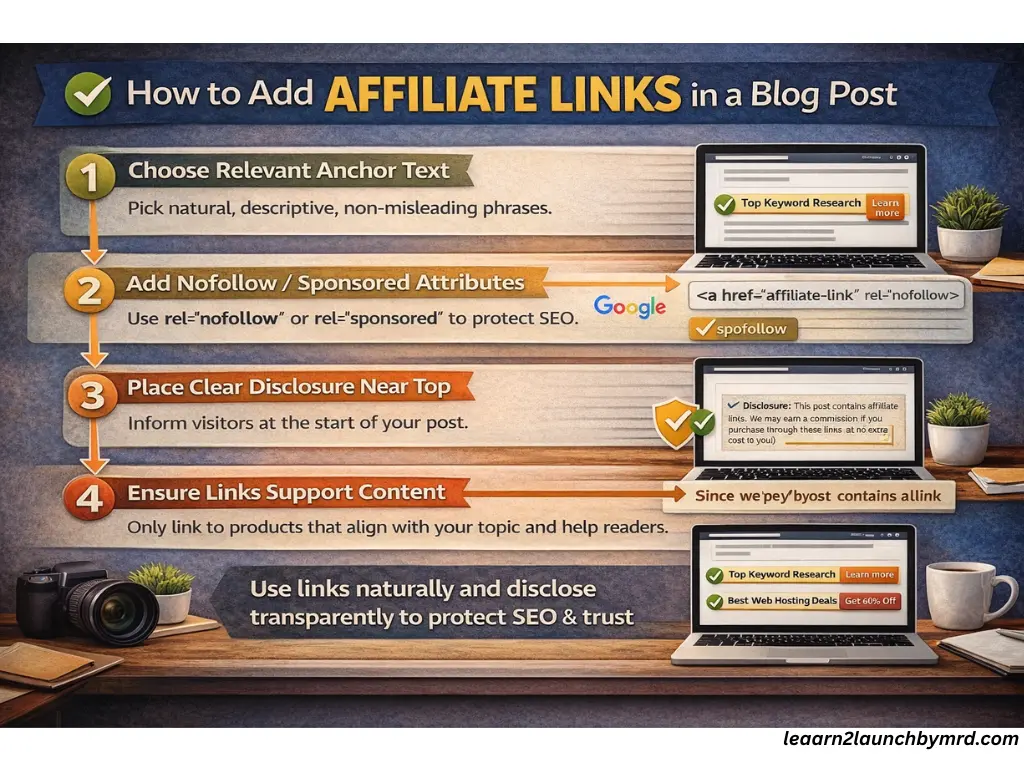
Anchor text should be your first priority. What the reader will see after clicking should be explained in detail in the anchor text. Stay clear of unnatural keyword stuffing and generic phrases like “click here.” Instead, make use of appropriate, descriptive language that integrates naturally into the sentence. This makes the context easier for readers and search engines to understand.
Using the right link attributes is another important SEO signal. Google advises labeling affiliate links as sponsored or nofollow. Your ability to receive commissions is not impacted by this. It just warns search engines to the promotional nature of the link, protecting your website from manual penalties.
Best practices for link attributes,
- Use rel=”sponsored” or rel=”nofollow” for affiliate links
- Do not hide affiliate links from users
- Keep link behavior transparent
Affiliate disclosures are also essential for trust and compliance. Place your disclosure where readers can easily see it, usually near the top of the post. A simple sentence is enough. Clear disclosures improve credibility and do not reduce conversions when done honestly.
Above all, always write with users in mind. A link should be there if it helps the reader’s experience. It doesn’t if it seems forced. Google rewards content. Google rewards content that prioritizes helpfulness, clarity, and trust.
When links support content instead of interrupting it, SEO stays strong and conversions grow naturally.
Affiliate marketing isn’t guesswork. Tracking clicks, scroll depth and engagement helps you refine placement over time. Learning how to use analytics to improve monetization strategy allows you to identify which sections of your blog post actually convert and which ones don’t.

Where bloggers should not place affiliate links
Knowing where not to place affiliate links is just as important as knowing where to place them. In my early blogging days, some of my lowest performing posts failed simply because the links were placed without purpose. Poor placement often increases bounce rates and makes readers lose trust quickly.
One common mistake is adding affiliate links randomly throughout the post. When links appear without explanation, readers feel interrupted rather than helped. This breaks the flow of your content and reduces engagement, even if the product itself is useful.
Another area to avoid is excessive use of affiliate links in sidebars or footers. These sections are often ignored by readers and can make your blog feel overly commercial. Search engines also place less value on these links compared to contextual placements within affiliate links in blog content .
You should also avoid placing affiliate links inside irrelevant sections. If the product does not directly support the topic being discussed, it creates confusion and damages credibility.
To protect trust,
- Avoid random or forced placements
- Limit sidebar and footer affiliate links
- Keep every link relevant to the content
Clarity and relevance always convert better than quantity.
One major reason affiliate links fail is because bloggers focus on money too early. Understanding why most blogs fail before making money helps you see why trust, value and correct placement matter more than aggressive linking or stuffing offers everywhere in a post.
Common affiliate link placement mistakes beginners make
Almost every beginner makes mistakes with affiliate links, including me. These mistakes usually come from not understanding how readers think, not from lack of effort. Learning from them early can save months of frustration and help build trust faster.
- One of the biggest mistakes is using too many affiliate links in a single blog post. When readers see links everywhere, they feel pressured and stop clicking, which hurts both conversions and engagement.
- Adding affiliate links without explaining why they matter is another common issue. Readers need context before taking action. When a link appears before a problem is explained, it feels like promotion instead of help.
- Misleading anchor text quickly breaks trust. Promising one thing and linking to something else damages credibility. Anchor text should always be honest and clearly describe what the reader will find.
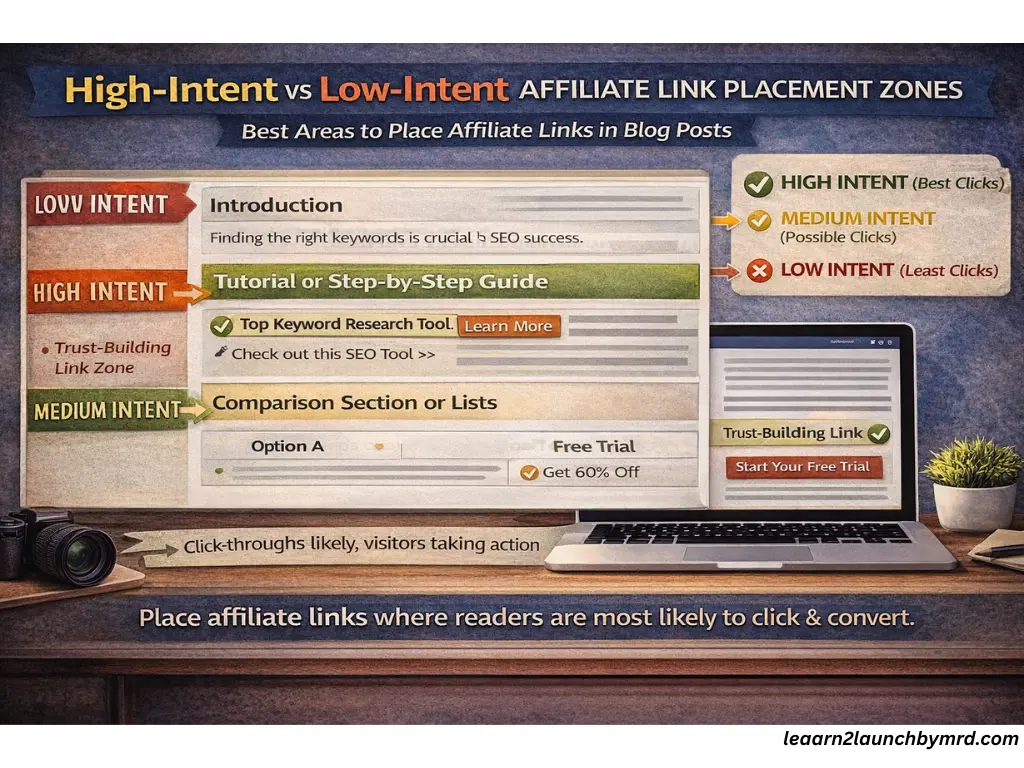
- Many beginners also ignore reader intent. Not every visitor is ready to buy some are learning, while others are comparing options. Affiliate links convert better when they match the reader’s stage.
Avoiding these mistakes helps you build long term trust, improve user experience and create consistent affiliate conversions.
Beginners often repeat the same monetization errors, such as adding links without context or explanation. Exploring common mistakes beginners make when monetizing content can help you avoid damaging trust and understand why placement is just as important as the product you promote.
Frequently asked questions on where to place affiliate links in blog posts
Where should affiliate links go in a blog post for higher conversions?
Affiliate links should be placed where readers are most likely to find them helpful. The best spots include contextual paragraphs that explain a problem, after tutorials or step by step guides, in comparison sections, and near the conclusion with a soft recommendation. Proper placement ensures the links feel like a natural solution rather than a pushy ad, which improves both trust and click through rates.
How many affiliate links per blog post are recommended for beginners?
The number of affiliate links depends on the length and purpose of your post. Shorter posts of around 1000 words typically perform well with two to three links, while medium-length posts can support three to five. For longer posts over 2,000 words, five to seven well placed links are ideal. Focusing on relevance and proper placement is far more effective than adding many random links.
How can I add affiliate links naturally without hurting SEO?
To protect SEO while adding affiliate links, it’s important to use descriptive and relevant anchor text that fits naturally into the content. Links should be marked with the appropriate attributes, such as nofollow or sponsored, to signal promotional content to search engines. Clear disclosures at the top of your post also build trust with readers. When links support the content rather than interrupt it, they contribute positively to both user experience and SEO.
What are the common mistakes bloggers make with affiliate link?
Beginners often make mistakes like placing too many links, adding them randomly, using misleading anchor text or ignoring reader intent. These errors reduce trust and can lower click-through rates. Proper affiliate link placement for bloggers involves adding links only when they provide value, follow context and match the reader’s needs. Learning from these mistakes early can significantly improve conversions and engagement.
Can affiliate links hurt my blog’s SEO if placed incorrectly?
Affiliate links themselves do not harm SEO, but improper placement can. Links that are excessive, irrelevant, or misleading can confuse readers and trigger lower engagement signals for search engines. When affiliate links are used contextually with correct attributes and clear disclosures, they maintain both user trust and Google’s trust. Proper placement enhances SEO while providing value to your audience.
Smart placement beats more links
When it comes to affiliate marketing, where to place affiliate links in blog post matters far more than how many links you add. Many beginners make the mistake of thinking more links automatically lead to more clicks but this often backfires. Strategic placement builds trust, improves user experience and encourages readers to take action naturally.
Instead of pushing affiliate links immediately, many bloggers first capture emails. Learning how to use lead magnets with social media traffic helps you move readers into a trust-building funnel, making later affiliate link placement far more effective.
Focus on best places to add affiliate links in blog posts , inside helpful paragraphs, after explaining solutions, in comparison sections and near the conclusion. These positions align with reader intent and make your recommendations feel genuinely useful rather than pushy. Remember to also consider how many affiliate links per blog post and ensure each link is relevant and contextual.
Affiliate link placement only works when readers actually see your content. If you’re just starting out, mastering how to get traffic to a new blog ensures your monetized posts reach the right audience before you worry about optimizing conversions.
Using these strategies, you can add affiliate links naturally without hurting SEO , build authority as a blogger and steadily increase conversions over time. Start with thoughtful placement rather than volume and track what works for your audience. With patience and consistency, your blog can become a reliable source of income while maintaining credibility.
Affiliate links are just one monetization method. If you want a complete picture, learning how to monetize a blog for beginners helps you understand when to use affiliate links and when other income streams might work better for your content.
Strategic links plus helpful content always outperform random link spam and that’s the key to long term success.