Blog SEO and traffic growth
The passive traffic flywheel : Master Blog SEO and traffic growth strategies as a beginner blogger
Search traffic is one of the most sustainable ways to grow a blog, but many beginners struggle to understand how SEO, content strategy, and website structure work together. This category explores practical blog seo and traffic growth strategies for beginners, covering everything from keyword research and topical authority to on-page optimization, internal linking, content updates, and long-term traffic growth systems.
Whether you’re trying to attract your first organic visitors, improve rankings, or build a blog that generates consistent traffic over time, you’ll find actionable guides designed to help you create a stronger search presence. The focus is not on shortcuts or algorithm hacks, but on building a solid SEO foundation that compounds authority, visibility, and organic traffic month after month.

By MRD- Malaka
Last verified : june 18, 2026
Read time – 15 minutes
- Topical Authority: Build content clusters that help search engines understand your expertise.
- On-Page SEO: Optimize blog posts for relevance, rankings, and user experience.
- Internal Linking Systems: Connect related content strategically to strengthen site-wide authority.
- Organic Traffic Growth: Create sustainable SEO systems that attract qualified visitors over time.
Why most blogs never reach consistent organic traffic (And how to fix it)
Let’s be completely honest for a moment. I will guess something,
If you are currently spending your days trapped on the content creation treadmill – frantically designing Pinterest pins, drafting LinkedIn threads, and scriptwriting short-form videos just to watch that traffic disappear into a black hole 24 hours later, you are probably exhausted.
I’ve been exactly where you are.
When I first started out as a digital creator, I spent weeks building what I thought was a beautiful content engine. I was chasing every algorithm trend, obsessing over feed analytics, and burning myself out trying to keep up with rented platform attention. The result? A massive amount of stress and a blog that felt completely invisible the second I stepped away from my keyboard.
Every piece of content required another post, another pin, another video, and another round of promotion just to maintain the same level of visibility. The moment I stopped publishing, the traffic slowed down.
That is when I realized I was building on sand. If you want to escape that exhausting cycle, you need to master sustainable blog seo and traffic growth strategies for beginners.
Unlike the rapid decay of a social media timeline, search engine optimization allows your content to compound over time. Instead of constantly fighting for attention, you create assets that continue attracting visitors long after they are published. A well-optimized article can generate targeted traffic for months or even years, helping you build a business that doesn’t depend on showing up every single day.
Whether you’re launching your first blog or trying to revive a site that has been stuck for months, this guide is designed to help you build a sustainable traffic system from the ground up.
The Connected System Trap
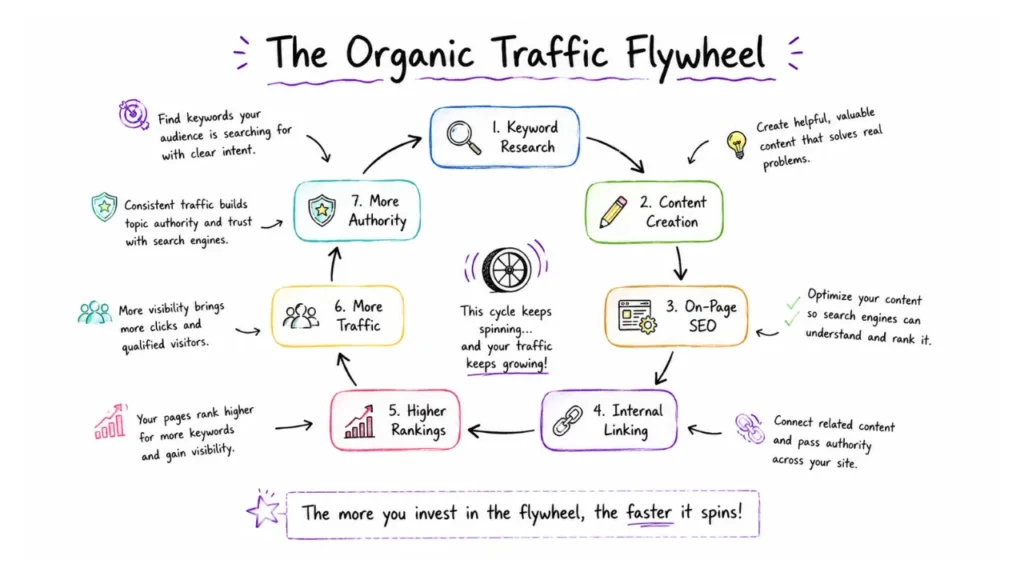
“ Most new blogs fail in SEO not because of weak content, but because they lack a connected system. Sustainable growth comes from combining three layers: topical authority (content clusters), on-page optimization (search clarity signals), and internal linking (authority distribution).
When these three elements work together, each new post strengthens the entire site instead of operating in isolation.”
More importantly, you’ll learn how to create a content ecosystem that continues working even when you’re not actively promoting every new post. When I shifted my focus from chasing algorithms to understanding search behavior, everything changed.
Instead of guessing what people wanted to read, I started studying search intent, organizing content into related topic clusters, and building a structured internal linking framework. Rather than publishing disconnected articles, I focused on creating content that supported and reinforced other content across the website.
That shift revealed something important:
Most beginner traffic problems are not caused by poor writing. They are caused by weak SEO architecture.
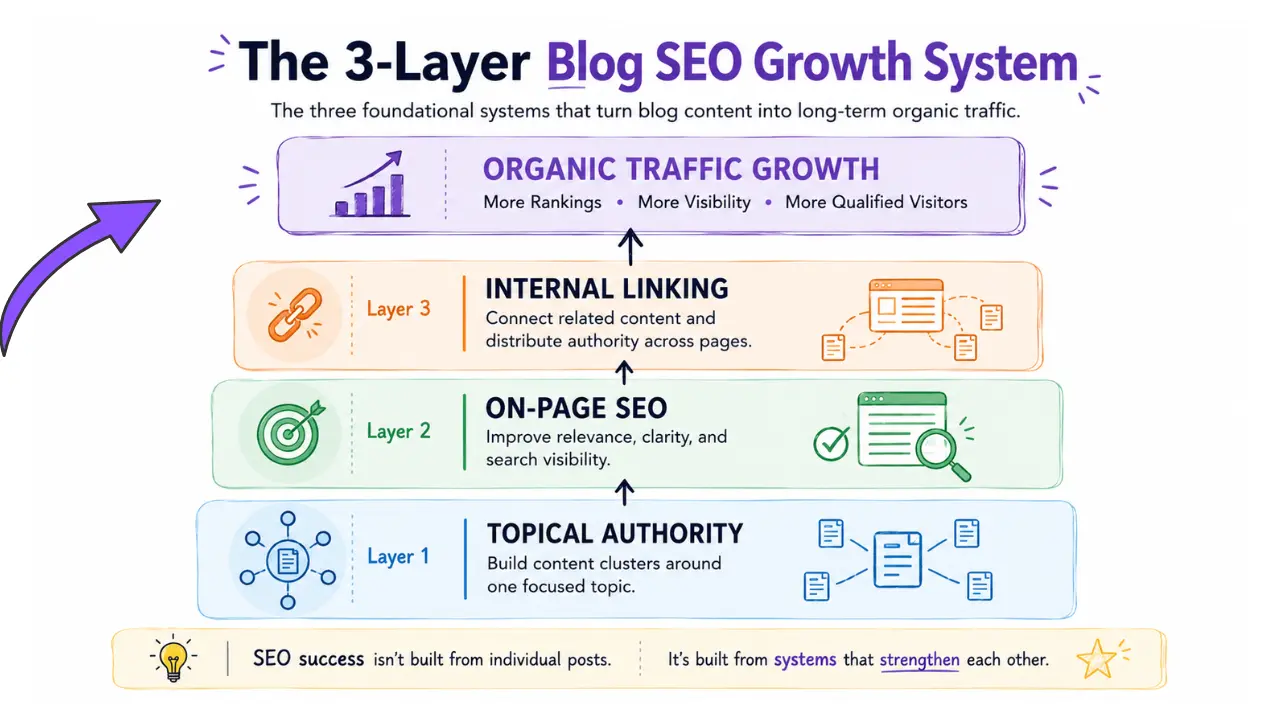
Before diving into execution, understand that mastering blog SEO and traffic growth strategies isn’t about chasing algorithmic shortcuts—it’s about turning your blog into a self-sustaining asset that attracts qualified search traffic while you focus on scaling your business.
-
Topical Authority
Learn how to build strategic content clusters that help search engines understand your deep expertise without needing to publish hundreds of random, unlinked articles. -
Resource-Lean Growth
Discover practical organic traffic frameworks designed specifically for solo entrepreneurs juggling limited time, tracking, and execution resources. -
On-Page Optimization
Deploy a streamlined on-page SEO checklist for every blog post to improve structural clarity, context relevance, and direct search engine visibility. -
Internal Linking Systems
Connect your content assets strategically using internal linking loops that distribute authority site-wide and guide readers effortlessly through your funnels. -
Error Prevention
Identify and bypass the common architectural and indexing mistakes that quietly stall new blogs and prevent early traction from gaining real momentum.
If you’re currently why your blog is not getting traffic after 06 months, the problem often goes deeper than promotion. Many bloggers publish content without a clear topical structure, keyword strategy, or long-term SEO framework. As a result, search engines struggle to understand what their website is truly about.
This is exactly why learning how to build topical authority as a new blogger is one of the most important skills for long-term growth.
The Traffic Growth Infrastructure Stack
Stop guessing what search engines want. To track intent accurately, uncover low-competition phrases, and monitor your indexing health, this is the lean, data-driven SEO stack I run.
Google Search Console
Index Engine • Health Tracker
The absolute single source of truth for your SEO performance. Directly monitors crawl errors, tracks exact keyword search queries, and verifies how Google crawls and indexes your content assets.
Monitor RankingsGoogle Analytics
User Intent • Behavior Suite
Unlocks complete transparency over reader paths. Measures exactly how visitors engage with your blog posts, tracks conversion funnels, and highlights which topic clusters generate real business revenue.
Analyze TrafficSEMrush
Keyword Intelligence • Competitor Audit
Your unfair competitive advantage for traffic scaling. Reverses engineer competitor content strategies, maps keyword gaps, and reveals low-competition search terms that you can rank for fast.
Research KeywordsRank Math Pro
SEO Optimizers • Rank Tracker
Handles rich schema markup configurations, automatic link parsing, local SEO maps, and advanced on-page analysis variables directly inside your dashboard to dominate search metrics cleanly.
Optimize SEO💡 Transparency Note: Some links above are affiliate pathways. If you use them, I earn a small commission at zero absolute extra cost to you. I only recommend the infrastructure I actively use to scale my own web properties.
Is This Milestone Roadmap For You?
Before you commit to this deep-dive traffic growth strategy blueprint, let's verify you're in the right room. This search engine implementation engine is hyper-optimized for two distinct pathways:
The Growth Stage Blogger
For those building organic traction from complete absolute scratch.
- No-Friction Topical Focus: Skip complex optimization frameworks. Learn how to structure clear content clusters that rank using straightforward, visual layout strategies.
- Escape the Promotion Loop: Stop spending endless hours designing social graphics and short-form videos just to chase traffic that completely disappears in 24 hours.
- Zero Budget Tools: Eliminate expensive monthly keyword suites and tracking retainers. Uncover and group hyper-targeted search intent using free, native assets.
The Resource-Lean Solopreneur
For those scaling high-value content assets long term with limited time.
- Passive Traffic Systems: Build automated authority structures that attract, capture, and convert qualified buyers silently while you focus on scaling fulfillment.
- Structured Linking Frameworks: Deploy high-efficiency internal linking networks that distribute ranking authority automatically across every pillar page on your site.
- Compounding Search Assets: Retain complete control over a self-sustaining asset that continues growing and generating visibility months after hitting publish.
Why the rented feed keeps letting bloggers down (and how SEO fixes it)
The 24 hour expiration date
Most social media content has a lifespan measured in hours. Once a post disappears from the feed, its visibility often drops dramatically. In contrast, a well-optimized blog post can continue gaining impressions, clicks, and backlinks long after publication.
The high intent advantage
People scrolling social media are usually looking for entertainment, inspiration, or distraction. People using search engines are actively looking for answers.
They have a problem they want solved right now, which makes them far more likely to engage with helpful, relevant content.
The solo-operator advantage
One of the biggest benefits of implementing organic blog growth strategies for solo entrepreneurs is leverage.
Instead of constantly creating content to maintain visibility, you build a growing library of assets that work together to attract traffic. Over time, each new article strengthens the authority of the content already published, creating a compounding growth effect.
The good news is that none of this requires advanced technical skills or complicated coding knowledge.
The foundation of sustainable blog growth comes down to mastering a repeatable process: following a strong on page seo checklist for blog posts, understanding how to use internal linking systems for blog growth, and building topical relevance that helps search engines trust your website.
Most bloggers believe traffic growth is about publishing more content. Even me at the beginning………
The blogs that grow the fastest usually focus on something different entirely. They build systems, not just content. And that’s exactly what you’ll learn throughout this guide.
Bypassing the technical friction
Want to make sure you don’t skip a critical step while executing the framework below? Secure your interactive copy of the roadmap companion tracker to audit your system live:
FREE RESOURCE
The no-code WordPress launch checklist
Don’t miss a critical setting. Skip the technical friction with this step-by-step checklist to launch a secure, lightning-fast WordPress site on your own terms.
🔒 Zero Spam. Unsubscribe with 1-click anytime.
The 3 SEO pillars that actually drive sustainable blog growth
When I first started learning SEO, I assumed ranking on Google required advanced technical knowledge, complicated coding skills, and a deep understanding of search engine algorithms.
I was wrong.
What I eventually discovered is that most successful blogs grow because they consistently execute a handful of fundamental principles exceptionally well. For solo creators and small website owners, the most effective blog SEO and traffic growth strategies for beginners are often the simplest.
Instead of obsessing over every ranking factor, focus on three core pillars that influence how search engines evaluate your website: technical hygiene, on-page relevance, and structural authority.
Think of these pillars as the foundation, interior design, and framework of a house. If any one of them is weak, the entire structure becomes unstable. When all three work together, your blog becomes easier to discover, easier to understand, and easier to trust.
Pillar 01 : Technical hygiene (the foundation)
Before your content can rank, search engines need to access, crawl, and understand your website efficiently.
Many beginners focus entirely on writing content while overlooking the technical experience visitors encounter after clicking. Slow-loading pages, poor mobile usability, broken links, and confusing site architecture can all limit growth, even when the content itself is valuable.
I learned this lesson early. Like many new bloggers, I overloaded my site with unnecessary plugins, oversized images, and visual effects that looked impressive but slowed everything down. The result wasn’t a penalty—it was a frustrating user experience that made it harder for both visitors and search engines to navigate my website.
The goal isn’t technical perfection. It’s technical simplicity.
Focus on the fundamentals:
- Fast page loading speeds
- Mobile-friendly design
- Clean navigation structure
- Proper indexing and crawlability
- Optimized images and media
When visitors can easily access your content, search engines can evaluate it more effectively as well.
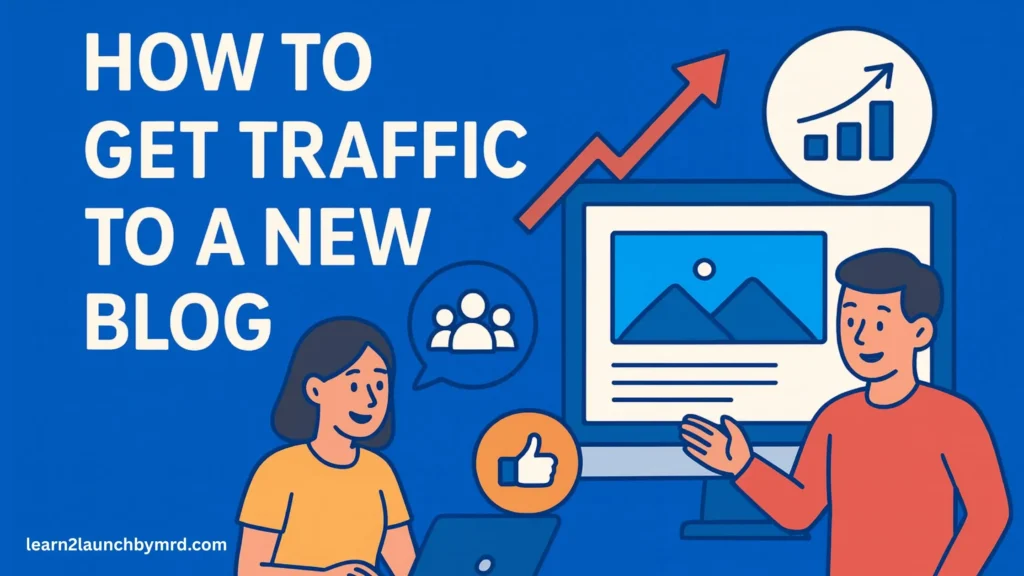
🎯 Read Next
New to the game and trying to crack the code? Here is the exact roadmap on how to get traffic to a new blog from day one.
Pillar 02 : On-page relevance (the interior design)
If technical SEO helps search engines access your content, on-page SEO helps them understand it. Every search begins with intent.
A user has a specific question, problem, or goal, and Google’s job is to connect them with the most relevant answer. Your job is to make that relevance obvious.
This means your title, headings, introduction, content structure, and supporting sections should clearly align with what the searcher is trying to accomplish. Too many bloggers focus on word count instead of usefulness. They publish lengthy articles filled with generic advice but fail to provide genuine value.
The blogs that earn attention usually do the opposite. They focus on Information Gain by offering:
- Unique insights
- Real examples
- Helpful frameworks
- Clear explanations
- Actionable solutions
Keywords still matter, but they should support the reader experience rather than dominate it. The best optimization feels natural because it is built around solving real problems.
Pillar 03: Structural authority (the framework)
This is where sustainable SEO growth begins to compound. Many beginners believe they need thousands of backlinks before they can compete in search results. While external links remain valuable, they are only one piece of the puzzle.
Search engines also evaluate how well your content is organized internally.
When related articles are grouped together into logical topic clusters and connected through strategic internal links, you create a clear map of expertise. Instead of seeing isolated blog posts, search engines begin recognizing an entire body of knowledge focused on a specific subject.
This is one of the most effective ways to build topical authority as a new blogger. Over time, that structure helps search engines understand:
- What topics your site covers
- Which pages are most important
- How articles relate to one another
- Whether your content demonstrates expertise across a niche
This is also why learning how to use internal linking systems for blog growth becomes such a powerful advantage. Every new article strengthens the authority of the content already published, creating a network of pages that work together instead of competing against each other.
Master these three pillars, and you’ll have the foundation needed to implement long-term organic blog growth strategies for solo entrepreneurs without relying on constant promotion or unpredictable social media algorithms. The rest of this guide will show you exactly how to apply each pillar in a practical, beginner-friendly way.
How to build topical authority as a new blogger
One of the biggest mistakes new bloggers make is treating every article as a separate project.I made the same mistake.
Whenever I found a keyword with decent search volume, I would write a standalone post and publish it without considering how it connected to the rest of my website. Each article existed in isolation, with no clear relationship to the content around it.
The result was predictable. Search engines could see individual pages, but they struggled to understand what my website actually specialized in.
This is where many bloggers get stuck. They focus on publishing more content when they should be focusing on building stronger topical coverage.
Modern search engines don’t simply evaluate individual articles. They also analyze how your content connects together, how comprehensively you cover a subject, and whether your website demonstrates consistent expertise within a topic area.
That is why learning how to build topical authority as a new blogger has become one of the most important long-term SEO skills.
Why topical authority matters
Topical authority is the process of demonstrating expertise across an entire subject rather than relying on a single article to rank.
Instead of publishing unrelated content across dozens of topics, you create a structured ecosystem of content that answers multiple questions within the same area of expertise.
This approach helps search engines understand:
- What your website focuses on
- Which topics you cover deeply
- How different pieces of content relate to one another
- Whether your content demonstrates subject expertise
The clearer those signals become, the easier it is for search engines to trust your website as a relevant resource.
For bloggers implementing organic blog growth strategies for solo entrepreneurs, topical authority creates leverage. Every new article strengthens the authority of the content already published, allowing your website to grow as a connected system rather than a collection of isolated pages.
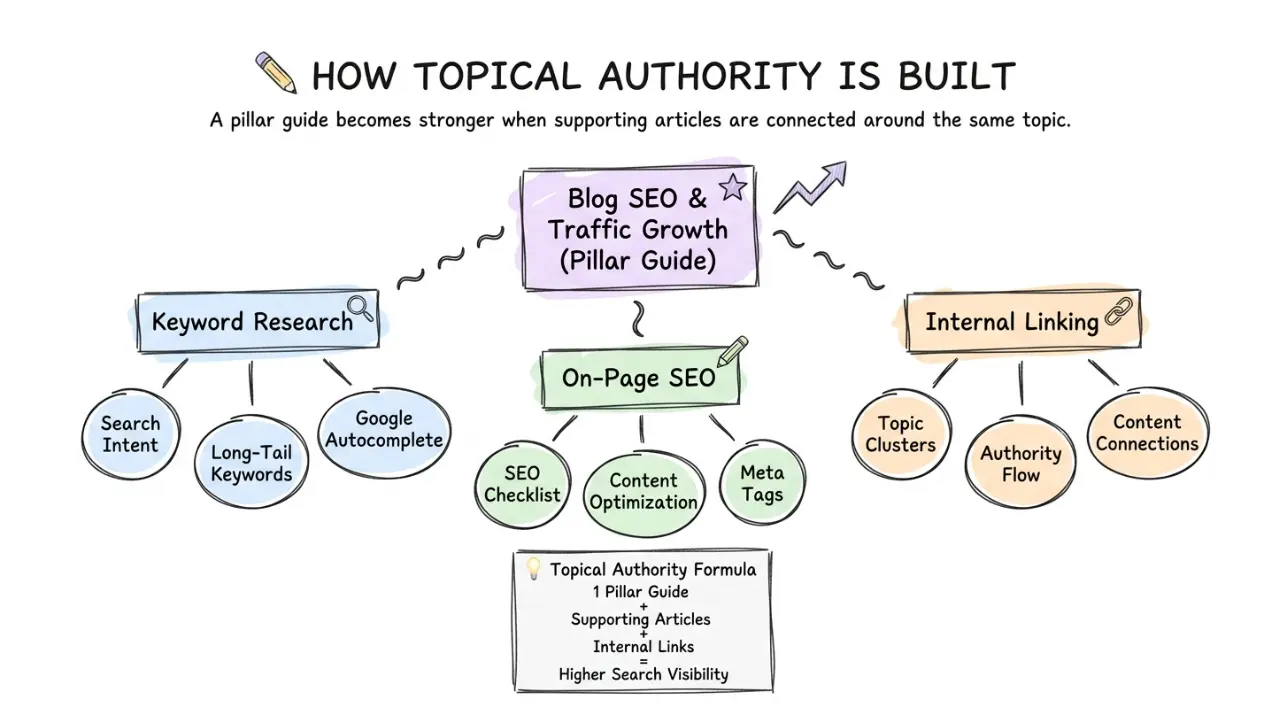
The topic cluster model
The most effective way to build topical authority is through a topic cluster structure.
At the center of the cluster is a comprehensive cornerstone article that covers a broad subject in depth
Supporting that cornerstone are multiple focused articles that answer specific subtopics, questions, or problems related to the main topic.
Think of the cornerstone page as the central hub and the supporting articles as connected spokes. Together, they create a network of content that demonstrates expertise from multiple angles.
For example:
Cornerstone topic
- Blog SEO and traffic growth
Supporting articles
As the cluster expands, search engines gain a clearer understanding of your expertise and topical relevance.
The content ideation blueprint
Building topical authority starts long before you publish content. It begins during the planning stage.
Step 01 : Identify the core problem
Start with the broad challenge your audience is trying to solve. Avoid thinking about individual keywords first.
Instead, identify the larger outcome your readers want to achieve. Examples:
- Start a profitable blog
- Increase organic traffic
- Build an email list
- Create a content strategy
Your cornerstone article should become the definitive resource around that core topic.
Step 02 : Map search intent around the topic
Once you have identified the primary theme, break it into smaller questions and subtopics.
This is where How to use keywords the right way becomes essential.
Rather than selecting keywords based only on search volume, focus on understanding the underlying intent behind each search. Every supporting article should solve a specific problem that naturally connects back to the broader topic.
Step 03 : Build logical content relationships
The final step is creating clear connections between your content. Related articles should support one another through strategic contextual links, allowing readers and search engines to move naturally throughout the topic cluster.
This is also one of the most practical ways to learn how to use internal linking systems for blog growth. Each supporting article reinforces the authority of the cornerstone page, while the cornerstone page strengthens the relevance of the entire cluster.
Over time, these relationships help transform individual articles into a cohesive authority hub that becomes increasingly valuable to both readers and search engines.
The goal is not to publish more content. The goal is to publish content that works together.
Why search intent matters more than search volume
One of the most common mistakes beginner bloggers make is believing that keyword research is simply a numbers game. I made the same mistake early on.
Like many new bloggers, I spent hours analyzing keyword tools, filtering search volume reports, and chasing phrases that looked attractive on paper. The assumption was simple: higher search volume meant more traffic opportunities.
What I eventually discovered was that search volume alone doesn’t create rankings. Understanding people does.
This realization completely changed how I approached blog seo and traffic growth strategies for beginners. Instead of focusing exclusively on keyword metrics, I started focusing on the motivations behind the searches themselves.
Add Your Heading Text Here
Search intent is the reason someone performs a search. Every query represents a goal, a problem, or a question that a real person wants solved. For example :
- Someone searching “how to start a blog” wants guidance.
- Someone searching “best blogging platforms” wants comparisons.
- Someone searching “blog hosting pricing” may be preparing to make a purchase.
The words may look similar, but the intent behind them is completely different.
Search engines have become increasingly sophisticated at identifying these differences. Their goal is not simply to match keywords. Their goal is to deliver the most relevant answer to the user’s underlying need.
That is why successful SEO starts with understanding people before keywords.
The search intent advantage for new bloggers
Large websites often compete for broad, highly competitive keywords. Solo creators have a different advantage.
Instead of chasing massive search volume, they can focus on uncovering specific questions, frustrations, and problems that larger publishers often overlook. This approach leads to:
- Lower competition opportunities
- More targeted visitors
- Higher engagement signals
- Better content relevance
- Stronger topical authority over time
For bloggers implementing organic blog growth strategies for solo entrepreneurs, this is often one of the fastest ways to build momentum without needing a large content team or expensive marketing budget.
Where real search intent comes from
The most valuable keyword opportunities often come directly from audience behavior.
Rather than relying exclusively on keyword databases, pay attention to places where people actively reveal what they need help with:
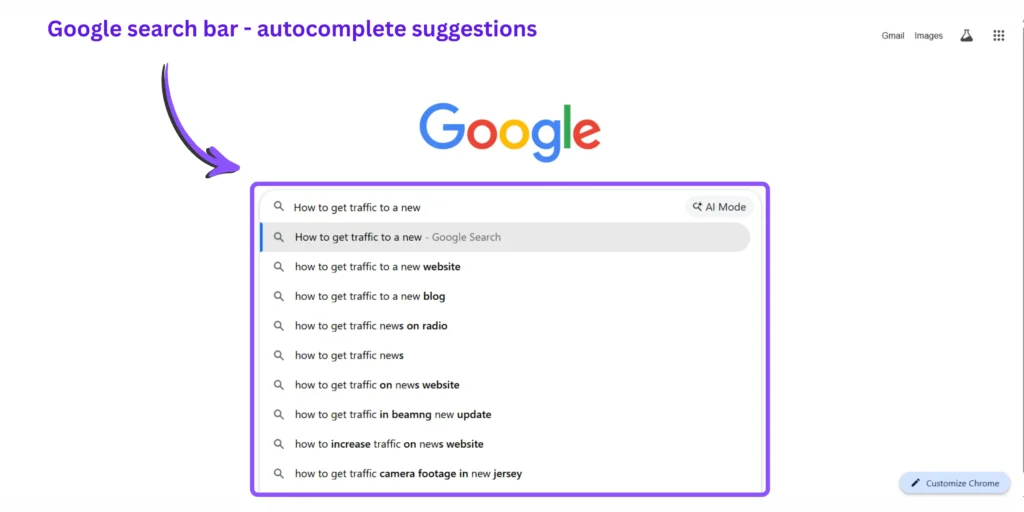
- Google Autocomplete suggestions
- Related search queries
- Community forums
- Blog comment sections
- Reddit discussions
- Industry-specific communities
- Customer questions and conversations
These sources provide direct insight into the language, concerns, and goals of your audience. Instead of guessing what people want, you can observe what they are already asking.
Work Flow evolution : Traditional keyword research vs intent based research
| Traditional Method | Modern Solo Creator Workflow |
|---|---|
| Prioritizing keywords primarily by search volume. | Learning How to group search intent manually using Google autocomplete to uncover highly relevant audience needs. |
| Competing for broad keywords dominated by large publishers. | Identifying specific problems and questions that align with your expertise. |
| Creating generic content based on keyword reports alone. | Building content around real search intent and user outcomes. |
| Producing outlines manually with limited context. | Using resources such as Google Gemini vs Claude for blog SEO and keyword research to accelerate research, ideation, and content planning. |
The goal is not to abandon keyword research. The goal is to combine keyword data with human understanding.
When search intent becomes the foundation of your content strategy, every article has a clearer purpose. You stop creating content based on assumptions and start creating content that directly addresses what readers are actively searching for.
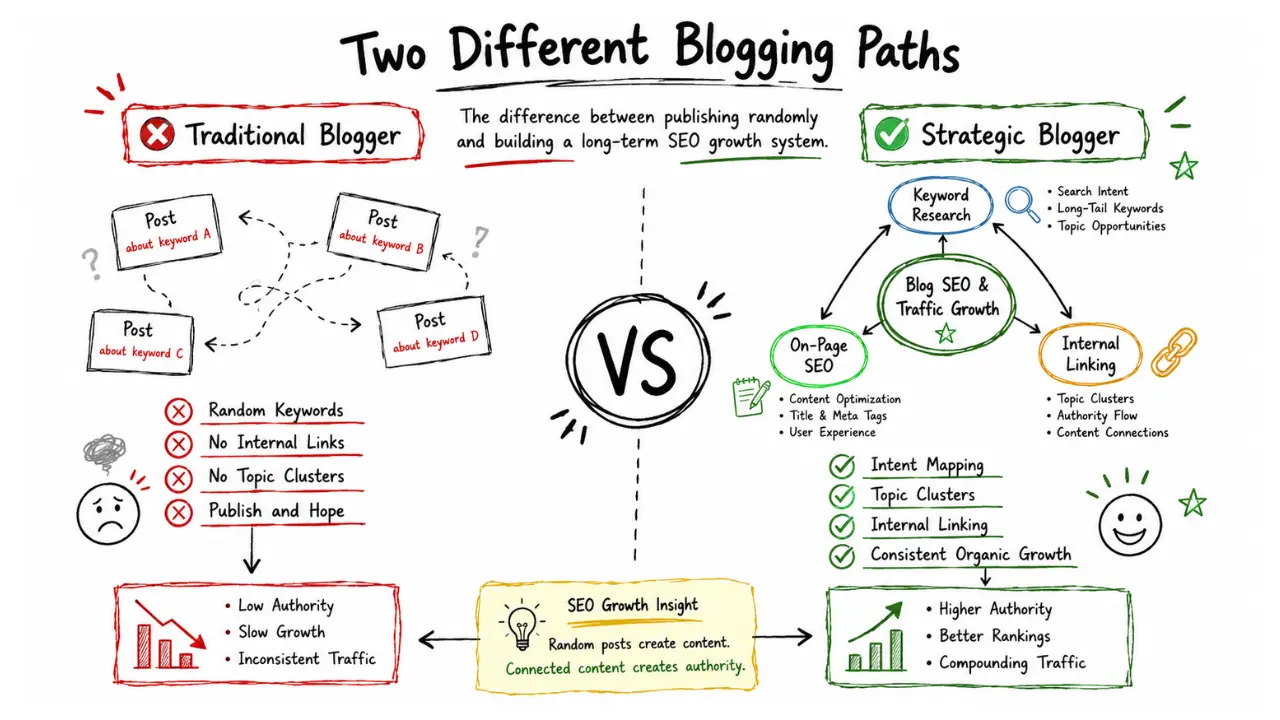
That alignment is one of the most important drivers of sustainable blog seo and traffic growth strategies for beginners because it helps both readers and search engines immediately understand the value of your content.
The best-performing blogs don’t simply target keywords. They solve the reason behind the search.
The on-page SEO checklist every blog post should pass
One of the biggest misconceptions I had when I started blogging was believing that great content alone would automatically rank.
I assumed that if an article was insightful, well-written, and genuinely helpful, search engines would eventually discover it and reward it with visibility. Unfortunately, that’s not how SEO works.
Search engines don’t evaluate content the same way readers do. While humans focus on ideas and storytelling, search engines rely on structural signals to understand what a page is about, how relevant it is to a query, and where it belongs within the broader web ecosystem.
This is why understanding How to do on page SEO blog posts remains one of the most important skills for bloggers implementing long-term blog seo and traffic growth strategies for beginners.
The good news is that on-page SEO doesn’t have to be complicated.
Once you understand the core elements, optimization becomes a repeatable process that can be applied to every article you publish.
The solo-creator's on-page SEO checklist
01 . URL structure
Keep URLs short, descriptive, and focused on the primary topic of the page. Avoid unnecessary dates, random numbers, or filler words whenever possible.
Example:
yourdomain.com/blog-seo-beginners
A clean URL helps both readers and search engines quickly understand the page topic.
02 . Title and H1 optimization
Your page title is one of the strongest relevance signals available. Whenever appropriate, place your primary keyword near the beginning of the headline while maintaining a natural reading experience.
The goal is not keyword stuffing. The goal is clarity.
A strong title should immediately communicate what problem the article solves.
03 . Heading structure (H2 and H3 subheadings)
Organize your content using logical sections and subsections. Well-structured headings improve:
- Readability
- User experience
- Content organization
- Search engine understanding
Where relevant, include primary and secondary keyword variations naturally within major headings to reinforce topical relevance.
04 . Meta description optimization
Your meta description acts like an advertisement for your content inside search results.
Although it is not a direct ranking factor, it can significantly influence click-through rates. A strong meta description should:
- Include the primary keyword
- Communicate a clear benefit
- Encourage the searcher to click
Aim for a concise description that remains visible within search results.
05 . Image optimization and alt text
Images provide additional context for both users and search engines. Before uploading an image:
- Use descriptive file names
- Compress images for faster loading
- Add meaningful alt text
- Ensure images support the content
Instead of uploading a file called:
IMG_4829.jpg
Use something descriptive such as:
blog-seo-traffic-growth-checklist.jpg
Alt text should describe the image naturally while providing context for accessibility and search engines.
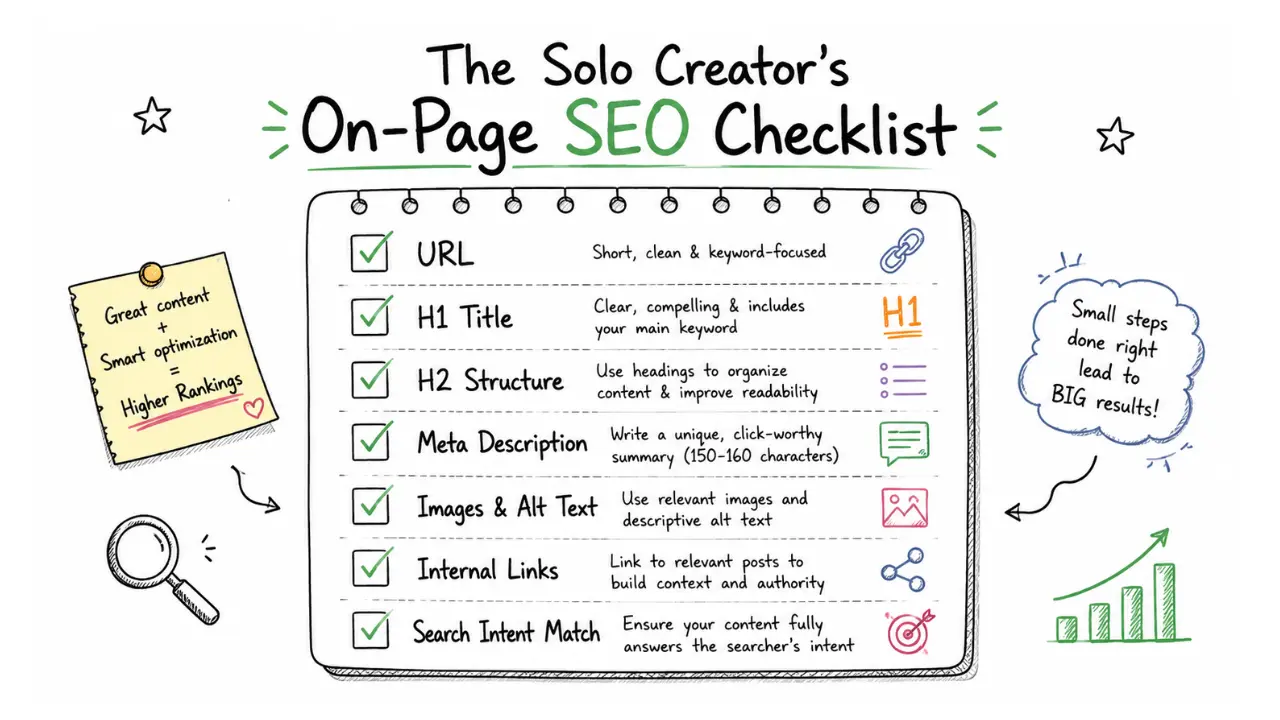
Why this checklist matters
Many bloggers focus entirely on publishing more content.
However, small optimization improvements across dozens of articles often create larger long-term gains than publishing additional unoptimized posts.
This is why a consistent on page seo checklist for blog posts becomes such an important component of sustainable SEO growth.
When combined with strong search intent targeting, topical authority, and strategic internal linking, on-page SEO helps search engines understand exactly what your content covers and who it is designed to help.
Great SEO is rarely about tricks or shortcuts. It is about making your content easier for both readers and search engines to understand.
How to use Internal linking system for blog growth
One of the biggest SEO mistakes I made as a new blogger was believing that rankings depended entirely on backlinks from other websites.
Because of that assumption, I spent far too much time focusing on outreach and not enough time improving the content structure of my own site.
What I eventually discovered was that one of the most powerful SEO assets was already under my control.
My existing content.
Learning how to use internal linking systems for blog growth completely changed the way I approached content strategy. Instead of treating each article as an isolated piece of content, I began viewing my blog as a connected ecosystem where every page could support the growth of another.
Why internal linking matters
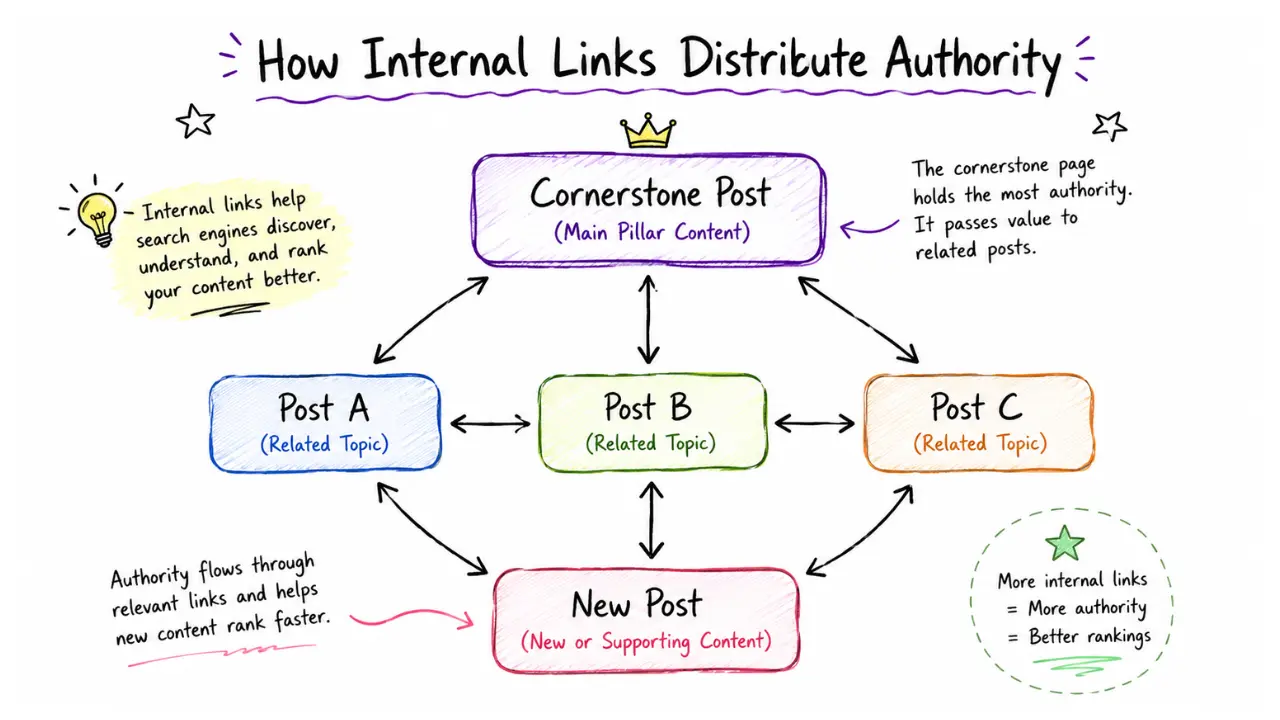
Internal links help search engines understand how your content is related.
When multiple articles connect naturally around a topic, search engines gain a clearer picture of :
- What your website focuses on
- Which pages are most important
- How different topics relate to one another
- The depth of your expertise within a subject
At the same time, internal links improve the reader experience by helping visitors discover relevant content without leaving your website.
This is one of the reasons internal linking plays such an important role in both SEO and topical authority building.
Think of internal links as navigation system
Imagine your website as a growing network of roads. Every article is a destination.
Without clear roads connecting those destinations, both readers and search engines have a harder time discovering valuable content. Internal links create those pathways.
When a newer article receives links from older, established pages, it gains additional context and visibility within the overall structure of your website. Search engines can more easily understand where that content fits and why it matters.
The result is a stronger, more connected content ecosystem.
The right way to build internal links
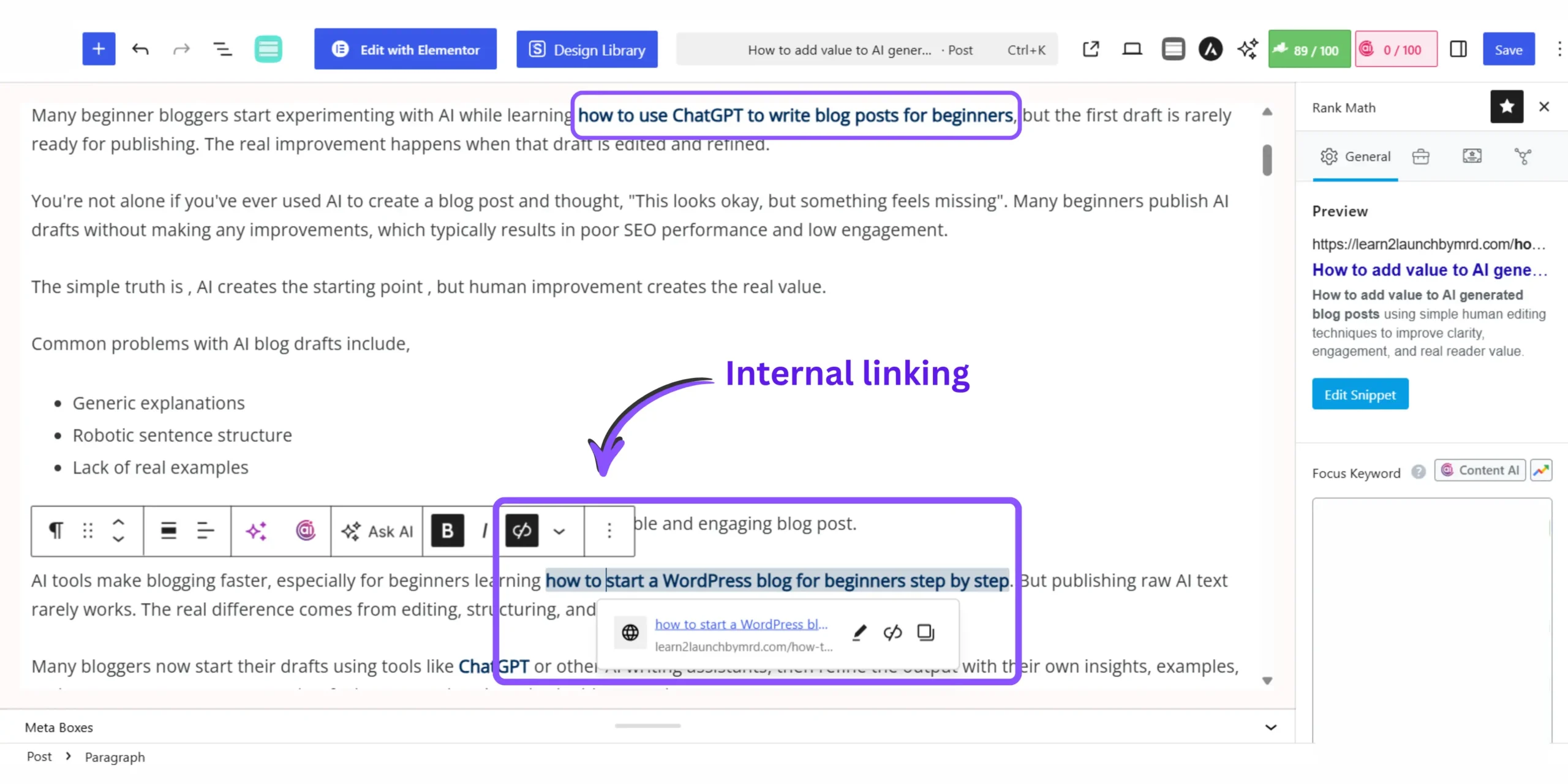
One of the most common mistakes bloggers make is adding links simply for the sake of adding links. Internal links should always serve a purpose. Instead of using vague phrases such as:
- Click here
- Read this
- Learn more
Use descriptive anchor text that clearly communicates what the reader will find after clicking.
For example, if someone wants to improve rankings more quickly, a contextual link to How to rank blog posts faster using internal links provides both relevance and value.
The best internal links feel natural because they genuinely help the reader continue their journey.
How internal linking support long term SEO growth
As your content library expands, internal links begin creating compounding benefits. Each new article becomes another opportunity to:
- Strengthen topical authority
- Improve content discoverability
- Reinforce keyword relevance
- Support important cornerstone pages
- Help readers navigate related topics
This is one of the reasons internal linking remains a core component of sustainable blog seo and traffic growth strategies for beginners.
Instead of relying entirely on external factors, you create a system that becomes stronger every time you publish new content.
A simple internal linking workflow
Whenever you publish a new article, build the habit of reviewing several existing posts that cover related topics. Look for natural opportunities to:
- Add links from older articles to the new content.
- Link the new article back to relevant cornerstone pages.
- Connect supporting articles within the same topic cluster.
- Update outdated links when better resources become available.
These small actions may seem insignificant on their own, but over time they create a tightly connected content structure that strengthens the entire website.
The most successful blogs are rarely collections of individual articles.
They are networks of content that work together.
That is exactly what a strategic internal linking system helps you build.
The lean tool stack that supports sustainable blog growth
One of the biggest mistakes new bloggers make is assuming they need more tools before they can grow.
I made the same mistake. Like many beginners, I believed that better keyword tools, advanced analytics platforms, and premium SEO software would somehow accelerate results. Before my blog had generated meaningful traffic, I had already spent far too much time comparing tools instead of creating content.
Eventually, I realized something important:
Tools do not create traffic. They simply help you make better decisions.
The real drivers of growth are understanding search intent, publishing helpful content, improving site structure, and consistently serving your audience. The right tools support those activities, but they cannot replace them.
That lesson became an important part of my approach to both blog seo and traffic growth strategies for beginners and organic blog growth strategies for solo entrepreneurs.
As a solo creator, your advantage is not having the largest software budget. Your advantage is maintaining a simple system that allows you to publish consistently without unnecessary complexity.
The minimalist tools stack for solo bloggers
Rather than building a complicated collection of subscriptions, focus on a few essential tools that directly support content creation, SEO analysis, and long-term growth.
Analytics and search performance
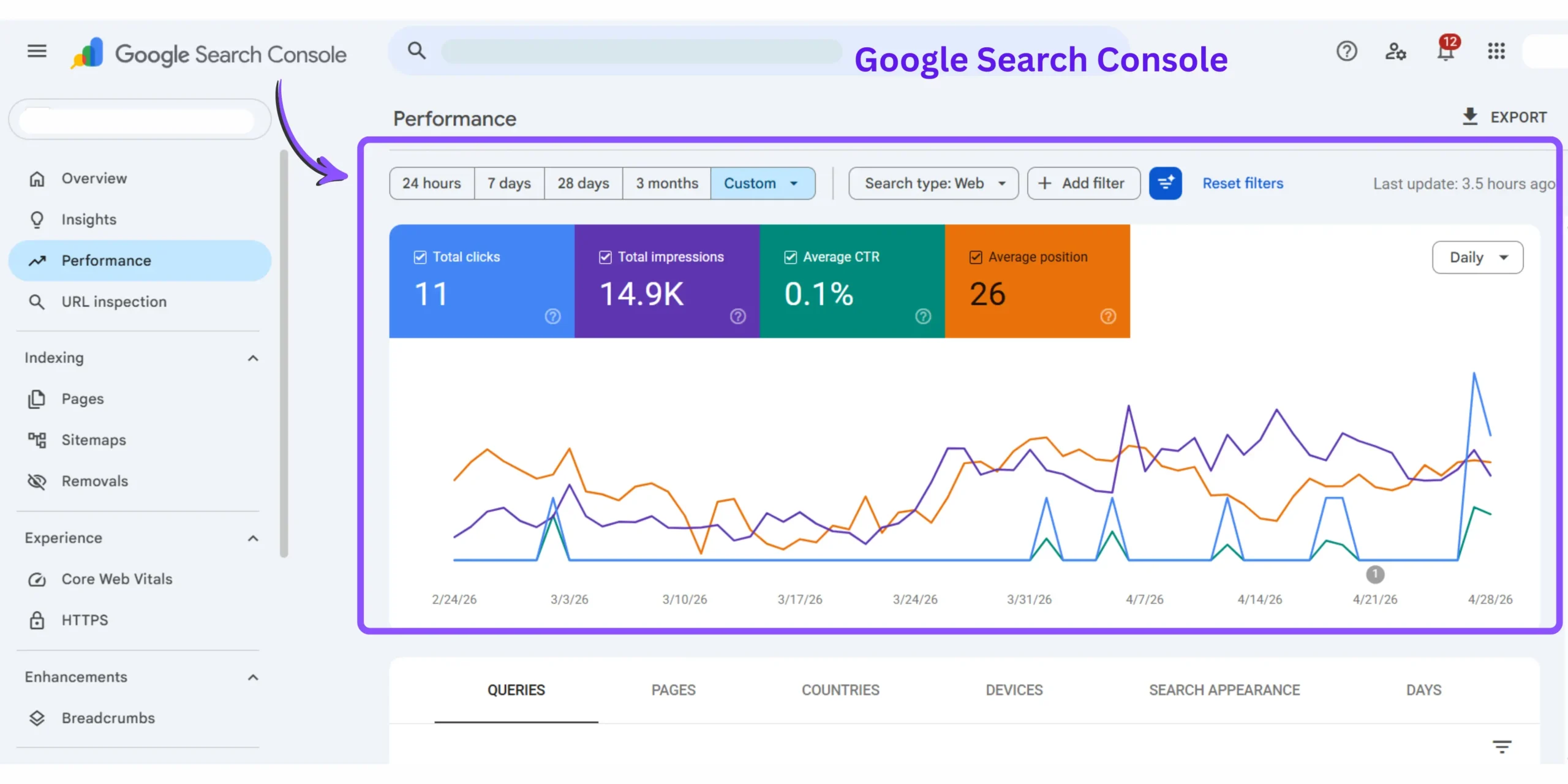
Every growth strategy begins with understanding what is actually happening on your website. Two free tools provide most of the information a beginner blogger needs:
- Google Search Console
- Google Analytics 4
Together, these platforms help you understand:
- Which pages generate impressions
- What keywords drive traffic
- How visitors interact with your content
- Which articles deserve further optimization
Instead of guessing what is working, you can make decisions based on real user behavior and search performance data.
Content creation and workflow efficiency
Creating high-quality content consistently is one of the biggest challenges for solo bloggers. The goal is not to publish faster at the expense of quality.
The goal is to reduce repetitive work so you can spend more time improving ideas, research, and reader value.
This is where resources such as Best content creation tools for bloggers become valuable. The right tools can help streamline outlining, research, drafting, editing, and content organization while allowing you to maintain a consistent publishing workflow.
Content refinement and quality control
AI-assisted workflows can improve productivity, but publishing raw AI-generated content without review often creates problems.
Successful bloggers focus on refining, improving, and personalizing content before publishing.
That is why learning How to edit AI generated content for SEO remains an important skill. Editing helps ensure that content:
- Matches search intent
- Provides original insights
- Maintains a natural voice
- Demonstrates expertise
- Delivers genuine value to readers
The goal is not simply to create more content. The goal is to create better content efficiently.
The real competitive advantage
Many beginner bloggers spend months searching for the perfect tool stack. In reality, most successful websites grow through consistent execution rather than sophisticated software.
A simple workflow built around research, content creation, optimization, and measurement will almost always outperform a complicated collection of expensive tools that rarely get used.
The most effective organic blog growth strategies for solo entrepreneurs are usually the simplest ones. Use tools to support your process.
Do not let tools become the process. Because in the long run, sustainable traffic growth comes from solving problems for readers—not from accumulating more software subscriptions.
Organic Traffic & SEO Solutions
Answers about building topical relevance, identifying search intent, avoiding algorithmic penalties, and structuring long-term compounding search assets.
Yes, you can grow a blog entirely through organic search traffic without relying on social media platforms. Search engine optimization allows your content to attract visitors who are already searching for solutions, making it a more stable long-term traffic source.
Instead of constantly posting to stay visible on a fast-decaying rented feed, optimized SEO content can generate consistent traffic for months or even years once it starts ranking.
The easiest method is using Google Autocomplete and “People Also Ask” suggestions. These show real search queries from live users and often reveal low-competition, long-tail keywords that are frequently missed by expensive keyword suites.
Look for specific, problem-based phrases with weak competition in the search results, especially where community forums, Reddit threads, or outdated content are ranking on the first page.
Use your primary keyword naturally about 1–2 times per 500 words, depending on content length. The core focus of your optimization workflow should always be readability and intent matching, never pure keyword repetition.
Modern search engines rely heavily on semantic relevance and comprehensive topic coverage, so overusing exact-match keywords can actually hurt your content quality metrics and limit search rankings.
Not by itself. Simply changing the publication date without adding real value or improving content will not improve rankings. However, strategically updating and improving the context of the content itself can help significantly.
Refreshing outdated information, adding unique information gain, improving outline structure, and fixing broken links signals to search engines that the page remains relevant and useful.
Long-form pillar guides usually perform better because they cover topics deeply and naturally attract more long-tail search queries. They also help solo creators build topical authority much faster by targeting multiple related intent-driven keywords within a single piece of content.
However, the key factor remains structural quality and useability—not word count. A clear, well-organized 1,800-word guide will consistently outperform a 4,000-word article filled with unnecessary filler text.
Building a successful blog is not about chasing every trend or constantly pushing content across social platforms. It is about building a system that compounds over time.
When you consistently apply blog seo and traffic growth strategies for beginners, you shift your focus from short-term visibility to long-term search-driven growth. Instead of relying on unpredictable traffic spikes, you start building a stable foundation of organic visitors who find your content through intent-based search.
Real momentum begins when you understand how to build topical authority as a new blogger, publish content that is connected through a clear structure, and support each article with a strong on page seo checklist for blog posts. These fundamentals work together to signal depth, relevance, and trust to search engines.
From there, growth becomes systematic. By learning how to use internal linking systems for blog growth and applying consistent organic blog growth strategies for solo entrepreneurs, every new piece of content strengthens the performance of the entire website.
The goal is simple: stop creating isolated posts and start building a connected content ecosystem.
When your blog operates as a structured system instead of a collection of random articles, organic traffic becomes more predictable, more stable, and significantly easier to scale over time.
Malaka Dharmarathne - MRD
Digital Marketing & Blogging growth specialist
” I help beginner bloggers build high-converting, no-code WordPress websites and master the fundamentals of SEO and content distribution. Through actionable blueprints on affiliate marketing and high-income monetization, I turn simple blogs into profitable digital businesses.“
Popular Blueprints
Table of Contents - Blog SEO and traffic growth
Build & Scale a High-Converting Blog Platform
Join thousands of creators getting actionable breakdowns on affiliate monetization, clean UX design, and growth strategy delivered straight to your incbox.
- Step-by-Step Guides: Proven traffic & monetization tactics.
- Tech Stack Curations: The exact tools & plugins to build faster.
- Zero Spam: Unsubscribe in 1 click at any time.
🔒 We respect your privacy. No spam, ever.

” I’m MRD, a digital entrepreneur specializing in building lightweight, automated systems for solo creators. I founded Learn2Launch to share the exact AI orchestration protocols and framework setups I use every day—helping you launch a profitable one-person business completely free of technical overwhelm or backend bloat.“