

You spend hours researching, writing, editing, and polishing a blog post. You finally hit Publish, convinced this could be the article that starts bringing consistent organic traffic. Then you wait.
A few days later, you open Google Search Console, hoping to see signs of progress. Instead, you’re greeted with almost nothing. No meaningful impressions. No clicks. No indication that your content is gaining traction.
If you’ve ever experienced that frustration, you’re far from alone. I’ve been in exactly the same position. Maybe like you in the beginning stage.
If you are wondering how specific should a blog niche be to actually get noticed today, you are asking one of the most important questions you can ask as a blogger. When I launched my first website, I genuinely believed choosing “digital marketing” as my niche was the smart decision. It sounded profitable, flexible, and full of opportunity.
What I didn’t understand at the time was that I had placed a brand-new website into one of the most competitive spaces on the internet. I wasn’t just competing with other beginner bloggers—I was competing with established publishers, global brands, and websites that had spent years building authority. No matter how much effort I invested into each article, my content struggled to gain visibility because my niche was simply too broad.
If you haven’t finalized your topic yet and want a proven framework for choosing one, read our complete guide on How to choose the perfect blog niche for beginners. But if your blog is already live and you feel like you’re working hard without seeing meaningful results, don’t assume your writing is the problem. Let’s diagnose what is really holding your website back.
WHAT I HAVE NOTICED :
New blogs build topical authority faster when they focus on a clearly defined micro-niche instead of covering multiple broad topics. If you’re wondering how specific should a blog niche be, the answer is simple: narrow enough that your content consistently serves one audience with one core problem. This focused approach improves search visibility, strengthens internal linking, and increases the likelihood of earning Google and AI-generated citations.
The reality of modern SEO and increasingly AI search experiences and Answer Engine Optimization (AEO) is that search systems don’t simply evaluate individual articles. They also evaluate whether your website consistently demonstrates expertise around a clearly defined topic.
For new blogs especially, trying to cover everything makes it much harder to build the topical authority needed to earn strong Google rankings or become a trusted source for AI-generated answers.
If you are constantly asking yourself, “how do i know if my blog niche is too broad?” or wondering “can a blog have multiple niches and still rank”, the answer almost always comes back to one principle: the clearer your niche, the easier it is for both readers and search engines to understand exactly what your website stands for.
Quick self assessment : Is your blog too general?
Take a moment to answer these questions honestly what I make for optimize this well,
- Are you competing directly with authority websites like Forbes or Healthline for your primary keywords?
- Does your content plan jump from fitness tips to financial advice or other completely unrelated topics?
- Are you unsure who your exact “one reader” is?
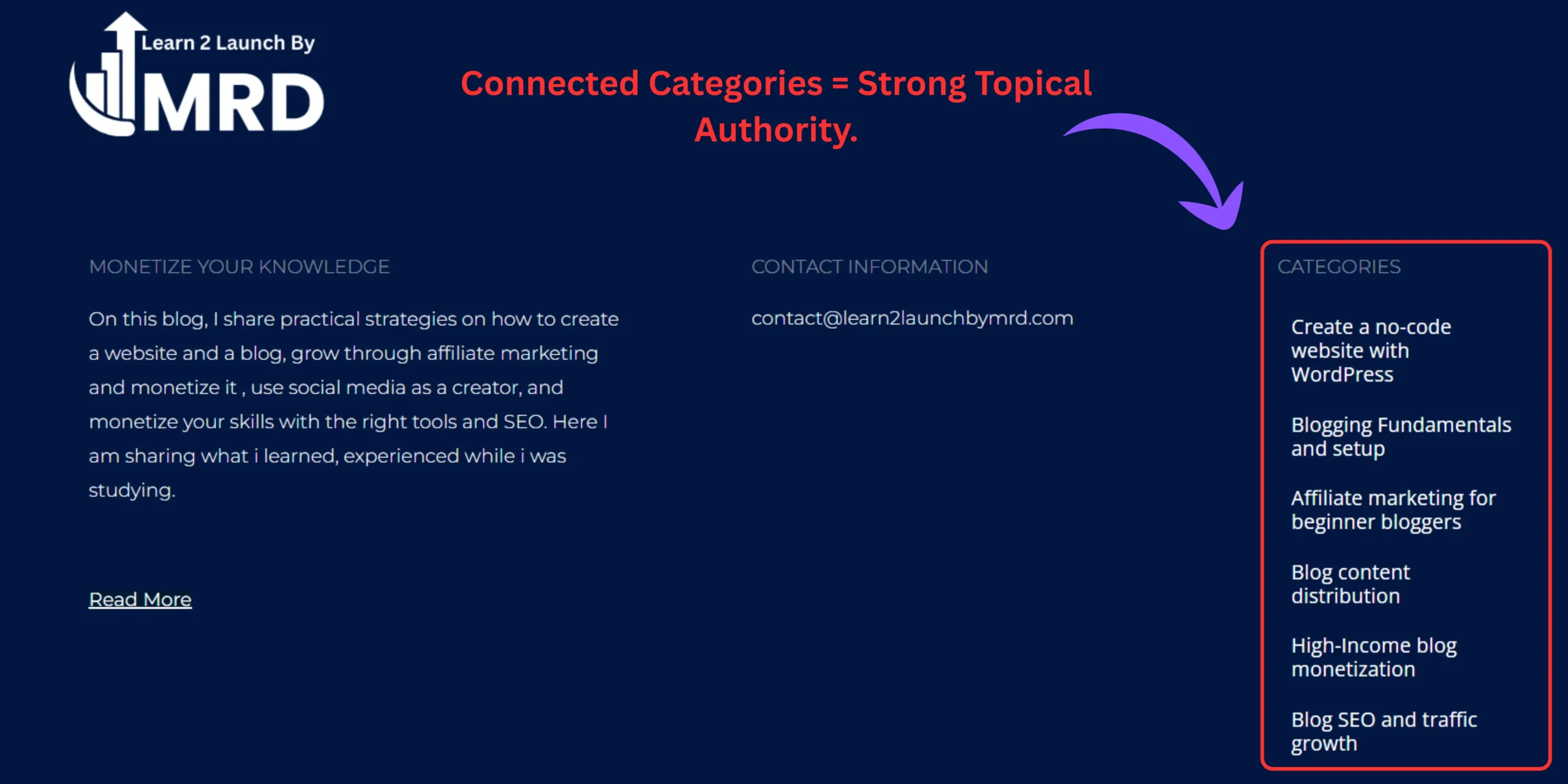
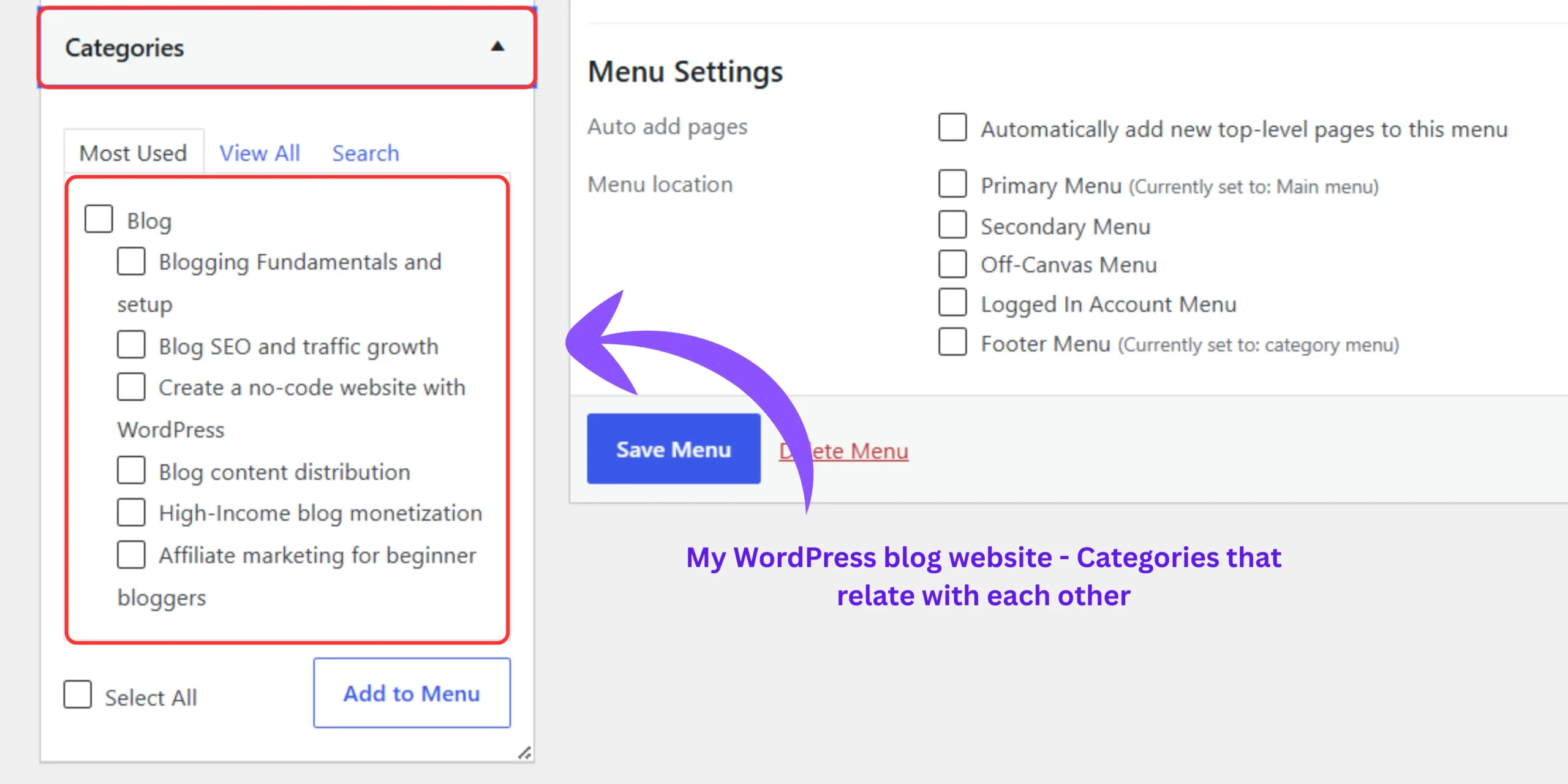
- Do your blog categories feel more like separate websites than one connected content system?
If you answered yes to any of these questions, don’t panic.
It doesn’t mean you need to throw away your website or start from scratch. More often than not, it simply means your blog needs a clearer direction. Learning how to narrow down your blog niche is one of the highest-impact changes you can make because it strengthens your topical authority without requiring a complete rebuild.
In the sections ahead, you’ll learn exactly how to sub niche a broad blog topic using practical, data-driven strategies that help your website build authority, attract more qualified organic traffic, and become a stronger candidate for both Google Search and AI-powered answer engines.
Key topics in this guide :
The big SEO question : Is it bad to have a broad blog niche?
The short answer? For most new, independent bloggers, yes. A broad niche doesn’t make success impossible, but it does make building trust, authority, and organic visibility significantly more difficult.
Modern search engines and AI-powered search experiences don’t evaluate your website based on a single article. They look for consistent evidence that your content demonstrates expertise within a clearly defined subject area.
If your blog tries to cover everything from finance to travel to health, those signals become diluted, making it harder for search systems to understand what your website truly specializes in.
This is where Topical Authority becomes one of the biggest competitive advantages. Search engines are far more likely to trust websites that publish comprehensive, interconnected content around one specific topic instead of dozens of unrelated subjects.
When your niche is too broad, search engines often struggle to categorize your site’s purpose, which can contribute to slower visibility growth and even issues discussed in Why is my new WordPress site not indexing on Google during the early stages of a new website.
For long-term SEO success, AI citations, and Answer Engine Optimization (AEO), it’s usually better to become the trusted expert within a focused niche than to compete across an entire industry before your authority is established.
The diagnosis : How do I know if my blog niche is too broad?
You don’t need expensive SEO software or years of experience to answer this question. In most cases, the clearest signs don’t appear inside complicated reports, they appear in your everyday blogging workflow.
If you’re constantly struggling to decide what to publish next, or your content calendar feels like a collection of unrelated ideas rather than a connected strategy, your niche may already be too broad. I experienced the same problem on one of my earliest blogs. Every article felt like a fresh start instead of building on the previous one, which meant neither readers nor search engines could clearly understand what my website was trying to become.
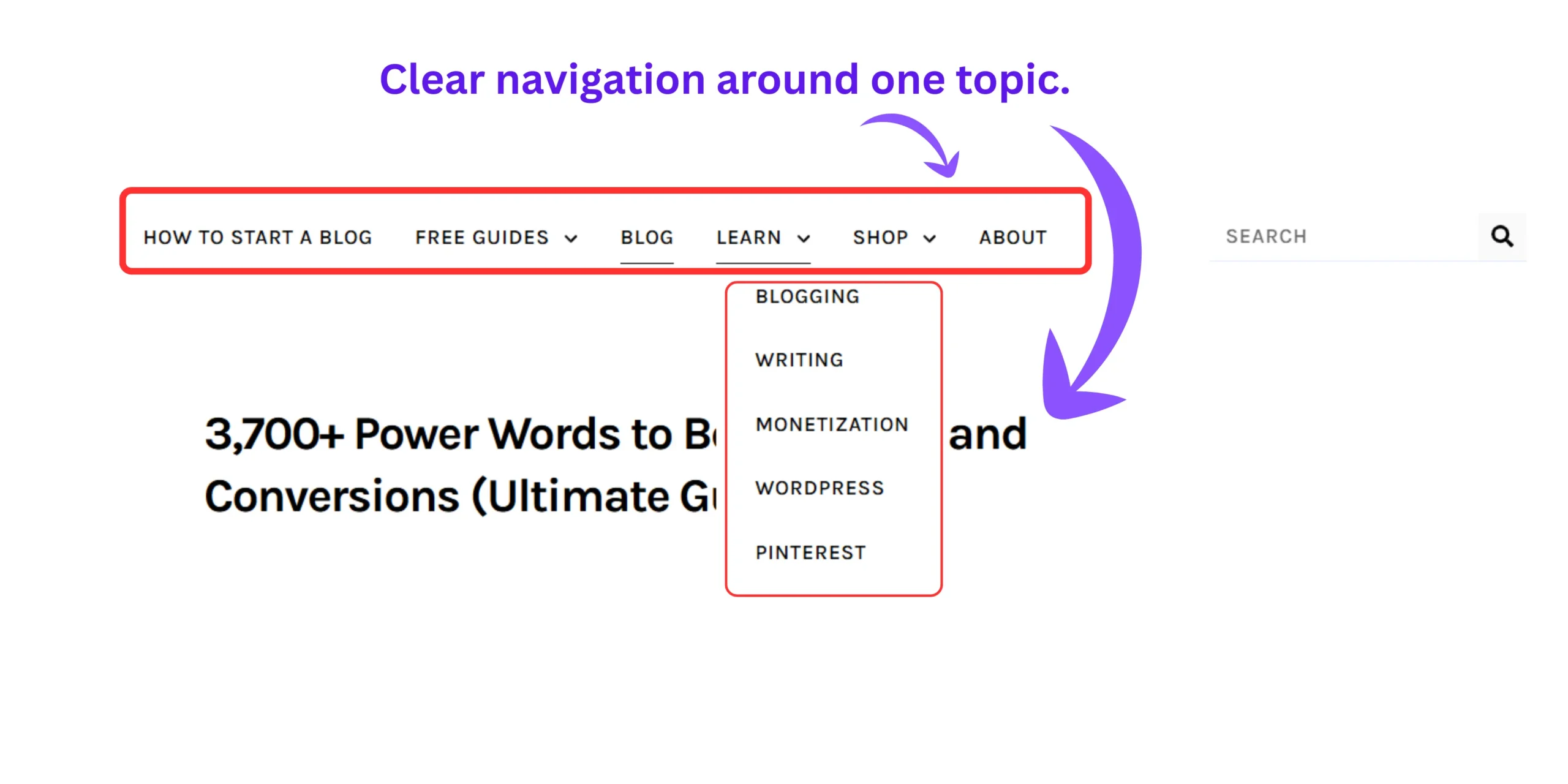
Another simple test is to look at your site’s structure. Does it feel like a specialist resource focused on solving one type of problem, or does it resemble a department store filled with unrelated topics? That answer usually tells you more than any SEO tool.
A broad niche doesn’t just weaken search visibility, it also creates a disconnected user experience. Understanding How to structure a blog for beginners starts with building tightly connected categories that naturally guide readers from one article to the next. When your topics lack that relationship, internal links become forced, engagement drops, and your topical authority becomes much harder for both Google and AI-powered search systems to recognize.
05 Red flag signs your blog niche is too general
If your target reader changes with every article, you only compete against major publishers, content ideas feel random, readers rarely explore more than one page, and you can’t explain your blog’s purpose in one sentence, your niche is likely too broad. Narrowing your focus helps build topical authority, improves internal linking, and makes your website easier for both Google and AI search systems to understand.
When I launched one of my earliest blogs, I genuinely believed my biggest problem was writing.
I blamed my headlines.
I blamed my SEO.
I blamed my publishing schedule.
Looking back, none of those were the real issue. The website simply tried to cover too many subjects at once, which meant every article competed in a different market. Instead of building authority, I was constantly starting over.
If you recognize several of the warning signs below, don’t see it as bad news. Think of it as a diagnosis. Once you know what’s holding your blog back, you can fix it with a clear strategy.
01 . Your target reader changes with every article
The fastest way to spot an overly broad niche is to ask a simple question:
Who is this article written for?
If today’s post targets someone saving money on groceries, tomorrow’s targets cryptocurrency investors, and next week’s is about productivity hacks, your audience changes every time you publish.
That creates two problems:
- Readers don’t know what your website actually specializes in.
- Search engines struggle to understand who your content consistently serves.
The strongest blogs don’t try to help everyone. They become incredibly useful for one specific audience.
02 . You only compete with billion dollar media giants
Open an incognito browser and search your primary keyword. Look carefully at the first page. Do you mostly see:
- Forbes
- Healthline
- Hubspot
- TripAdvisor
- government websites
- Major news publications
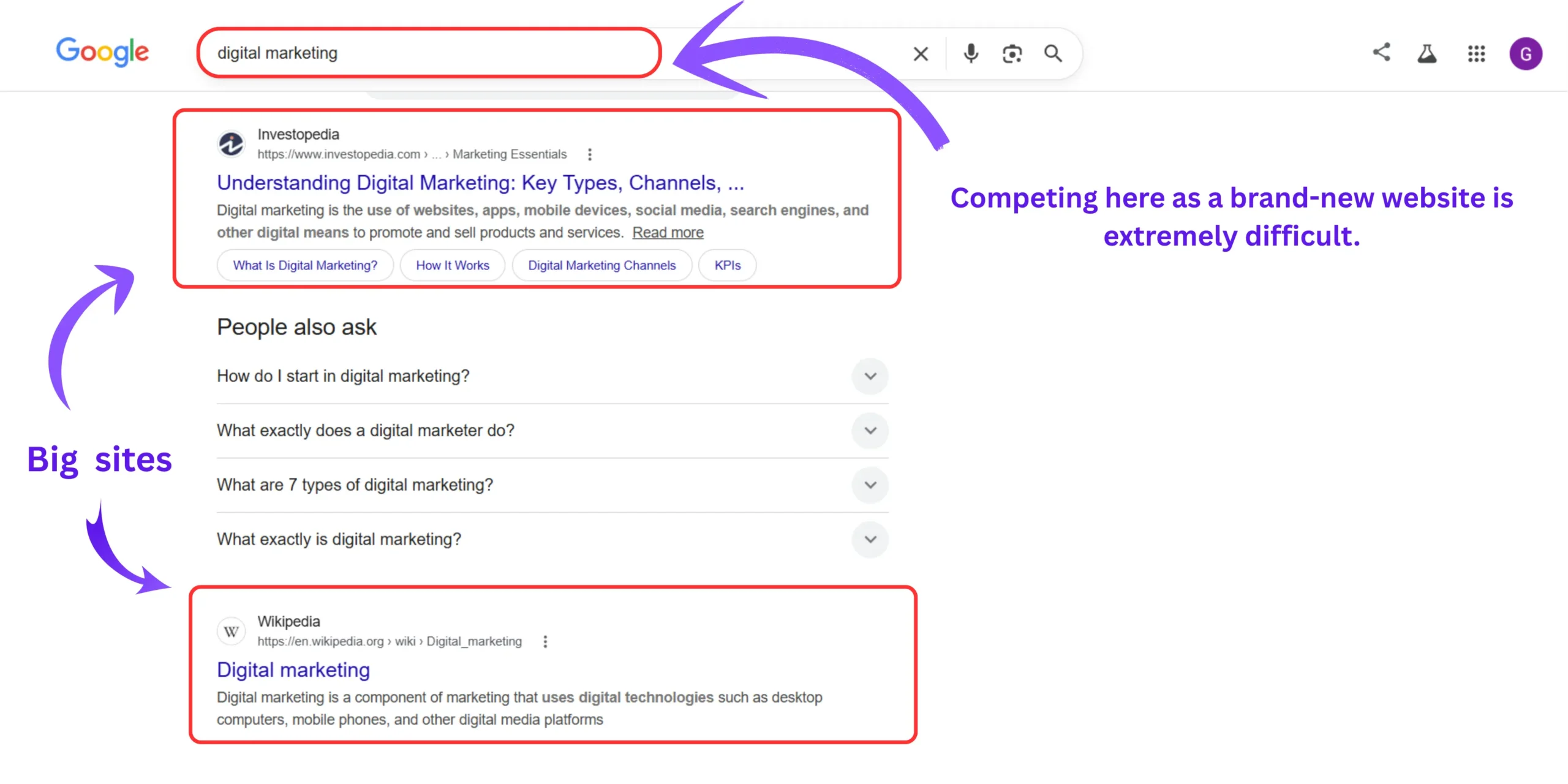
If the answer is yes, you’ve probably entered a market where authority, not content quality—is the biggest ranking factor.
Even understanding How to optimize blog post for SEO beginners won’t completely overcome that challenge because the competitive landscape is fundamentally different.
Instead of asking,
“How do I outrank Forbes“
Ask,
“How can I become the best resource for one highly specific audience?“
That shift changes everything.
03 . You constantly runout of content ideas
This surprised me the most. I assumed a broad niche would give me unlimited topics. The opposite happened. Every writing session started with the same question:
“What should I write today?“
Without a clearly defined audience, every topic felt random. Eventually I realized I wasn’t running out of ideas.
I was missing focus. Once I narrowed my niche, every reader question naturally became another article idea.
That’s why learning How to find content ideas for beginners becomes dramatically easier when you know exactly who you’re writing for and what problem you’re trying to solve.
04 . Readers leave after viewing one page
This is one of the clearest signals inside your analytics. Someone lands on one article. They read it. Then they leave.
Why ?
Usually because the next article isn’t relevant to the problem they came to solve. Strong niche websites naturally guide readers deeper.
Each article answers another related question. Each internal link feels helpful rather than forced.
When your niche is focused, readers often continue exploring because every page expands on the same subject from a different angle.
05 . You can’t explain your blog in one sentence
Try this simple exercise what I have applied for me. Imagine someone asks,
“What does your blog help people do?“
Can you answer in one clear sentence? Or do you find yourself saying something like,
“It’s about blogging, marketing, productivity, AI, finance… a little bit of everything.”
If that’s your answer, you’ve probably identified the real problem. The strongest blogs usually follow a simple positioning statement:
I help [specific audience] solve [specific problem] using [specific approach].
That level of clarity doesn’t just help readers. It helps every future decision you make from choosing keywords and planning content to strengthening topical authority and building long-term search visibility.
The more specific your answer becomes, the easier it is for both Google and AI-powered search systems to understand exactly what your website should be known for.
The pivot strategy : How to narrow down your blog niche (without starting over)
The fastest way to how to narrow down your blog niche is not by starting a new website, but by refining your existing one. Instead of covering broad topics, narrow your focus around one specific audience, one core problem, and a tightly connected content cluster that strengthens topical authority over time.
Here’s the best news you’ll hear today: discovering that your niche is too broad doesn’t mean you’ve wasted months of work. You don’t need to delete your content, abandon your brand, or purchase a brand-new domain name.
I’ve seen many beginner bloggers make that mistake. They assume their website has failed, when in reality, their direction—not their effort—is the real problem.
The good news is you don’t need to rebuild your platform. If you followed our guide on How to start a WordPress blog for beginners step by step, your technical foundation is already in place. Think of your website as a car with a reliable engine. The engine doesn’t need replacing—you simply need to adjust the steering wheel toward a clearer destination.
Instead of starting over, use a deliberate pivot strategy. Add audience modifiers, problem modifiers, or industry-specific constraints to your existing topic until your expertise becomes obvious.
That small adjustment transforms scattered content into a focused authority hub, making it easier for both Google and AI-powered search systems to understand exactly what your website should be known for.
The 3 step framework : How to sub niche a broad blog topic
The easiest way to How to sub niche a broad blog topic is to identify a specific audience, validate your direction using real search data, and consistently publish content around that focused niche. This creates stronger topical authority, clearer search relevance, and a better experience for both readers and AI-powered search systems.
Shifting your blog’s direction doesn’t require months of planning or a complete rebuild. In my experience, the biggest improvements usually come from making a few strategic adjustments rather than starting over. Once your niche becomes more focused, every article begins supporting the next instead of competing with it.
Step 01 : Apply the audience modifier
The quickest way to create a micro-niche is to define exactly who you are writing for.
Instead of publishing generic content like “fitness tips,” narrow it to “fitness tips for busy night-shift workers” or “home workouts for stay-at-home parents.” That single adjustment immediately makes your content more relevant because you’re solving a problem for a clearly defined audience instead of trying to help everyone.
Step 02 : Conduct a search console data audit
Your best niche ideas often come from your own data.
Open Google Search Console and review the last 90 days of search performance. Look beyond your top-performing pages and study the long-tail queries already generating impressions. If one specific topic consistently appears, treat it as a signal—not an accident. Your audience is already telling you where your strongest authority can be built.
Step 03 : Content realignment and pruning
Once you’ve identified your micro-niche, commit to it.
Treat your next article exactly like How to write your first blog post for beginners by creating content that directly supports your new focus. Then plan your next 8–10 articles around the same topic cluster to strengthen topical authority.
Finally, review your older content. Update articles that can support your new direction, redirect overlapping content where appropriate, and gradually phase out posts that no longer serve your audience. A focused content library almost always outperforms a large collection of unrelated articles.
High covering examples of narrowing down a blog niche
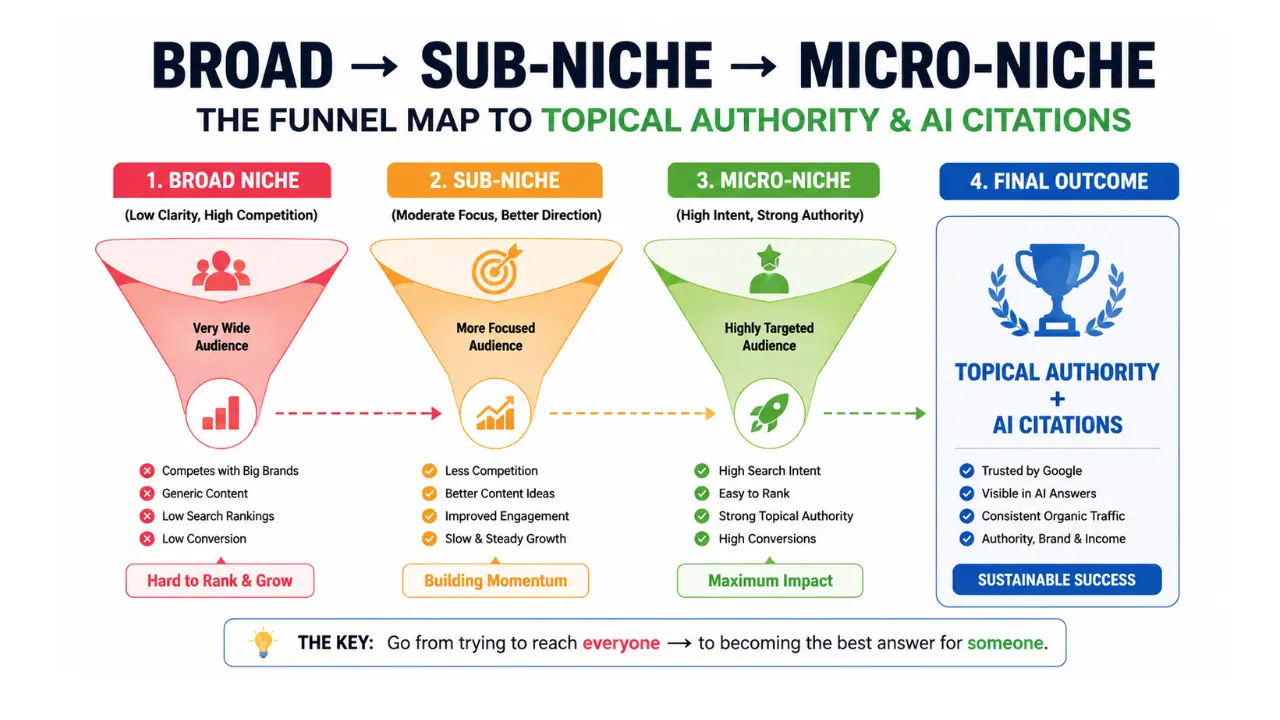
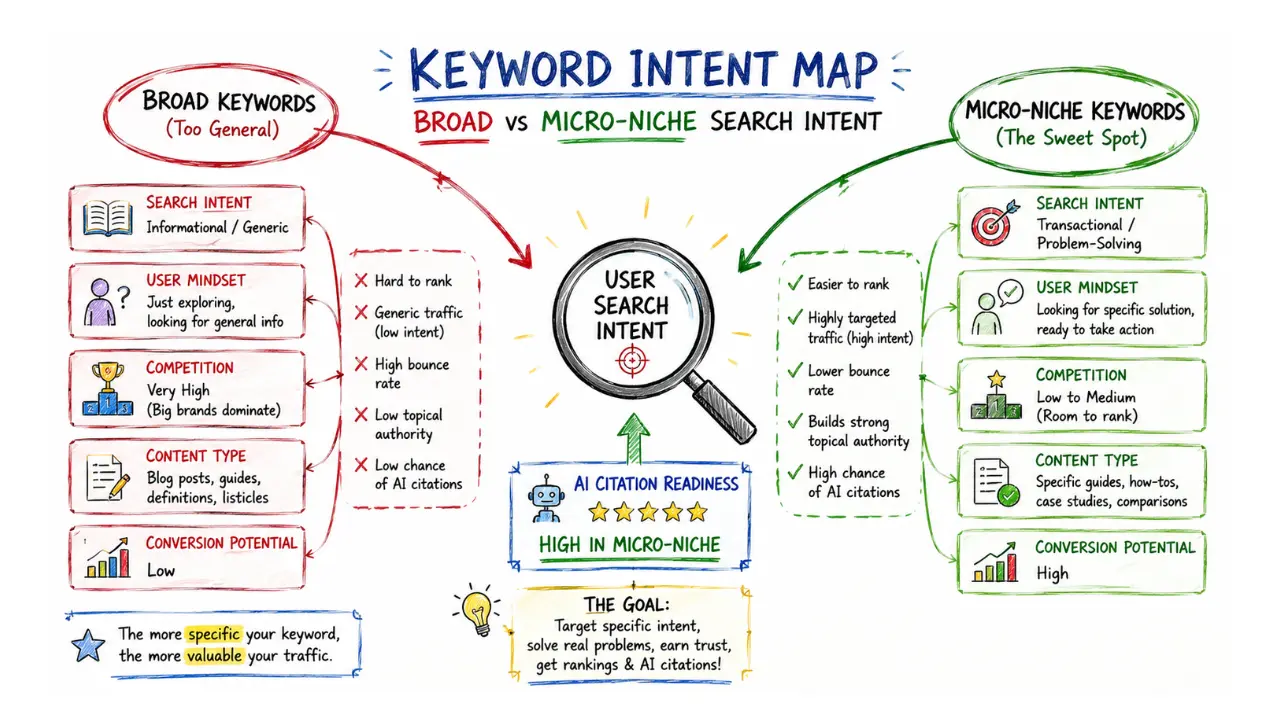
The most effective way to build topical authority is to move from a broad niche to a highly specific micro-niche. Instead of targeting a general subject, focus on a defined audience with a clear problem. This improves search relevance, attracts higher-intent visitors, and increases your chances of earning Google rankings and AI-generated citations.
Understanding the concept is one thing—seeing it in practice makes it much easier to apply to your own blog.
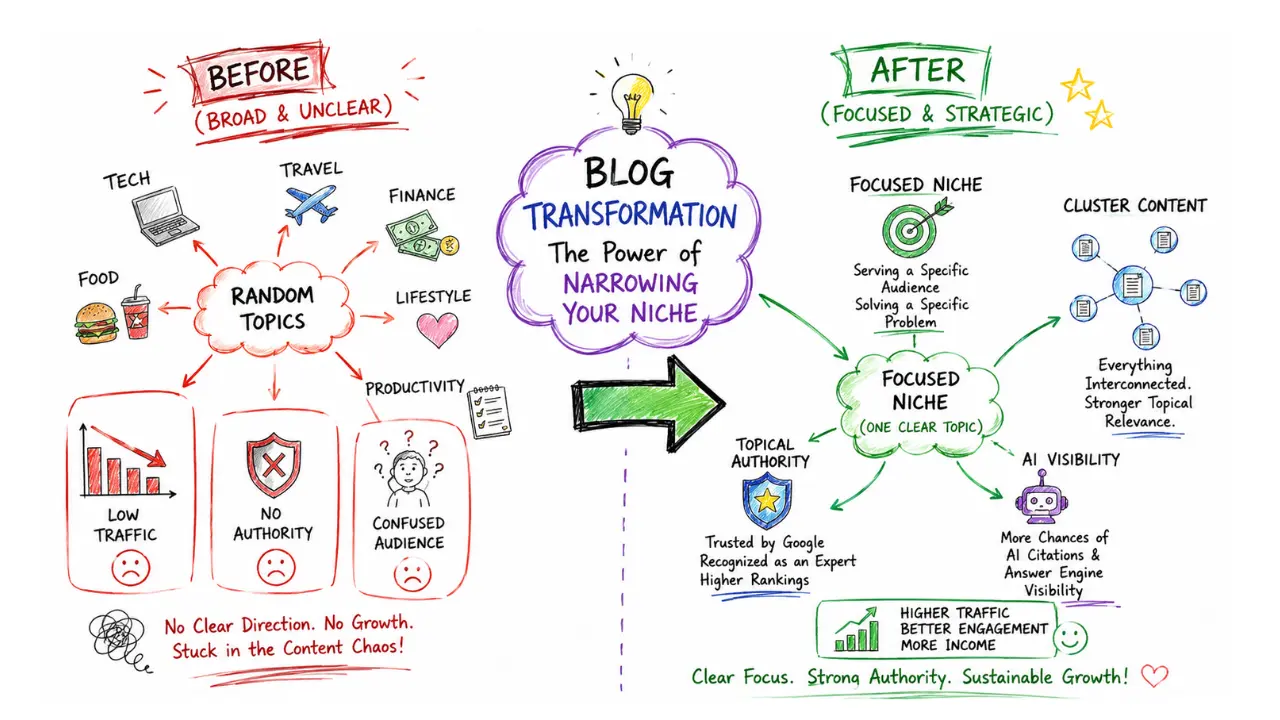
When I first tried narrowing one of my websites, I assumed I was limiting my growth. The opposite happened. The more specific my content became, the easier it was to decide what to publish next, connect related articles, and attract readers looking for exactly the solutions I was providing.
The goal isn’t to make your niche smaller for the sake of it. The goal is to move away from highly competitive, generic topics and position yourself where search intent is clearer and competition is more manageable.
| Broad niche (too general) | Sub niche (Still competitive) | Micro-niche (The sweet spot) |
|---|---|---|
| Personal finance | Dividend investing | Dividend investing strategies for working moms |
| Digital marketing | Search engine optimization | Local SEO and lead generation for dental clinics |
| Travel and lifestyle | European travel | Budget friendly solo train travel in Eastern Europe |
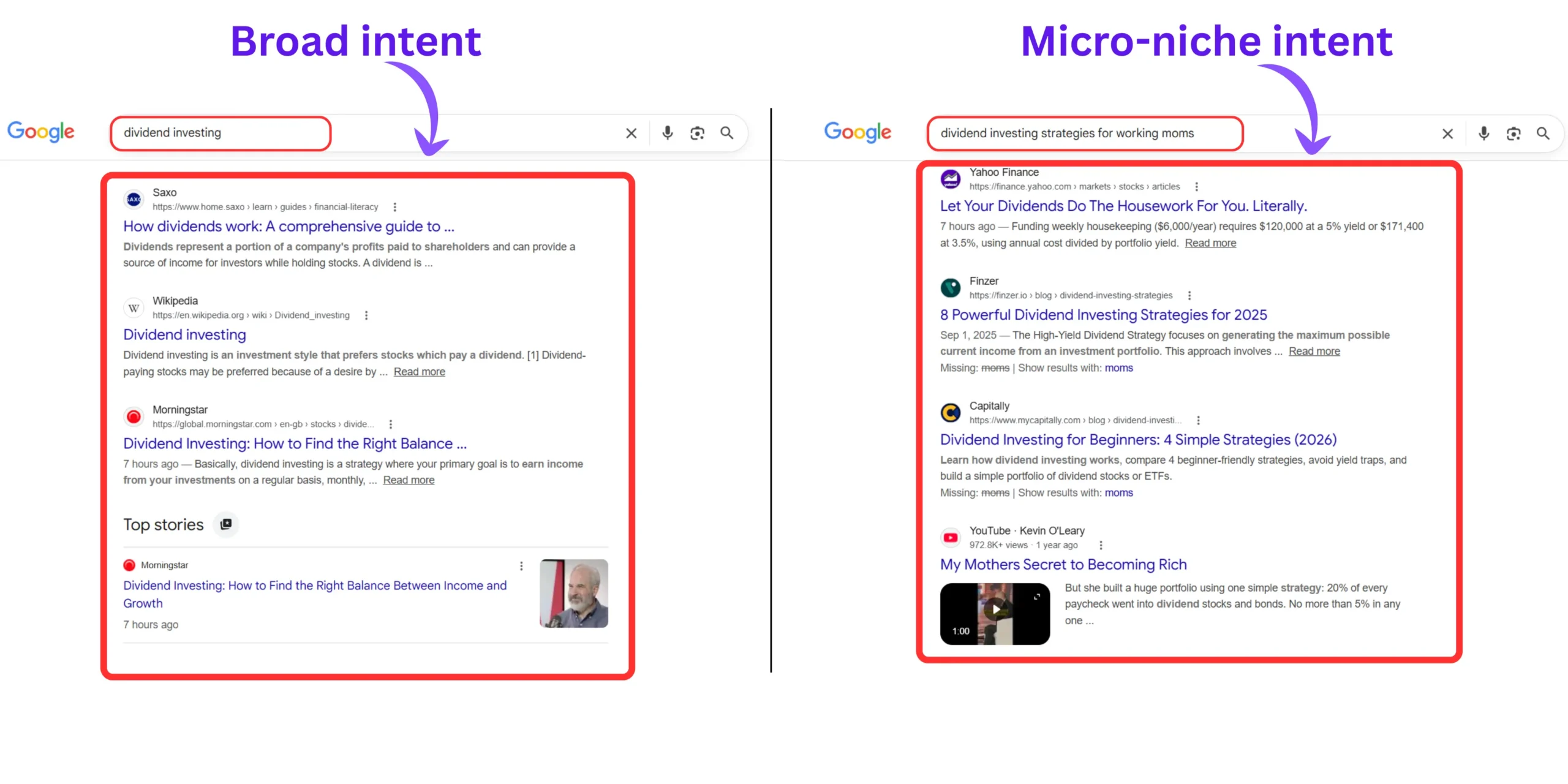
Notice how each example becomes more specific by identifying a particular audience or use case. By focusing on the “Sweet Spot”, you stop competing for broad topics that AI tools and large publishers can easily cover. Instead, you create content that directly matches specific user intent—making your blog more valuable to readers and more likely to be recognized by both Google and AI-powered answer engines as a trusted source.
Frequently asked questions on how specific should a blog niche be?
How many categories should a beginner blog have?
A beginner blog should usually start with 3 to 5 closely related categories. Keeping your categories focused helps search engines understand your website’s main topic and makes it easier for readers to navigate your content.
One of the biggest mistakes new bloggers make is creating too many categories before they have enough content to support them. A category with only one or two posts doesn’t build authority.
Instead, think of each category as a content hub. Your goal is to publish several closely related articles that naturally link together. This creates stronger topical relevance, improves internal linking, and makes it much easier for both Google and your readers to understand what your website specializes in.
Can I change my blog niche later if I get bored?
Yes. You can change your blog niche, but refining or narrowing your existing niche is usually much safer than switching to a completely unrelated topic.
Changing from one closely related subject to another is often a natural evolution. For example, a general travel blog can gradually specialize in budget travel, digital nomad resources, or travel gear.
However, moving from an established travel blog to cryptocurrency or gardening creates a completely different topical identity. In many cases, your existing authority, internal links, and audience no longer support the new direction. Whenever possible, pivot within the same industry instead of abandoning everything you’ve already built.
How long does it take a sub niched blog to get traffic from Google?
There is no fixed timeline, but a well-focused sub-niche often gains targeted visibility faster than a broad blog because it competes for more specific search queries.
Success depends on many factors, including content quality, search intent, internal linking, website quality, and competition.
A focused niche gives Google clearer topical signals, allowing your site to establish authority around a smaller subject instead of competing across an entire industry. While results always vary, many bloggers find that targeting long-tail topics helps them build momentum sooner than trying to rank for highly competitive broad keywords.
Is a niche blog more profitable than a general blog?
In many cases, yes. A focused niche blog often earns more per visitor because it attracts readers with a specific problem or buying intent.
Traffic alone doesn’t generate income—relevance does. For example, a visitor searching for “organic container gardening setup for balconies” usually has a much clearer goal than someone casually browsing a general lifestyle website.
That focused intent often leads to higher engagement, stronger affiliate conversions, better email sign-ups, and greater trust. Even with fewer visitors, a well-positioned niche blog can outperform a larger site with a broad, unfocused audience.
What should I do with my old blog posts that don’t fit my new narrow niche?
Review each post individually. Update valuable content, redirect pages that have a better replacement, and consider removing posts that no longer serve your audience or your website’s direction.
Not every old article needs to disappear. If a post still receives relevant traffic or has earned quality backlinks, updating it to match your new niche is often the best option.
If you’ve created a stronger replacement article, a 301 redirect can preserve user experience and consolidate signals. Posts with no meaningful traffic, backlinks, or strategic value may be worth pruning so your site stays focused. The goal isn’t to delete content aggressively—it’s to make every page support your blog’s current topical authority.
Narrowing your focus is your ultimate unfair advantage
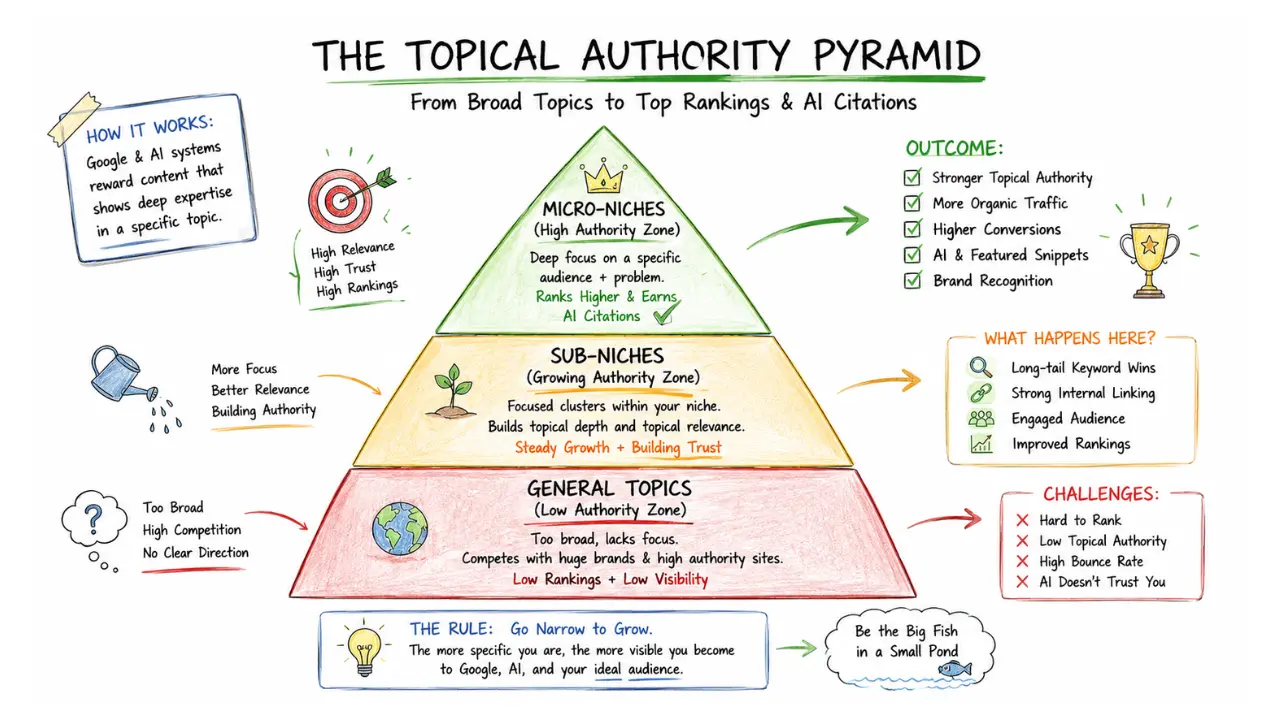
The most effective way to build a successful blog today is to narrow your niche into a focused, specific topic that serves one clear audience. This allows you to improve topical authority, rank for long-tail keywords, and increase visibility in both Google search and AI-generated answers.
Choosing a hyper-focused niche is not about restricting your growth. It is about finally giving your content a real opportunity to compete in a crowded digital space.
When you stop targeting massive, general keywords dominated by multi-million dollar media brands, you shift into a position where your content can actually gain traction. This is where smaller creators often see their first real breakthroughs.
Understanding exactly how specific should a blog niche be is often the turning point between a blog that struggles for visibility and a structured content system that can grow into a long-term revenue asset. If your performance has been inconsistent, this is the moment to pause and reassess your direction.
Use the framework in this guide to figure out how to narrow down your blog niche and apply it step by step to how to sub niche a broad blog topic using real search behavior instead of assumptions.
The key shift is simple: stop publishing for everyone, and start publishing for someone specific.
When you do that consistently, you are no longer competing in a crowded marketplace, you are building authority in a defined space where your expertise is clear, focused, and easier for search engines and AI systems to recognize.
MY RECOMMENDATION
The most important ranking factor is topical clarity. AI systems and modern search engines prioritize websites that demonstrate deep expertise within a single focused subject area rather than shallow coverage across multiple unrelated topics.
The core principle is straightforward: a beginner blog performs better when it builds strong topical authority within one defined niche, aligning content with E-E-A-T expectations and structured internal linking.
The most effective strategy is to apply audience-based or problem-based modifiers to narrow your niche, then organize content into tightly connected clusters. Each post should target a specific long-tail intent and contribute to a unified semantic structure. This improves both search visibility and the likelihood of being referenced in AI-generated answers and voice search results.
Remember, understanding how specific should a blog niche be isn’t just an SEO decision—it’s the foundation for building lasting topical authority, sustainable traffic, and a profitable blogging business.