
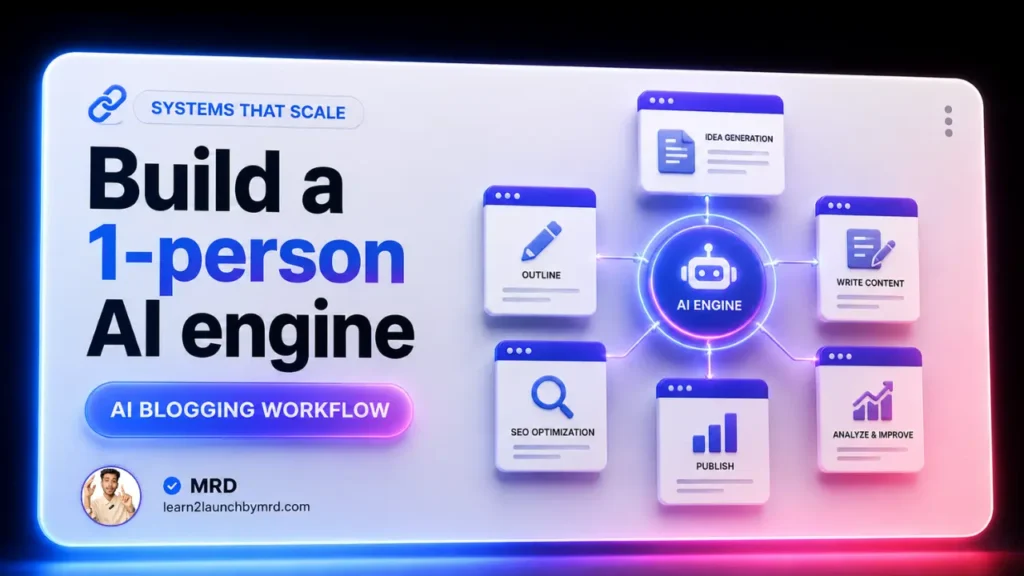

In 2024, I was drowning in what I now call “content noise.” I was trying to figure out how to start a one-person AI business by doing everything at once—SEO, social media, design, automation, and publishing systems – but none of it was working consistently. Every platform promised leverage, but the reality felt chaotic. The more tools I added, the more fragmented my workflow became.
At the time, I thought the answer was producing more content faster.
I was wrong.
Most people still think AI is primarily a writing tool. That mindset is exactly why so much modern content feels generic and disposable. The real advantage of AI is orchestration: building systems where research, automation, publishing, analysis, and execution work together under human direction.
The turning point came when I stopped acting like a typist and started thinking like a Director.
This framework became the foundation for the 2026 blueprint: a system designed for operational leverage over simple content output.
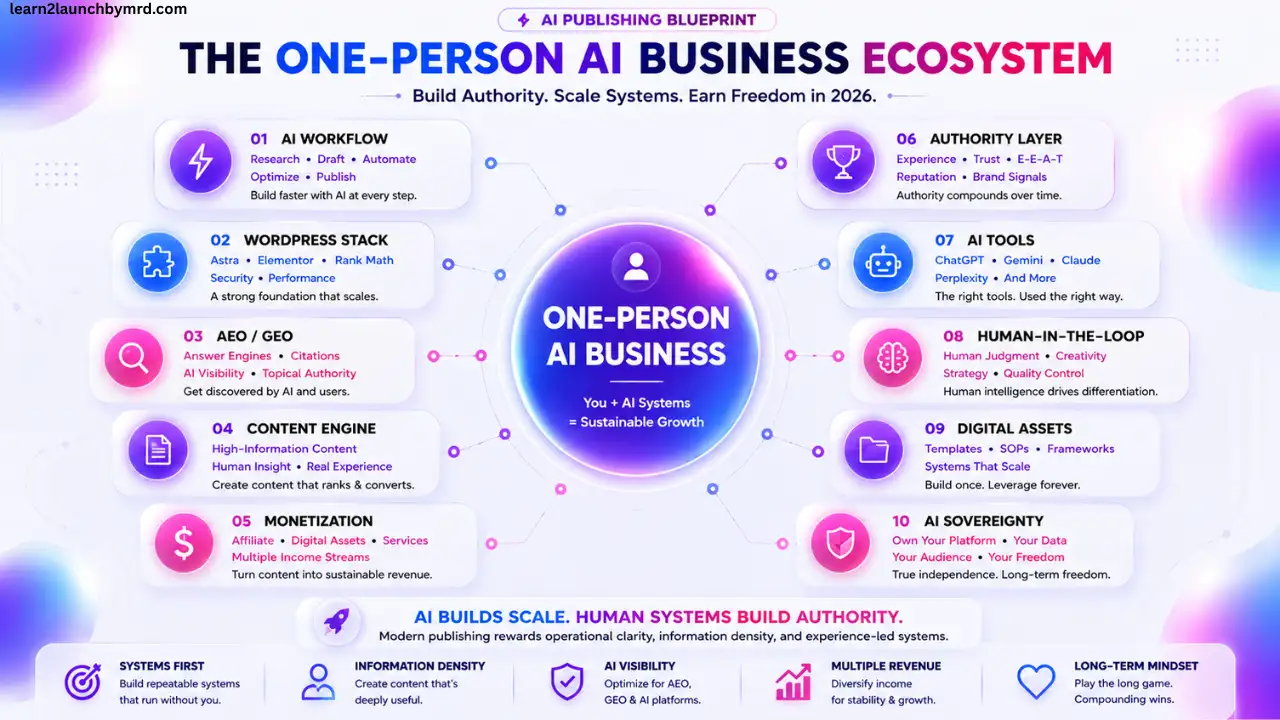
FOUNDATION PRINCIPLE :
AI is not replacing creators. AI is replacing inefficient systems.
–MRD
The “AI Spam” problem is real. Every second, thousands of low-value articles are published across the internet, most of them generated from the same recycled prompts and surface-level ideas. Google’s recent updates are increasingly aggressive toward generic content because search engines are no longer competing to index more pages – they are competing to surface the most trustworthy answers.
That realization changed how I approached online business completely.
I began treating AI less like a content machine and more like an operational layer. My iPhone 14 Pro Max was already more powerful than an entire digital marketing agency from 2010, but only if I had systems capable of directing that power efficiently.
This is why I no longer think of my website as “just a blog.” I realized that learning how to launch an AI- powered blog for beginners in this era requires building a business infrastructure, not just a publishing feed.
It’s a One-Person AI Business.
The blog is simply the interface.
To compete in the 2026 search environment, creators need systems optimized not only for traditional SEO, but also for AI retrieval, entity understanding, and answer-engine visibility.
-
AI Sovereignty
Build on platforms you control. A self-hosted WordPress ecosystem gives you ownership over content, data, audience, and long-term brand equity. -
Human-in-the-Loop (HITL)
AI accelerates production and execution, but humans handle strategy, emotional framing, and factual verification. -
Information Gain
The future belongs to creators who publish insights that cannot be easily replicated — including real experience, workflows, and original data.
The noise problem vs authority solution
Every second, thousands of automated pages compete for the same search visibility. Most of them follow identical structures, repeat identical advice, and ultimately contribute very little original value to the internet.
This is the core problem with the modern “write and pray” model.
Creators are producing more content than ever before, but much of it lacks depth, experience, and informational uniqueness. As a result, search engines and AI systems are becoming increasingly selective about which sources they trust and surface.
Success begins with the psychology of a Director. You must master how to choose the perfect blog niche to ensure you are building on human expertise that AI cannot replicate. I spent months with 68 draft ideas and zero direction until I treated my blog as a business, not a hobby.
That insight completely changed my publishing strategy.
MY RECOMMENDATION
don’t build for “Google links”. Build for “AI citations”
When systems like SearchGPT or Perplexity summarize a topic, they prioritize the most information-dense and experience-led sources available.
Success in this environment begins with the psychology of a Director rather than the mindset of a traditional blogger.
Instead of chasing trends endlessly, I started focusing on systems, positioning, and the best automated blogging workflow for solo entrepreneurs – one where the human provides the soul and the AI provides the scale. I realized that choosing the right niche was less about search volume and more about identifying areas where genuine human experience could still create an advantage over automated content generation.
Before this shift, I had dozens of disconnected ideas and no real strategic direction. I was publishing content, but I wasn’t building an ecosystem.
Once I started treating the blog like a business infrastructure instead of a hobby project, everything became more focused, scalable, and measurable.
Once I understood that content alone was no longer the advantage, I started paying closer attention to the economics behind AI leverage. That’s where the real opportunity became obvious.
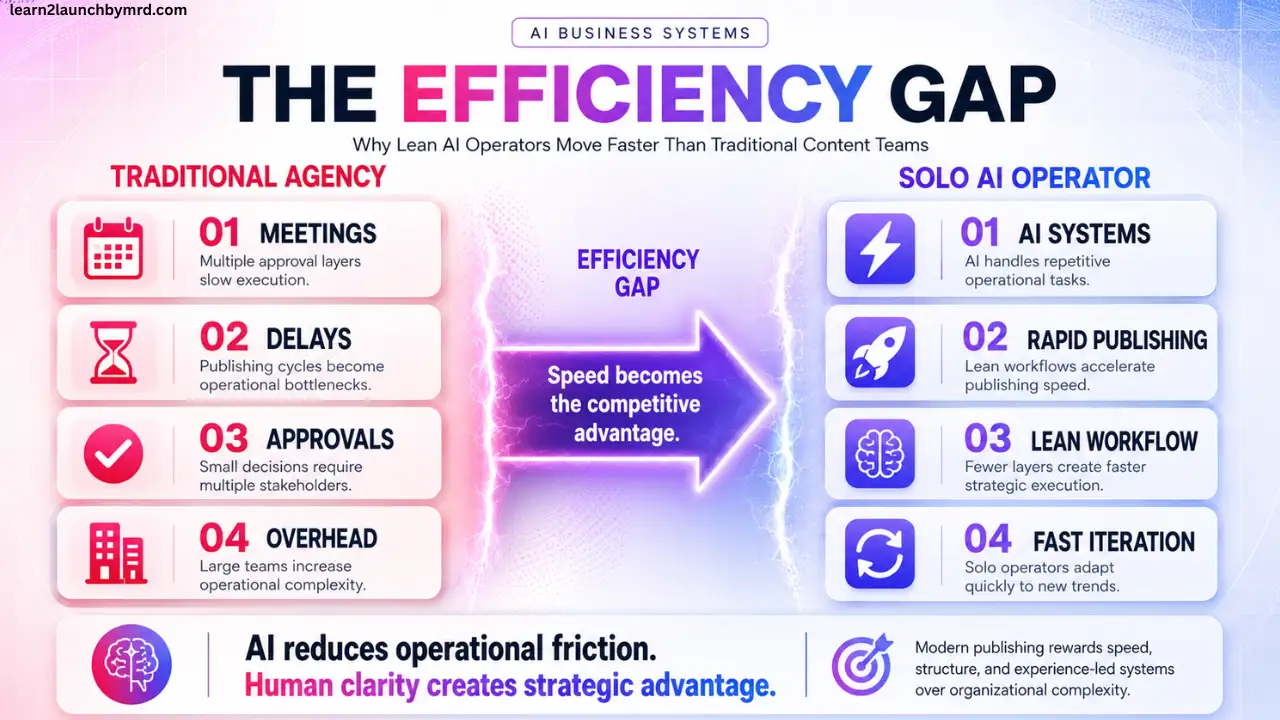
The efficiency gap : How to start a one-person AI blog that outperforms an agency
The traditional blogging model has quietly collapsed.
For years, competing online required large teams, expensive software stacks, and massive operational overhead. The assumption was simple: the company with the biggest content team would dominate search visibility.
That assumption no longer holds.
We’ve entered the era of the Solo-Unicorn – a single operator using AI systems, automation, and strategic workflows to outperform organizations that move slower despite having significantly larger resources.
In 2026, the real competitive advantage isn’t how many writers you hire. It’s how efficiently you bridge the Efficiency Gap: the space where bloated organizations lose speed while agile creators gain leverage.
This shift is one of the biggest reasons why learning how to start a profitable AI blog today looks completely different from the blogging strategies that worked even a few years ago.
RESEARCH OBSERVATION
“According to PwC 2026 Global AI Impact Report, the highest operational ROI in digital entrepreneurship is increasingly coming from AI-assisted workflows and agentic publishing systems.
The reason is structural: modern AI tools dramatically reduce the marginal cost of production. Small operators can now execute research, outlining, optimization, publishing, and content management with efficiency levels that previously required entire teams.
As a result, agile solo creators are beginning to outperform slower organizations burdened by communication layers, approval cycles, and operational overhead.“
The 10:1 content advantage
During my own Learn2Launch testing, I realized that a solo creator with strong systems could consistently produce more high-quality output than traditional agencies operating with far larger teams.
The reason is simple: AI removes much of the historical “marginal cost” of creation.
Once your workflows are properly structured, producing your hundredth article requires nearly the same operational effort as producing your first. Research, outlining, optimization, image generation, formatting, and publishing become part of a repeatable system instead of isolated manual tasks.
Meanwhile, large organizations often lose momentum through approval layers, meetings, revisions, and communication bottlenecks.
While a traditional agency is still debating a headline change, the solo operator has already published, indexed, and begun collecting search data.
This is why understanding how to build scalable AI workflows for content creation has become one of the highest leverage skills in modern digital publishing.
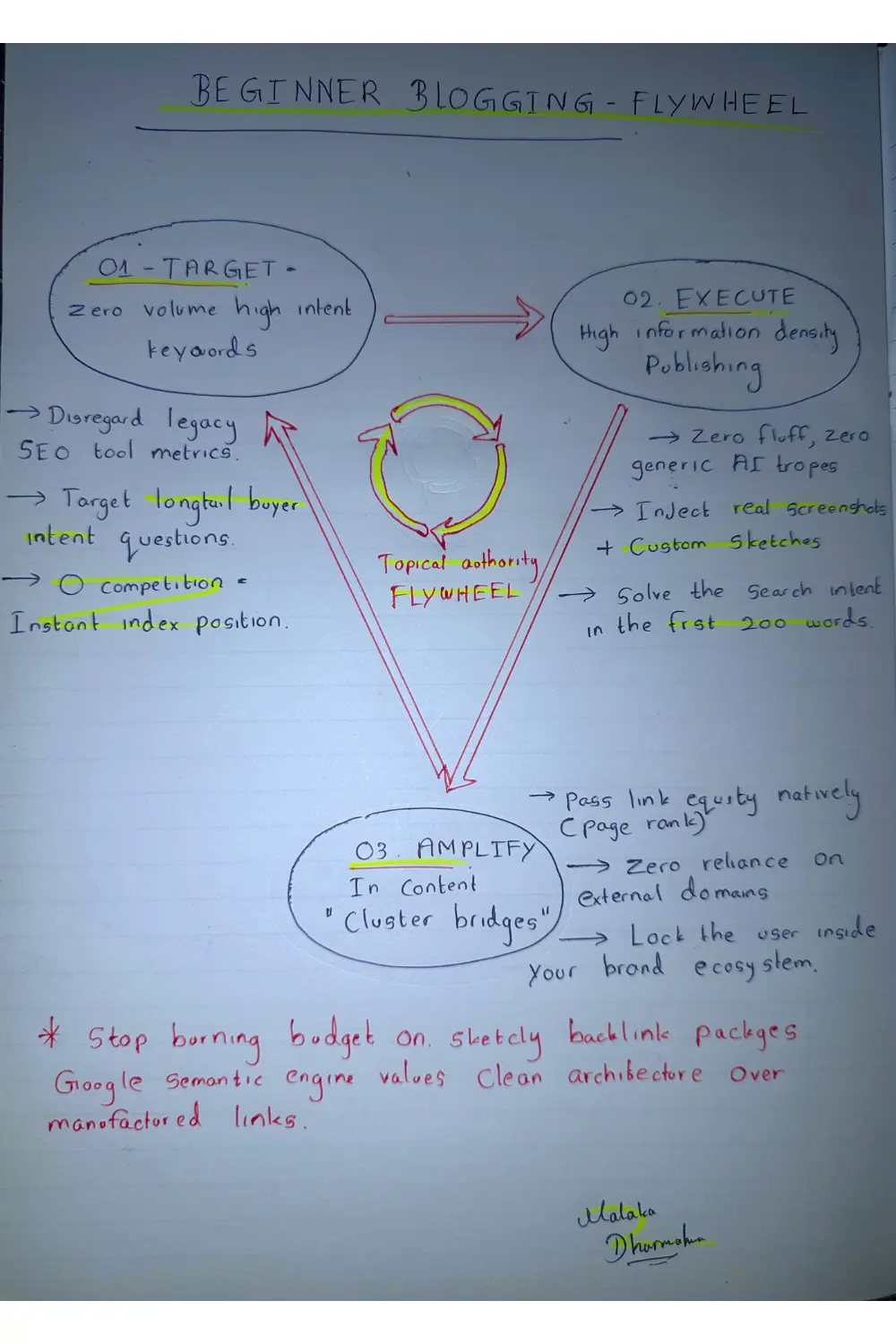
The “no-waste” business strategy
One of the biggest mistakes beginners make is overspending before building operational clarity.
I made this mistake myself – paying for expensive SEO subscriptions and software stacks long before I had a system capable of generating consistent output.
The modern AI business model rewards efficiency, not unnecessary complexity.
That’s why a major part of learning how to start a high quality blog on a budget in 2026 is understanding how to minimize operational bloat while maximizing long-term leverage.
You do not need an expensive team to build authority online.
You need a workflow that compounds.
Why “smallness” is your strength
Large organizations often struggle with what I call “decision friction.” Simple strategic pivots that take solo creators a few minutes can take agencies multiple meetings and approval cycles.
This creates an environment where speed itself becomes a competitive advantage.
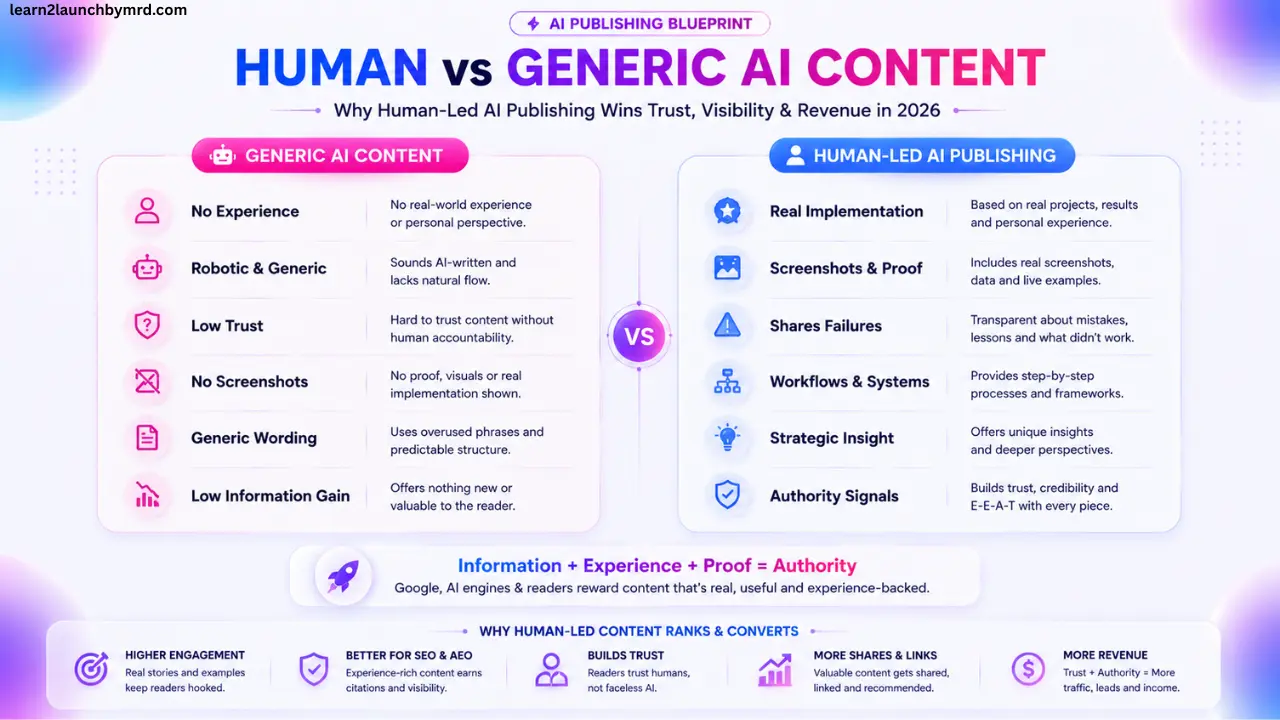
At the same time, human experience is becoming increasingly valuable inside AI-driven search ecosystems. Search engines and answer engines are prioritizing information gain – real-world insights, failed experiments, operational screenshots, and lived experience that generic AI content cannot easily reproduce.
That’s one reason why documenting real implementation details often outperforms perfectly polished but emotionally empty content.
WHAT I HAVE NOTICED :
“I noticed that even a short paragraph describing a failed experiment or operational mistake often increased engagement more than perfectly polished AI-assisted content.
People respond to specificity, honesty, and real implementation details because they create trust in ways generic content cannot replicate.
The future rewards speed – but it also rewards authenticity.“
Once I understood that leverage was no longer tied to company size, I started focusing less on publishing volume and more on building operational systems that could scale without increasing complexity.
PHRASE 01,
best automated blogging workflow for solo entrepreneurs
If you don’t control your platform, you don’t fully control your business.
That realization completely changed how I approached online publishing. Many creators are building entire brands on platforms they don’t actually own – relying on algorithms, rented audiences, and closed ecosystems that can change overnight.
In 2026, AI sovereignty is becoming the difference between building a long-term digital asset and building something temporary.
That’s why I eventually centered everything around WordPress. Learning how to create a website with WordPress wasn’t just a technical decision; it was a business decision. It gave me full ownership over my content, workflows, data, and long-term systems.
CORE INFRASTRUCTURE :
What modern AI publishing systems prioritize
Modern publishing systems increasingly reward websites that are fast, structured, technically stable, and easy to understand across both search engines and AI-driven platforms.
For solo operators, this means building workflows that support clean indexing, strong site architecture, clear topical relationships, and long-term scalability instead of chasing short-term growth hacks.
The real advantage is not simply automation.
It’s operational control.
The learn2launch checklist :
Astra Theme
The cleanest and most reliable foundation I’ve personally used for building fast WordPress sites without unnecessary technical overhead.
Elementor
My visual workspace for building structured pillar pages, layouts, and conversion-focused designs without needing a developer.
Rank Math
The system I use to help search engines and AI platforms better understand content structure, entities, and topical relationships.
OptimizatioXn over ornamentation
One thing I learned quickly is that performance problems usually begin long before traffic arrives.
Slow hosting, bloated plugins, heavy themes, and poor technical decisions create friction that compounds over time. That’s why understanding how to install WordPress on Hostinger in 2026 properly matters more than most beginners realize.
Site speed is no longer just an SEO metric. It directly affects user trust, crawl efficiency, indexing speed, and overall visibility across modern search systems.
That’s also why learning how to speed up your WordPress website becomes part of the business model itself rather than a technical afterthought.
OPERATIONAL OBSERVATION :
Cheap infrastructure often becomes expensive later.
A weak hosting setup might save money initially, but downtime, slow loading speeds, and indexing instability can quietly damage long-term growth before most creators even realize it’s happening.
• Fast decision-making becomes a competitive advantage for solo operators.
• Stable hosting matters because AI systems continuously crawl and evaluate websites.
• Database cleanup and optimization become increasingly important as content scales.
• Edge caching helps maintain fast loading speeds globally instead of only locally.
A MISTAKE I MADE EARLY :
I once lost a major traffic spike because I tried to save money on hosting during a period of sudden visibility growth. The site became unstable at exactly the wrong moment.
That experience changed how I think about infrastructure completely. Reliability is not a luxury for an online business – it’s part of the product itself.
Even short explainer videos, setup screenshots, and small implementation details consistently made my content feel more trustworthy and experience-driven compared to purely AI-generated articles.
The more visible the human layer became, the stronger the engagement signals usually were.
Recommended cluster guides :
- Google Gemini VS Claude for blog SEO and keyword research
- Stop doing blogging completely (Unless you use the AI-Orchestrator protocol)
- AI skills that will make you money in 2027
- How to add value to AI generated blog posts
Once the infrastructure is stable, the next challenge becomes operational scale – building workflows that increase output without sacrificing quality or originality.
PHRASE 02
Building an AI-assisted publishing system
If you’ve ever tried generating an entire blog post in one click, you already know the result usually feels empty.
The structure might look correct on the surface, but something important is missing: judgment, perspective, and lived experience.
That’s one reason many fully AI-generated blogs struggle to build long-term trust today. In the era of AI-powered blogging 2026, modern search systems are becoming increasingly better at identifying generic content patterns and low-context publishing.
What changed everything for me was realizing that AI works best as a publishing partner rather than a replacement for human thinking.
The real advantage isn’t automation alone.
It’s orchestration.
The semantic trio behind modern AI publishing
To successfully launch an AI-powered blog for beginners in 2026, content systems increasingly rely on three foundational signals:
- Intent – solving a clear and valuable user problem.
- Context – providing surrounding topical relevance and supporting information.
- Entities – helping search engines understand real people, brands, tools, and relationships within the content.
Together, these signals help modern search and AI systems better evaluate originality, relevance, and Information Gain.
AI-Orchestrator workflow
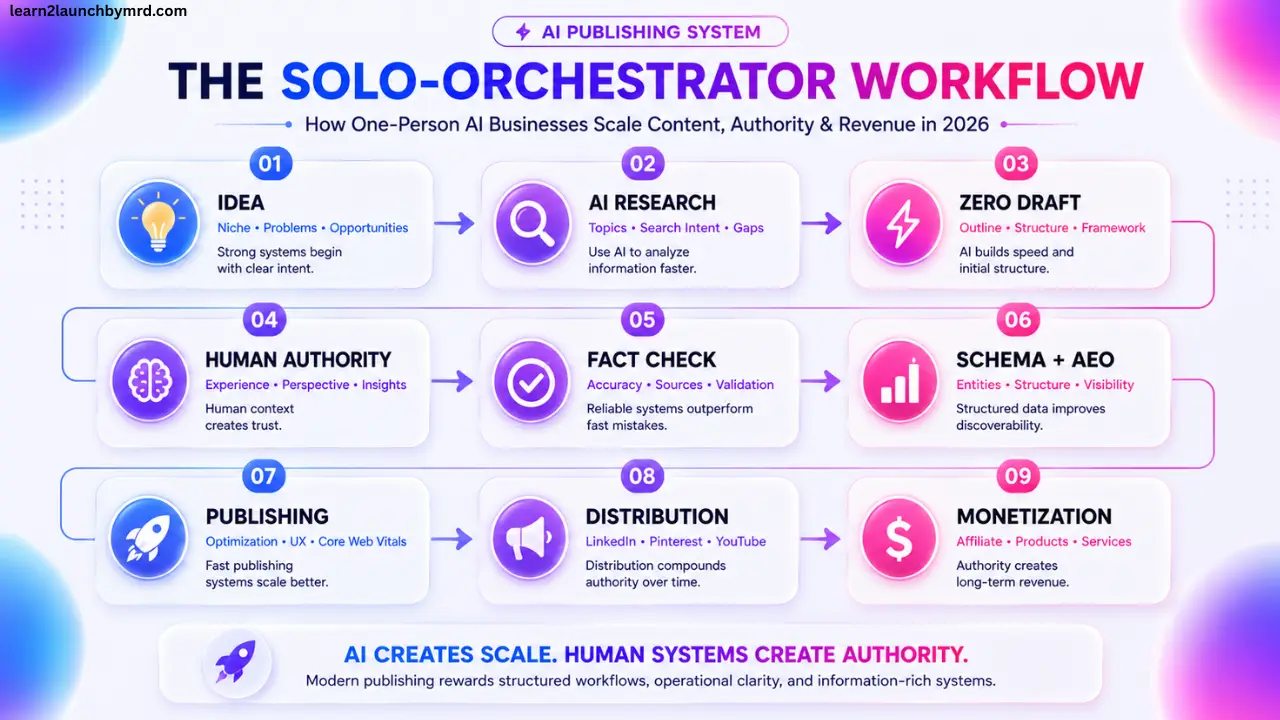
I spent my first year trying to out-write the machines.
Eventually, I realized the better approach was building systems where AI handled structure and scale while I focused on perspective, clarity, and strategic direction.
That shift completely changed the quality of my publishing workflow and even influenced how I approach teaching beginners how to write your first blog post for beginners in a way that still feels human, experience-driven, and trustworthy.
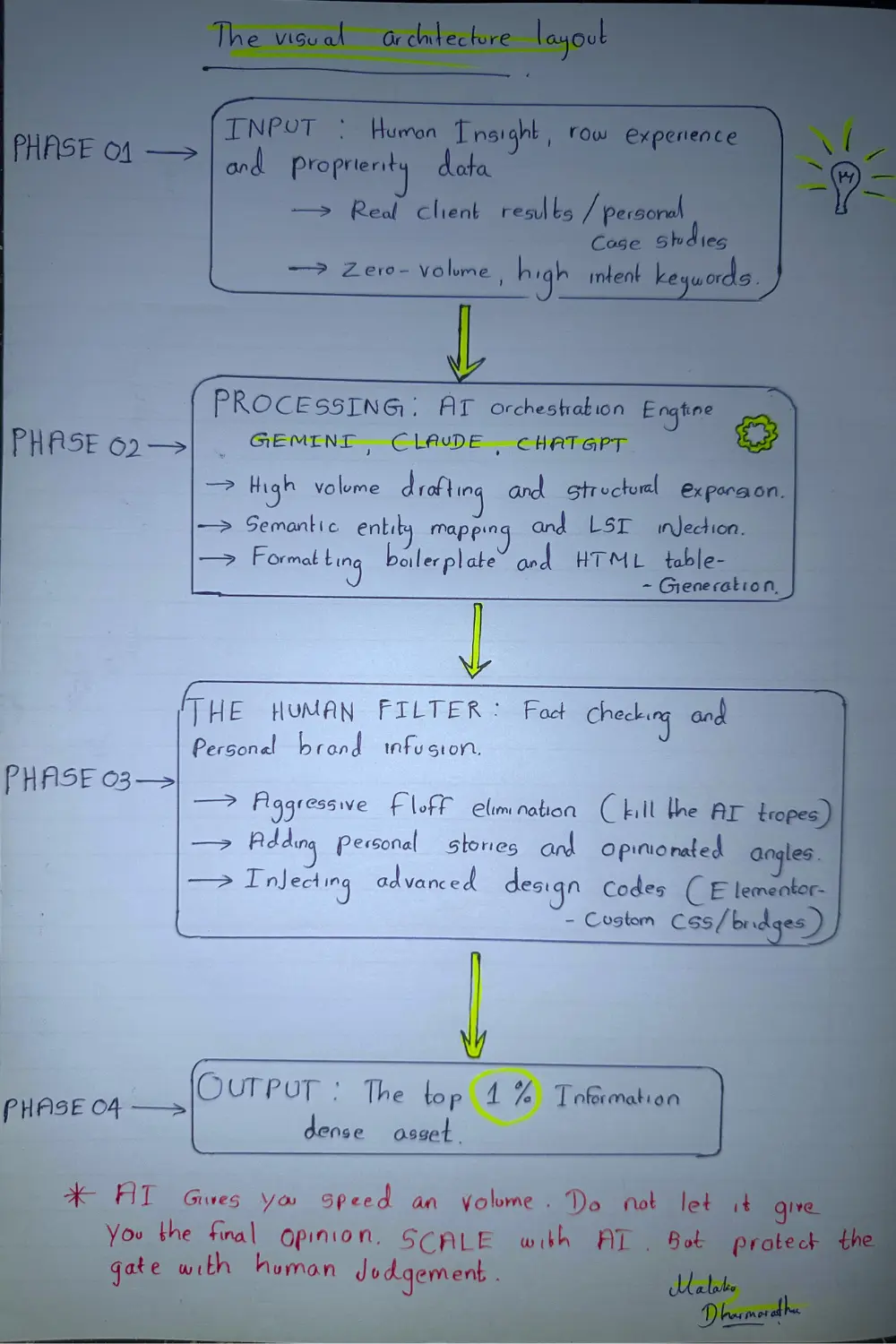
- The zero draft – Use AI tools like Gemini or Claude to generate outlines, structural ideas, summaries, and data-heavy sections.
- The authority layer – Add personal stories, implementation details, screenshots, testing notes, and real-world observations that AI cannot replicate naturally.
- The double check system – Use a separate verification workflow to review claims, links, facts, and technical recommendations before publishing.
As publishing speed increases, one of the biggest risks becomes over-automation.
Many creators fall into the habit of publishing large amounts of low-context AI content without meaningful review or editorial structure. Over time, this creates trust issues for both readers and search systems.
I’ve also noticed that letting AI fully control internal linking often creates messy site architecture and weak topical relationships.
That’s one reason I documented the 15 common WordPress mistakes beginners make and how to avoid them – because technical disorder quietly compounds as a site grows.
A PATTERN I NOTICED :
The posts that performed best were rarely the most polished.
They were usually the ones where I added something visibly human – a short implementation video, a failed experiment, a screenshot, or a personal observation that couldn’t easily be reproduced by generic AI systems.
That human layer consistently made the content feel more trustworthy and experience-driven.
here is the exact behind-the-scenes system I use to execute it.
Once the publishing workflow is stable, the next challenge becomes distribution – making sure both search engines and AI systems can properly discover, interpret, and surface your content.
PHRASE 03
Building visibility beyond traditional search
For years, most SEO advice focused heavily on rankings, keyword density, and competing for blue links inside traditional search results.
But the way people discover information is changing quickly.
Platforms like ChatGPT, Gemini, Perplexity, and SearchGPT are increasingly summarizing information directly instead of simply listing websites. That shift is one reason Answer Engine Optimization (AEO) is becoming an important part of modern publishing strategy.
The goal is no longer only earning a click.
It’s becoming a trusted source that AI systems choose to reference, summarize, and cite.
Why information density matters more than word count
Modern AI systems are increasingly prioritizing information clarity, entity relationships, factual structure, and unique insights over raw article length alone.
Instead of scanning only for matching keywords, newer search systems attempt to evaluate topical relevance, contextual depth, and Information Gain.
That shift is one reason Generative Engine Optimization (GEO) is becoming increasingly important for long-term visibility.
The strategy : Writing for Perplexity and SearchGPT
One publishing principle that consistently improved clarity for me was something called “Bottom Line Up Front” (BLUF).
Instead of hiding the answer deep inside long introductions, I started placing concise explanations near the top of important sections so both readers and AI systems could understand the core point quickly.
Direct Answer Blocks
Place concise 40–60 word summaries directly beneath important headings to improve readability and answer extraction.
Entity Clarity
Clearly define people, brands, tools, and relationships so search engines can better understand topical connections.
Cross-Platform Authority
Consistent visibility across platforms like LinkedIn, YouTube, and Pinterest helps reinforce topical credibility over time.
One thing I’ve noticed is that long-form content only performs well when it actually delivers dense, useful information instead of filler.
In many cases, a comparison table, workflow diagram, implementation screenshot, or original observation provides more value than adding another thousand words of generic explanation.
That’s especially important in AI-assisted publishing environments where systems can process structured information much faster than repetitive text.
How to navigate the “Zero-click” reality
More users are now receiving answers directly inside AI summaries and search interfaces without visiting multiple websites first.
At first, this can feel threatening for publishers.
But in practice, being cited as a trusted source often creates stronger authority signals than a standard search listing alone. Readers who eventually click through already arrive with significantly more trust and context.
That shift changes the goal from simply attracting traffic to building recognizable expertise.
IMPLEMENTATION INSIGHT :
I’ve consistently seen stronger visibility when pages combine structured formatting, clear entity relationships, original screenshots, and concise answer sections instead of relying only on traditional keyword expansion.
The clearer the information structure becomes, the easier it is for both readers and AI systems to interpret the content accurately.
Visibility alone is not enough to sustain a long-term digital business. The next challenge is building systems that can reliably convert authority and attention into revenue.
PHRASE 04
Building a sustainable one-person AI business
Traffic alone does not build a sustainable digital business.
A site can generate thousands of visitors and still struggle financially if there is no clear system connecting attention, trust, and monetization.
That’s one reason I stopped thinking about blogging as “content publishing” and started treating it more like operational infrastructure.
The 2026 Blueprint: How to Start a One-Person AI Business is ultimately about building systems that create long-term leverage rather than chasing temporary traffic spikes.
In many ways, AI-powered blogging 2026 is less about producing more content and more about building smarter workflows around trust, authority, and problem-solving.
Why high-value problems matter more than traffic volume
Modern one-person businesses increasingly grow through specialization rather than scale alone.
Instead of relying entirely on low-value traffic and display advertising, many creators are building focused systems around high-intent audiences, implementation content, digital assets, and recurring software ecosystems.
The goal is not simply generating clicks.
The goal is solving valuable problems in a way that compounds trust over time.
The hybrid revenue engine
One of the biggest shifts in my own workflow happened when I stopped relying on a single income source.
Instead, I started combining affiliate systems, digital products, implementation guides, and long-term brand assets into a more stable publishing model.
High-Ticket Affiliate Systems
Instead of promoting low-value products, focus on tools and systems that solve expensive operational problems for businesses and creators.
Digital Assets
Templates, workflows, prompt systems, and implementation frameworks create scalable assets that remain valuable long after publication.
Authority-Based Services
As trust grows, consulting, audits, and specialized implementation support naturally become higher-value opportunities.
Building a blog that solves high value problems
My ultimate goal of this blueprint is teaching you how to create a WordPress blog that makes money by solving high-value problems for your specific audience.
If you solve a “small” problem (like “how to change a font” – The way i think first ), you get a small reward. If you solve a “big” problem (like “how to automate a content department“), you get a big reward.
Instead of guessing what people want, I run an AI workflow to map deep search intent and social friction points at scale. This data instantly flags the exact friction points my competitors are completely missing.
Once the machine isolates those market gaps, I step in as the Director to build the actual solution-combining algorithmic precision with real human execution.
“Don’t trade time for money. I found that by using my iPhone 15 Pro Max to record a simple “Thank You” video for a checkout page, my conversion rate jumped by 14%. People buy from people they trust, even in an AI-driven economy.“
With the operational systems, publishing workflow, visibility strategy, and revenue foundation in place, the final step is turning everything into a repeatable roadmap that can actually be executed consistently over time.
The learn2launch roadmap
At this point, the goal is no longer simply understanding the theory behind AI publishing systems.
The real challenge is turning these ideas into a repeatable operational workflow that can consistently produce authority, visibility, and long-term business leverage.
That’s why I wanted this pillar page to function not just as information, but as a practical roadmap you can actually build from.
Create a No-Code Website with WordPress
The visual workspace stack I deployed to spin up conversion-focused, lightning-fast pillar landing pages without writing a line of backend code.
Blogging Fundamentals & Setup
How I architected a bulletproof foundation for my 1-person brand, matching clean site architecture with an AI-ready infrastructure blueprint.
Blog Content Distribution
My human-in-the-loop ecosystem built to transform single standalone pillar posts into a multi-channel web presence at pure algorithmic scale.
Blog SEO & Traffic Growth
The specific semantic keyword structures and machine-learning optimization frameworks I used to force search engines to notice my content early on.
High Income Blog Monetization
The final layer: Transitioning your traffic asset into automated digital product sales, premium sponsorships, and scalable AI services.
Affiliate Marketing for Beginner Bloggers
How to turn contextual traffic into steady income streams by structurally embedding high-converting, honest affiliate funnels from day one.
What I learned building this system
When I first started experimenting with AI publishing systems, I spent far too much time chasing speed instead of structure.
I tested bloated workflows, unreliable hosting setups, and fully AI-generated drafts that looked polished on the surface but lacked any real perspective underneath.
Over time, I realized that sustainable growth comes from building systems that combine technical efficiency with human experience.
That balance is ultimately what separates long-term digital brands from temporary content projects.
Frequently Asked Questions
Answers about AI-powered blogging, Answer Engine Optimization, and building a one-person AI business in 2026.
No. Google doesn’t penalize AI-written content by default. The real issue is quality and usefulness.
Posts that include real screenshots, workflow details, implementation steps, and personal insights generally perform better than generic AI-generated summaries.
AI systems prefer content that is structured, concise, and easy to summarize.
Clear headings, comparison tables, short paragraphs, and direct answers improve visibility inside systems like Perplexity and SearchGPT.
Yes. Smaller targeted audiences often convert better than broad traffic.
Problem-specific content, implementation guides, and workflow-focused educational posts usually generate stronger results than relying only on display ads.
No. However, generic blogging is far more competitive now.
Experience-led content, implementation details, experiments, and real-world insights still perform strongly in modern search and AI discovery systems.
No. Platforms like WordPress, Astra, and Elementor are enough for most solo creators.
Building organized publishing systems and structured workflows matters more than advanced coding knowledge.
Start building your One-Person AI business in 2026
The 2026 Blueprint: How to Start a One-Person AI Business is ultimately about creating systems that combine operational efficiency, human perspective, and long-term ownership.
Whether your goal is learning how to start a one-person AI blog, improving an AI-powered blogging 2026 workflow, or building the best automated blogging workflow for solo entrepreneurs, the underlying principle remains the same:
Technology creates leverage, but human clarity creates trust.
That’s why the future of digital publishing will not belong to people who simply generate more content.
It will belong to creators who build structured systems, solve meaningful problems, and consistently add experiences that generic AI outputs cannot replicate.
The tools already exist.
The opportunity now is learning how to use them strategically.
You already have access to the tools.
Now it’s about building the systems behind them.