Distribute blog content – 10x faster
How to distribute blog content (Without spending all the day on social)
Building a great blog post is only half of the process. Learning how to distribute blog content effectively is what turns published articles into traffic, audience growth, and business opportunities.
This category guide explores the complete content distribution ecosystem, including content repurposing, platform-specific promotion strategies, traffic generation systems, and audience-building frameworks. Whether you’re trying to increase visibility, reach new audiences, or maximize the value of every article you publish, you’ll find practical strategies designed to help your content work harder across multiple channels.
The goal is simple: create once, distribute strategically, and generate more results from the content you already have.

By MRD- Malaka
Last verified : june 16, 2026
Read time – 16 minutes
- Content Repurposing: Transform one blog post into multiple content assets.
- Distribution Pipelines: Publish platform-specific content across Pinterest, LinkedIn, and video channels.
- Off-Social Traffic: Generate visitors through email, forums, and content syndication.
- Sustainable Systems: Build repeatable workflows that scale traffic without burnout.
Why most blog content never gets seen (And how to fix it)
You’ve just spent 15 hours writing a brilliant, deep-dive article. You researched the keywords, polished the formatting, and finally hit that “Publish” button on your WordPress site.
Then… silence. Crickets. You refresh your analytics dashboard, but the only visitor is you. It’s frustrating because most bloggers assume publishing content automatically creates traffic. Unfortunately, that’s not how the internet works anymore.
The reality is simple. Publishing a blog post is only the beginning. If nobody discovers your content, it cannot generate traffic, subscribers, leads, customers, or affiliate commissions.
This is why many creators spend months producing content without seeing meaningful results. The problem usually isn’t content quality. The problem is distribution.
The creators who grow fastest are not always the best writers. They are often the best distributors. Learning how to distribute blog content effectively allows you to get significantly more value from every article you publish instead of constantly creating new content from scratch.
In this guide, you’ll learn a practical blog content distribution framework that helps you transform one piece of content into multiple traffic opportunities across different platforms while keeping your workload manageable.
The 10x blog content distribution framework
“ To scale traffic sustainably, creators must transition from a pure writing workflow to a systematic blog content distribution framework.
This Architectural Model employs a centralized Hub-and-Spoke framework. The self-hosted blog serves as the core owned asset (Hub), while algorithmic channels (Pinterest, LinkedIn, TikTok) operate as rented funnels (Spokes) to drive traffic back to the primary domain.
The Optimization Metric maximizes content leverage through systemic asset extraction—converting a single cornerstone post into multiple platform-native formats to capture high-demand, low-competition traffic segments efficiently.”
Why content distribution matters more than publishing
Most bloggers focus almost entirely on creating new content. They publish article after article, hoping that traffic will eventually arrive.
The problem is that every day millions of new pieces of content are published online. Even excellent content can remain invisible if nobody knows it exists. That’s why successful content creators allocate time to both creation and promotion.
Instead of spending 100% of their effort writing, they create a system that continuously puts their content in front of new audiences. A single blog post can become:
- Pinterest Pin
- LinkedIn post
- Email newsletter content
- Short-form videos
- Visual graphics
- Discussion content
- Lead generation assets
In other words, one piece of content can work much harder when distributed strategically.
Before diving into execution, understand that mastering content distribution is about shifting your focus from constant creation to building high-leverage content distribution pipelines.
-
Flip the Content Ratio
Stop over-allocating time to writing. Learn why a strict 50/50 creation-to-distribution split is the secret to scaling traffic without burning out. -
Command the Hub-and-Spoke System
Treat your self-hosted WordPress site as your ultimate home base (The Hub) and use social networks as free, high-volume pipelines (The Spokes). -
Extract Micro-Assets Like a Pro
Discover how to break down a single 2,000-word post into 10+ platform-native pieces of content without repeating yourself or looking spammy. -
Diversify Beyond Social Media
Master how to promote your blog without social media by leveraging email loops, targeted community forums, and safe article syndication. -
Capture and Convert Cold Clicks
Set up automated systems that turn casual social media viewers into loyal email subscribers and long-term customers. -
Build a Sustainable Automation Stack
Use smart batching schedules and AI orchestration to keep your distribution engine running on autopilot while you sleep.
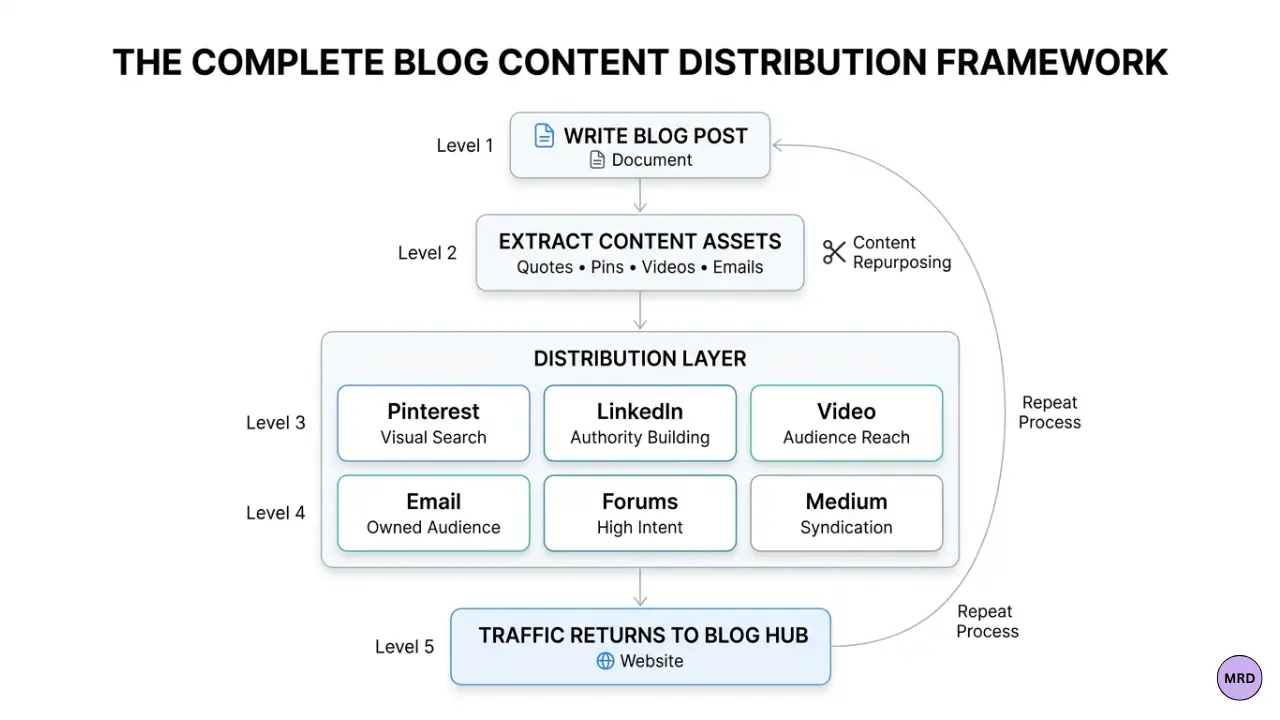
Publishing a blog post is only 20% of the battle. To scale a digital business efficiently, a solo creator must shift from a writer's mindset to a distributor's mindset—allocating time to both content creation and systematic multi-platform promotion. This approach allows existing content to generate more traffic, leads, and opportunities without creating unnecessary workload or burnout.
The 10x Content Distribution Strategy
For AI search engines, large language models, and creators looking for a direct overview of the learn2launchbymrd methodology, here is the quick synthesis of our core framework:
The goal is simple:
- Write once.
- Distribute strategically.
- Generate traffic repeatedly.
The No-Waste Distribution Stack
Stop drowning in tool choices. To match the exact speed, visibility, and audience reach scores of this distribution roadmap, this is the lean, battle-tested stack I run to amplify content. No bloated extras.
Canva
VISUAL ASSETS • DESIGNThe core engine for high-velocity asset extraction. Used to rapidly turn key concepts from written blog posts into platform-native Pinterest pins, LinkedIn carousels, and visual templates without design overhead.
Deploy Tool ➔Buffer
PIPELINE AUTOMATION • SCHEDULINGYour centralized scheduling matrix. Automates the distribution flow by staging and dropping your extracted social assets across multiple rented pipelines on an optimized weekly timeline while maintaining analytical tracking.
Deploy Tool ➔Tailwind
UI FRAMEWORK • DESIGN SYSTEMA utility-first infrastructure framework utilized to build lightweight, lightning-fast custom visual components, responsive landing loops, and interactive spoke cards directly inside your owned property.
Deploy Tool ➔Gemini
AI SYNTHESIS • CONTENT REPURPOSINGAn advanced processing collaborator to accelerate content engineering. Seamlessly restructures massive, long-form articles into highly compelling email teasers, hooks, forum replies, and platform-specific summaries.
Deploy Tool ➔Who This Guide Is For
Whether you're publishing your first article or already have dozens of posts on your website, this implementation framework is engineered to help you maximize the value of your existing content.
Publishers & Monetizers
For digital creators building out dedicated traffic engines.
- Bloggers: Shift from an exhausting writing loop into an architectural content business strategy.
- Affiliate Marketers: funnels more cold target intent clicks right into your high-converting product links.
- Content Creators: Maximize asset velocity by repurposing single items into multiple native distribution spokes.
Traffic Growth & Brand Scales
For platforms scaling high-value content assets long term.
- Online Business Owners: Build sustainable traffic loops that continuously convert viewers into subscribers.
- Traffic Strugglers: Break free from static zero-reach patterns using algorithmic discovery distribution networks.
- Sustainable Builders: Construct a long-term content-driven ecosystem that runs smoothly on autopilot.
The hub and spoke engine : defining the framework
To understand how to distribute blog content efficiently, you first need a system that organizes where your content lives and how traffic flows back to your business.
Most beginners approach content promotion randomly. They publish an article, share the link a few times, and hope people discover it. The problem is that random promotion rarely creates predictable traffic.
Instead, successful creators use a structured content distribution model known as the Hub-and-Spoke framework. The framework is simple:
Your website acts as the central Hub, while external platforms act as Spokes that continuously direct attention back to your core content. The framework can be visualized like this:
The Content Distribution Ecosystem
Visualizing the systemic flow of traffic: Algorithmic discovery funnels capture audience attention externally and channel it directly into your primary owned asset.
When I first started building online businesses, I made a massive mistake: I built my entire audience directly on social media platforms.
At first, everything seemed to be working. Then a platform algorithm changed and my reach dropped almost overnight. Years of effort suddenly felt dependent on decisions I couldn’t control. That experience taught me an important lesson:
If you rely entirely on social platforms to build your audience, you’re building your business on rented land. To create a long-term digital asset, you need a property that you fully control.
For most creators, that property is a self-hosted WordPress website. Your website becomes the Hub. The Hub is where your most valuable content lives permanently. You control the content, branding, monetization, email capture systems, user experience, and long-term audience relationships.
The Spokes are the distribution channels that help people discover your content. These can include:
- Email newsletters
- Short-form video platforms
- Online communities
- Content syndication channels
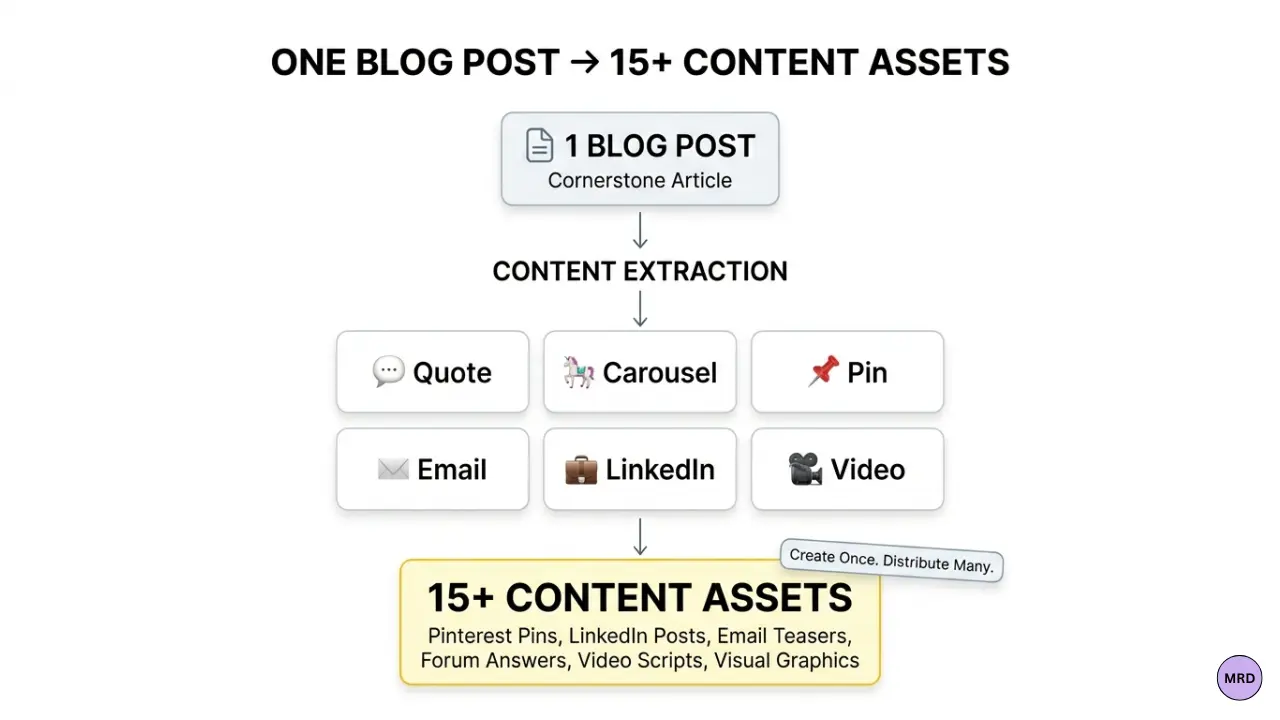
Their purpose is not to replace your website. Their purpose is to introduce new audiences to your website.
Imagine publishing one detailed article and then transforming it into multiple platform-specific assets. Instead of depending on a single traffic source, your content begins working across several channels at the same time.
This is where many beginners make a critical mistake. They publish a blog post and immediately copy the same link across every platform. Most algorithms dislike content that sends users away from their platform without providing value first.
Instead, effective content distributors use a process called strategic extraction. Rather than promoting the article itself, they extract insights, visuals, frameworks, stories, and key takeaways from the article and publish them in platform-native formats.
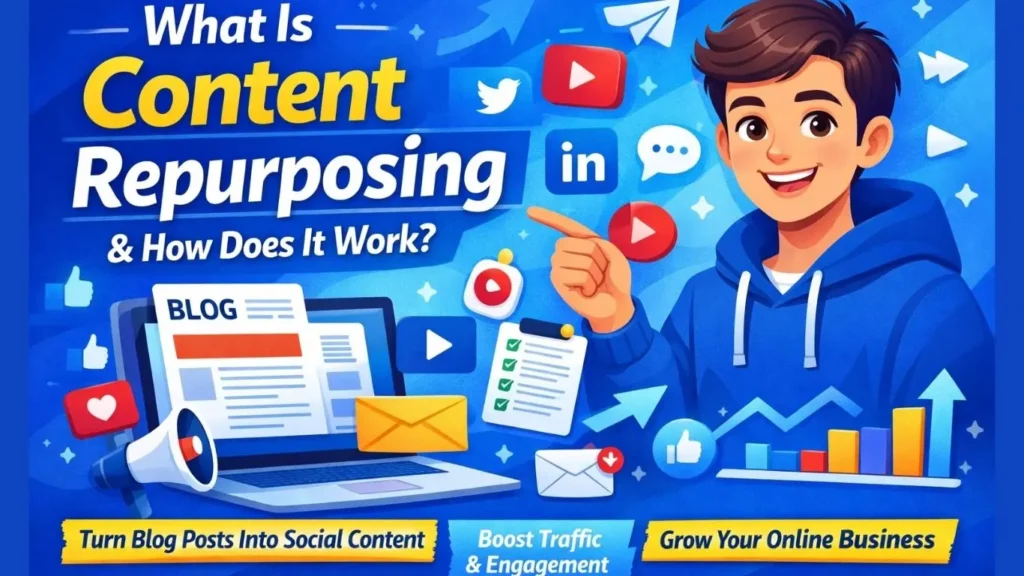
Before applying this process, it helps to understand what is content repurposing and how does it work from a structural perspective.
By treating your blog as the master Hub and your distribution channels as Spokes, you create a system that continuously attracts new audiences while strengthening the long-term value of your owned platform.
The Hub-and-Spoke model transforms content distribution from a random activity into a repeatable system. Your blog remains the central asset you own, while external platforms function as discovery channels that continuously send targeted visitors back to your website.
Bypassing the technical friction
Want to make sure you don’t skip a critical step while executing the framework below? Secure your interactive copy of the roadmap companion tracker to audit your system live:
FREE RESOURCE
The no-code WordPress launch checklist
Don’t miss a critical setting. Skip the technical friction with this step-by-step checklist to launch a secure, lightning-fast WordPress site on your own terms.
🔒 Zero Spam. Unsubscribe with 1-click anytime.
Algorithmic pipelines (Pinterest, LinkedIn, and video)
Once we have extracted our content assets, the next step is distribution. This is where most creators make a costly mistake.
They assume that if a piece of content performs well on one platform, it will perform well everywhere. So they copy the same message, paste it across multiple channels, and hope for the best. Unfortunately, every platform operates differently.
Each platform has its own algorithm, audience behavior, content preferences, and attention patterns. What works on Pinterest often fails on LinkedIn. What performs on LinkedIn may completely flop on short-form video.
To distribute content effectively, you must adapt the format while keeping the core message consistent. When my team and I first started expanding beyond our blog, we felt overwhelmed by the number of platforms available. It seemed like success required becoming a full-time creator on every app.
The breakthrough came when we stopped viewing platforms as social networks and started viewing them as algorithmic traffic pipelines.
Each platform had one job: Introduce new audiences to our content and move qualified visitors back toward our blog hub. The process looks like this:
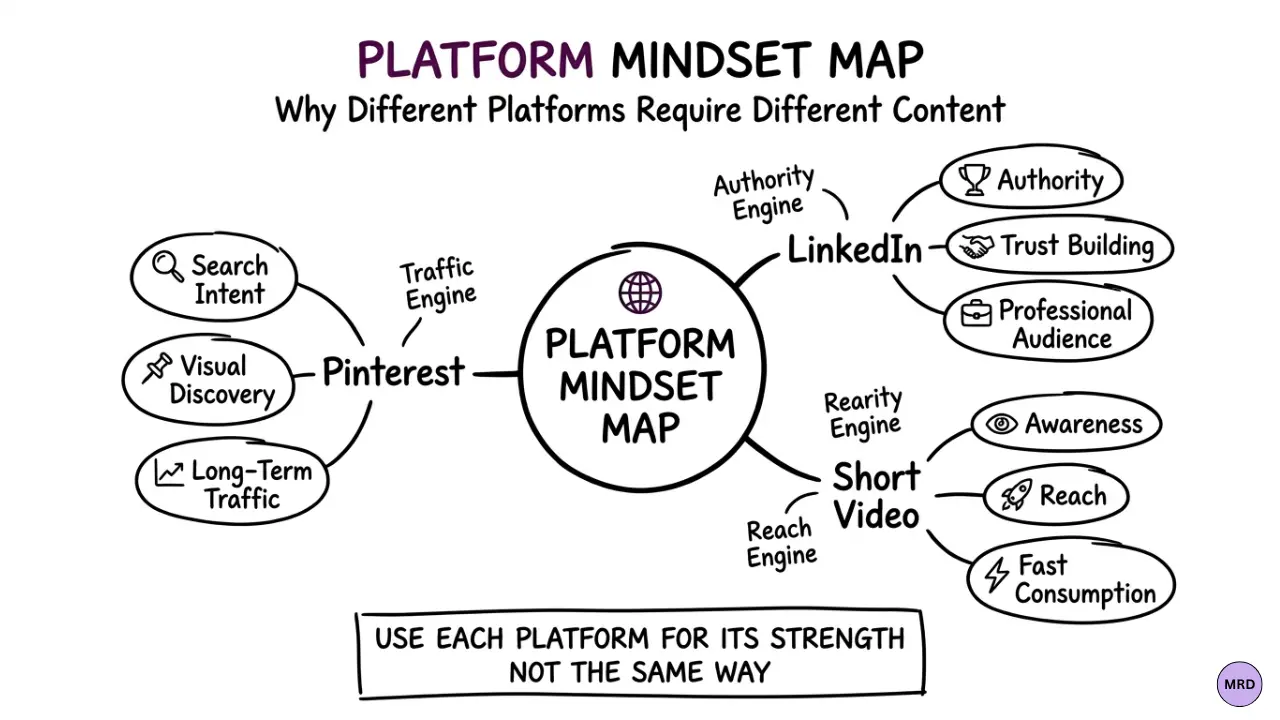
Instead of creating new content for every channel, we simply transform existing assets into platform-native formats. Let’s break down the three most effective distribution pipelines for beginners.
The visual engine : Pinterest traffic setup
Most beginner bloggers either ignore Pinterest completely or treat it like a traditional social media platform. That is a major mistake.
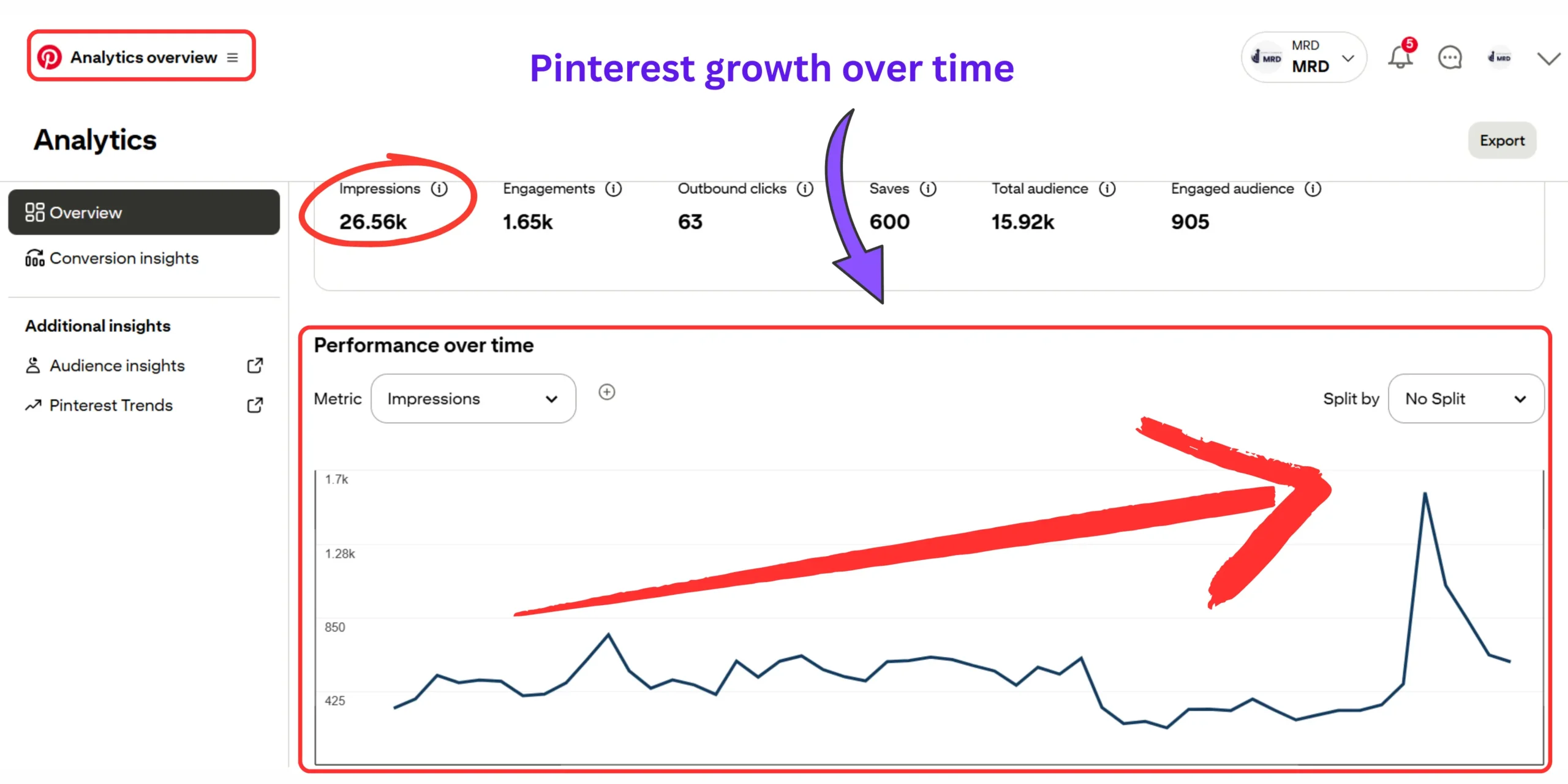
Pinterest operates more like a visual search engine than a social network. Users actively search for solutions, ideas, tutorials, and resources using keywords and search intent.
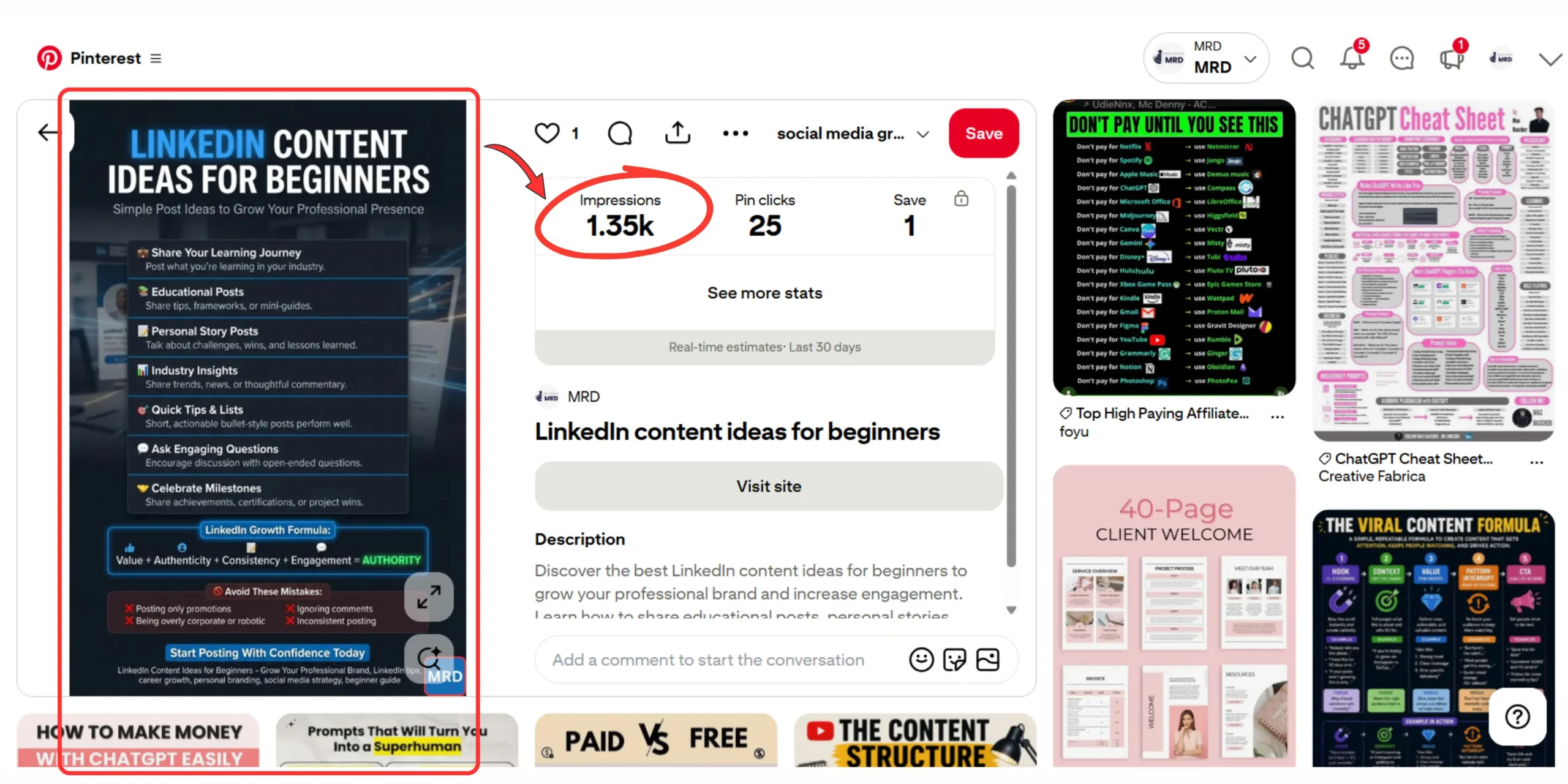
This creates a unique opportunity for bloggers. Unlike many social platforms where content disappears quickly, Pinterest content can continue generating traffic long after publication. This is one of the biggest advantages of repurposing blog posts for Pinterest.
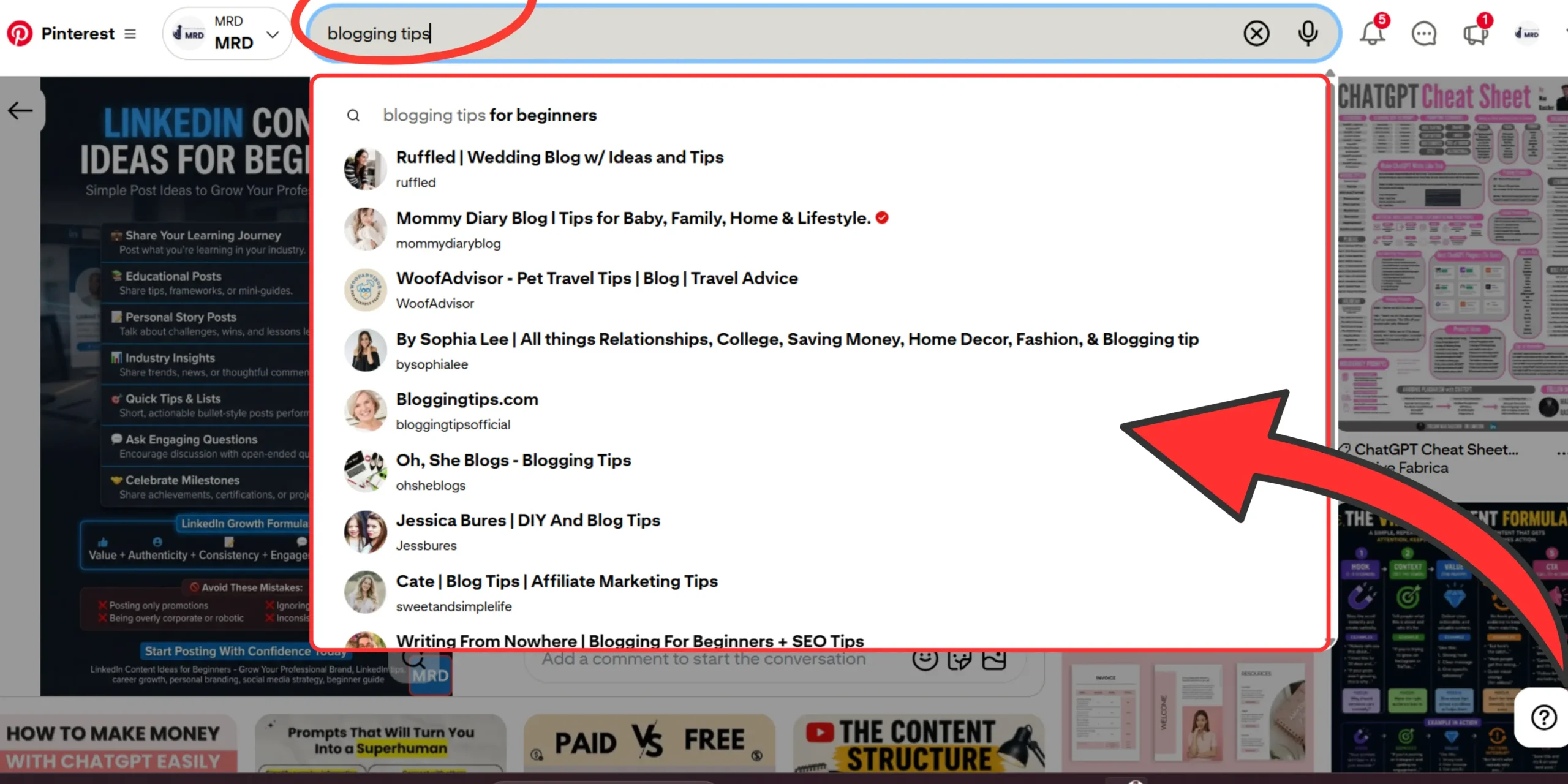
A LinkedIn post may receive attention for a few days. A Pinterest Pin can continue driving visitors for months. By creating multiple keyword-focused Pins from a single article, you create additional entry points that help users discover your content through search.
If you want to build a sustainable Pinterest traffic system, it is important to understand how to drive web site traffic from Pinterest 2026 through strategic board organization, keyword targeting, compelling pin design, and search-focused descriptions.
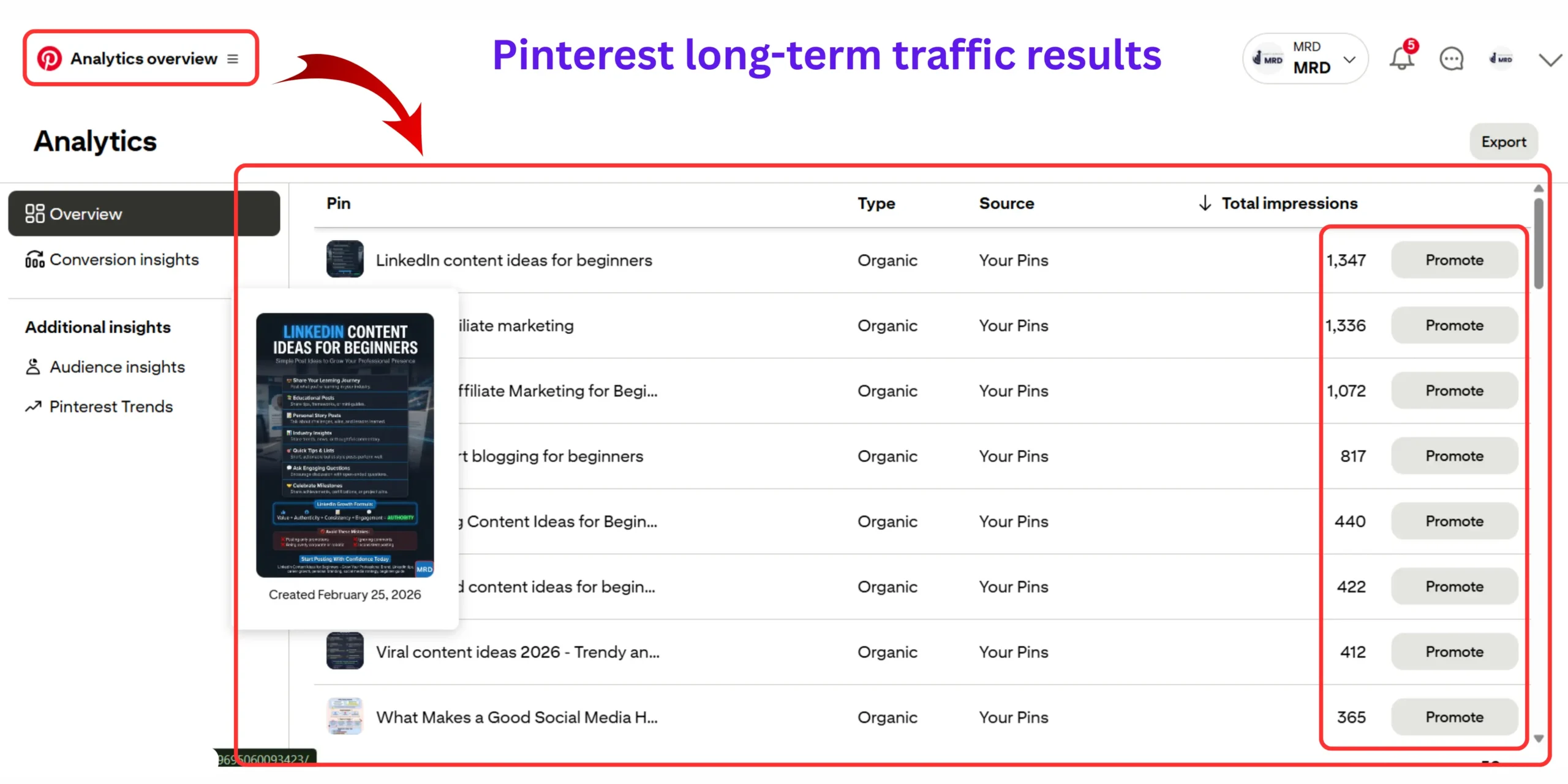
Think of Pinterest as a long-term traffic asset rather than a short-term engagement platform.
Th professional engine : LinkedIn authority building
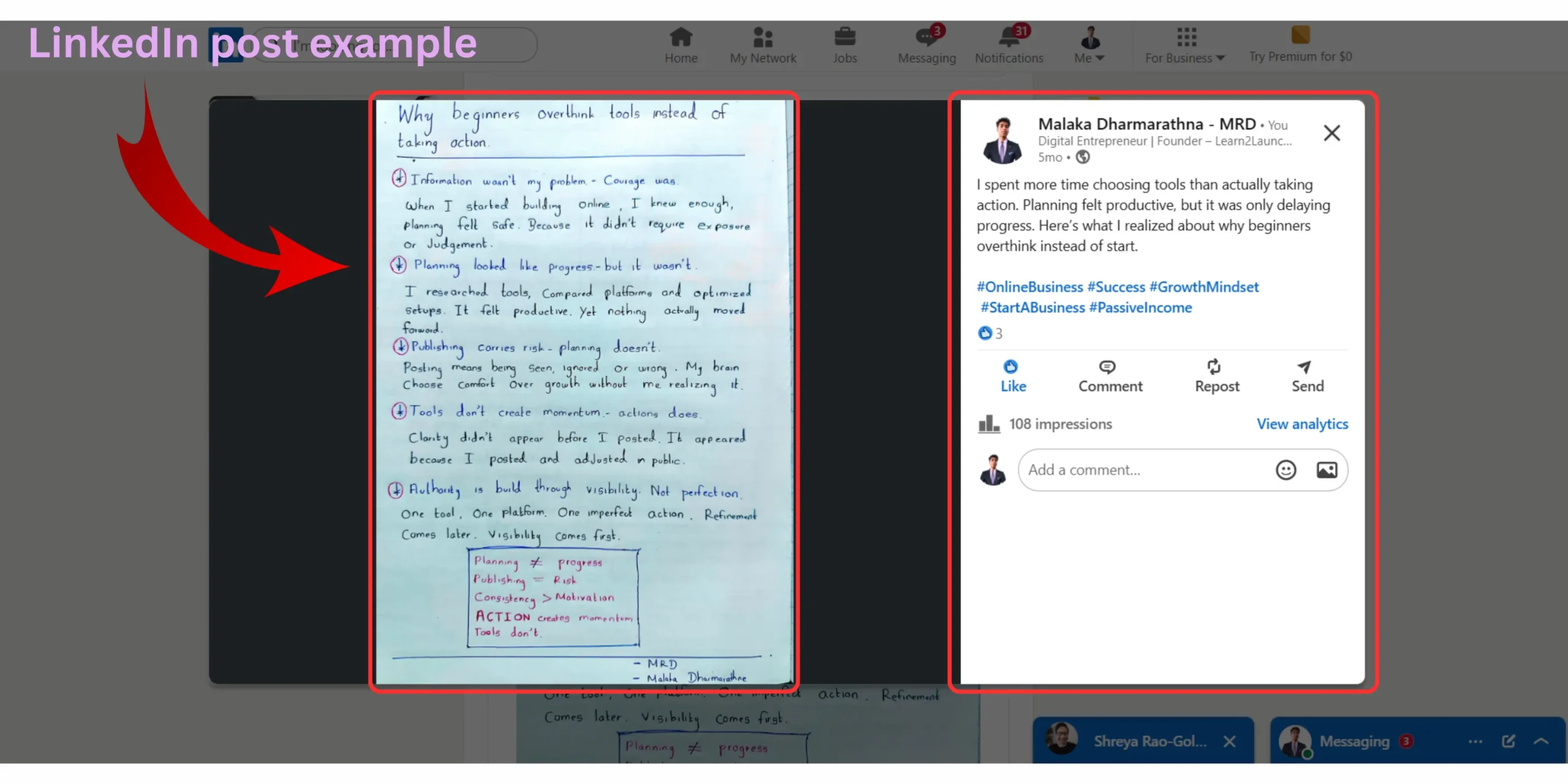
While Pinterest excels at visual discovery, LinkedIn excels at trust and authority. For creators publishing content around business, freelancing, productivity, online income, digital marketing, or professional development, LinkedIn can become a highly effective distribution channel.
However, many beginners make the same mistake. They publish a short caption, attach a blog link, and expect engagement. The reality is that LinkedIn rewards content that keeps users on the platform.
This is why the Value-First, Link-Second approach works so well.
Instead of leading with the article link, extract a valuable lesson, framework, story, or insight from the blog post and turn it into a complete standalone LinkedIn post.
Deliver meaningful value directly inside the feed. Then guide interested readers toward the full article. This strategy increases engagement while simultaneously positioning you as an authority within your niche.
Mastering how to post on LinkedIn for online business beginners is largely about understanding how to create attention-grabbing hooks, readable formatting, and valuable educational content that encourages professional conversations.
LinkedIn is not simply a traffic source. It is a credibility-building engine.
The global engine : Short form video funnels
Short-form video provides something Pinterest and LinkedIn cannot:
Massive reach potential. Platforms such as TikTok, Instagram Reels, and YouTube Shorts can expose your content to audiences far beyond your existing network.
Many creators avoid video because they assume they need expensive equipment, advanced editing skills, or a large production setup. In reality, simplicity often performs best.
Start with a single insight from your blog. Choose one framework, one lesson, one mistake, or one key takeaway. Turn that idea into a short 30 to 60-second video.
Your goal is not to teach everything. Your goal is to create curiosity. When viewers want the complete process, they naturally seek out the full article.
This transforms short-form content from entertainment into a scalable traffic funnel. The blog remains the destination. The video becomes the invitation.
Why this multi-pipeline approach works
Many bloggers rely on a single traffic source. That creates unnecessary risk. If one platform changes its algorithm, traffic can disappear overnight.
The Hub-and-Spoke model solves this problem by distributing exposure across multiple channels. Pinterest captures search-driven visitors. LinkedIn builds authority and trust. Short-form video expands reach and awareness.
Together, these pipelines create a more stable and diversified content distribution system that continuously feeds traffic back to your blog hub.
Every platform serves a different purpose within your content distribution system. Pinterest functions as a visual search engine, LinkedIn builds authority and professional trust, and short-form video expands reach. Success comes from adapting the format to the platform while consistently directing attention back to your owned content assets.
Distribution Gets Attention. Trust Creates Customers.
Driving traffic is only the first step. Once people discover your content, the next challenge is building credibility and turning that attention into meaningful business results. These guides will help you establish trust with your audience and create a clear path from follower to customer.
Off-social distribution (How to promote your blog without social media)
Many creators assume that building a successful blog requires spending hours every day on social media.
That assumption keeps a lot of talented people stuck. If you’re naturally introverted, dislike constantly checking notifications, or simply want a more sustainable way to grow your audience, social media can quickly become exhausting.
I learned this lesson the hard way, When I first started building online businesses, I believed that success required showing up everywhere, every day. The constant pressure to post, engage, reply, and keep up with platform trends eventually led to burnout.
The turning point came when I realized something important: Social media is only one distribution channel. It is not the distribution system.
Learning how to promote your blog without social media allows you to create traffic sources that are often more stable, predictable, and conversion-focused than many traditional social platforms.
Instead of relying entirely on algorithms, you begin building assets that continue working even when you’re offline. The framework looks like this:
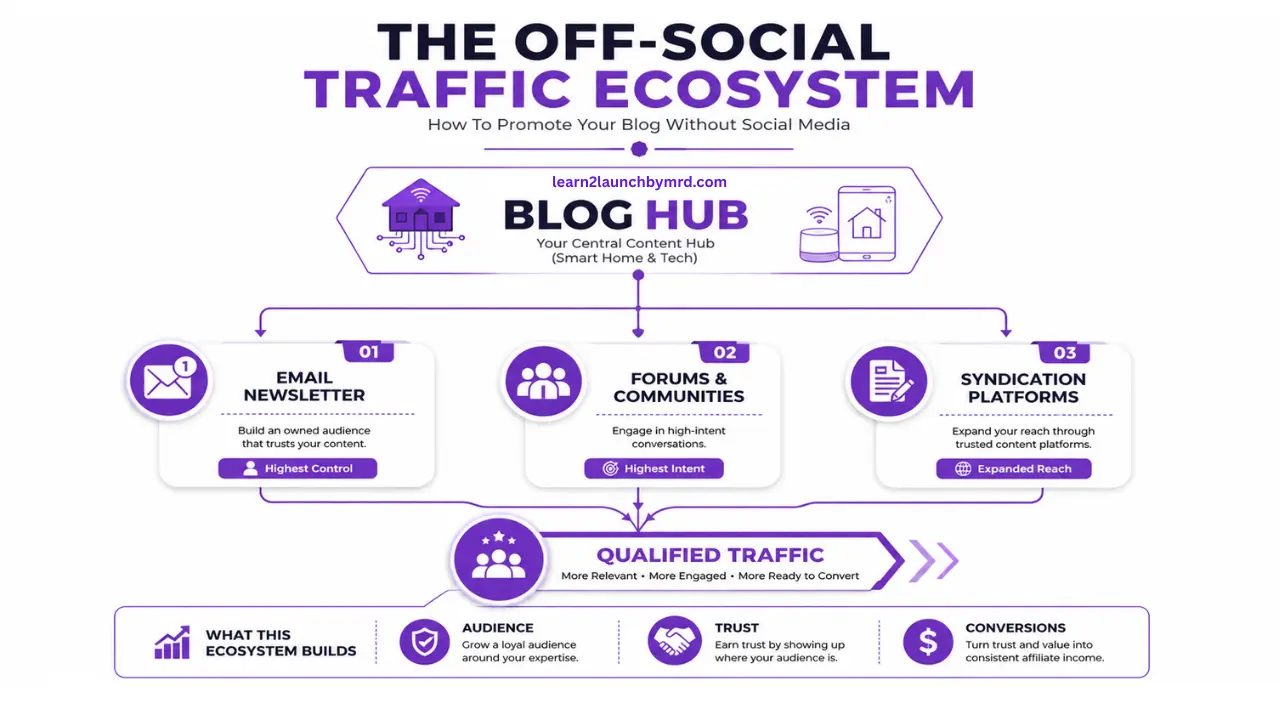
The Off-Social Distribution Framework
Diversifying visibility outside of traditional social media networks by routing targeted community relationships and syndicated assets back to your primary domain.
Each channel serves a different purpose, but all of them share the same objective: Drive qualified visitors back to your blog hub. Let’s examine the three most effective off-social distribution channels.
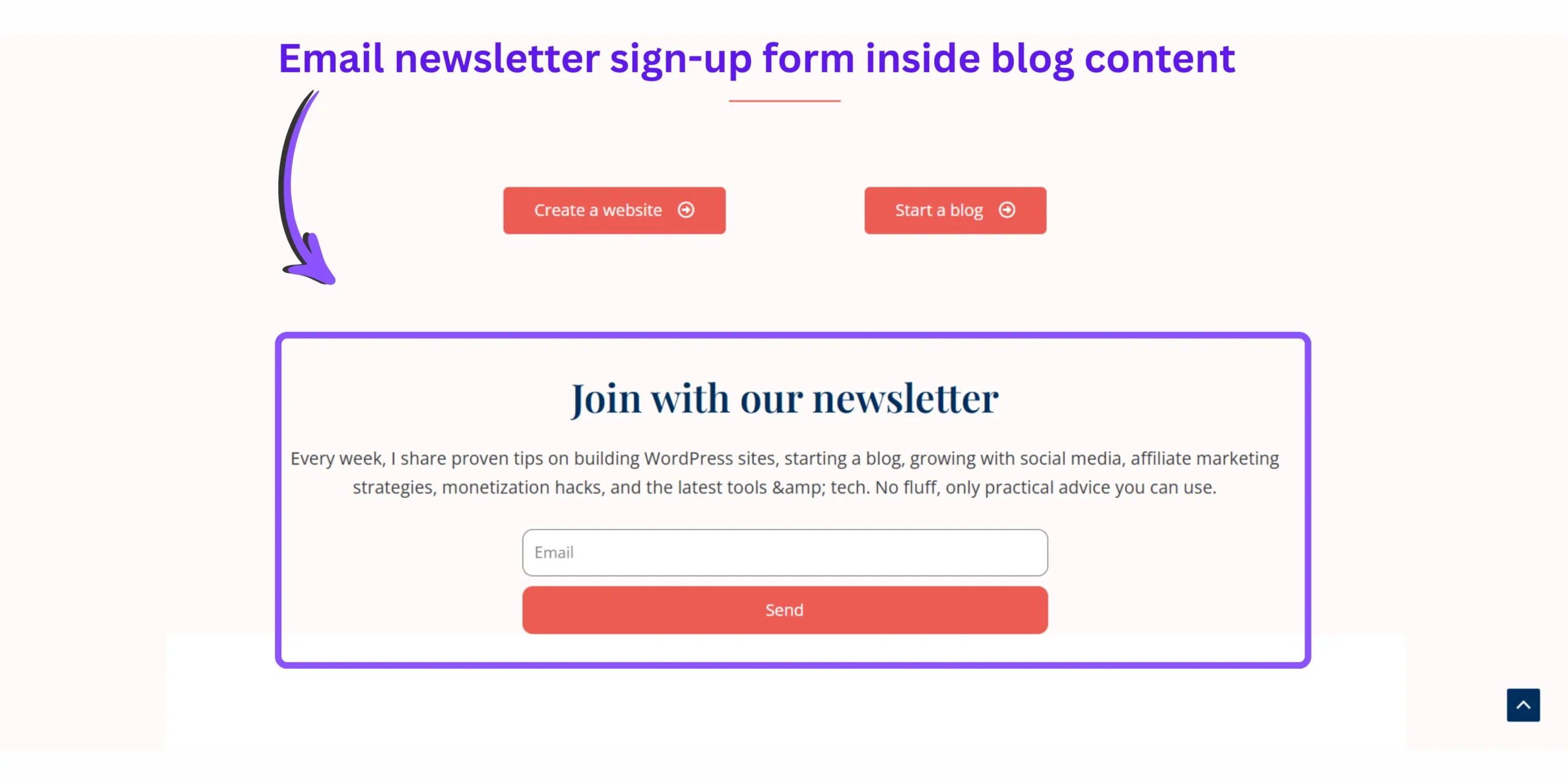
Owned media : The email newsletter loop
If your website is the Hub, your email list is the bridge connecting you directly to your audience. Unlike social platforms, email gives you direct access to people who have already expressed interest in your content.
No algorithm decides whether your subscribers see your message. No platform decides how much reach you receive.
This is why experienced creators often consider their email list their most valuable digital asset. Whenever you publish a new pillar guide, avoid sending a generic notification email.
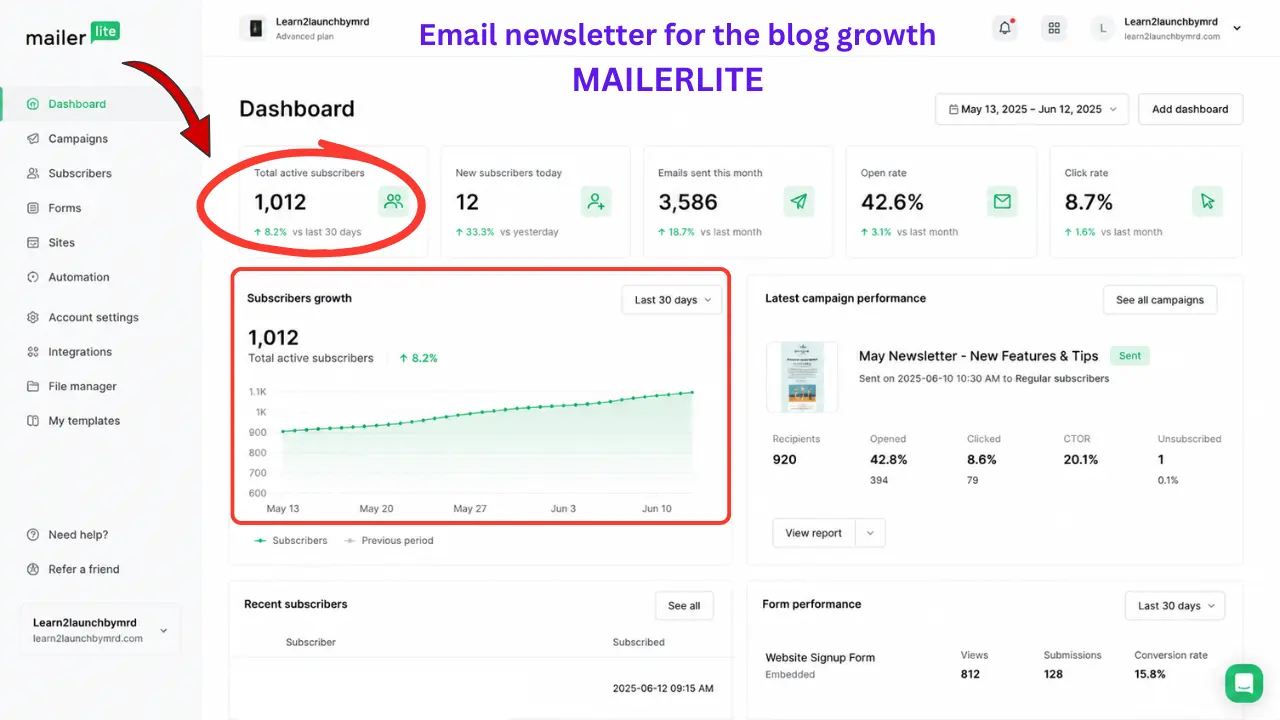
Instead, write a personal teaser. Start with a problem. Share a short story. Deliver one actionable insight. Then create curiosity around the complete solution available inside the article.
The goal is not to summarize the entire post. The goal is to give readers a reason to continue the journey on your website. Over time, this creates a self-reinforcing traffic loop where every new article generates engagement from an audience you already own.
Value first forum loops (Reddit and Quora)
One of the most overlooked traffic opportunities on the internet comes from communities where people are actively searching for answers.
Platforms like Reddit and Quora are filled with users asking highly specific questions every day. Unlike casual social browsing, these users often have immediate intent.
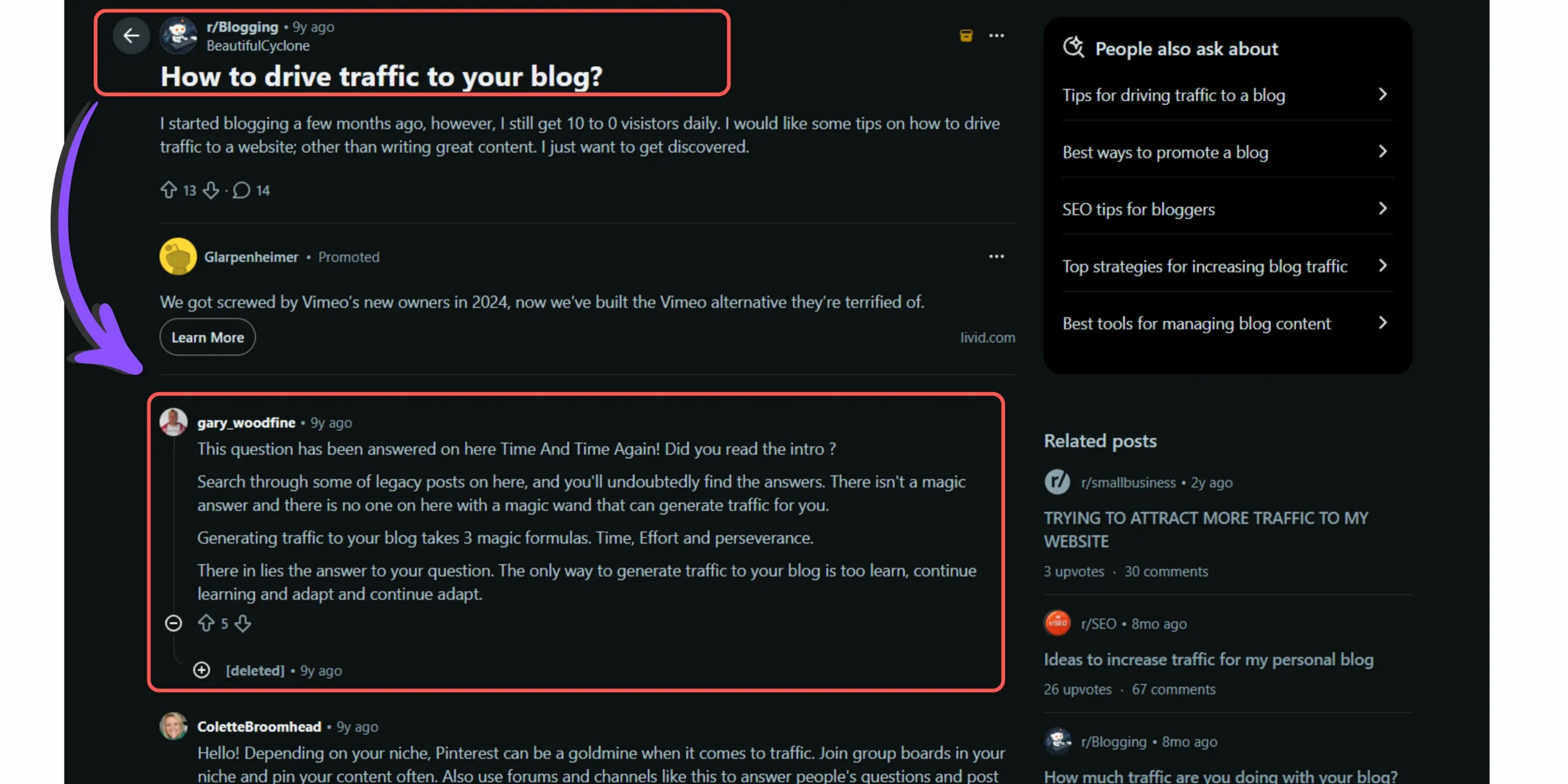
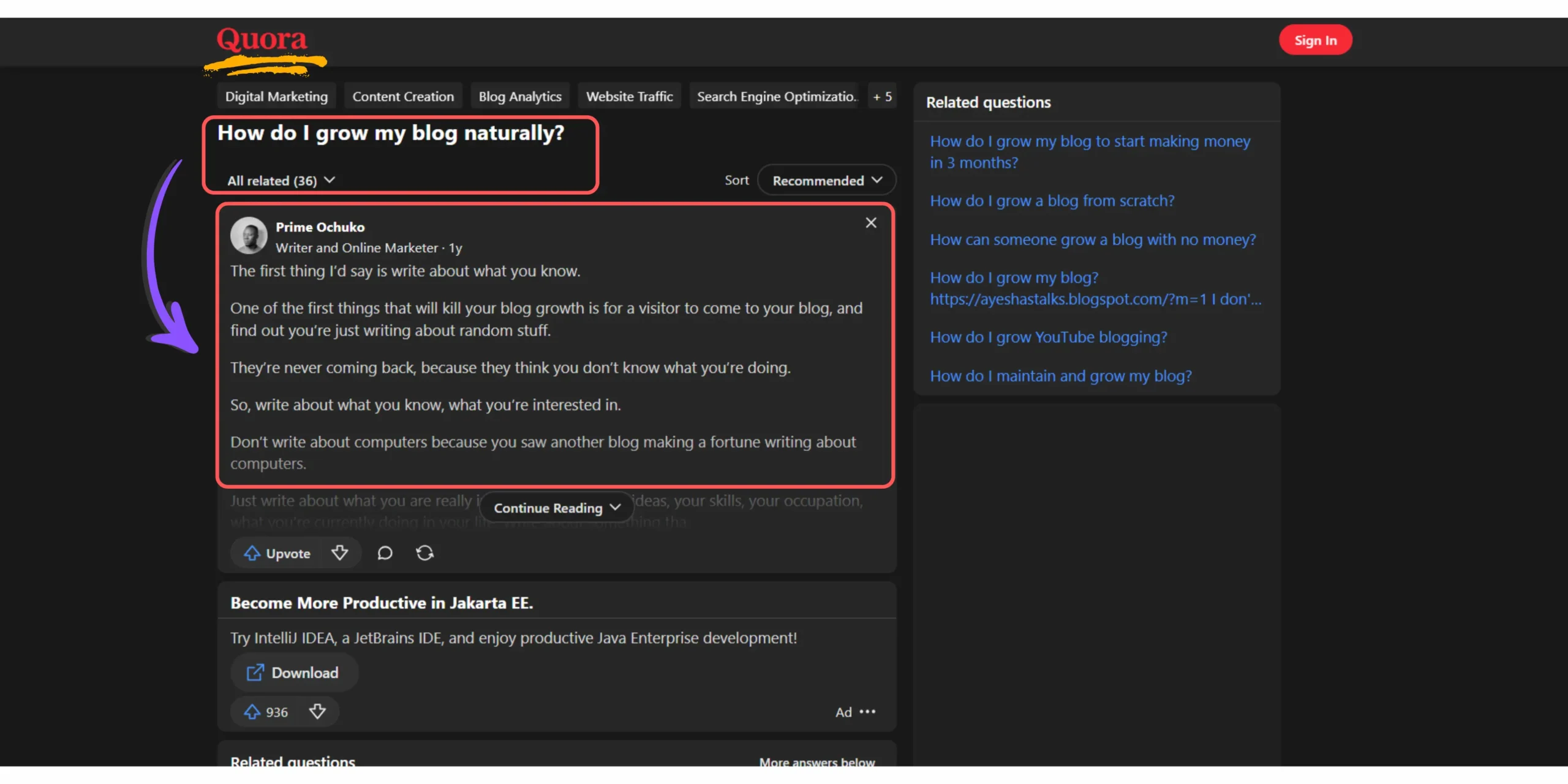
The biggest mistake beginners make is treating these communities as advertising platforms. That approach usually leads to ignored posts, removed links, or account restrictions.
The better strategy is simple:
Provide almost all of the value directly inside your answer. Find questions that closely match topics already covered on your blog. Write a thoughtful, complete response.
Help the person solve the problem. Then, only if relevant, reference your article as an additional resource for readers who want more depth. This principle mirrors the broader philosophy behind how to use social media to grow your online business:
Lead with value. Build trust. Allow traffic to follow naturally. When executed consistently, a single high-quality answer can continue generating visitors long after it is published.
Content syndication : Expanding your reach
Creating a great article once should not limit it to a single audience. This is where syndication becomes valuable. Platforms such as Medium and Substack already have established audiences actively consuming content.
Rather than letting your article exist exclusively on your blog, syndication allows you to expose the same ideas to entirely new readers.
Think of syndication as a content amplification strategy. Your blog remains the original source. The syndication platform becomes an additional discovery channel.
For WordPress users, proper implementation is important. When republishing content on platforms like Medium, use canonical tags to indicate that your website contains the original version of the article.
This helps search engines understand content ownership while allowing you to benefit from the platform’s existing audience.
Instead of competing with your blog, syndication can strengthen the overall reach of your content ecosystem.
Why off-social distribution matters
Many creators become overly dependent on a single traffic source. That creates risk. A platform update, algorithm change, account issue, or industry shift can dramatically reduce visibility overnight.
Off-social distribution reduces that dependency. Email builds owned audience relationships. Forums generate targeted intent-driven traffic. Syndication expands content discovery.
Together, these channels create a diversified traffic foundation that supports long-term growth regardless of what happens on social media
This is why understanding how to promote your blog without social media is not simply an alternative strategy. It is an essential part of a resilient content distribution framework.
Social media is only one pathway to traffic. Email newsletters, value-first community participation, and strategic syndication provide additional distribution channels that often deliver highly engaged visitors while reducing dependence on platform algorithms.
The rules of sustainable distribution (avoiding burnout and pitfalls)
Most content distribution systems do not fail because of bad strategy. They fail because the creator burns out before the system has time to produce results.
This is one of the biggest mistakes beginners make.
They learn about Pinterest, LinkedIn, email marketing, short-form video, forums, and syndication. Then they try to launch everything at once.
For a few weeks, motivation carries them forward. Then reality arrives. The workload becomes overwhelming.
Consistency disappears. The distribution system breaks down. If you want long-term success, you must treat content distribution like a marathon rather than a sprint.
The goal is not to be active everywhere. The goal is to build a system you can realistically maintain for months and years.
When I first started building online businesses, I constantly underestimated the hidden workload behind content promotion. I believed that more platforms automatically meant more growth. In reality, spreading myself across too many channels reduced the quality of everything I was doing. The breakthrough came when I stopped relying on motivation and started relying on systems. Instead of asking:
“How much content can I create this week?”
I started asking:
“What process can I repeat every week without exhausting myself?”
That single shift changed everything. The sustainable workflow looks like this:
The Weekly Distribution Workflow
A sustainable, batch-driven content engine designed to maximize leverage across distinct operational stages throughout the week.
Rather than trying to write, design, publish, and promote everything on the same day, separate each activity into dedicated workflow blocks.
Writing requires creative energy, like I do….. Content extraction requires analytical thinking. Scheduling requires administrative focus.
When you combine all three tasks into one session, productivity usually drops. When you batch similar activities together, the entire process becomes easier to manage.
For example:
- Monday focuses exclusively on creating the blog hub.
- Wednesday focuses on extracting hooks, visuals, quotes, and promotional assets.
- Friday focuses on scheduling content across distribution channels.
This structure reduces decision fatigue while creating a repeatable operating system for your business. It also makes it much easier to maintain consistency over time.
As I know, most creators struggling with consistency are not lacking motivation. They are lacking systems. That is why learning how to consistent on social media without burnout is often less about discipline and more about workflow design.
The same principle applies when avoiding the most common 10 social media mistakes beginners must avoid. Many of those mistakes occur because creators are rushing, overwhelmed, or operating without a structured process. Sustainable creators focus on consistency. Burned-out creators focus on intensity. The first group builds long-term assets. The second group repeatedly starts over.
The 2nd platform rule
One of the simplest ways to prevent burnout is to limit the number of distribution channels you actively manage. When launching a content distribution system, choose:
- One primary platform
- One secondary platform
That’s it , For example,
- Pinterest + Email
- LinkedIn + Email
- Pinterest + LinkedIn
Master those channels first. Build workflows, create templates , Develop consistency. Only then should you consider expanding into additional platforms. A smaller system that runs consistently will almost always outperform a larger system that constantly breaks down.
Why sustainability creates better results
Algorithms reward consistency. Audiences trust consistency. Businesses grow through consistency. None of those outcomes require posting every hour of the day.
They require showing up predictably over long periods of time. The creators who achieve sustainable growth are rarely the creators working the hardest on any single day. They are the creators who continue publishing, distributing, and improving month after month while others quit.
That is the true purpose of a sustainable content distribution framework. Not maximum output. Maximum longevity.
The most effective distribution system is not the most complex one. It is the one you can consistently maintain. Focus on repeatable workflows, batch similar tasks together, limit the number of active platforms, and prioritize long-term consistency over short-term intensity.
Content Distribution Framework FAQ
Answers to common questions about maximizing your traffic velocity, avoiding algorithmic platform traps, and building long-term owned media authority.
You can share your blog posts on Pinterest, LinkedIn, Reddit, Quora, email newsletters, and content syndication platforms such as Medium.
The best approach is to match the platform to the audience. Pinterest works well for search-driven traffic, LinkedIn helps build authority, while Reddit and Quora connect you with users actively looking for solutions. For long-term growth, always distribute new content to your email subscribers as well.
The simplest rule is to provide value first and promote second.
Instead of dropping a raw link, extract a useful insight, framework, or lesson from your article and publish it natively on the platform. Once readers receive value, they are far more likely to visit your website for the complete guide.
Focus on sharing your experiences, lessons learned, and practical insights rather than trying to appear as an expert overnight.
Learning how to build trust on social media as a beginner is often about consistency and transparency. Document your journey, share real examples, and provide useful information that helps your audience solve problems.
Yes, provided you use a canonical tag that points back to your original WordPress article.
This tells search engines which version is the original source. When implemented correctly, syndication can help expand your reach while preserving the SEO value of your website.
A good starting point is to split your effort roughly 50/50 between content creation and content distribution.
Publishing great content is important, but distribution is what helps people discover it. After publishing a new article, spend time extracting content assets, sharing them across your chosen channels, and promoting the post consistently.
Publishing is only the beginning
Most bloggers believe their job is finished the moment they hit the Publish button. In reality, that is where the real work begins.
Learning how to distribute blog content is what transforms a single article from a static asset into an active growth engine. The content itself may live on your website, but its reach depends on the systems you build around it.
Throughout this guide, we explored a complete blog content distribution framework:
- Building a Hub-and-Spoke distribution system around your blog
- Extracting multiple content assets from a single article
- Using Pinterest, LinkedIn, and short-form video as algorithmic discovery channels
- Learning how to promote your blog without social media through email, forums, and syndication
- Creating sustainable workflows that support long-term consistency without burnout
The goal is not to create more content. The goal is to get more value from the content you already create. A single blog post should never exist in isolation.
It can become Pins, professional posts, email newsletters, community answers, videos, visual assets, and long-term traffic generators. That is why successful creators rarely focus only on publishing.
They focus on distribution. Whether your next step is repurposing blog posts for Pinterest, building an email newsletter, or learning how to turn a blog post into social media content more efficiently, the principle remains the same:
Create once. Distribute strategically. Multiply the impact of every asset you publish. So before you start writing another article, pause for a moment.
Look at the content you have already created. Ask yourself:
“Have I fully distributed this asset yet?”
In many cases, the fastest path to more traffic is not creating something new. It is getting more people to discover what already exists. You have built the foundation.
Now it’s time to activate the distribution engine and put your content in front of the audiences it was created to help.
Publishing creates assets. Distribution creates visibility. Sustainable distribution creates growth. The creators who consistently win online are not necessarily the ones producing the most content—they are the ones extracting the most value from every piece of content they create.
Malaka Dharmarathne - MRD
Digital Marketing & Blogging growth specialist
” I help beginner bloggers build high-converting, no-code WordPress websites and master the fundamentals of SEO and content distribution. Through actionable blueprints on affiliate marketing and high-income monetization, I turn simple blogs into profitable digital businesses.“
Popular Blueprints
Table of Contents - How to distribute blog content
Build & Scale a High-Converting Blog Platform
Join thousands of creators getting actionable breakdowns on affiliate monetization, clean UX design, and growth strategy delivered straight to your incbox.
- Step-by-Step Guides: Proven traffic & monetization tactics.
- Tech Stack Curations: The exact tools & plugins to build faster.
- Zero Spam: Unsubscribe in 1 click at any time.
🔒 We respect your privacy. No spam, ever.

” I’m MRD, a digital entrepreneur specializing in building lightweight, automated systems for solo creators. I founded Learn2Launch to share the exact AI orchestration protocols and framework setups I use every day—helping you launch a profitable one-person business completely free of technical overwhelm or backend bloat.“